KUALA LUMPUR – As artificial intelligence (AI) rapidly transforms industries worldwide, Malaysia’s higher education institutions face a growing imperative to rethink how they prepare the next generation of cybersecurity professionals.
The question is no longer whether cybersecurity education needs to evolve—but how quickly institutions can adapt to ensure graduates remain relevant in an AI-driven digital economy.
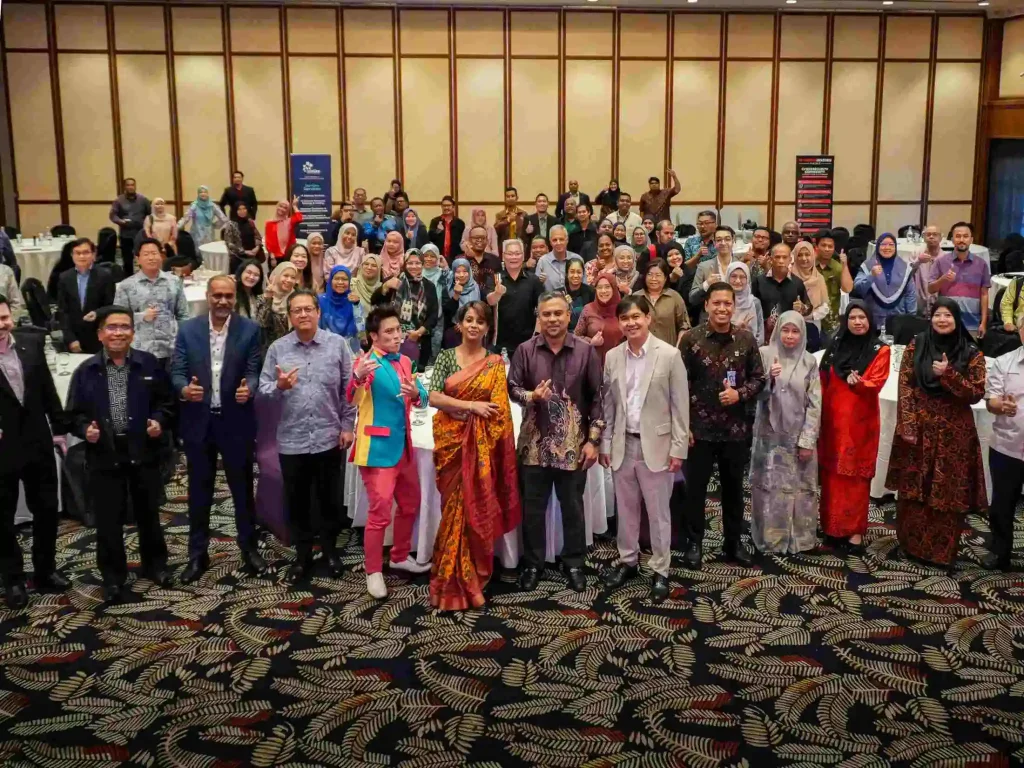
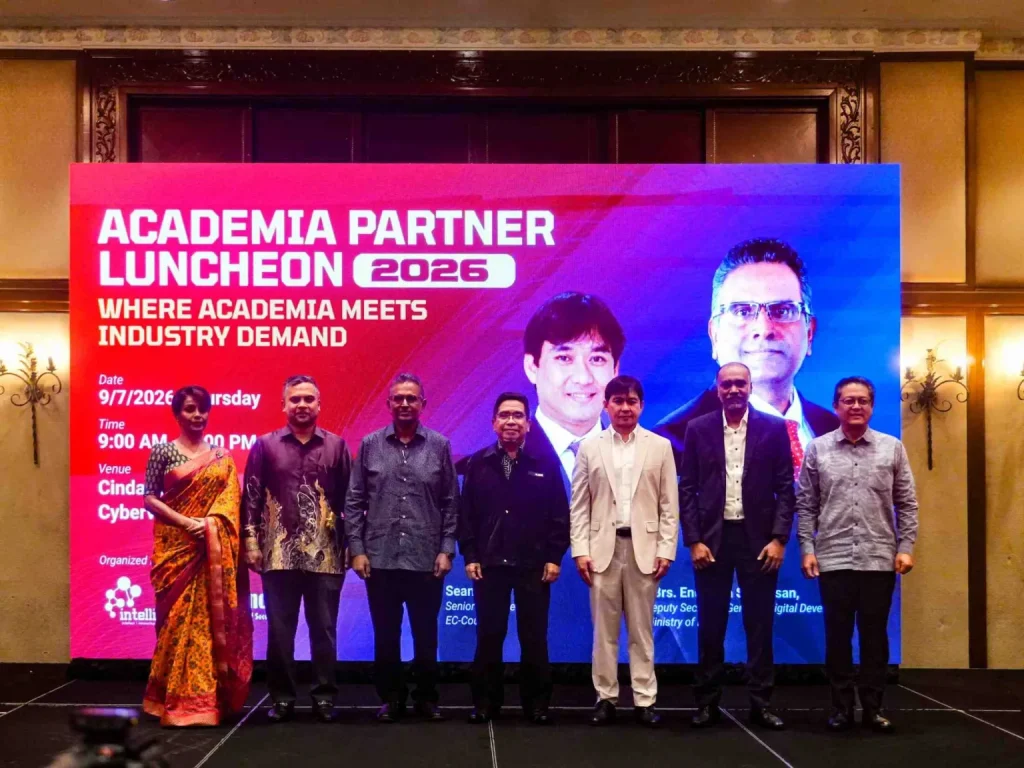
This message took centre stage at the EC-Council Academia Partner Luncheon 2026, held on 9 July 2026 under the theme “Where Academia Meets Industry Demand”, where leaders from universities, TVET institutions, government agencies, and industry partners gathered to discuss the future of cybersecurity education and workforce development in Malaysia.
The event was officiated by YBhg. Encik Ma Sivanesan A/L Marimuthu, Deputy Secretary General (Digital Development), Ministry of Digital, whose opening address underscored the Government’s commitment to strengthening collaboration between academia, industry, and the public sector to develop a digitally skilled workforce capable of supporting Malaysia’s ambitions as a regional digital economy.
Artificial intelligence is reshaping the cybersecurity landscape at an unprecedented pace.
On one hand, organisations are increasingly leveraging AI to detect cyber threats faster, automate incident response, enhance security operations, and strengthen cyber resilience.
On the other hand, cybercriminals are exploiting the same technologies to launch more convincing phishing campaigns, generate sophisticated malware, automate reconnaissance, and execute large-scale attacks with greater speed and precision.
This changing threat landscape is fundamentally altering what employers expect from cybersecurity graduates.
Beyond technical knowledge, organisations are now seeking professionals who understand AI-enabled environments, cloud security, cyber resilience, digital trust, governance, risk management, regulatory compliance, and emerging technologies. Equally important are critical thinking, adaptability, and continuous learning—qualities that enable professionals to respond effectively to cyber threats that evolve almost daily.
The discussions throughout the luncheon reflected a growing consensus that traditional approaches to cybersecurity education are no longer sufficient. Future graduates must leave university equipped not only with academic qualifications, but with practical experience, industry-recognised certifications, and workplace-ready competencies that reflect real-world industry needs.
As Malaysia accelerates its digital transformation, universities and higher learning institutions are uniquely positioned to become the driving force behind the nation’s cybersecurity readiness.
Participants emphasised that academia must continue evolving its curricula by integrating practical learning, industry collaboration, emerging technologies, AI competencies, and globally recognised professional certifications. Such initiatives will help bridge the long-standing gap between classroom learning and employer expectations while ensuring graduates are better prepared to contribute from day one.
The conversations also highlighted that developing future-ready talent cannot be achieved by educational institutions alone. Sustainable success requires strong partnerships between universities, industry leaders, certification bodies, government agencies, and employers to ensure programmes remain relevant as technology and workforce demands continue to evolve.
Delivering the keynote address, Sean Lim, Senior Vice President, Asia Pacific, EC-Council, provided a broader strategic perspective on the future of cybersecurity education and workforce development across the region.
Drawing upon global industry trends, Sean highlighted that AI is fundamentally changing not only how cyber threats emerge, but also how cybersecurity professionals are expected to think, innovate, and solve increasingly complex challenges.
The future workforce, he noted, must possess multidisciplinary capabilities that extend beyond technical expertise to include AI literacy, governance, business understanding, communication, leadership, and lifelong learning.
He emphasised that universities can no longer focus solely on preparing students for today’s jobs. Instead, institutions must prepare graduates for careers that are continuously evolving and in many cases, roles that have yet to emerge.
“Cybersecurity is no longer simply an IT discipline; it has become a strategic business capability. Universities have a unique opportunity to produce graduates who are globally competitive by combining academic excellence with internationally recognised certifications, practical experience, and the adaptability required to thrive in an AI-driven future.”
Sean also highlighted EC-Council’s continued commitment to supporting higher education institutions worldwide through globally recognised cybersecurity programmes that integrate emerging technologies, AI-driven security concepts, ethical hacking, digital forensics, threat intelligence, cloud security, and cyber defence.
These initiatives aim to ensure graduates are equipped with skills that remain relevant as industries continue embracing AI and digital transformation.
Adding a Malaysian industry perspective, Dr. Kavitha Muthy, Chief Strategy Officer of Intellize Tech Services Sdn. Bhd. and Malaysia Representative for the EC-Council Academia Programme, stressed that Malaysia has a significant opportunity to position itself as a regional leader in cybersecurity talent development provided academia and industry continue working together.

She noted that cybersecurity education should no longer be viewed as merely producing technical professionals, but as developing future leaders capable of protecting digital economies, critical infrastructure, businesses, and communities.
“The future of cybersecurity will not be built in security operation centres alone. It begins in our classrooms, laboratories, and training environments. AI is transforming every aspect of cybersecurity, and our graduates must be prepared not only to use these technologies but to secure them responsibly. Industry and academia must work together to ensure students graduate with skills that remain relevant in an increasingly AI-driven world.”
Dr. Kavitha added that practical exposure, experiential learning, and industry-recognised certifications are becoming essential components of higher education. Graduates who possess validated skills alongside academic qualifications will be better positioned to meet employer expectations and contribute meaningfully to Malaysia’s growing digital economy.
Industry and Academia Must Continue Moving Together
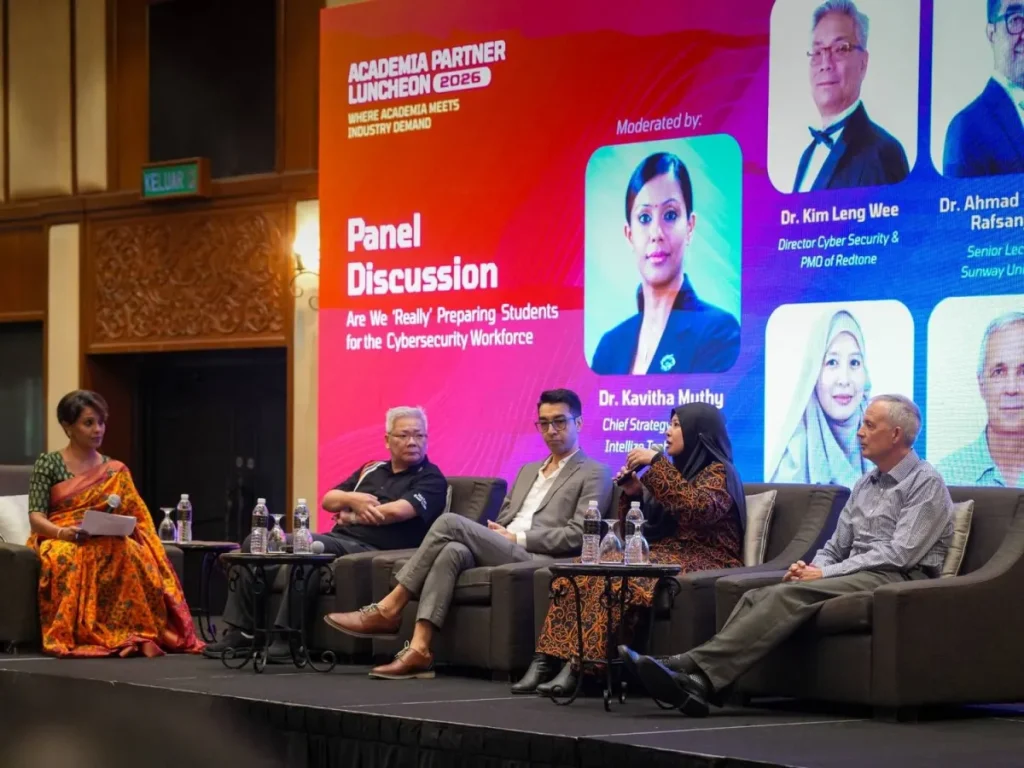
One of the highlights of the luncheon was a high-level roundtable discussion involving university leaders, TVET representatives, government officials, and cybersecurity practitioners.
Participants exchanged perspectives on workforce readiness, curriculum relevance, talent shortages, AI integration, employer expectations, and the importance of producing graduates with practical, immediately deployable skills.
The discussion reinforced that continuous engagement between academia and industry is essential to keep educational programmes aligned with the rapidly evolving cybersecurity landscape.
Beyond the presentations, the EC-Council Academia Partner Luncheon 2026 successfully strengthened relationships among key stakeholders while creating new opportunities for collaboration, knowledge sharing, and long-term partnerships that will support Malaysia’s cybersecurity talent ecosystem.
Securing Malaysia’s Digital Future Starts in the Classroom
As Malaysia advances its digital ambitions, the demand for competent cybersecurity professionals will only continue to grow. AI is changing the nature of cyber threats, transforming business operations, and redefining the skills required across every sector of the economy.
The discussions throughout the luncheon delivered one consistent message: preparing graduates for the future requires more than updating syllabuses. It demands stronger collaboration, greater industry engagement, practical learning opportunities, and a shared commitment to producing professionals who can thrive in an AI-powered world.
The EC-Council Academia Partner Luncheon 2026 demonstrated that this transformation is already underway. By strengthening collaboration between academia, industry, government, and global certification bodies, Malaysia is taking meaningful steps toward building a workforce capable of protecting the nation’s digital future while remaining globally competitive.
Because in the era of artificial intelligence, success will belong not to those who simply teach technology—but to those who prepare talent to secure it.
About EC-Council
The International Council of E-Commerce Consultants (EC-Council) is one of the world’s largest and most recognised cybersecurity technical certification bodies, operating in more than 170 countries. Renowned for developing the globally recognised Certified Ethical Hacker (CEH) programme, EC-Council has trained and certified hundreds of thousands of cybersecurity professionals worldwide through its portfolio of role-based certifications covering ethical hacking, cyber defence, digital forensics, incident response, cloud security, penetration testing, security operations, artificial intelligence, and emerging technologies.
To strengthen the future cybersecurity workforce, EC-Council established the EC-Council Academia Programme, a global initiative that enables universities, colleges, polytechnics, and TVET institutions to integrate internationally recognised cybersecurity certifications directly into their academic curricula.
About Intellize Tech Services Sdn. Bhd.
Intellize Tech Services Sdn. Bhd. is the Malaysia representative for the EC-Council Academia Programme and a leading provider of cybersecurity, business continuity, disaster recovery, and cyber resilience consulting services. Working closely with universities, government agencies, and industry partners, Intellize supports talent development initiatives that strengthen Malaysia’s digital resilience and prepare future professionals for an increasingly AI-driven world.