KUALA LUMPUR — Malaysia is intensifying the use of technology smart mobility and digital infrastructure management to strengthen the country’s road network and support sustainable economic growth.
Works Minister Datuk Seri Alexander Nanta Linggi said the country is now moving from a traditional approach that only focuses on building and expanding roads to a more efficient, integrated and data-driven mobility management model.
Speaking at Intertraffic Amsterdam, one of the world’s leading mobility and infrastructure exhibitions, he said the new approach combines engineering expertise, digital technology and public participation to ensure that traffic and infrastructure management can be implemented more efficiently.
Nanta said the rapid urbanisation and economic growth across Southeast Asia are increasing the need for smarter infrastructure management.
“Across Southeast Asia, infrastructure development is growing very rapidly. The real challenge is not whether infrastructure will continue to grow – it will definitely grow – but how we manage that infrastructure smarter,” he said in a statement issued by the Ministry of Works (KKR) today.
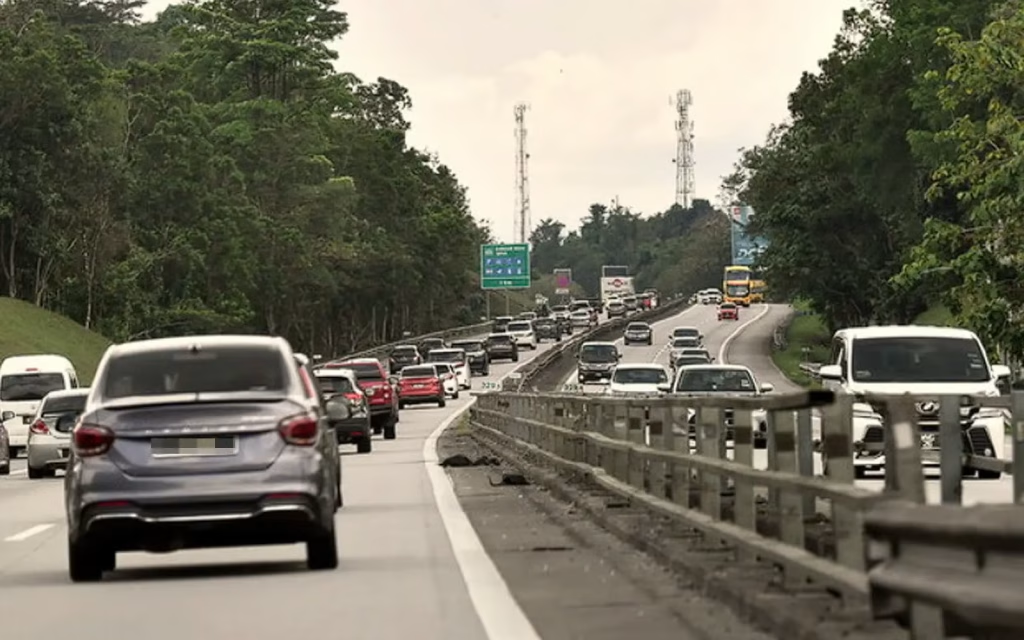
Nanta said Malaysia currently maintains nearly 296,000 kilometres (km) of roads, among the largest road networks in Southeast Asia, supported by a highway system of over 5,000 km connecting major cities, ports and economic corridors across the country.
He said economic growth continued to drive increased demand for mobility as Malaysia recorded 1.57 million new vehicle registrations in 2024 alone, equivalent to about 4,300 new vehicles entering the road every day.
To address this pressure, he said KKR was expanding the use of Intelligent Transport Systems (ITS) and integrated digital platforms to improve traffic monitoring, optimise traffic flow and strengthen road safety.
Nanta said public participation also played an important role in the country’s smart mobility ecosystem through the MYJalan mobile application which allowed the public to report road damage and safety issues directly to the authorities.
“Since its launch, the platform has received over 54,000 public reports, with over 90 per cent successfully resolved, thus helping authorities respond faster to infrastructure issues across the country,” he said.
Nanta said Malaysia was also strengthening infrastructure governance through the National Construction Information Platform, which brings together construction data, regulatory information and project monitoring systems to support more efficient planning and asset management.
He said the development of major infrastructure projects such as the Pan Borneo Highway spanning over 2,000 kilometres in Sabah and Sarawak had also improved logistics connectivity and opened up more economic opportunities in East Malaysia.
At the same time, Nanta said under the 13th Malaysia Plan, the government would build and upgrade over 2,800 kilometres of rural roads to improve community connectivity in small towns and agricultural areas.
“This is what we mean when we talk about humanising engineering – ensuring that infrastructure development truly improves daily lives and connects Malaysians to opportunities,” he said.
Nanta said with the urban population in Southeast Asia expected to exceed 400 million people by 2030, Malaysia was positioning itself as a regional hub for smart mobility and infrastructure technology innovation.
“Building more infrastructure is no longer enough. The future lies in developing smarter, safer, more efficient and more sustainable infrastructure,” he said.
Previously, KKR announced that Malaysia would be participating in the Intertraffic Amsterdam 2026 forum for the first time and become the only ASEAN country to receive an official invitation to participate in the prestigious event which will be held at the RAI Amsterdam Convention Centre from March 9 to 12.
— BERNAMA