KOTA KINABALU: President of the United Progressive Kinabalu Organisation (UPKO), Ewon Benedick, said Sabah and Sarawak remain integral parts of the Federation of Malaysia, but both states are firmly demanding the full implementation of the Malaysia Agreement 1963 (MA63) and the rights enshrined in it.
He said the demand is made collectively as Sabah and Sarawak share many similar rights as agreed upon during the formation of Malaysia.
According to him, everyone has the right to interpret or express views that regard Sabah and Sarawak as a “Borneo bloc” in advocating for the implementation of MA63.
“Everybody has the right to express their opinion. As President of UPKO, whether it is called the Borneo region, the Borneo bloc, or the territories of Sabah and Sarawak, to me we share nearly the same rights under the Malaysia Agreement.
“Without Sabah and Sarawak, there would be no Federation of Malaysia. That is a fact.
“So we are only demanding what was agreed upon in the Malaysia Agreement 1963 and negotiating as Sabah and Sarawak with the Federal Government,” he said.
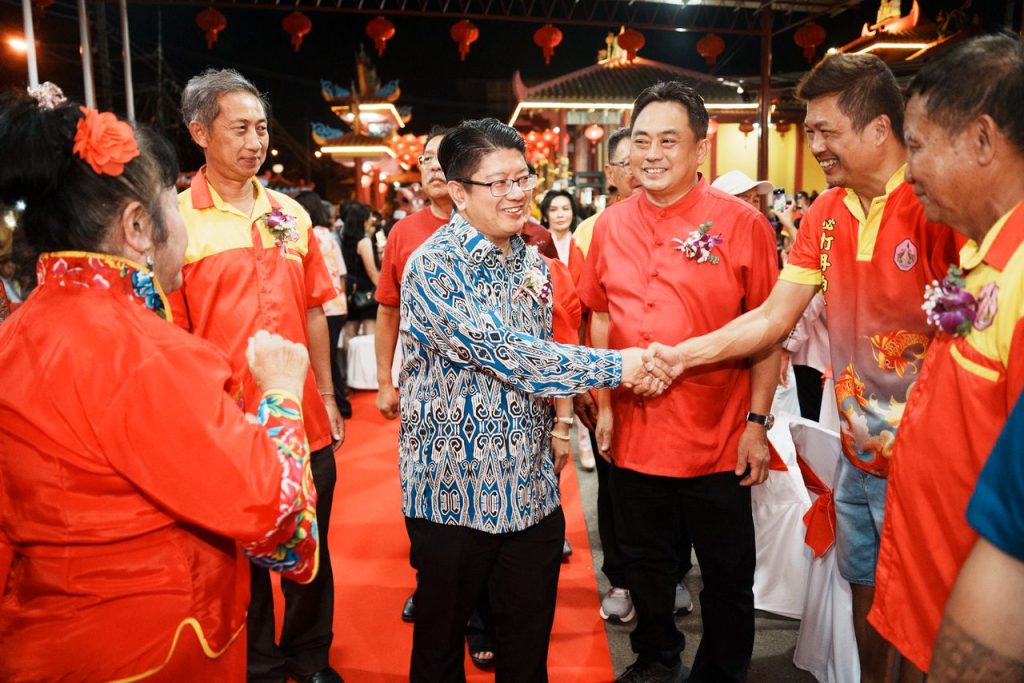
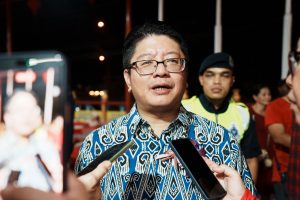
Ewon said this when met by reporters during a Chinese New Year celebration organised by UPKO Putatan at the Taipakkung Putatan grounds here yesterday.
He noted that there are various interpretations of the term “Borneo bloc,” and from one perspective it can be considered accurate, as Sabah and Sarawak are located on the island of Borneo and are separated from Peninsular Malaysia by the South China Sea.
However, in the context of nation-building, he said the view expressed by Sabah Chief Minister Hajiji Noor is also valid, as Sabah and Sarawak remain within one federation and one country — Malaysia — that must continue working together.
“To ensure that the Federation of Malaysia continues to grow as a nation, the Malaysia Agreement must be fulfilled and the rights of Sabah and Sarawak must be implemented,” he said.
“It is therefore natural for leaders and the people of both states to unite in defending and fighting for our rights.”
Ewon added that as long as the matters agreed upon in MA63 have not been fully implemented, the struggle to ensure its execution will continue.
He said the Federal Government, Sabah and Sarawak currently have several official platforms to negotiate the implementation of MA63, including the MA63 Implementation Action Council and the MA63 Technical Committee, which convene annually.
According to him, these platforms serve as negotiation channels to ensure the rights of Sabah and Sarawak are carried out.
He also explained that when Singapore was still part of the Malaysian federation, there were constitutional safeguards for territories outside Malaya, including Sabah and Sarawak.
At that time, he said, Peninsular Malaysia did not possess a two-thirds legislative majority in Parliament.
However, that guarantee diminished after Singapore left the federation, even though the safeguard was among the reasons Sabah and Sarawak agreed to form Malaysia.
“That is why some view Sabah and Sarawak as a single bloc in Borneo. We are located in our own region, separated by the South China Sea, and we are demanding the constitutional guarantees and rights that were agreed upon in the Malaysia Agreement 1963,” he said.
Meanwhile, Ewon said Sabah has also taken a firm stance in defending its rights, including the issue of the 40 per cent revenue entitlement.
He referred to the action by the Attorney General’s Chambers of Malaysia in filing a stay of execution against a High Court decision that ordered negotiations between the Federal Government and the Sabah state government to be finalised within 180 days on the matter.
He said the Sabah government, through the Sabah State Attorney-General, has indicated that the matter will be challenged in court.
“This means we will stand firm in our own way. We are now in an era where the authority and confidence of leadership in Sabah and Sarawak are rising. I would like to remind our friends in Peninsular Malaysia that they can no longer view or belittle Sabah and Sarawak as they may have done in the past.
“They have the right to express their views about Sabah and Sarawak — that is their right. But we also have the same right to say that we are the Borneo territories. Without us, namely Sabah and Sarawak, Malaysia would not have been formed.
“I would also dare say that Sabah and Sarawak have long subsidised development in Peninsular Malaysia through revenues from oil and gas,” he said.