KUALA LUMPUR, Nov 12 – The East Coast Rail Link (ECRL) is expected to transform transportation and create new economic opportunities for communities across Malaysia’s East Coast.
The 665-kilometre rail network will connect Kelantan, Terengganu and Pahang with the Klang Valley. It will offer passengers a faster alternative to long road journeys.
The service is scheduled to begin operations on December 12, 2026. Economy-class fares from Gombak to Kota Bharu will start from RM125 for a one-way trip.
Currently, travelling from Kuala Lumpur to Kota Bharu by road usually takes seven to eight hours. During festive seasons and school holidays, heavy traffic can extend the journey to as long as 20 hours.
However, the ECRL is expected to reduce the journey to approximately four hours.
ECRL Offers an Alternative to Road Travel
The new rail service aims to make long-distance travel more comfortable and convenient for East Coast residents.
It will also help reduce the pressure on major highways, particularly during festive periods when thousands of vehicles travel towards Kelantan and neighbouring states.
According to the report, around two million vehicles entered Kelantan during the Aidilfitri celebrations in March. Nearly one million vehicles also entered the state during the school holiday period.
These figures highlight the demand for better transportation connections between the East Coast and the Klang Valley.
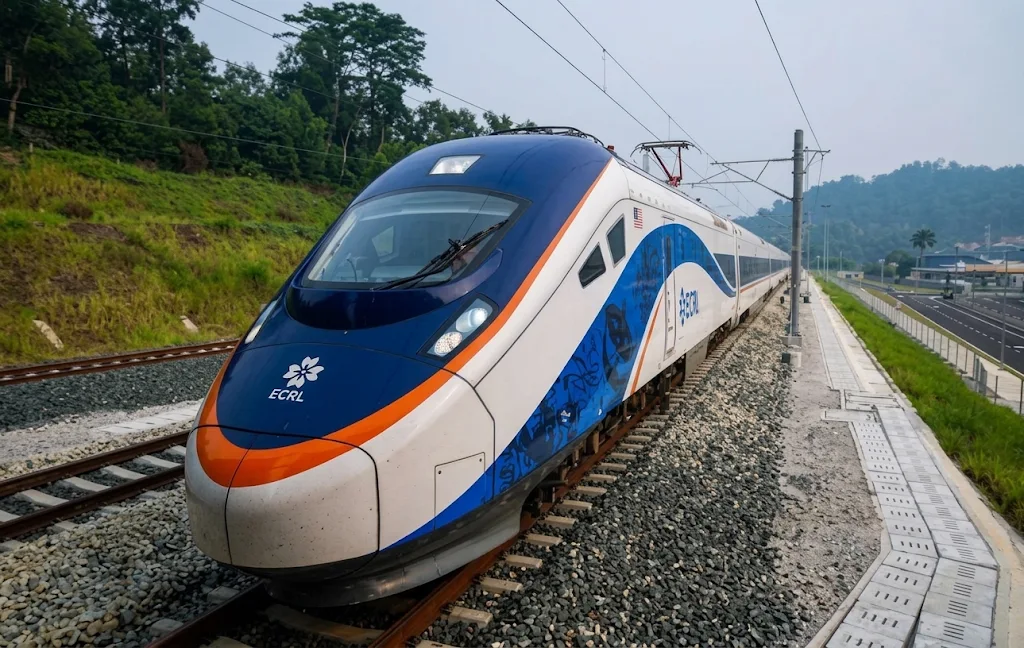
Malaysia Rail Link Sdn Bhd (MRL) chief executive officer Datuk Seri Darwis Abdul Razak said the ECRL’s inspection train had completed a 519-kilometre journey from Gombak to Kota Bharu in three hours and 19 minutes.
The train reached speeds of up to 160 kilometres per hour during the journey.
New Investment to Support Kelantan’s Development
Beyond passenger transportation, the ECRL is expected to support long-term economic growth across the East Coast.
The Ministry of Finance announced an allocation of more than RM250 million to strengthen ECRL-related development in Kelantan.
The allocation includes RM30 million for a new bus terminal at Kota Bharu ECRL Station. Another RM200 million will support preliminary work for a proposed extension from Kota Bharu to Rantau Panjang.
The proposed extension covers approximately 30 kilometres. It could also reuse an existing 18-kilometre railway section between Pasir Mas and Rantau Panjang.
Darwis said the extension could improve cargo movement between southern Thailand and Malaysia.
Meanwhile, the wider ECRL corridor is expected to attract businesses, encourage investment and create employment opportunities.
ECRL to Strengthen Cargo Transportation
The railway will also serve businesses that need reliable and cost-effective cargo transportation.
Its connection between the East Coast, Klang Valley and Port Klang could provide an alternative route for moving goods to local and international markets.
Industries that could benefit include manufacturing, petrochemicals, minerals, agriculture and container transportation.
ECRL Operation Sdn Bhd chief executive officer Zaidi Sharif said major companies had shown encouraging interest in the Electric Locomotive (E-Loco) cargo service.
Businesses can request cargo operations based on their transportation needs. The service is planned to operate at night.
A cargo train can carry up to 3,150 tonnes using 45 carriages. This capacity is equivalent to approximately 79 lorry loads.
As a result, rail freight could reduce the number of heavy vehicles on highways. It could also lower road congestion and accident risks.
Major Companies Show Interest in ECRL
Several major companies have already explored opportunities to use the railway.
Petronas is looking at rail transportation as part of its efforts to reduce its carbon footprint.
National carmaker Perodua has also signed a memorandum of understanding with MRL. The agreement covers the transportation of finished vehicles and automotive components from its Serendah factory to the East Coast.
In addition, MRL has partnered with Kuantan Port to strengthen cargo connections between ports on the East and West coasts.
The Malaysian Investment Development Authority (MIDA) is also promoting Economic Accelerator Projects along the ECRL route.
These projects aim to attract investment into industrial areas, logistics centres and towns near railway stations.
The development of 21 projects along the corridor could contribute between RM80 billion and RM90 billion in additional value to Malaysia’s gross domestic product by 2047, according to a previous announcement by the Deputy Economy Minister.
Local Communities Must Benefit From ECRL
Despite its potential, the success of the ECRL will depend on more than railway infrastructure.
State governments, businesses and local communities must work together to maximise its benefits.
Local companies will need to improve their skills, adopt new technologies and strengthen their business capabilities.
Furthermore, supporting facilities such as transport connections, industrial areas and logistics services must develop alongside the railway.
The benefits should also reach communities beyond areas located directly next to the stations.
Ultimately, the ECRL represents more than a new transportation route. It offers an opportunity to improve regional connectivity, expand trade and create more balanced economic growth across Malaysia’s East Coast.
Source : BERNAMA | Rewritten By Minutesmy