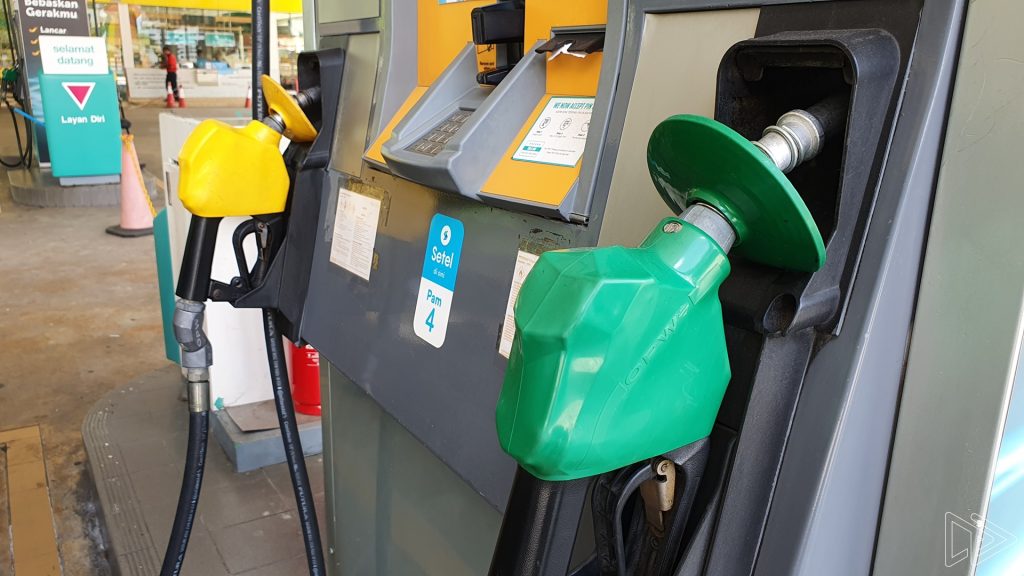
KUALA LUMPUR: Enforcement of restrictions on the purchase of RON95 petrol using foreign credit and debit cards at self-service petrol pump terminals will be implemented in stages nationwide starting today. The latest move is part of the government's efforts to strengthen the fuel subsidy mechanism in Malaysia following the global energy crisis. A survey in several states, especially those bordering neighboring countries, found that the Ministry of Domestic Trade and Cost of Living (KPDN) is actively implementing enforcement and monitoring operations at petrol stations. Apart from monitoring operations, petrol station operators are also seen to be prepared and comply with regulations regarding restrictions on the sale of RON95 petrol using foreign credit and debit cards at self-service terminals. In SARAWAK , KPDN Enforcement Director-General Datuk Azman Adam also inspected the implementation of the new regulations at Tasik Biru, Bau, which is located about 25 kilometres from Kuching city. He said the cooperation given by petrol station operators, including in Sarawak, towards the implementation of petrol and diesel filling controls was very good. At the same time, he said there were several improvements that needed to be made to increase the effectiveness of delivering information to the public regarding the latest ban. "Among the suggestions are enlarging the display of instructions regarding petrol and diesel filling limits at petrol stations so that they are clearer and easier for users to understand, as well as using graphic communication materials so that the presentation of information is more attractive and effective," he said. Azman said 283 petrol stations in Sarawak would continue to be monitored to ensure compliance with the guidelines. In JOHOR , state KPDN Director Lilis Saslinda Pornomo said 180 enforcement officers were carrying out inspections and monitoring in the field, especially in hotspot areas and border crossings in the state. He said monitoring at all 639 petrol stations in the state would also continue to be enhanced through daily patrols, including making announcements and reminders to foreign vehicle owners regarding enforcement. "In addition, we also place static enforcement officers in strategic locations and carry out regular surprise inspections," he told Bernama after inspecting enforcement at a petrol station in Johor Bahru. Meanwhile in KELANTAN , the manager of a petrol station in Kampung Belukar, Tumpat here, Ku Muhammad Farid Aidil Ku Din said all staff at the station had been briefed on the enforcement. "We are not facing any problems implementing it. We very much welcome the steps taken by this government in ensuring that RON95 can be fully enjoyed by local people," he said when met by reporters today. Bernama's survey of several petrol stations also found that Kelantan KPDN enforcement officers have been actively conducting regular monitoring at all petrol stations since early this morning, especially at locations near the Malaysia-Thailand border. In KEDAH , state KPDN Director Muhammad Nizam Jamaludin in a statement said that 180 enforcement officers were assigned to carry out inspections and monitoring in the field, in addition to integrated cooperation with the Malaysian Border Control and Protection Agency (AKPS), Royal Malaysian Police (PDRM) and other enforcement agencies, through Ops Tiris 4.0. A survey at several petrol stations in Changlun, near the national border, found that no foreign vehicles were seen filling up with RON95 petrol. A petrol station operator, Mohamad Niekmat Ariffin, said all his employees had been informed of the enforcement order banning the sale of RON95 petrol to foreign vehicles as well as the restriction on foreign credit and debit cards at self-service terminals which began to be implemented today. "We also monitor and control oil sales to prevent misuse, for example filling barrels without a permit exceeding 20 litres," he said. In PERLIS , most petrol station operators are aware of and comply with the restrictions on sales using foreign credit and debit cards at self-service petrol pump terminals, and they even take the initiative to make announcements by posting notices at petrol pumps. Perlis KPDN director Rohaida Hassan, who also participated in today's inspection operation, said the majority of petrol stations understood the regulations enforced today and complied with the ban. He said his department had also increased controls and inspections at 40 petrol stations throughout Perlis every day during the day and night, with a focus on more than 10 petrol stations located in border areas. "For starters, we are more about advocacy to educate and provide information about the regulations for using foreign credit cards and debit cards for foreign vehicles," he said.

Logistics Costs, Insurance Premiums Driving Oil Price Increase, Says Anwar

PUTRAJAYA, April 9 — Prime Minister Anwar Ibrahim said the recent rise in oil prices the West Asian conflict is not solely due to supply shortages, but also driven by escalating logistics costs and higher insurance premiums.

Speaking at the Transport Ministry’s monthly assembly today, Anwar explained that although key fuel supply routes remain open and shipments to Malaysia have not been disrupted, overall costs have increased significantly, reported Bernama.

“The oil that was procured before the conflict has been delayed in the Strait of Hormuz and is now being redirected to Pengerang, contributing to the higher costs,” he said.

He added that insurance premiums have surged by more than 100 per cent, while freight charges have also risen sharply, making previously secured supplies far more expensive than anticipated.

“This means that the oil that was initially expected to be processed at a lower cost in Pengerang is now significantly more expensive,” he said.

On the diplomatic front, Anwar emphasised that Malaysia’s strong international relationships remain a key asset in safeguarding national interests amid global tensions.

He cited Malaysia’s good ties with Iran as instrumental in ensuring safe passage for Malaysian merchant vessels, including those operated by Petronas, through the Strait of Hormuz.

“In my discussions with the President of Iran, Masoud Pezeshkian, he assured me that all necessary measures would be taken immediately to allow our ships to pass safely,” Anwar said.

The Foreign Ministry had earlier confirmed that one of seven Malaysian vessels previously stranded in the strait has resumed its journey, following high-level diplomatic engagement between Malaysia and Iran on March 26 that secured clearance for all affected ships.

The Strait of Hormuz, a critical global energy corridor handling around 20 per cent of the world’s oil and gas supply, has faced disruptions amid ongoing regional conflict.

Commenting on the broader situation, Anwar said the crisis has had ripple effects on the global economy, including Malaysia, despite the country not being directly involved.

He described the conflict as a major geopolitical shock that has destabilised Gulf nations and disrupted global markets, with long-term consequences expected, particularly in the energy sector.

Quoting the Emir of Qatar, Anwar said gas operations in the region may take at least three years to recover, with full normalisation projected within three to five years.

Related News