KUALA LUMPUR, May 22 -- Malaysia's trade volume jumped 15.3 percent year-on-year to RM1.127 trillion for the period January to April 2026, creating new history, according to the Malaysia External Trade Development Corporation (MATRADE). The performance was driven by a surge in demand for high growth, high value (HGHV) products and a planned market diversification strategy. In a statement on Thursday, MATRADE said exports jumped 19 percent to RM609.31 billion while imports increased 11.1 percent to RM517.40 billion, thus recording the highest value ever recorded during the period. "This resulted in a trade surplus of RM91.92 billion, a remarkable jump of 99.1 percent which effectively doubled the previous year's performance," he explained. MATRADE added that Malaysia has demonstrated remarkable external sector resilience despite the escalating geopolitical uncertainties in West Asia. Export expansion in the period January to April 2026 was driven by strong demand for electrical and electronic (E&E) products which grew by RM71 billion or 32.1 percent, supported by the global semiconductor boom which was further boosted by the application of artificial intelligence (AI), cloud computing and the expansion of data centers. Most importantly, Malaysia strengthened its position in the global AI value chain with exports of AI-enabled products jumping 42.9 percent to RM319.05 billion, now accounting for more than half (52.4 percent) of the country's total exports. In addition, pharmaceutical and automotive products provided an additional dimension to the HGHV narrative by recording double-digit growth of 21.9 percent and 10.3 percent respectively. This is in line with the 13th Malaysia Plan (13MP) strategic priorities for the HGHV industry including semiconductors, energy transition technologies as well as sectors driven by the digital economy. Meanwhile, April 2026 also delivered exceptional results with monthly exports jumping 36.9 percent to RM182.74 billion and the monthly trade surplus increasing by 460.5 percent to RM28.75 billion, the highest value ever recorded in Malaysia's trade history. This in turn strengthens the momentum that drives the country's trade engine. Meanwhile, MATRADE Chief Executive Officer Abu Bakar Yusof said the surge in AI-enabled products and semiconductor exports confirmed that Malaysian industry is firmly entrenched in the technology supply chain that shapes the global economy. "MATRADE remains committed to guiding Malaysian exporters and small and medium enterprises (SMEs) to move up the value chain to ensure that we not only dominate the market, but also capture the highest value opportunities within it," he said. According to MATRADE, exports to the United States increased by 32.5 percent, Taiwan (+68.9 percent), Hong Kong (+43.0 percent), China (+18.7 percent), the European Union (+23.9 percent) and ASEAN (+8.6 percent) which was partly driven by shipments of E&E products. Exports to free trade agreement (FTA) partners increased 14.2 percent to RM390.09 billion with 17 out of 24 FTA countries recording positive growth including South Korea, India, Mexico, the United Kingdom, Australia and New Zealand. Most notably, Malaysia's trade diversification is entering a high-growth phase that goes beyond its traditional pillars. Developing markets recorded exponential growth with the Democratic Republic of Congo (+196.6 percent), Sudan (+223.1 percent), Zimbabwe (+220.5 percent), Bulgaria (+141.6 percent), Haiti (+103.5 percent), Ethiopia (+88.1 percent) and Uzbekistan (+29.7 percent) leading the surge. "This reflects the systematic expansion of Malaysia's trade footprint into high-growth and underserved markets across Africa and Eastern Europe," he said. He explained that Malaysia's diversity strategy is also on the right track. "While our core markets remain strong, the exponential growth we are seeing in frontier economies in Africa, Latin America and Eastern Europe signals that Malaysian exporters are confidently entering new markets. "In this era of global trade uncertainty, geographical resilience is not just a strategic precaution. We are stepping beyond traditional markets to ensure Malaysia remains important and cannot be ignored in the global supply chain," said Abu Bakar. MATRADE said Malaysia's trade trajectory for 2026 remains robust, driven by a combination of HGHV sector momentum, diversified target markets and strategic adaptability in the face of geopolitical uncertainties. This positions Malaysia as a confident and resilient player in the global trade landscape, according to MATRADE. He explained that the agency will continue to support Malaysian exporters to seize new emerging opportunities, take advantage of trade agreements and firmly penetrate high-value segments in the global supply chain. --BERNAMA

Malaysian trade hits historic record of RM1.127 trillion for January-April 2026

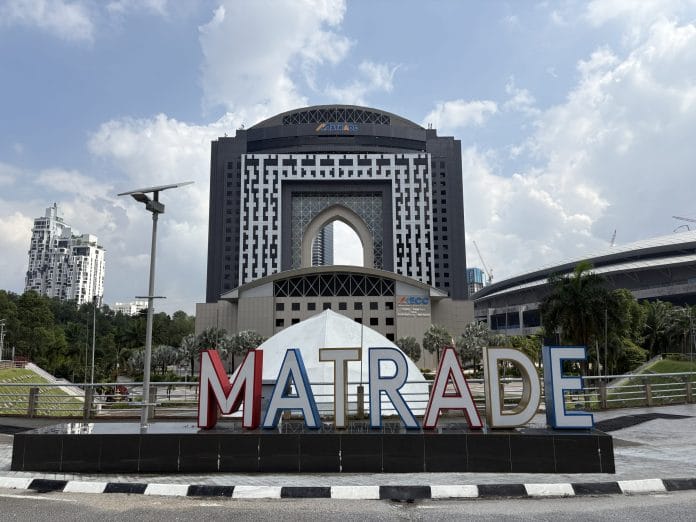
KUALA LUMPUR, May 22 — Malaysia’s trade volume jumped 15.3 percent year-on-year to RM1.127 trillion for the period January to April 2026, creating new history, according to the Malaysia External Trade Development Corporation (MATRADE).

The performance was driven by a surge in demand for high growth, high value (HGHV) products and a planned market diversification strategy.

In a statement on Thursday, MATRADE said exports jumped 19 percent to RM609.31 billion while imports increased 11.1 percent to RM517.40 billion, thus recording the highest value ever recorded during the period.

“This resulted in a trade surplus of RM91.92 billion, a remarkable jump of 99.1 percent which effectively doubled the previous year’s performance,” he explained.

MATRADE added that Malaysia has demonstrated remarkable external sector resilience despite the escalating geopolitical uncertainties in West Asia.

Export expansion in the period January to April 2026 was driven by strong demand for electrical and electronic (E&E) products which grew by RM71 billion or 32.1 percent, supported by the global semiconductor boom which was further boosted by the application of artificial intelligence (AI), cloud computing and the expansion of data centers.

Most importantly, Malaysia strengthened its position in the global AI value chain with exports of AI-enabled products jumping 42.9 percent to RM319.05 billion, now accounting for more than half (52.4 percent) of the country’s total exports.

In addition, pharmaceutical and automotive products provided an additional dimension to the HGHV narrative by recording double-digit growth of 21.9 percent and 10.3 percent respectively.

This is in line with the 13th Malaysia Plan (13MP) strategic priorities for the HGHV industry including semiconductors, energy transition technologies as well as sectors driven by the digital economy.

Meanwhile, April 2026 also delivered exceptional results with monthly exports jumping 36.9 percent to RM182.74 billion and the monthly trade surplus increasing by 460.5 percent to RM28.75 billion, the highest value ever recorded in Malaysia’s trade history.

This in turn strengthens the momentum that drives the country’s trade engine.

Meanwhile, MATRADE Chief Executive Officer Abu Bakar Yusof said the surge in AI-enabled products and semiconductor exports confirmed that Malaysian industry is firmly entrenched in the technology supply chain that shapes the global economy.

“MATRADE remains committed to guiding Malaysian exporters and small and medium enterprises (SMEs) to move up the value chain to ensure that we not only dominate the market, but also capture the highest value opportunities within it,” he said.

According to MATRADE, exports to the United States increased by 32.5 percent, Taiwan (+68.9 percent), Hong Kong (+43.0 percent), China (+18.7 percent), the European Union (+23.9 percent) and ASEAN (+8.6 percent) which was partly driven by shipments of E&E products.

Exports to free trade agreement (FTA) partners increased 14.2 percent to RM390.09 billion with 17 out of 24 FTA countries recording positive growth including South Korea, India, Mexico, the United Kingdom, Australia and New Zealand.

Most notably, Malaysia’s trade diversification is entering a high-growth phase that goes beyond its traditional pillars.

Developing markets recorded exponential growth with the Democratic Republic of Congo (+196.6 percent), Sudan (+223.1 percent), Zimbabwe (+220.5 percent), Bulgaria (+141.6 percent), Haiti (+103.5 percent), Ethiopia (+88.1 percent) and Uzbekistan (+29.7 percent) leading the surge.

“This reflects the systematic expansion of Malaysia’s trade footprint into high-growth and underserved markets across Africa and Eastern Europe,” he said.

He explained that Malaysia’s diversity strategy is also on the right track.

“While our core markets remain strong, the exponential growth we are seeing in frontier economies in Africa, Latin America and Eastern Europe signals that Malaysian exporters are confidently entering new markets.

“In this era of global trade uncertainty, geographical resilience is not just a strategic precaution. We are stepping beyond traditional markets to ensure Malaysia remains important and cannot be ignored in the global supply chain,” said Abu Bakar.

MATRADE said Malaysia’s trade trajectory for 2026 remains robust, driven by a combination of HGHV sector momentum, diversified target markets and strategic adaptability in the face of geopolitical uncertainties.

This positions Malaysia as a confident and resilient player in the global trade landscape, according to MATRADE.

He explained that the agency will continue to support Malaysian exporters to seize new emerging opportunities, take advantage of trade agreements and firmly penetrate high-value segments in the global supply chain.

–BERNAMA

Related News