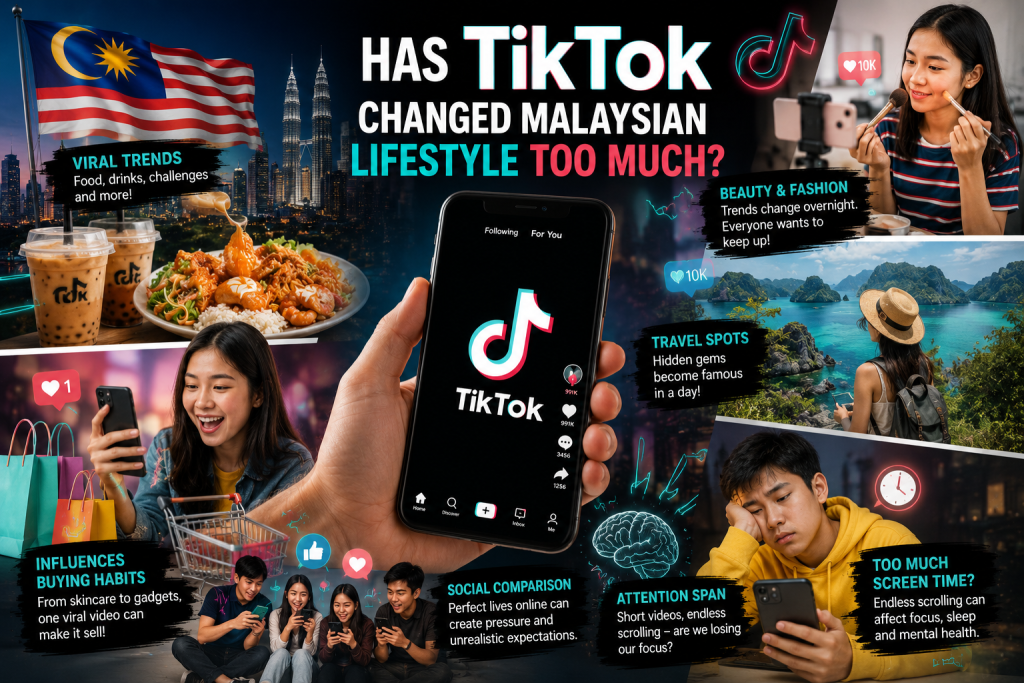
TikTok has become one of the most influential social media platforms in Malaysia today. What started as a simple entertainment app for short videos has now evolved into a major force shaping trends, shopping habits, food culture, travel decisions, and even the way Malaysians think and communicate. From viral food reviews to fashion trends and lifestyle content, TikTok now plays a huge role in daily life, especially among younger generations. 
There is no denying that TikTok has created many positive opportunities. Small businesses, local food vendors, and independent creators have benefited greatly from the platform. Many Malaysian entrepreneurs have managed to grow their brands overnight through viral videos without spending huge amounts on advertising. TikTok has also helped promote local tourism spots, hidden cafés, and Malaysian culture to wider audiences both locally and internationally.
However, TikTok has also introduced a strong “viral culture” into society. Today, many Malaysians rush to buy trending products, visit viral cafés, or try popular foods simply because they appeared online. In some cases, people are more interested in creating content for social media rather than genuinely enjoying the experience. This has created a lifestyle where online validation and trends often influence personal choices.
Another growing concern is how TikTok affects spending habits and mental health. Constant exposure to influencer lifestyles, luxury items, beauty standards, and shopping promotions can create pressure, especially among young users. Many people feel the need to keep up with trends to fit into online culture. At the same time, endless scrolling and short-form videos can reduce productivity and increase screen addiction among users.
Despite these concerns, TikTok itself is not entirely the problem. The platform can also be educational, creative, and informative when used responsibly. Many Malaysian creators share useful content about business, education, cooking, travel, and financial advice. The issue lies more in how people consume content and allow social media to influence their daily lives too heavily.
Overall, TikTok has undeniably changed Malaysian lifestyle in many ways. It has created opportunities, transformed businesses, and reshaped modern culture, but it has also encouraged unhealthy comparisons, impulsive trends, and digital dependency. As TikTok continues to grow, Malaysians must learn to balance entertainment with real-life values and avoid letting social media completely define their lifestyle choices.
— MINUTESMY / SUGAN BALAN