PUTRAJAYA: Funds of up to RM50 million from the High Impact Programme under the Skills Development Fund Corporation (PTPK) will be used to introduce new fields in Technical and Vocational Education and Training (TVET) through the implementation of TVET 2.0. Deputy Prime Minister Datuk Seri Ahmad Zahid Hamidi said the fields include hydrogen energy technology, maintenance, repair and overhaul (MRO) and maritime engineering, which were not previously taught at any TVET institution. "The funds are to translate the implementation into the TVET 2.0 program and are used for new fields that have not been taught at any TVET institution so far." "For example, learning about hydrogen energy for vehicles and machinery, especially for energy production...this includes the fields of MRO and Maritime Engineering," he told the media after the opening ceremony of the National TVET Day 2026 celebration here today. The ceremony was officiated by Prime Minister Datuk Seri Anwar Ibrahim and was also attended by Cabinet ministers and Chief Secretary to the Government (KSN) Tan Sri Shamsul Azri Abu Bakar. Ahmad Zahid said the MRO field is now among the top choices for TVET students due to its good career prospects, including the opportunity to undergo training abroad with leading world airlines such as Airbus and Boeing. "MRO is now chosen as the main choice because it is not only about salary, but students are also given training abroad at Airbus or Boeing companies," he said. He said the government also gave priority to graduates of tahfiz and pondok institutions to participate in TVET programmes to increase their chances of obtaining highly skilled jobs. Meanwhile, Ahmad Zahid said the coordination of TVET implementation at the ministry and agency levels under the leadership of KSN will begin next month with the aim of accelerating the implementation of TVET 2.0. He said the move was important to ensure that all 12 ministries involved and their respective agencies could implement the TVET agenda more effectively and in a coordinated manner. "Demand exceeds supply. Therefore, we must increase training in various fields according to job needs and sectors that receive foreign direct investment (FDI)," he said. Commenting on the sectors that most need skilled workers at present, he said the MRO and semiconductor industries are among the most urgent sectors. Earlier, Anwar in his speech said the government had agreed to allow the use of funds of up to RM50 million from the High Impact Programme under PTPK to strengthen the implementation of TVET 2.0. Anwar, who is also the Finance Minister, said the use of the funds was conditional, namely that employers and industry must work closely with the government to make the TVET 2.0 agenda a success. Under the 2026 Budget framework, the overall allocation for PTPK is set at RM650 million. -- BERNAMA

MRO, hydrogen and maritime among the focus of the RM50 million TVET 2.0 fund – Ahmad Zahid

PUTRAJAYA: Funds of up to RM50 million from the High Impact Programme under the Skills Development Fund Corporation (PTPK) will be used to introduce new fields in Technical and Vocational Education and Training (TVET) through the implementation of TVET 2.0.

Deputy Prime Minister Datuk Seri Ahmad Zahid Hamidi said the fields include hydrogen energy technology, maintenance, repair and overhaul (MRO) and maritime engineering, which were not previously taught at any TVET institution.

“The funds are to translate the implementation into the TVET 2.0 program and are used for new fields that have not been taught at any TVET institution so far.”

“For example, learning about hydrogen energy for vehicles and machinery, especially for energy production…this includes the fields of MRO and Maritime Engineering,” he told the media after the opening ceremony of the National TVET Day 2026 celebration here today.

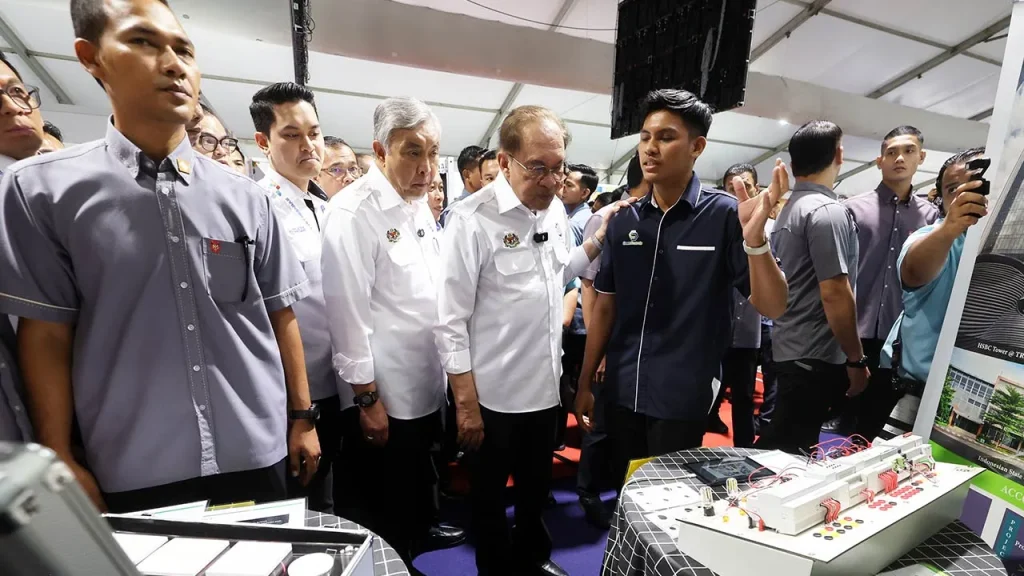
The ceremony was officiated by Prime Minister Datuk Seri Anwar Ibrahim and was also attended by Cabinet ministers and Chief Secretary to the Government (KSN) Tan Sri Shamsul Azri Abu Bakar.

Ahmad Zahid said the MRO field is now among the top choices for TVET students due to its good career prospects, including the opportunity to undergo training abroad with leading world airlines such as Airbus and Boeing.

“MRO is now chosen as the main choice because it is not only about salary, but students are also given training abroad at Airbus or Boeing companies,” he said.

He said the government also gave priority to graduates of tahfiz and pondok institutions to participate in TVET programmes to increase their chances of obtaining highly skilled jobs.

Meanwhile, Ahmad Zahid said the coordination of TVET implementation at the ministry and agency levels under the leadership of KSN will begin next month with the aim of accelerating the implementation of TVET 2.0.

He said the move was important to ensure that all 12 ministries involved and their respective agencies could implement the TVET agenda more effectively and in a coordinated manner.

“Demand exceeds supply. Therefore, we must increase training in various fields according to job needs and sectors that receive foreign direct investment (FDI),” he said.

Commenting on the sectors that most need skilled workers at present, he said the MRO and semiconductor industries are among the most urgent sectors.

Earlier, Anwar in his speech said the government had agreed to allow the use of funds of up to RM50 million from the High Impact Programme under PTPK to strengthen the implementation of TVET 2.0.

Anwar, who is also the Finance Minister, said the use of the funds was conditional, namely that employers and industry must work closely with the government to make the TVET 2.0 agenda a success.

Under the 2026 Budget framework, the overall allocation for PTPK is set at RM650 million.

— BERNAMA

Related News