KUALA LUMPUR: The Finance Ministry has considered coordinating expenditure for the Ministry of Health (MOH) by only RM500 million compared to RM3.1 billion as claimed on social media, said Finance Minister II Datuk Seri Amir Hamzah Azizan. He said the amount did not include major expenses such as emoluments, medical supplies, overtime allowances including on-call allowances , and so on. "The allocation for medicines has also been increased to RM6.5 billion for 2026." "For 2026, the Ministry of Health continues to target the recruitment of more than 18,000 health workers without any reduction compared to the previous year," he said during a question and answer session at the Dewan Rakyat today. He was answering a supplementary question from Datuk Seri Hasni Mohammad (BN-Simpang Renggam) on how the Joint Committee's decision could make the RESET strategy and the Medical and Health Insurance Plan (MHIT) a success following the cuts in MOH allocations. He said the adjustment of operating expenses only involved non-critical expenses while all core expenses including basic services, security, health and education would continue as approved in the 2026 Budget. "This measure aims to create fiscal space to accommodate part of the sudden increase in subsidy spending due to the West Asian crisis," he said. He said the fiscal position was also important because the RESET agenda played a role in seeing how the government could control cost increases in the future. "The core initiatives we are implementing will also provide opportunities to control cost increases through transparency and new approaches such as the diagnosis-related group (DRG) system to ensure that we can control cost increases," he said. Regarding tax incentives for private hospital charity funds, he said the government had discussed with several private hospitals that had established their respective funds, and the funds would be used to cover the cost of treatment for the B40 group at the hospitals. Meanwhile, answering Hasni's original question on the latest status of the implementation of RESET and the MHIT Plan as well as the achievements of the Joint Ministerial Committee since its establishment in addressing medical inflation, Amir Hamzah said that to date, five important initiatives have been implemented. He said the initiative includes the publication of the basic MHIT White Paper in January 2026, the publication of the Cost Range of Common Medical Treatments in Private Hospitals and the publication of the World Bank report on medical inflation in April 2026. In addition, it also includes the publication of tools to help consumers create transparency in assessing insurance needs, making claims and planning personal travel; and the provision of tax incentives for private hospital welfare funds to encourage charitable healthcare services. Amir Hamzah said the government is also actively carrying out the pilot phase of the Basic MHIT plan which will begin by the end of July 2026. "This pilot phase on a controlled scale involves several insurers and takaful operators as well as selected private hospitals in the Klang Valley to test the acceptance of the basic MHIT product and the readiness of its operating system." "This basic MHIT plan is expected to be launched at the national level in January 2027," he said. -- BERNAMA

Parliament: Coordination of expenditure to MOH only RM500 million – Amir Hamzah

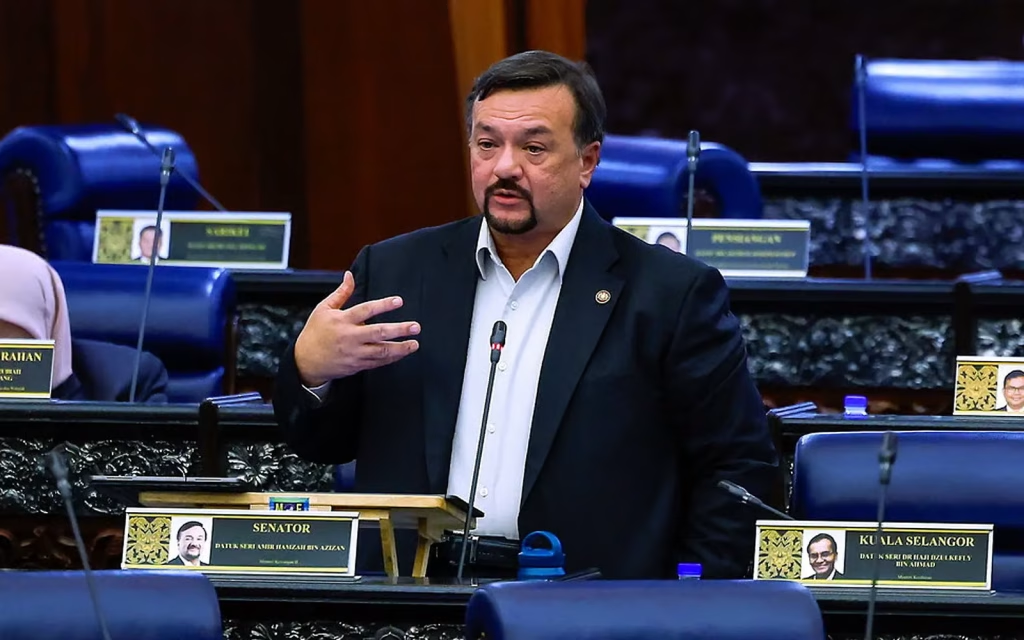
KUALA LUMPUR: The Finance Ministry has considered coordinating expenditure for the Ministry of Health (MOH) by only RM500 million compared to RM3.1 billion as claimed on social media, said Finance Minister II Datuk Seri Amir Hamzah Azizan.

He said the amount did not include major expenses such as emoluments, medical supplies, overtime allowances including on-call allowances , and so on.

“The allocation for medicines has also been increased to RM6.5 billion for 2026.”

“For 2026, the Ministry of Health continues to target the recruitment of more than 18,000 health workers without any reduction compared to the previous year,” he said during a question and answer session at the Dewan Rakyat today.

He was answering a supplementary question from Datuk Seri Hasni Mohammad (BN-Simpang Renggam) on how the Joint Committee’s decision could make the RESET strategy and the Medical and Health Insurance Plan (MHIT) a success following the cuts in MOH allocations.

He said the adjustment of operating expenses only involved non-critical expenses while all core expenses including basic services, security, health and education would continue as approved in the 2026 Budget.

“This measure aims to create fiscal space to accommodate part of the sudden increase in subsidy spending due to the West Asian crisis,” he said.

He said the fiscal position was also important because the RESET agenda played a role in seeing how the government could control cost increases in the future.

“The core initiatives we are implementing will also provide opportunities to control cost increases through transparency and new approaches such as the diagnosis-related group (DRG) system to ensure that we can control cost increases,” he said.

Regarding tax incentives for private hospital charity funds, he said the government had discussed with several private hospitals that had established their respective funds, and the funds would be used to cover the cost of treatment for the B40 group at the hospitals.

Meanwhile, answering Hasni’s original question on the latest status of the implementation of RESET and the MHIT Plan as well as the achievements of the Joint Ministerial Committee since its establishment in addressing medical inflation, Amir Hamzah said that to date, five important initiatives have been implemented.

He said the initiative includes the publication of the basic MHIT White Paper in January 2026, the publication of the Cost Range of Common Medical Treatments in Private Hospitals and the publication of the World Bank report on medical inflation in April 2026.

In addition, it also includes the publication of tools to help consumers create transparency in assessing insurance needs, making claims and planning personal travel; and the provision of tax incentives for private hospital welfare funds to encourage charitable healthcare services.

Amir Hamzah said the government is also actively carrying out the pilot phase of the Basic MHIT plan which will begin by the end of July 2026.

“This pilot phase on a controlled scale involves several insurers and takaful operators as well as selected private hospitals in the Klang Valley to test the acceptance of the basic MHIT product and the readiness of its operating system.”

“This basic MHIT plan is expected to be launched at the national level in January 2027,” he said.

— BERNAMA

Related News