PUTRAJAYA, July 20 — The Ministry of Communications has urged all departments and agencies under it to continue practising prudent spending and make full use of government-owned facilities, including the Tun Abdul Razak Broadcasting and Information Institute (IPPTAR), for programmes such as training and courses.
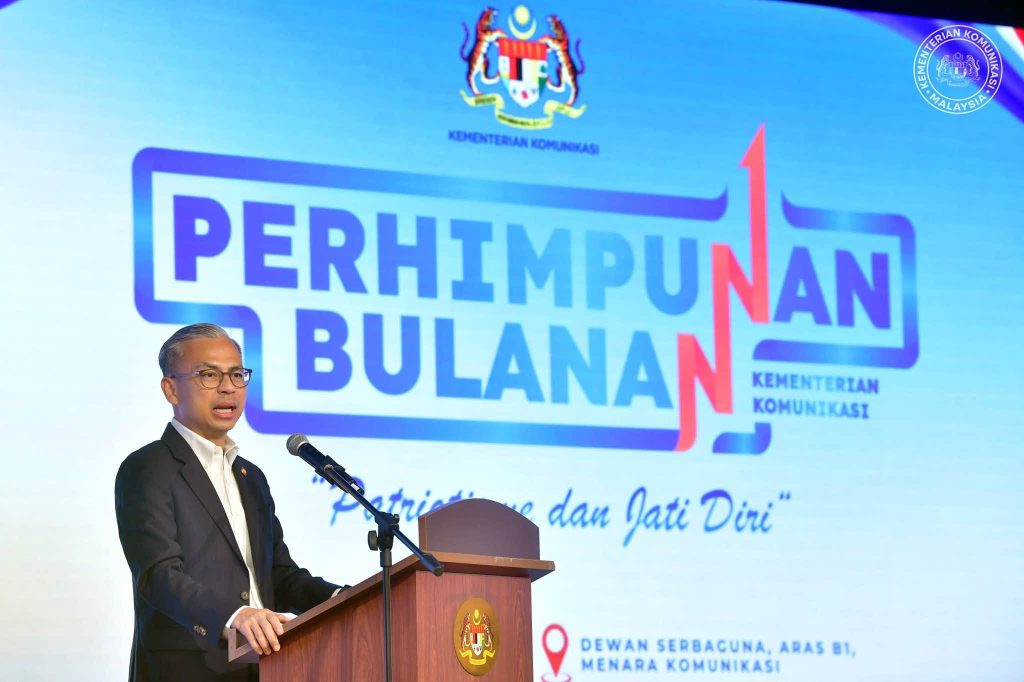
Minister Datuk Seri Fahmi Fadzil said the move was important to ensure the ministry’s expenditure was managed prudently in line with the current economic situation.
“Many training programmes, for example, can be held at IPPTAR. Previously, such programmes may have been conducted at hotels or similar venues, but the Ministry of Communications has its own equivalent of the National Institute of Public Administration (INTAN), namely IPPTAR.
“I have therefore instructed that this matter be followed up and that action be taken, particularly to ensure training programmes are held at IPPTAR,” he told reporters after the ministry’s monthly assembly here today.
He said IPPTAR had also reported that it had recently seen growing interest from various ministries and agencies to organise training programmes and courses at the institute.
Meanwhile, Fahmi said the ongoing conflict in West Asia must be closely monitored as its impact would also be felt by Malaysia.
“We can see that in the Middle East, in West Asia, just when it appeared the war had ended, developments over the past week suggest that the situation remains unresolved.
“There is no doubt that the economic impact of the ongoing war and conflict in West Asia will also be felt by us,” he said.
He also reminded all agencies to be more aware of issues that may not be well understood among local communities.
“We must strive to demonstrate that the Federal Government is not only willing to listen but is also responsive and quick to resolve issues and problems,” he said.
He added that agencies under the Ministry of Communications should also strengthen the dissemination of verified information through official channels and bridge demographic gaps, particularly among Generation Z and Generation Alpha.
He said changing media consumption patterns among younger generations required the ministry and its agencies to adopt new approaches.
Referring to findings from a survey conducted by the Malaysian Communications and Multimedia Commission (MCMC), Fahmi said that among those aged between 18 and 35, 87 per cent regarded WhatsApp as their first source of information, followed by Facebook and TikTok.
However, the same survey found that respondents’ level of trust in information on those platforms was relatively low, at around 46 to 47 per cent.
“As for what we regard as traditional media sources such as newspapers, television and radio, respondents considered these sources to be highly trustworthy.
“They rarely read newspapers, but if they come across a news report in a newspaper, they believe it. On the other hand, they receive a great deal of news and information through WhatsApp, but they are unsure whether the information is accurate or not,” he said.
Fahmi also urged all departments and agencies under the ministry to produce more patriotic content in conjunction with National Month, which began yesterday and runs until Sept 16.
“I see this as a good opportunity for us to produce content that not only raises awareness but also reminds people of the importance of living in harmony, peace and unity in a country like Malaysia,” he added.
— BERNAMA