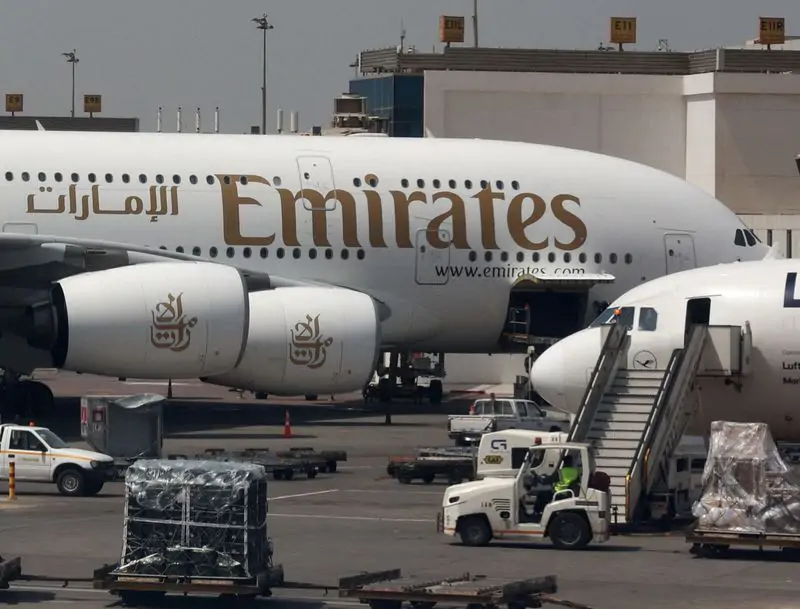
DUBAI, Nov 5 – Emirates airline recorded a 66% drop in net profit for the first half of its 2026-27 financial year as the conflict involving Iran disrupted flights and pushed fuel costs higher.
The Dubai-based airline reported a net profit of 3.3 billion dirhams (US$903 million) for the six months ending Sept 30.
This was a sharp decline from the same period last year.
Revenue also fell by 13% to 56.9 billion dirhams (US$15.5 billion).
The airline said its cargo business continued to contribute to revenue. It also reported steady travel demand across its markets despite the regional challenges.
Iran Conflict Disrupts Airline Operations
The conflict has created major challenges for airlines operating across the Middle East.
Airspace restrictions and temporary closures forced carriers to change their flight routes. Some services faced delays, cancellations and diversions.
These disruptions also affected passenger travel patterns.
Government travel advisories further influenced where and when people chose to travel.
Emirates Group said the first six months of its 2026-27 financial year had tested the airline’s ability to manage operations during a difficult period.
Emirates Restores 91% of Its Flight Network
Despite the disruption, Emirates has gradually restored its services.
The airline said it was operating 91% of its pre-disruption flight network by the end of September.
However, its passenger capacity remained below last year’s level.
Available seat kilometres, an industry measure of passenger-carrying capacity, fell by 17%.
The average passenger seat factor also dropped to 72%, compared with 79.5% a year earlier.
This figure measures how many available seats are filled by paying passengers.
Passenger Numbers Fall by 22%
Emirates carried 21.8 million passengers during the first half of the financial year.
This was 22% lower than the same period last year.
The airline’s performance reflects the wider pressure facing carriers across the Gulf region.
Although several airlines have gradually resumed services, security concerns continue to affect the outlook.
Recent attacks on Saudi Arabia by Yemen’s Iran-aligned Houthi group have added further uncertainty to the region’s aviation recovery.
Airline Recovery Faces More Uncertainty
The Middle East remains an important international aviation hub.
However, continued conflict and airspace restrictions could affect flight schedules, operating costs and passenger confidence.
Higher fuel prices are also putting pressure on airline finances.
For Emirates, restoring more flights and managing costs will remain important as it works towards a stronger recovery.
Source : The Star | Rewritten By Minutesmy