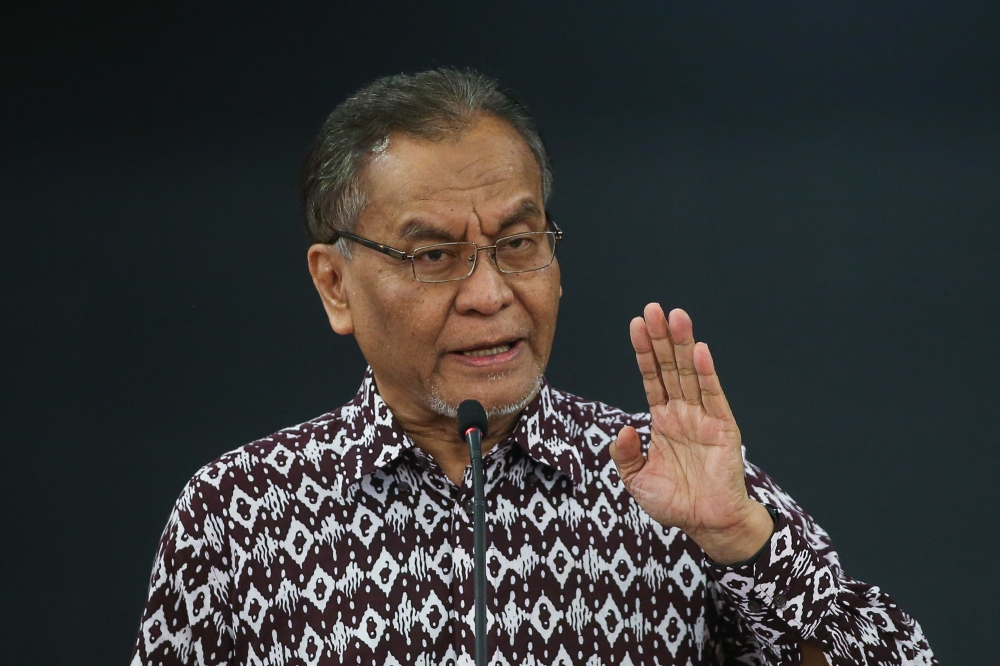
PUTRAJAYA — Claims that foreign nationals receive free treatment at government hospitals are inaccurate as they are required to pay a deposit before being admitted to wards, Health Minister Dzulkefly Ahmad said.
He explained that under the standard operating procedures of the Ministry of Health Malaysia (MOH), foreign patients must pay a RM1,400 deposit for medical cases and RM2,800 for surgical cases before they can be admitted to hospital wards.
Dzulkefly said holders of cards issued by the United Nations High Commissioner for Refugees (UNHCR) are only eligible for a 50 per cent discount on the deposit amount.
“Foreign patients must make the deposit payment before being registered for ward admission. It is not correct to claim that they are exempted from payment,” he said.
He added that the ministry would review reports and conduct further investigations to verify the authenticity of information that had gone viral on social media regarding the issue.
The claims alleged that foreign nationals could receive free treatment without paying deposits through the use of Appendix A.
However, Dzulkefly clarified that the Appendix A Form only applies to critical cases involving life-threatening situations in hospital emergency departments, and its use is subject to assessment by a specialist medical officer or the hospital director.
“This form only allows a deferment, not an exemption, from the deposit payment. It is used to allow treatment and stabilisation of patients so that their lives can be saved,” he said.
“Once the patient’s condition is stabilised, the process to collect payment for treatment will continue according to established procedures,” he added.
Dzulkefly also said the ‘No Wrong Door’ policy practised in government hospitals ensures that critically ill patients receive immediate treatment regardless of their financial status.
He noted that deposit exemptions are only granted to foreign nationals who have health insurance coverage, including the Foreign Workers Hospitalisation and Surgical Insurance Scheme (SPIKPA) or refugee medical insurance schemes.
“If the foreign patient does not have such insurance and lacks sufficient funds, they will be asked to contact relatives or friends to obtain the required deposit. There is no compromise,” he said.
–ASTRO AWANI