KUCHING: Despite the excitement of the Gawai Day celebration, the Dayak community in Sarawak is facing the challenge of defending their customs and heritage, especially in the face of modernisation. Former Sarawak Customs and Traditions Council Research Assistant Philip Igai said the Gawai Day celebration has changed a lot now compared to the 1960s to 1980s, which prioritized elements of rituals and traditional customs. He said that among the factors that led to traditional ritual practices no longer being carried out was the change in religious beliefs among the Dayak community, especially after many converted to Christianity. "In the past, there were more traditional elements such as Gawai Umai and Gawai Tuah which involved the elderly with various traditional ceremonies. "Elderly people at that time played a major role in managing ceremonies. Today, most traditional ceremonies are becoming rarer and are almost not carried out," he told Bernama. The 76-year-old former teacher said that to attract the interest and involvement of the younger generation, the Gawai celebration committee at the longhouse is now more inclined to plan activities suitable for the group in question. Among the main activities, he said, were sports competitions such as sepak takraw and futsal, and there were also karaoke activities which were also well received. "Despite that, efforts to preserve cultural heritage are still ongoing. In the Betong area, for example, there are certain clubs and associations that help the younger generation learn traditional cultural arts," he said. Philip said that although traditional elements are diminishing, the Gawai Day celebration, which is celebrated on June 1 and 2, still remains a symbol of the identity of the Dayak community, which consists of almost 30 ethnic groups in Sarawak. He said efforts to make the Gawai Dayak celebration a national celebration had long been discussed since the early 1960s by leaders such as Datuk Seri Tra Zehnder. "Before it was officially recognized, the Dayak community celebrated various Gawai festivals according to their respective communities as a sign of gratitude to God for the harvest, but the celebration dates differed according to the area and local customs. "After the formation of Malaysia in 1963, the first Chief Minister of Sarawak, Tan Sri Stephen Kalong Ningkan, agreed to have this festival gazetted and the first Gawai Day celebration was celebrated on June 1, 1965," he said. Philip said that although the actual Gawai Day celebration begins on June 1, preparations begin earlier through a special meeting to establish a celebration committee at the longhouse for the purpose of distributing tasks. "Usually on May 30, preparations begin with food preparation such as slaughtering chickens, cooking lemang and preparing various traditional dishes. "On the morning of May 31, longhouse residents began arranging mats in the ruai to mark the start of the real Gawai celebration. Some also took the opportunity to visit the graves of family members," he said. He said that on the night of May 31, longhouse residents will gather in the ruai for the Gawai celebration ceremony and at that time, special drums known as gendang rayah will be played. “There is also a 'berayah' event, where representatives from each room walk around the ruai while wearing traditional clothing and carrying a machete as a traditional symbol. "By midnight, the Gawai Chief will deliver a speech and at exactly 12 midnight (June 1), all the longhouse residents will drink 'air pengayu' as a symbol of the beginning of the Gawai new year and they will shake hands as a sign of forgiving mistakes," he said. -- BERNAMA

Gawai Day: Preserving heritage in the midst of modernization

KUCHING: Despite the excitement of the Gawai Day celebration, the Dayak community in Sarawak is facing the challenge of defending their customs and heritage, especially in the face of modernisation.

Former Sarawak Customs and Traditions Council Research Assistant Philip Igai said the Gawai Day celebration has changed a lot now compared to the 1960s to 1980s, which prioritized elements of rituals and traditional customs.

He said that among the factors that led to traditional ritual practices no longer being carried out was the change in religious beliefs among the Dayak community, especially after many converted to Christianity.

“In the past, there were more traditional elements such as Gawai Umai and Gawai Tuah which involved the elderly with various traditional ceremonies.

“Elderly people at that time played a major role in managing ceremonies. Today, most traditional ceremonies are becoming rarer and are almost not carried out,” he told Bernama.

The 76-year-old former teacher said that to attract the interest and involvement of the younger generation, the Gawai celebration committee at the longhouse is now more inclined to plan activities suitable for the group in question.

Among the main activities, he said, were sports competitions such as sepak takraw and futsal, and there were also karaoke activities which were also well received.

“Despite that, efforts to preserve cultural heritage are still ongoing. In the Betong area, for example, there are certain clubs and associations that help the younger generation learn traditional cultural arts,” he said.

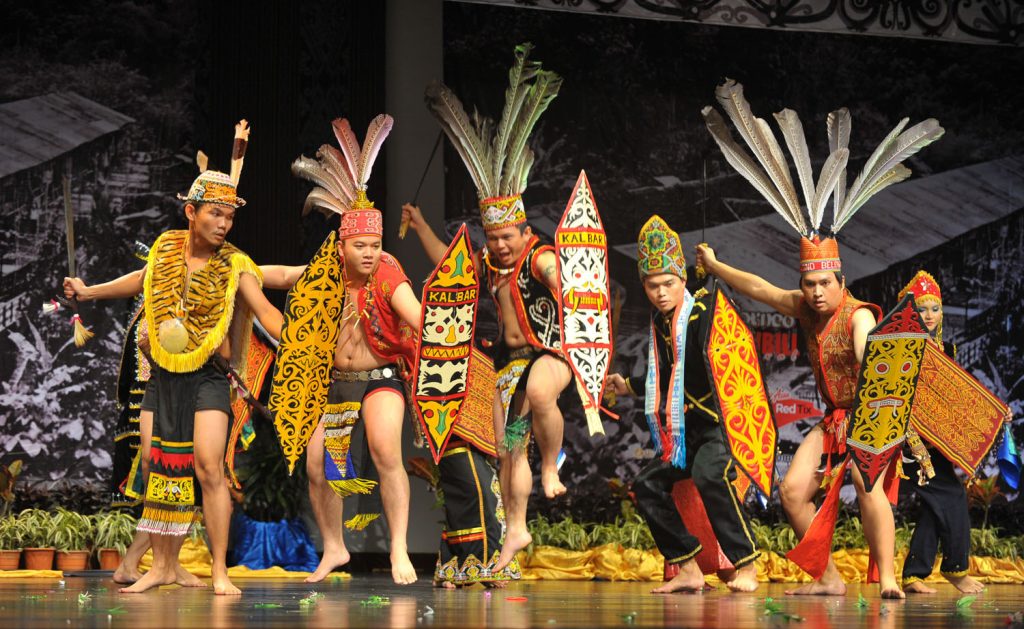
Philip said that although traditional elements are diminishing, the Gawai Day celebration, which is celebrated on June 1 and 2, still remains a symbol of the identity of the Dayak community, which consists of almost 30 ethnic groups in Sarawak.

He said efforts to make the Gawai Dayak celebration a national celebration had long been discussed since the early 1960s by leaders such as Datuk Seri Tra Zehnder.

“Before it was officially recognized, the Dayak community celebrated various Gawai festivals according to their respective communities as a sign of gratitude to God for the harvest, but the celebration dates differed according to the area and local customs.

“After the formation of Malaysia in 1963, the first Chief Minister of Sarawak, Tan Sri Stephen Kalong Ningkan, agreed to have this festival gazetted and the first Gawai Day celebration was celebrated on June 1, 1965,” he said.

Philip said that although the actual Gawai Day celebration begins on June 1, preparations begin earlier through a special meeting to establish a celebration committee at the longhouse for the purpose of distributing tasks.

“Usually on May 30, preparations begin with food preparation such as slaughtering chickens, cooking lemang and preparing various traditional dishes.

“On the morning of May 31, longhouse residents began arranging mats in the ruai to mark the start of the real Gawai celebration. Some also took the opportunity to visit the graves of family members,” he said.

He said that on the night of May 31, longhouse residents will gather in the ruai for the Gawai celebration ceremony and at that time, special drums known as gendang rayah will be played.

“There is also a ‘berayah’ event, where representatives from each room walk around the ruai while wearing traditional clothing and carrying a machete as a traditional symbol.

“By midnight, the Gawai Chief will deliver a speech and at exactly 12 midnight (June 1), all the longhouse residents will drink ‘air pengayu’ as a symbol of the beginning of the Gawai new year and they will shake hands as a sign of forgiving mistakes,” he said.

— BERNAMA

Related News