KOTA KINABALU, Feb 15: Assistant Minister to the Chief Minister Datuk Joniston Bangkuai has called for a structured and coordinated effort to fully harness Sabah’s potential as a premier camping and outdoor activities destination.
Joniston urged the Sabah Camping and Caravanning Association to spearhead the initiative by leveraging its membership in the World Camping Federation and working closely with rural tourism operators.
“I understand that the Sabah Camping and Caravanning Association, in collaboration with Community-Based Tourism (CoBT), has identified more than 200 locations across Sabah suitable for development as camping sites,” he said.
Joniston, who is also Chairman of the Sabah Tourism Board (STB), noted that Sabah’s emergence as a CoBT hub has been driven by the active involvement of local communities in developing tourism attractions throughout the state.
This position is further strengthened by growing community participation in every district, with both small- and large-scale initiatives complementing one another and enriching rural tourism offerings.
“Some may see it as competition, but we should instead view CoBT as complementary, where rural communities offer distinct experiences shaped by their unique landscapes, natural surroundings and ways of life, which differ from one district to another.
“In the context of Visit Malaysia 2026 and Visit Sabah 2027, we need more new tourism products to attract visitors and enhance their overall experience,” he said.
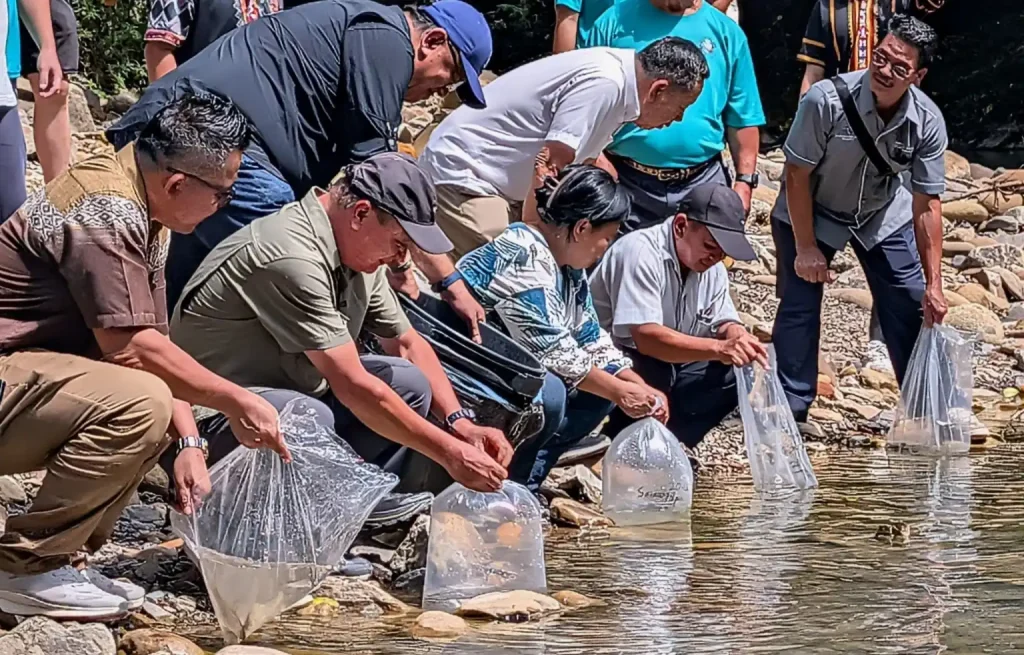
Joniston said this when officiating the Tampasak Eco-Camp and Tagal Sondoton–Poimbolutan projects in Kampung Tampasak and Kampung Babagon here on Sunday.
Also present were Moyog Community Development Leader Frankie Roy Benedict, representing Moyog Assemblyman Datuk Donald Mojuntin, and Tampasak Eco-Tourism Chairman Winnie Joannes.
Joniston added that STB views CoBT as a vital component of the state’s tourism development, particularly in empowering rural communities.
“STB has a dedicated Product Unit that monitors all CoBT products and initiatives to ensure they meet established standards, while also providing continuous support to the communities involved.
“STB also offers the necessary training and upskilling programmes to empower communities, enabling them to manage and enhance their own tourism products,” he said.
He called on all agencies, strategic partners and communities to continue collaborating with STB to ensure that CoBT development is carried out sustainably.
“Continuous collaboration is essential to ensure these efforts deliver long-term benefits to local communities and the state’s tourism industry,” he said.