Subang Jaya – A coalition of 11 non-governmental organizations (NGOs) representing gig workers and consumers has called for the immediate postponement of the Gig Workers Bill, which is scheduled to come into force tomorrow.
The group urged the government to delay implementation until a comprehensive review is completed and proper consultations with all relevant stakeholders are carried out.
The Gig Workers Act 2025 (Act 872) is a landmark Malaysian law enforced by early 2026 to protect over 1.2 million gig workers. It legalizes the status of gig workers, mandates social security (SOCSO) contributions, establishes a tribunal for disputes, and enforces formal, fair terms of engagement for platform workers.
The coalition also raised serious concerns about the consultation process, describing it as insufficiently inclusive and lacking transparency. They questioned the effectiveness of stakeholder engagement, noting that consultations appeared to continue even after the Act had been passed.
The coalition comprises 11 organizations, namely Kongres Kesatuan Sekerja Malaysia (MTUC), Persatuan Pengguna Islam Malaysia (PPIM), Gerakan Ekonomi Malaysia (GEM), Persatuan Penghantar p-hailing Malaysia (PENGHANTAR), Pertubuhan Lestari Ekonomi Aktivis Gig Digital Malaysia (LEAD Malaysia), Persatuan Kebajikan Pekerja Industri e-hailing Malaysia (PKEH), Pertubuhan Tenaga Gig Melaka (TENAGA Gig Melaka), Persatuan Ekonomi Digital Melaka (EDiM), Persatuan Rakan Penghantar Melaka (RPM), Persatuan Rakan Penghantar Kedah (RPK), and Persatuan Kebajikan Perkhidmatan Penghantar Bermotosikal Perak (PKPPBP).
Secretary-General of the Malaysian Trades Union Congress (MTUC), Kamarul Baharin Mansor, said the organization does not support the implementation of the bill, claiming a lack of fair and adequate consultation between MTUC and the government, particularly the Ministry of Human Resources.
He noted that labour-related legislation has traditionally been discussed thoroughly with MTUC before being tabled in Parliament, but such engagement did not take place in this instance.
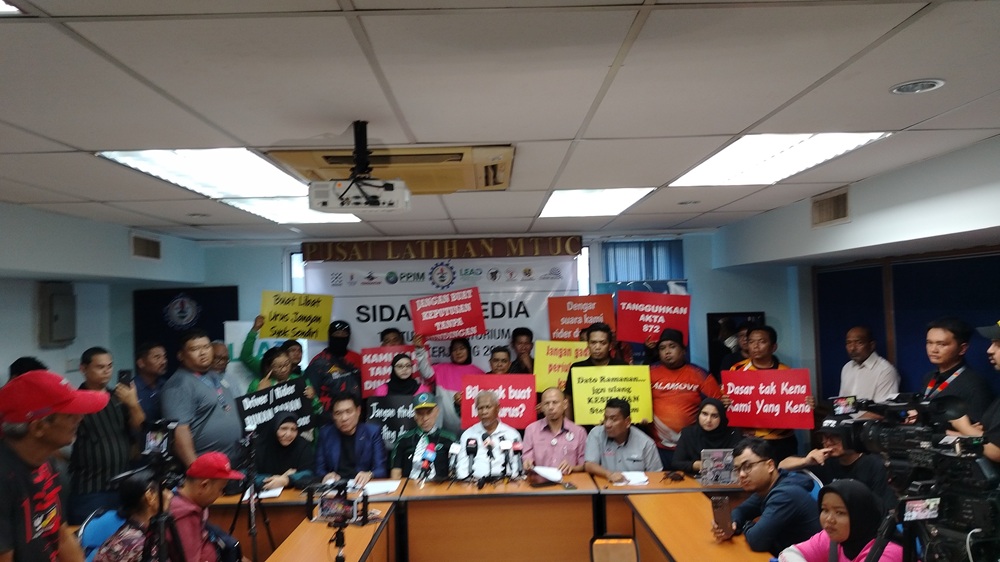
“MTUC does not agree with the implementation of this Gig Bill because there was no discussion between MTUC and the government. We find this law unusual as it was brought directly to Parliament without proper and fair consultation,” he said during a press conference at Wisma MTUC here today.
At the same press conference, 10 other NGOs also voiced their opposition to the bill’s implementation.
The coalition emphasized the need for inclusive dialogue between the government and industry stakeholders to ensure that any legislation introduced effectively protects gig workers’ welfare without undermining the sustainability of the sector.
Rising Insurance Costs Add Pressure
The coalition also highlighted the sharp increase in commercial insurance premiums within the e-hailing sector as a growing structural challenge.
They warned that rising costs are already eroding gig workers’ income margins and could trigger a chain reaction across the ecosystem. Higher operating costs may be passed on to consumers through increased fares, potentially contributing to the rising cost of living.
In the long term, the coalition cautioned that sustained cost pressures could reduce service demand, lower daily trip volumes, and destabilize gig workers’ incomes. Without regulatory intervention, this imbalance could lead to broader market inefficiencies and weaken the resilience of the gig economy.
They further noted ongoing engagements between Bank Negara Malaysia and insurance providers but expressed concern over the lack of clear outcomes or policy direction to date.
Call for Policy Review and Structured Engagement
The coalition emphasized the need to maintain balance within the gig economy ecosystem, ensuring that policies do not adversely affect workers’ incomes, platform sustainability, or consumer interests.
They called for stronger and more inclusive stakeholder engagement, as well as alignment between the proposed law and existing legal frameworks and operational realities.
Four Key Demands
To ensure long-term sustainability and policy effectiveness, the coalition outlined four main demands:
- A moratorium on the Gig Workers Act 2025 until a comprehensive review is completed
- The establishment of a structured engagement platform or regulatory “sandbox” to test implementation in phases
- A full-scale impact assessment covering economic, social, and legal dimensions
- Policy refinements grounded in fairness, market balance, and ecosystem sustainability
— Minutes MY / Ramani