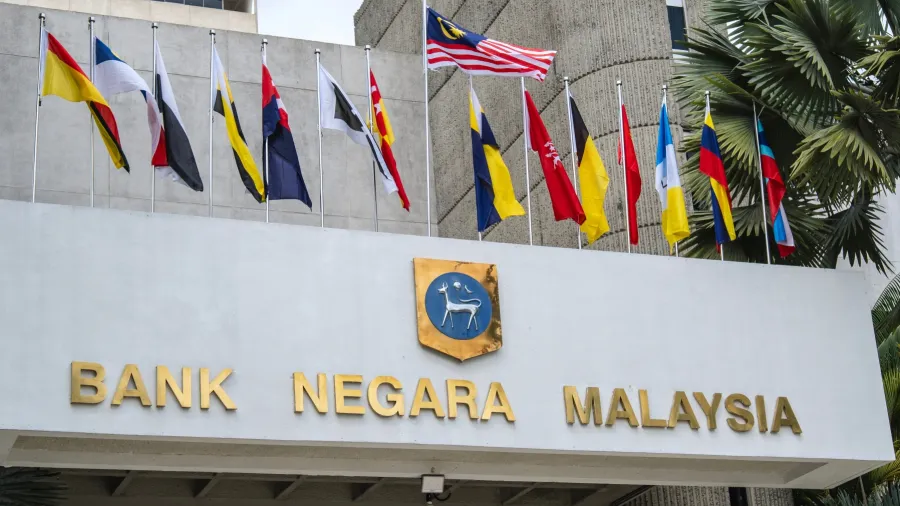
BNM Fined Bank Rakyat RM1 Million Over Cybersecurity Breaches
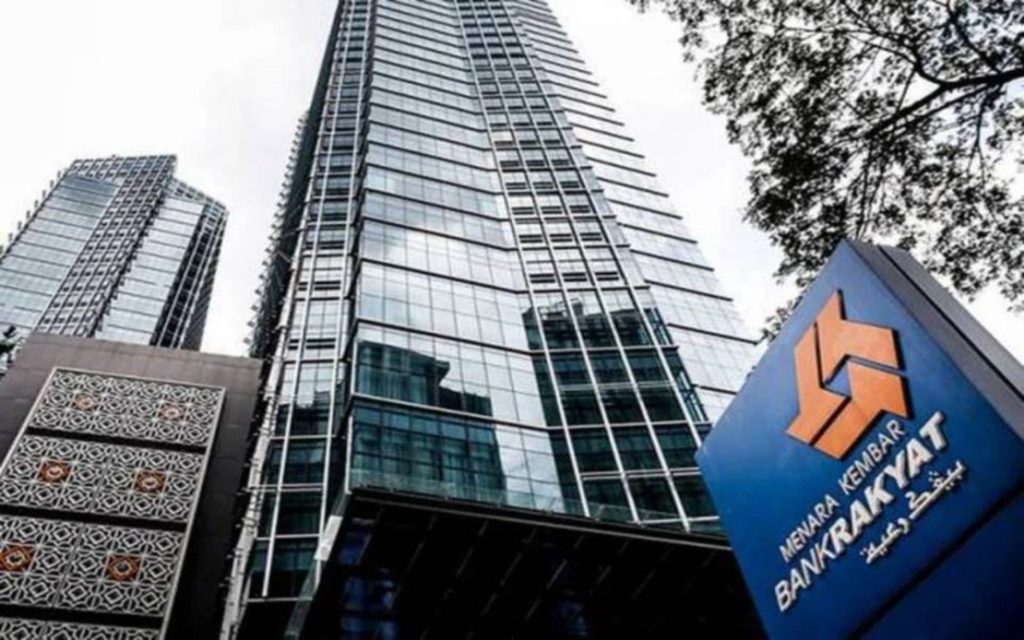
KUALA LUMPUR, Jan 26 — Bank Negara has imposed a RM1 million administrative monetary penalty on entity-accent entity-underline inline cursor-pointer align-baseline Bank Kerjasama Rakyat Malaysia Berhad(Bank Rakyat) for failing to meet required cybersecurity and customer data protection standards. The central bank said the penalty, imposed on Jan 20, 2026, followed the discovery of multiple breaches under its Risk Management in Technology Policy Document (RMiT PD) and Management of Customer Information and Permitted Disclosures Policy Document (MCIPD PD). The violations were uncovered after a cybersecurity incident in which an external threat actor gained unauthorised access to the bank’s IT infrastructure. Investigations found that the breaches stemmed from inadequate cybersecurity controls and weaknesses in incident response. BNM said Bank Rakyat failed to implement robust cybersecurity measures and did not sufficiently safeguard customer information as required under regulatory guidelines. The bank has since taken remedial steps to strengthen its cybersecurity framework, including improvements to its information and communication technology (ICT) controls, resources and governance. In determining the penalty, BNM considered several factors, including the severity of the breaches, the bank’s lack of reasonable care in ensuring compliance, its existing control environment, past compliance record, and actions taken after the incident to prevent recurrence. Bank Rakyat paid the RM1 million penalty on Jan 26, 2026. BNM reiterated that all financial institutions must comply with its technology risk management and customer information policies, warning that it will take firm supervisory and enforcement action against any institution that fails to meet regulatory requirements.

KUALA LUMPUR — Bank Negara has imposed a RM1 million administrative monetary penalty on Bank Kerjasama Rakyat Malaysia Berhad(Bank Rakyat) for failing to meet required cybersecurity and customer data protection standards. The central bank said the penalty, imposed on Jan 20, 2026, followed the discovery of multiple breaches under its Risk Management in Technology Policy […]

BNM to pay RM5 billion in dividends to government, total assets RM602.22 billion
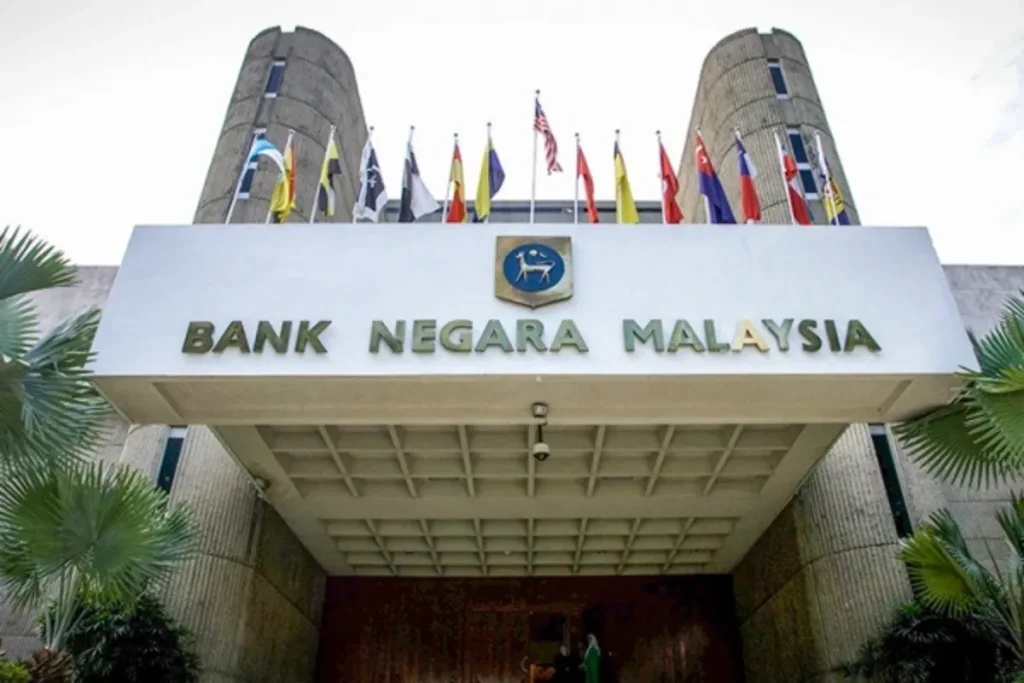
"BNM's liabilities consist primarily of currency in circulation (2025: RM177.75 billion; 2024: RM170.72 billion) and deposits by financial institutions (2025: RM118.06 billion; 2024: RM131.92 billion)," said BNM in its 2025 Annual Report released today. For the financial year ended Dec 31, 2025, BNM recorded a net profit of RM12.45 billion (2024: RM13.16 billion), following total income of RM14.35 billion (2024: RM14.98 billion), after deducting costs related to reserve portfolio management and monetary operations. In 2025, BNM spent RM1.86 billion to manage the organization. Of the net profit of RM12.45 billion, RM7.45 billion (2024: RM7.91 billion) will be transferred to the Risk Reserve, which amounts to RM155.31 billion at the end of 2025 (2024: RM147.90 billion). “Given that 85 percent of BNM's assets are denominated in foreign currencies, it is important for BNM to build up adequate Risk Reserves. "This allows BNM to buffer financial market volatility as well as fluctuations in the exchange rate of foreign currency assets," explained BNM.

KUALA LUMPUR — Bank Negara Malaysia (BNM) will pay a dividend of RM5 billion to the government for 2025. Total assets as at Dec 31, 2025 stood at RM602.22 billion compared to RM621.54 billion in the previous year, largely reflecting the impact of currency translation following the strengthening of the ringgit. “BNM’s liabilities consist primarily […]

BNM Governor: Strong Economic Foundations Key to Navigating Global Uncertainty

KUALA LUMPUR: Strengthening economic fundamentals and policy buffers in the face of global trade uncertainties is an important step to ensure continued growth and, in turn, guarantee the well-being of the people, said Bank Negara Malaysia (BNM) Governor Datuk Seri Abdul Rasheed Ghaffour. He said that improvements in fiscal sustainability and attracting quality investment have created space to continue implementing much-needed reforms in social protection and the labor market. "These reforms may require some short-term adjustments, but these adjustments are necessary to ensure more inclusive growth and provide benefits to the people, including future generations," he said in the BNM 2025 Annual Report released here today. The central bank projects Malaysia's Gross Domestic Product (GDP) to grow between four percent and five percent in 2026 as Malaysia's domestic resilience and diversified export structure provide a strong foundation to face external challenges. Malaysia's path towards becoming a high-income developed nation must be built on the foundation of shared prosperity. “We need to build an economy that creates higher-paying jobs, supports households and businesses, and remains resilient for decades to come,” said the Governor. Abdul Rasheed said the financial sector remained effective in moving funds between savers and borrowers. “Financial institutions remain well-capitalized and operationally resilient, supported by more than adequate liquidity buffers and good asset quality. "This ensures continued access to financing for households and businesses, thus supporting consumption, investment and sources of income," he said. Looking ahead, he said in an increasingly fragmented world, ASEAN could be a source of strength. In the face of significant global trade tensions, ASEAN's united commitment to provide a prudent and constructive response reflects this principle. For Malaysia, being part of a region that upholds cooperation and stability is an important core in facing an increasingly complex global landscape. In this regard, BNM is leading efforts to advance more integrated regional financial and economic integration through the Financial Track. The regional payment network continues to expand, with 29 payment networks now operating across ASEAN member countries. “Now, tourists making purchases or small businesses selling products across borders can make and receive payments faster, more securely and at a lower cost. "This development reduces friction, expands opportunities and supports the income sources of the ASEAN community," he said. He said ASEAN's ability to respond collectively to external shocks has also been strengthened, including through the enhancement of the Chiang Mai Multilateralisation Initiative as well as several key strategies under the ASEAN Geoeconomic Task Force. All of these measures strengthen ASEAN's ability to act together against external shocks, thus creating an additional layer of resilience to face global uncertainties. "For BNM, the priority will continue to be on preparedness to face the challenges ahead, without neglecting the long-term priorities of enhancing economic prospects and preserving the country's resilience," he said. Abdul Ghaffour said the Monetary Policy Committee will continue to closely monitor developments and assess the balance of risks to the growth and inflation outlook. "BNM also continues to stand ready, as it has done throughout several episodes of significant uncertainty, to ensure that the market remains orderly and manage the risk of excessive volatility," he said. With the Financial Sector Plan 2022–2026 entering its final phase, implementation will be accelerated in line with efforts to develop the next direction for Malaysia's financial sector. "BNM will implement efforts to further facilitate innovation, including in new areas such as digital finance, stablecoins and climate adaptation in a safe and responsible manner," he said.

KUALA LUMPUR — Strengthening economic fundamentals and policy buffers remains crucial for Malaysia to sustain growth and safeguard public well-being amid global trade uncertainties, said Abdul Rasheed Ghaffour, Governor of Bank Negara Malaysia. Speaking in conjunction with the release of the BNM 2025 Annual Report, he highlighted that ongoing improvements in fiscal sustainability and the […]

Google to Require Financial Advertisers in Malaysia to Verify Licences From April 2026

KUALA LUMPUR — Google will require verification for advertisers promoting financial products and services in Malaysia beginning April 14, 2026, as part of efforts to strengthen protection against financial scams. In a statement, the company said the new Financial Services Verification (FSV) requirement will ensure that only legitimate and licensed financial service providers are allowed […]