Agropreneur Sees Potential In Local Onion Farming Amid Import Dependence
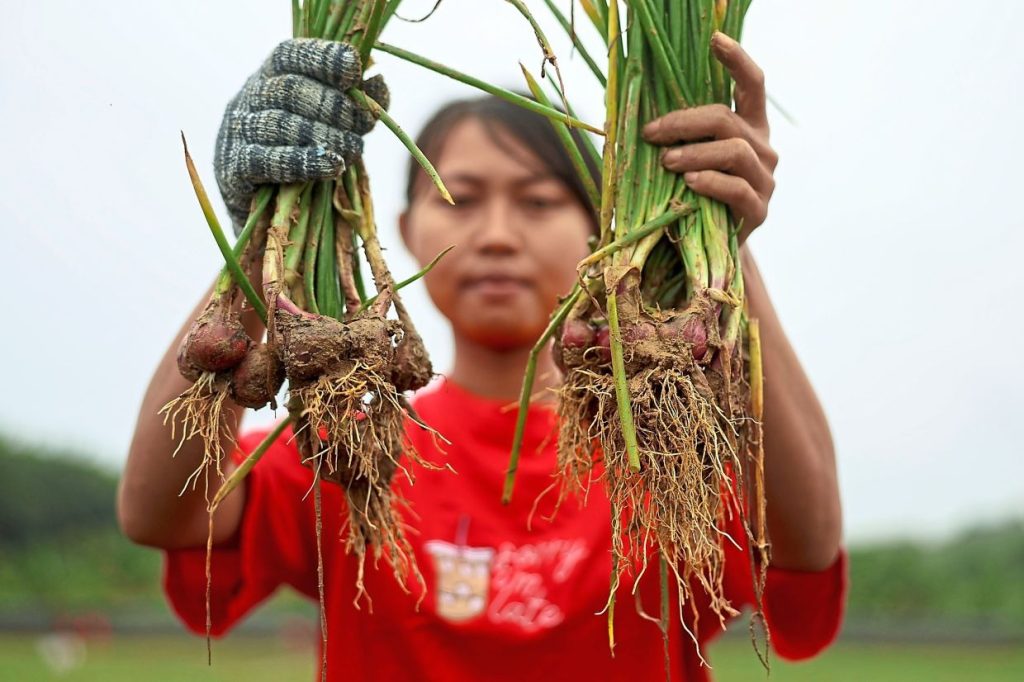
KUALA PILAH, May 24 -- What began as a small experimental project with just 500 polybags has now grown into a serious venture for young farmer Muhammad Nazirullah Mohamad Nazlan, who is betting on locally grown red onions as Malaysia looks to reduce its reliance on imports. The 32-year-old agropreneur from Negeri Sembilan had spent the past few years focusing on chilli cultivation, but a collaboration offer from the Malaysian Agricultural Research and Development Institute (MARDI) last October opened the door to something entirely new. Through the project, MARDI supplied him with seeds for the BAW-2 rose onion variety while also providing technical support, monitoring and guidance throughout the planting process. “At first, I only tried 500 polybags as a pilot project. The first harvest came in March, and each polybag produced between 500 and 700 grammes of onions,” he told Bernama when met at his farm in Ulu Pilah here recently. The encouraging outcome quickly convinced him that onion farming could go beyond a small-scale trial. Eager to learn more, Muhammad Nazirullah visited onion farms in Bachok, Kelantan and Gopeng, Perak to better understand commercial cultivation techniques before deciding to expand the project further. Today, he manages around 51,000 polybags of red onions across three separate plots covering eight acres, a scale-up he described as both challenging and rewarding. Red onions, he said, can be harvested within 75 days and planted up to four times a year, making the crop commercially attractive for local growers. He is also preparing another 55-acre onion farm in Tanjung Ipoh, which is expected to begin operations in July. Despite having a background in business studies, agriculture has long been close to his heart, with nearly a decade of experience in the field helping him navigate the demands of modern farming. For Muhammad Nazirullah, the venture is about more than just business. He sees local onion cultivation as part of a bigger effort to strengthen the country’s food security at a time when Malaysia still relies heavily on imported onions. “The government wants to reduce dependence on imported onions by at least 30 per cent by 2030. Right now, we are still building the ecosystem, especially in terms of seed supply before production can be expanded further,” he said. Drawing on nearly a decade of experience in agriculture, he described onion farming as relatively easier to manage compared to other crops as it requires less water and is well-suited for controlled environments such as rain shelter structures. His farm uses fertigation and Internet of Things (IoT) technology, allowing watering and fertilisation to be carried out automatically every hour, a system that helps maintain crop health while reducing disease risks and labour costs. Working alongside a manager and six workers, Muhammad Nazirullah said his first three-tonne harvest was sold to MARDI at RM7 per kilogramme under a five-year collaboration agreement that also includes reseeding activities. Still, expanding the project has required significant investment. Nearly RM400,000 was spent on infrastructure such as rain shelter systems and fertigation facilities, which he believes are necessary to minimise losses during unpredictable weather conditions, especially the monsoon season. Looking ahead, he hopes to expand into downstream products such as fried onions and eventually explore export opportunities once production stabilises, with a long-term target of producing between 15 and 20 tonnes per acre each season. -- BERNAMA

KUALA PILAH, May 24 — What began as a small experimental project with just 500 polybags has now grown into a serious venture for young farmer Muhammad Nazirullah Mohamad Nazlan, who is betting on locally grown red onions as Malaysia looks to reduce its reliance on imports. The 32-year-old agropreneur from Negeri Sembilan had spent […]

Mustapha Sakmud’s “Secret Recipe” Helps Former Guard Rebuild Life

KOTA KINABALU,May 18– For Jumadi, losing his job after battling serious health problems felt like his entire life had collapsed overnight. The former security guard described the experience as “falling down a flight of stairs” after a nerve tumour in his head and complications following surgery three years ago left him unable to continue working. […]

PBTs Urged To Consider Rental Cuts Until Year-End

PUTRAJAYA, May 14 -- Local authorities (PBTs) nationwide have been urged to consider reducing rental rates for business premises, stalls and food courts under their jurisdiction until the end of 2026. Housing and Local Government Minister Nga Kor Ming said the move was a proactive effort by the MADANI Government to safeguard public welfare and assist hawkers and small traders currently coping with rising operating costs. “This strategic move aims to ease the burden of operating costs faced by local hawkers and small traders, thus stimulating economic growth at the grassroots level,” he said in a statement today. He said that the initiative could also help ensure the continuity of business operations, sustain job opportunities and strengthen the economic resilience of the local community. “By providing this rental reduction, we are not only assisting small traders to stay afloat, but also helping to ensure the stability of prices of goods and services for consumers,” he said. Nga said that the ministry would work closely with all PBTs to identify suitable implementation methods based on financial capabilities and local needs, to ensure public well-being and the urban economic ecosystem continued to be strengthened. “The welfare of the people has always been a priority for the MADANI Government. We want to ensure that no group is left behind in national development and continues to benefit from the country’s economic growth,” he said. Nga said that the move would also complement various ongoing efforts to assist the people and the small business community, including entrepreneurship assistance programmes, the provision of more conducive business facilities, the upgrading of food courts and public markets, and initiatives such as MyKiosk. Last Tuesday, the National Economic Action Council (MTEN) urged PBTs and state governments nationwide to reduce rental rates for premises or shops under their jurisdiction with immediate effect. Economy Minister Akmal Nasrullah Mohd Nasir said the move was crucial in helping small traders, night market operators and micro-entrepreneurs cope with rising operating costs, which account for an average of between seven and 58 per cent of total business expenses. “They are exposed to weak cash flow and often rely on a single source of income. Without intervention, the risk of business closures could increase significantly,” he said during the online briefing on the global supply crisis. --BERNAMA

PUTRAJAYA, May 14 — Local authorities (PBTs) nationwide have been urged to consider reducing rental rates for business premises, stalls and food courts under their jurisdiction until the end of 2026. Housing and Local Government Minister Nga Kor Ming said the move was a proactive effort by the MADANI Government to safeguard public welfare and […]