
Cost of Living: How Malaysians Are Coping in 2026
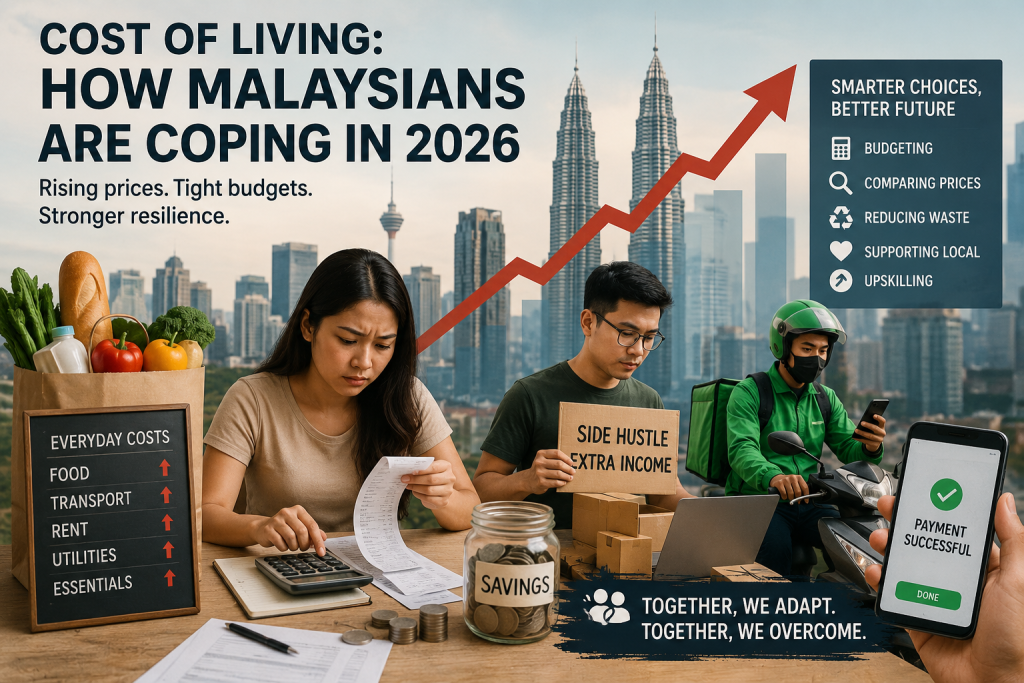
In 2026, the cost of living remains one of the biggest concerns among Malaysians from all walks of life. Whether it is a family living in Kuala Lumpur, a fresh graduate starting a career in Johor Bahru, or small business owners in Penang, many are feeling the pressure of rising expenses while trying to maintain a decent quality of life. The reality is simple — prices are increasing faster than incomes for many people. Food prices continue to climb, rental costs in urban areas remain high, and transportation expenses are becoming heavier on household budgets. While Malaysia’s economy shows signs of growth in several sectors such as technology, tourism, and digital services, the benefits are not always reaching ordinary citizens equally. Today, Malaysians are adapting in ways that would have seemed unusual just a few years ago. Families are cutting unnecessary spending, young adults are taking on freelance jobs after office hours, and more people are turning to online businesses to earn extra income. Side hustles are no longer just an option — they are becoming a necessity. At the same time, consumer behavior is changing rapidly. More Malaysians are comparing prices through apps before shopping, choosing local brands over imported goods, and reducing luxury spending. Dining out less frequently, delaying large purchases, and using public transportation more often have become common habits among middle-income households. One noticeable trend in 2026 is the rise of the “survival mindset” among younger Malaysians. Many Gen Z workers no longer prioritize owning luxury items or expensive cars. Instead, financial stability, flexible work opportunities, and affordable living are becoming more important. This generation has grown up during uncertain economic periods, and it has shaped how they view money and success. Housing affordability remains another major issue. For many young Malaysians, owning a home still feels out of reach, especially in major cities. High property prices combined with slow salary growth have forced many to continue renting or living with family longer than previous generations did. While affordable housing initiatives exist, demand still exceeds supply in many urban areas. Small businesses are also facing enormous challenges. Rising operating costs, higher utility bills, and increasing supply chain expenses have placed pressure on local entrepreneurs. Many small traders and food operators are struggling to balance competitive pricing with maintaining profits. Some businesses have survived by embracing digital platforms and cashless systems, but others continue to face uncertainty. Despite these challenges, Malaysians continue to show resilience. Across the country, communities are finding ways to support one another. Local markets promoting affordable products, community food banks, and social media groups sharing financial advice have become increasingly important. Malaysians have always been known for adaptability, and this period is proving that once again. Technology is also helping people cope. The digital economy has opened opportunities for freelancers, online sellers, content creators, and gig workers. Many individuals are building secondary incomes through platforms that did not exist a decade ago. However, this also raises concerns about job security and work-life balance, especially among younger workers juggling multiple sources of income. Looking ahead, the cost of living issue cannot be solved through individual effort alone. Long-term solutions require stronger wage growth, better public transportation systems, affordable housing policies, and continued support for local businesses. Economic progress should not only be measured through national statistics, but through the daily lives of ordinary Malaysians. In the end, the conversation about the cost of living is not only about money. It is about the future people believe they can build for themselves and their families. As Malaysia moves deeper into 2026, one thing is clear: Malaysians are not giving up. They are adapting, evolving, and finding ways to move forward despite the pressures surrounding them. But resilience alone should not become the permanent solution to rising living costs. Sustainable change is needed to ensure future generations can thrive, not simply survive. -- MINUTESMY / SUGAN BALAN

In 2026, the cost of living remains one of the biggest concerns among Malaysians from all walks of life. Whether it is a family living in Kuala Lumpur, a fresh graduate starting a career in Johor Bahru, or small business owners in Penang, many are feeling the pressure of rising expenses while trying to maintain […]