
AI cannot replace the experience of journalists in the field – Expert

KOTA BHARU: The ability to master artificial intelligence (AI) technology in the newsroom world is no longer considered an option, but rather a critical necessity in facing an increasingly challenging and competitive media landscape. As digital change moves at a rapid pace, media organizations' failure to integrate AI technology into operations can not only affect efficiency and productivity but also risk falling behind in the competition to remain relevant to audience needs. However, despite the advantages of technology that can speed up news production, concerns have arisen about excessive reliance on AI and digital sources, which are feared to erode the fundamental values ​​of journalism, including the grassroots culture that is the backbone of quality reporting. The concern stems from an ongoing debate about the tendency of some reports to rely too heavily on information on social media or online sources, which is then processed using AI without direct verification at the scene. Senior Lecturer at the Faculty of Modern Languages ​​and Communication, Universiti Putra Malaysia (UPM), Dr Syed Agil Shekh Alsagoff said that AI can indeed be an effective tool to increase productivity in newsrooms, but it cannot replace the experience and editorial judgment of journalists in the field. He said that the main strength of journalists in producing high-impact reports remains their ability to see the real situation for themselves, meet with the community and obtain confirmation from various sources before a piece of news is published. "If journalists rely too much on AI and digital sources, the culture of going to the field will diminish, whereas the presence of journalists in the field is very important to understand the true context of an issue and obtain a more accurate picture," he told Bernama. Syed Agil said that the field approach not only provides valuable experience to journalists, but also helps produce more comprehensive reports with stronger narratives based on direct observations at the scene. He explained that the situation is different from reports that rely too much on AI and social media, which risks making the news "bland" because technology is only capable of processing data without understanding the emotions and sensitivities of society. "The experience of being on the scene of an incident allows journalists to understand the emotions, atmosphere and real reality that technology cannot fully translate. For example, when a disaster occurs, journalists who go to the field can better translate the news narrative. "While AI and social media can only help produce reports quickly, they cannot replace the experience of journalists who see firsthand the suffering of victims, the fear during conflicts and the grief of families who have lost loved ones," he said. In this regard, Syed Agil stressed that journalism is not just about presenting facts but also involves understanding the pulse of humanity and the reality of society, in addition to demanding the production of ethical reports through presence in the field. At the same time, he did not deny the benefits of AI if used wisely, especially in research, data analysis and multimedia content production, but it still needs to be balanced with the basic values ​​of journalism. "AI is an aid, journalists still need to go out into the field to see, hear and understand an issue for themselves. Without that element, reports may be completed quickly but lose their soul and human values," he said. Therefore, in conjunction with the celebration of National Journalists' Day (HAWANA) 2026 on June 20, he said, it should be used as a platform to strengthen the balance between technological advancements and human values ​​in journalism to ensure that the media industry continues to be relevant and trusted by the community. Themed "Media with Integrity, Credibility at the Core", the highlight of this year's HAWANA celebration will take place at the PICCA Convention Centre @ Arena Butterworth, Penang, and will be officiated by the Prime Minister, Datuk Seri Anwar Ibrahim. Organised by the Ministry of Communications with the Malaysian National News Agency (Bernama) as the implementing agency, HAWANA is a platform to acknowledge the contributions, perseverance and professionalism of media practitioners in Malaysia. -- BERNAMA

KOTA BHARU: The ability to master artificial intelligence (AI) technology in the newsroom world is no longer considered an option, but rather a critical necessity in facing an increasingly challenging and competitive media landscape. As digital change moves at a rapid pace, media organizations’ failure to integrate AI technology into operations can not only affect […]

i2Cool’s Electricity-Free Cooling Film Applied at Dorsett Putrajaya to Improve Comfort and Energy Efficiency for Lake-View Dining Space
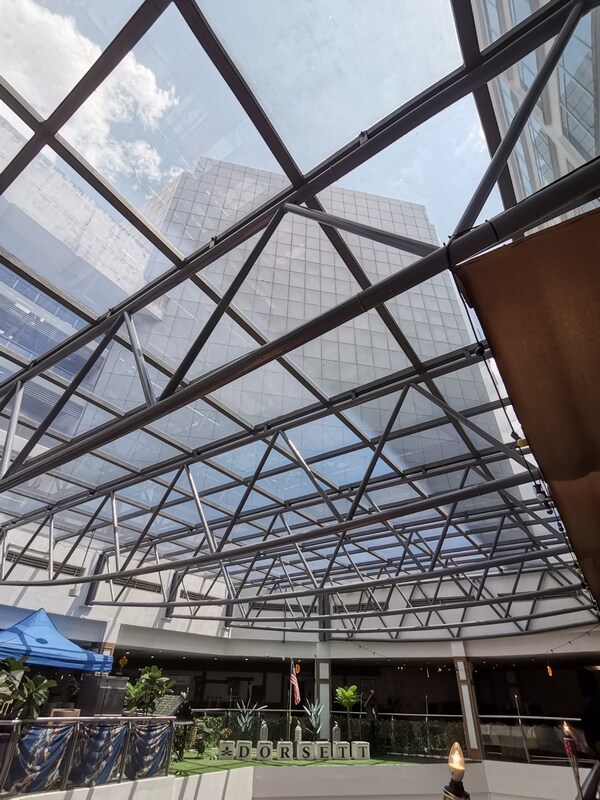
PUTRAJAYA, Malaysia, May 21, 2026 /PRNewswire/ -- i2Cool has completed the installation of its i2Film Electricity-free Cooling Film at Dorsett Putrajaya, helping the hotel address solar heat gain and improve guest comfort in its glass-fronted lake-view dining area. Located in Putrajaya, Malaysia, where the annual average temperature is around 28°C and hot, humid weather persists throughout the year, hotels built beside scenic waterfronts often face a dual challenge: maintaining open views while managing the heat load brought by strong sunlight. At Dorsett Putrajaya, Citra Rasa all-day dining restaurant is one of the hotel's signature spaces. Overlooking Putrajaya Lake, the restaurant is known for its lake-view dining experience and local Malaysian flavours, including Nasi Lemak and Nasi Goreng. However, the large floor-to-ceiling glass façade also created a long-standing comfort issue, especially for tables close to the windows. According to feedback from hotel staff, window-side tables were often left empty during busy weekend brunch hours, as guests would ask whether those seats were too hot. The issue was not simply a matter of air-conditioning capacity. Under prolonged sunlight, the glass itself became a continuous heat source, transferring heat into the indoor space. The hotel's engineering team had been aware of the issue for nearly two years. The key technical question was whether the heat-insulating film should be installed on the interior or exterior side of the glass. While interior application is shielded from weather, site evaluations revealed significant drawbacks, including structural instability of the existing trusses for worker access and the high risk of disrupting operations within the restaurant. After rounds of technical discussion and on-site comparison testing, i2Cool provided the hotel with a detailed technical assessment showing that exterior installation offered stronger advantages in heat dissipation and thermal insulation for this project. By installing the film on the exterior side, solar radiation could be reflected before acting on the glass, helping block heat at the source and maintain a lower glass substrate temperature. The hotel ultimately selected i2Film Electricity-free Cooling Film EFC-Blue 70e and adopted exterior-side installation. The project covered a total area of 421.6 square metres and was completed on 9 March 2026, ahead of Malaysia's hottest period of the year. Following installation, on-site monitoring showed a significant improvement in thermal and lighting performance: Solar irradiance decreased from 230.9 W/m² to 73.5 W/m², representing a 68.16% reduction. Illuminance was adjusted from 5,714 Lux to 4,830 Lux, reducing excessive heat while maintaining a bright indoor dining environment. With up to 94% mid-infrared emissivity, i2Film helps release heat absorbed by the glass surface without additional electricity consumption. The 421.6 m² installation is estimated to help the hotel save approximately 137,915.3 kWh of air-conditioning energy per year. Beyond the data, the change was also reflected in guest experience. According to follow-up feedback, guests who previously felt a burning sensation when seated near the windows now described the space as bright but no longer uncomfortably hot. Another business guest also noted that it was the first time he had finished a meal there without feeling sweaty on his back. According to the hotel's front office manager, staff no longer need to explain that the window-side tables may feel hot. During weekend brunch hours, some guests now actively ask to be seated by the windows. For a hotel that receives hundreds of diners every day, the shift from "avoided seats" to "preferred seats" is a clear validation of the improvement. For hotel operations, the project also delivers practical energy-saving value. The 421.6 m² installation is estimated to help save approximately 137,915.3 kWh of air-conditioning energy per year. However, according to an internal review by the hotel management, the most valuable outcome was not only the number on the electricity bill, but the fact that the hotel no longer needs to struggle with the same long-standing issue. The Dorsett Putrajaya project provides a practical reference for glass façade buildings in tropical regions seeking to improve thermal insulation and reduce cooling demand. From the technical discussion two years ago to the final decision to adopt exterior-side installation, the project shows how a practical material-level cooling solution can help balance scenic views, indoor comfort and energy efficiency. For i2Cool, the 421.6 m² application at Dorsett Putrajaya is one example among more than 500 projects across nearly 30 countries and regions. From Dubai Mall to lakeside restaurants in Putrajaya, from data centres to star-rated hotels, electricity-free cooling technology is turning "light transmission without excessive heat" from a technical concept into a tangible cooling experience. -- Source: i2Cool Limited

PUTRAJAYA, Malaysia, May 21, 2026 /PRNewswire/ — i2Cool has completed the installation of its i2Film Electricity-free Cooling Film at Dorsett Putrajaya, helping the hotel address solar heat gain and improve guest comfort in its glass-fronted lake-view dining area. Located in Putrajaya, Malaysia, where the annual average temperature is around 28°C and hot, humid weather persists […]