
Malaysia’s GDP growth expected to moderate to 4.2 percent in 2026 – MBSB IB
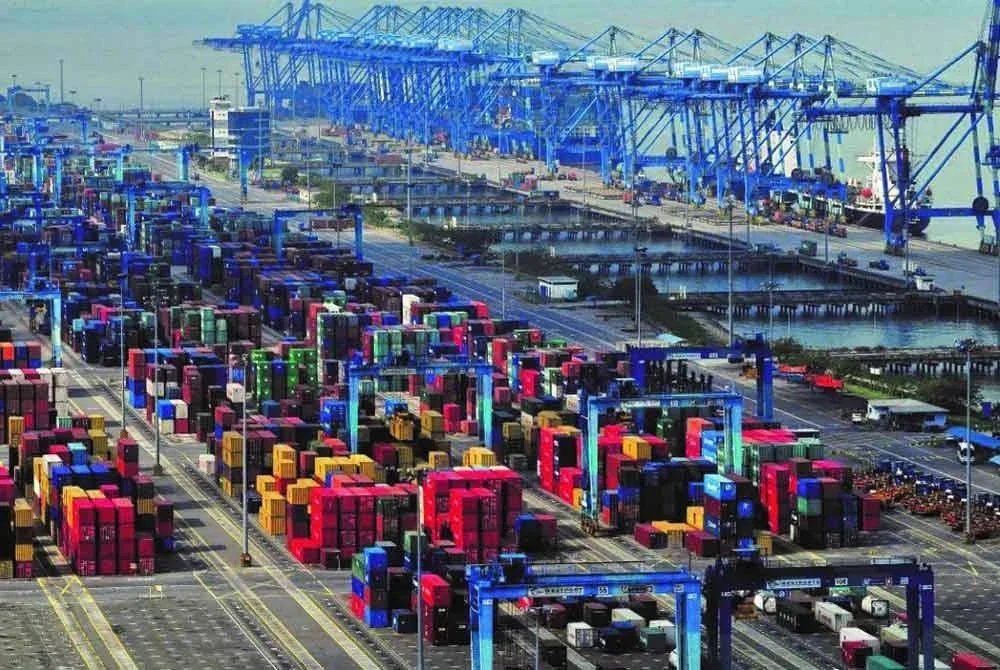
KUALA LUMPUR: Malaysia's Gross Domestic Product (GDP) growth is expected to moderate to 4.2 percent this year compared to 5.2 percent in 2025, driven by increasing domestic demand alongside remaining resilient external demand, according to MBSB Investment Bank Bhd (MBSB IB). The investment bank said the outlook for foreign trade remained cautious as weaker global demand in a high inflation environment could dampen export momentum.\ However, continued energy price shocks and potential disruptions to trade flows in West Asia could put pressure on global supply chains and increase the risk of shortages of petroleum-related products. “In addition, tighter United States (US) trade policies could continue to affect external demand, particularly if new tariffs are imposed on semiconductor products, thus posing a downside risk to Malaysia's electrical and electronics (E&E) exports. “Domestically, growth prospects may also face pressure from weaker consumer and business sentiment as well as rising pricing pressures, with companies expected to pass on higher production costs to consumers,” said MBSB IB in its research note. According to the investment bank, although domestic growth remains strong, the ringgit continues to face challenges against a strong US dollar. At the same time, the “higher rates for longer than expected” narrative in the US is gaining traction, with demand for dollar-denominated assets increasing. Some market players expect the likelihood of higher interest rate hikes following renewed inflation concerns in the US to potentially support the US dollar index in the short term, as supply-side inflationary pressures remain a concern. Going forward, MBSB IB expects the local currency to strengthen throughout 2026, as the ringgit's recent resilience reflects increased confidence in Malaysia's macroeconomic management as well as stronger economic fundamentals. “However, this prospect (further ringgit strengthening) faces challenges from a resurgent US dollar as market participants factor in a 'no rate cut' scenario for this year, driven by ongoing oil price shocks and rising geopolitical tensions in West Asia. "Currently, we maintain our ringgit forecast for 2026, with an expected stronger average of around RM3.92 and closing at around RM3.85 by year-end," he said. -- BERNAMA

KUALA LUMPUR: Malaysia’s Gross Domestic Product (GDP) growth is expected to moderate to 4.2 percent this year compared to 5.2 percent in 2025, driven by increasing domestic demand alongside remaining resilient external demand, according to MBSB Investment Bank Bhd (MBSB IB). The investment bank said the outlook for foreign trade remained cautious as weaker global […]

Malaysia needs green finance surge, strengthen technology for global competitiveness – World Bank
KUALA LUMPUR: Malaysia needs to expand green financing, strengthen local technology capabilities and increase participation across sectors and regions to fully capitalize on the global transition towards sustainability, thus turning climate risk into a competitive advantage in the green value chain. In its recently published Climate and Country Development Report, the World Bank stated that significant obstacles such as low investment in research and development (R&D), workforce skills gaps and weak industry-academia collaboration risk limiting innovation as Malaysia accelerates the country's green transition. “Although Malaysia has introduced green policies and fiscal instruments, domestic private sector investment remains cautious and the innovation ecosystem is still in the development phase. "To accelerate this transformation, Malaysia also needs to increase investment in sustainability-related services and the knowledge-based sector," the bank said in the report. The World Bank also noted that global demand for activities supported by strong environmental, social and governance (ESG) standards is increasing, with green financing, climate risk analytics, sustainable certification and environmental auditing emerging as new growth areas. According to him, Malaysia has a competitive advantage in ESG due to its mature financial sector, robust digital infrastructure and multilingual workforce. "Developing capabilities in these high-value services will diversify exports and integrate sustainability elements into the supply chain," said the bank, adding that states such as Penang and Selangor have the potential to become green industrial clusters that can attract sustainable investment and talent. At the same time, the bank stressed that rural and small-scale states need to be empowered to also reap the benefits of low-carbon growth, whether through green agro-processing, circular economy enterprises or ecotourism. According to him, support for small and medium enterprises (SMEs), investment in regional innovation hubs and empowerment of local governance will ensure that Malaysia's green transition is inclusive, resilient and forms the basis for shared prosperity. Impact of Climate Change The World Bank has announced that climate change is expected to cost up to 8.3 percent of Malaysia's Gross Domestic Product (GDP) by 2050 under the most pessimistic scenario, with greater losses possible. According to him, about half of the predicted costs have already been realised through a decline in GDP, driven by crop losses, floods and reduced productivity due to heat stress. The World Bank has stated that the agriculture sector alone faces the risk of a decline of up to 18 percent in its production value by mid-century, with knock-on effects that will affect business continuity, employment, health outcomes and overall economic stability. "If a once-in-20-year flood hits after a prolonged heat wave, GDP losses could exceed 20 percent in a single year, making climate resilience an economic imperative," the bank said. According to the bank, adaptation measures have the potential to offset up to half of the expected climate-related economic losses, with efforts to address heat stress as a key strategy. The World Bank has stated that increasing the coverage of air conditioning in workplaces from 42 to 75 percent by 2050 could maintain workforce productivity at a modest annual cost of around US$40 million. "However, more comprehensive action is needed. Climate-resilient land-use plans can reduce the risk of floods and landslides, while climate-smart agriculture and integrated water resources management will help maintain food and water security," the bank said. -- BERNAMA

KUALA LUMPUR: Malaysia needs to expand green financing, strengthen local technology capabilities and increase participation across sectors and regions to fully capitalize on the global transition towards sustainability, thus turning climate risk into a competitive advantage in the green value chain. In its recently published Climate and Country Development Report, the World Bank stated that […]