
Malaysia Maintains Among Lowest Fuel Prices Despite Global Supply Crisis
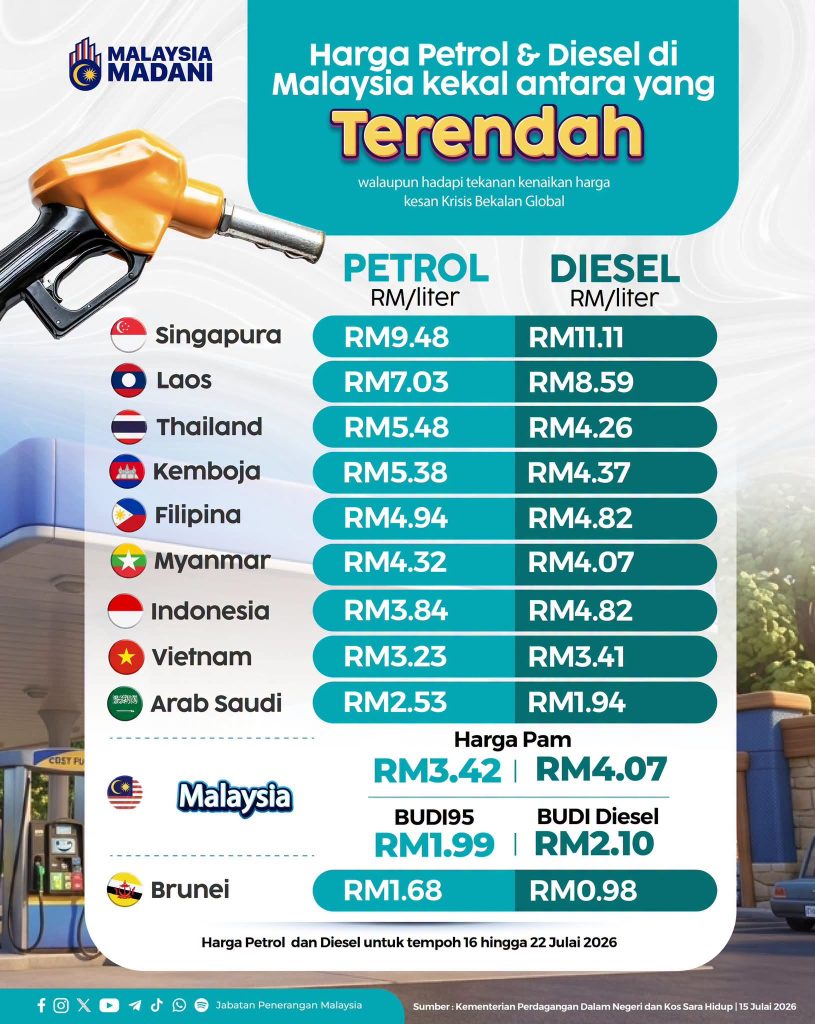
KUALA LUMPUR, July 16 – Malaysia continues to maintain among the lowest petrol and diesel prices in the region despite rising global fuel prices driven by the ongoing Global Supply Crisis. The government said the stability of domestic fuel prices reflects its continued commitment to protecting the people from the impact of volatile international energy markets. Through the targeted fuel subsidy initiative, the MADANI Government aims to ensure that assistance reaches those who need it most while keeping the cost of living manageable for Malaysians. The government noted that global supply disruptions and geopolitical uncertainties have continued to exert upward pressure on fuel prices worldwide, affecting many countries. Despite these challenges, Malaysia has managed to cushion consumers from sharp price increases by maintaining targeted subsidies and implementing measures to safeguard the welfare of the rakyat. The MADANI Government reaffirmed its commitment to ensuring fuel price stability while balancing fiscal sustainability and providing targeted assistance to eligible groups. -- MINUTESMY

KUALA LUMPUR, July 16 – Malaysia continues to maintain among the lowest petrol and diesel prices in the region despite rising global fuel prices driven by the ongoing Global Supply Crisis. The government said the stability of domestic fuel prices reflects its continued commitment to protecting the people from the impact of volatile international energy […]

Maintaining Fuel Subsidies Eases Burden On People, Curbs Inflation – FOMCA
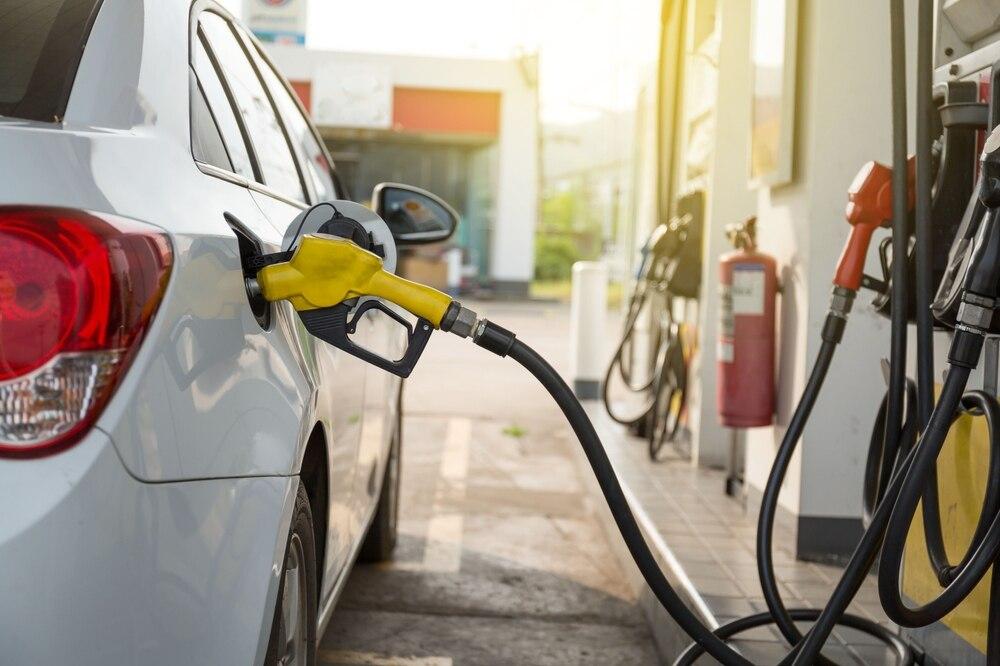
KUALA LUMPUR, June 9 -- The government's commitment to continue bearing the cost of fuel subsidies is seen as helping the people and curbing inflationary pressures, while serving as the country's main shield against the impact of the global supply crisis. Federation of Malaysian Consumers Associations (FOMCA) chief executive officer Dr Saravanan Thambirajah said the organisation welcomed the MADANI Government's initiative as it gives consumers confidence that the people's welfare remains a priority. He said maintaining fuel prices at current levels greatly helps reduce transportation and logistics cost pressures, while also supporting the supply chain to prevent increases in the prices of daily necessities. "However, FOMCA is of the view that fuel prices are not the only factor determining the prices of goods. "Consumers still face challenges from food costs, rental rates, energy costs, wages and various other operating expenses that also influence market prices. Nevertheless, maintaining the RON95 price can act as a buffer against inflation," he told Bernama. Meanwhile, senior lecturer at the Faculty of Economics and Muamalat, Universiti Sains Islam Malaysia, Dr Mohd Shukor Harun, viewed the government's commitment as a responsible measure, particularly in easing the financial burden of the B40 and M40 groups. "However, from a public policy perspective, the existing blanket subsidy mechanism is regressive because it also benefits the wealthy. "If this subsidy is maintained when global crude oil prices surge, the country's fiscal deficit will widen and the expenditure will consume funds that should otherwise be channelled to development, education and healthcare sectors," he said. In this regard, he proposed a more sustainable long-term strategy to ensure continued assistance for the people in facing global economic pressures, including the progressive implementation of targeted subsidies. For food delivery rider Umair Al-Anshaari Rusli, 24, the government's move to maintain the subsidy is a great help as he relies entirely on his vehicle to earn a daily income. "This fuel subsidy is important because it can help control increases in the prices of goods and transportation costs, as we depend heavily on motorcycles or cars to earn a living," he said. Prime Minister Datuk Seri Anwar Ibrahim previously said he did not agree with raising fuel prices while the country was facing a global supply crisis, and stressed that the government would continue efforts to bear fuel subsidy costs by allocating substantial monthly expenditure to prevent the people from being burdened -- BERNAMA

KUALA LUMPUR, June 9 — The government’s commitment to continue bearing the cost of fuel subsidies is seen as helping the people and curbing inflationary pressures, while serving as the country’s main shield against the impact of the global supply crisis. Federation of Malaysian Consumers Associations (FOMCA) chief executive officer Dr Saravanan Thambirajah said the […]

Malaysia working to guarantee energy supply until December following global crisis – Fadillah

PUTRAJAYA -- Malaysia is working to ensure that the country's energy supply security continues to be maintained until December following the global supply crisis which is affecting economic chains and increasing energy costs. Deputy Prime Minister and Minister of Energy Transition and Water Transformation Datuk Seri Fadillah Yusof said that, so far, the country's energy supply is expected to be sufficient until July, while efforts are being intensified, including obtaining additional supply sources from abroad. "So far, God willing, our energy supply is guaranteed until July. Petronas is working hard to obtain all supplies, even if it means going to Africa." "If everything (supplies) can be collected, God willing we will have guaranteed energy supply until December," he said when speaking at the PETRA Monthly Assembly, here, today. He said the current global energy crisis is affecting the entire economic chain, especially the logistics sector which has seen costs increase before ultimately impacting the prices of goods and security of supply. Fadillah said the impact of the crisis was also felt in other sectors including medicine and manufacturing due to the shortage of certain raw materials such as plastic used in packaging and various industrial needs. "In Malaysia, we still take it for granted. We still feel as if Malaysia is not facing a crisis. That is the position in Malaysia, but in fact many parties are working to ensure that we are still in this comfortable situation," he said. In this regard, Fadillah said that all parties need to play a role by ensuring savings in electricity and water consumption to reduce energy consumption. "When we reduce energy consumption, we can extend the duration of our energy supply and ultimately we will have security and will not be affected by the crisis that occurs," he said. He said that the government, through the National Economic Action Council (MTEN) Meeting which is held every week, is also engaging with various sectors to identify the impact of the crisis on the national economy as well as intervention measures that can be implemented. He said the efforts included ensuring the survival of small and medium enterprises (SMEs), as well as preventing job losses and reducing the impact on the people. At the same time, he said, the government will continue to give priority to three main aspects of the energy sector, namely security of supply, prices that the people can afford, and environmental sustainability. -- BERNAMA

PUTRAJAYA — Malaysia is working to ensure that the country’s energy supply security continues to be maintained until December following the global supply crisis which is affecting economic chains and increasing energy costs. Deputy Prime Minister and Minister of Energy Transition and Water Transformation Datuk Seri Fadillah Yusof said that, so far, the country’s energy […]

MADANI Government Expands Support for Small Businesses Facing Rising Costs
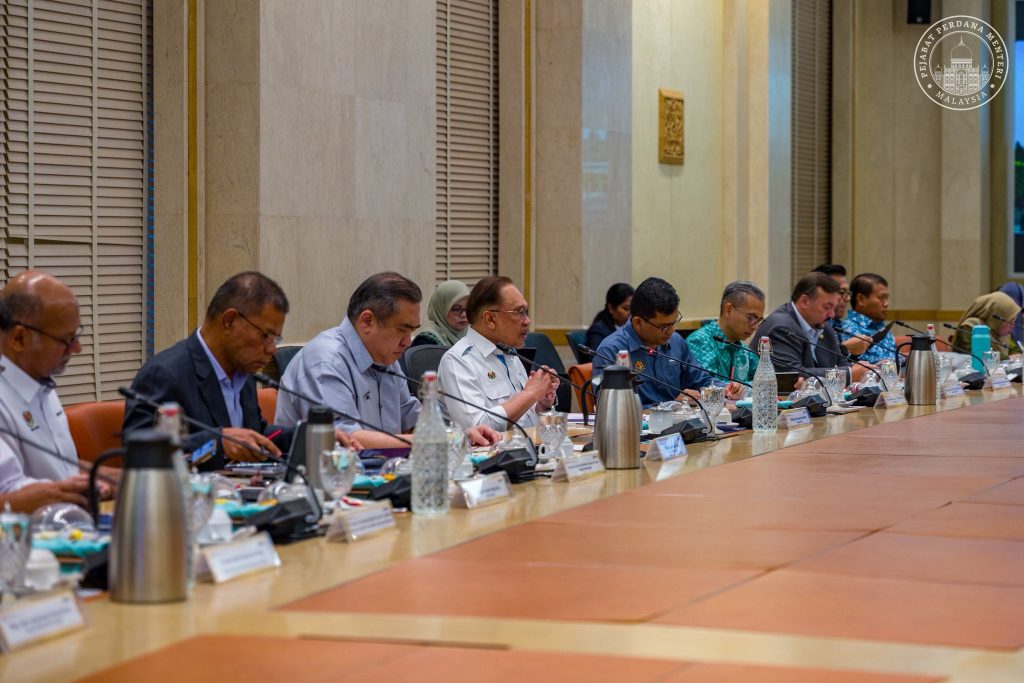
PUTRAJAYA, 13 May — Prime Minister Anwar Ibrahim yesterday chaired the National Economic Action Council (MTEN) meeting, which focused on strengthening Malaysia’s preparedness and economic resilience in facing the ongoing global supply crisis and rising cost of living. During the meeting, several strategic proposals and initiatives were discussed, including measures to reduce rental rates for business premises under the supervision of local authorities (PBTs) nationwide. Anwar stressed that more local authorities should emulate the efforts already implemented by Kuala Lumpur City Hall (DBKL) and MARA in lowering rental rates for traders and premise occupants, particularly to ease the burden faced by hawkers and small business operators affected by increasing operating costs. “The MADANI Government has begun implementing rental reductions through DBKL and MARA. This compassionate approach should serve as an example for other local authorities across the country in safeguarding the welfare of the people and ensuring the continuity of small businesses amid increasingly challenging global economic conditions,” he said. The Prime Minister added that the meeting also reviewed several strategic measures aimed at addressing global economic uncertainty, including the development of a Global Supply Crisis Monitoring Dashboard and proposed policy improvements related to supply management and price control. Taking into account the impact of the global crisis on the prices of daily necessities, Anwar instructed all ministries to restructure and strengthen existing initiatives, assistance, and intervention efforts to ensure aid reaches targeted groups effectively, especially the poor and vulnerable communities. He reiterated that MTEN will continue prioritising efforts to guarantee supply continuity and protect the rakyat, particularly vulnerable groups and small traders, from the effects of global economic shocks. “The government remains committed to ensuring no one is left behind as we navigate these global economic challenges together,” he said. -- MINUTESMY -- SOURCE: FB ANWAR IBRAHIM

PUTRAJAYA, 13 May — Prime Minister Anwar Ibrahim yesterday chaired the National Economic Action Council (MTEN) meeting, which focused on strengthening Malaysia’s preparedness and economic resilience in facing the ongoing global supply crisis and rising cost of living. During the meeting, several strategic proposals and initiatives were discussed, including measures to reduce rental rates for […]