KUSKOP Financing Agencies Go To The Ground To Reach MSMEs, In Line With PM’s Call – Sim

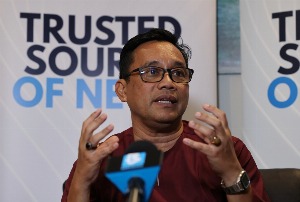
GEORGE TOWN, May 24 -- The Ministry of Entrepreneur Development and Cooperatives (KUSKOP) is mobilising four of its financing agencies to go to the ground and engage micro, small and medium enterprises (MSMEs) by providing advisory services and direct financing assistance. Its Minister, Steven Sim, said the four agencies are the National Entrepreneur Group Economic Fund (TEKUN Nasional), Amanah Ikhtiar Malaysia (AIM), SME Bank and Bank Rakyat, which are regularly deployed, including during the nationwide KUSKOP MADANI Sales programme. He said the move is also in line with Prime Minister Datuk Seri Anwar Ibrahim’s call for microcredit agencies to be more proactive in reaching out to the public and entrepreneurs. “We always go to the ground, provide face-to-face advisory services, and, if anyone is interested in registering with complete documents, they can apply on the spot. “So, we do not wait for customers to come to the office. Instead, we seek out customers, entrepreneurs and petty traders to provide assistance to them,” he told reporters after officiating the Family Day Carnival held in conjunction with the Sungai Pinang state constituency KUSKOP MADANI Sales programme today. Also present was chairman of the state Social Development, Welfare and Non-Muslim Affairs Committee Lim Siew Khim, who is also the Sungai Pinang assemblywoman. Yesterday, Anwar called on relevant agencies to intensify efforts to go to the ground and provide information to small and medium enterprises (SMEs) on financing facilities and assistance offered by the government. The Finance Minister said this was important to ensure the group does not miss out on various initiatives specifically designed to help increase income and expand businesses. Meanwhile, Sim said KUSKOP is always open to discussions with MSMEs facing cash flow problems or affected by economic crisis and disasters. He said this includes assistance through moratoriums and loan repayment rescheduling, which are part of the ministry’s efforts to support MSMEs. According to him, the non-performing loan (NPL) rate involving financing agencies under KUSKOP has also shown improvement over the past one to two years, with fewer borrowers defaulting on repayments. -- BERNAMA

GEORGE TOWN, May 24 — The Ministry of Entrepreneur Development and Cooperatives (KUSKOP) is mobilising four of its financing agencies to go to the ground and engage micro, small and medium enterprises (MSMEs) by providing advisory services and direct financing assistance. Its Minister, Steven Sim, said the four agencies are the National Entrepreneur Group Economic […]

PM Anwar Ibrahim: Investments Must Benefit Malaysians, Not Just Boost Economic Numbers
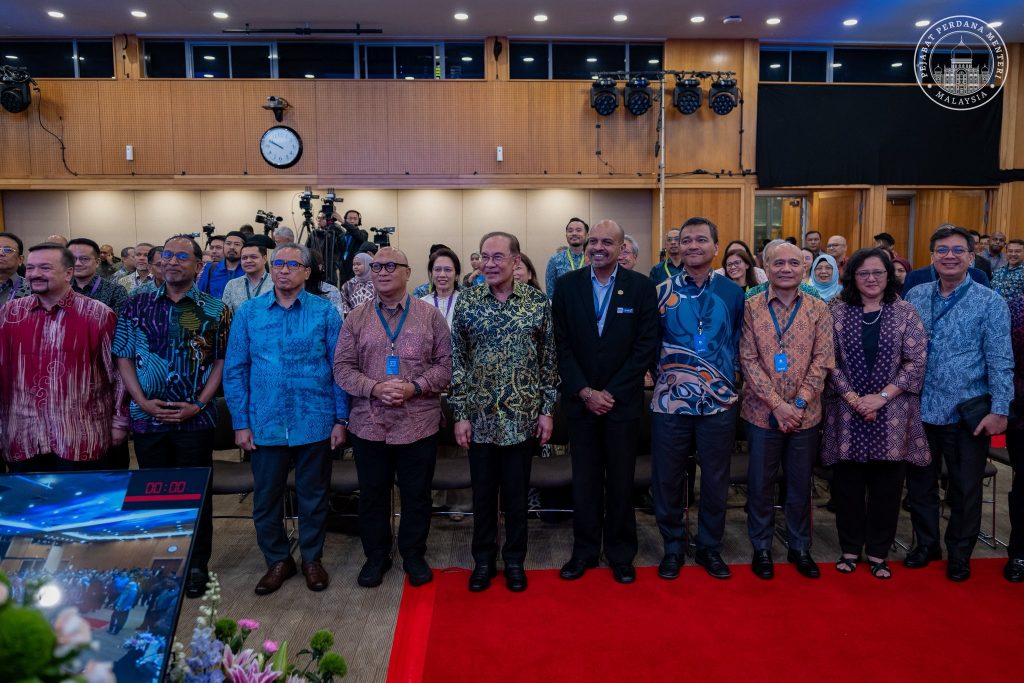
KUALA LUMPUR, May 23 — Prime Minister Anwar Ibrahim said Malaysia must ensure incoming investments contribute directly to strengthening local industries, improving workforce skills and raising the people’s standard of living, rather than merely increasing economic figures on paper. Speaking at the Forum of Malaysian Scientists MADANI Series 12 held at the Securities Commission Malaysia last night, Anwar said the discussion focused on how Malaysia can position itself more effectively amid the changing landscape of global capital flows. He noted that recent indicators showed encouraging developments, with economic growth, investments and capital markets continuing to record positive momentum, in some areas exceeding initial forecasts. However, the Prime Minister stressed that economic success should not be measured solely through macroeconomic data. According to Anwar, investments entering the country must help build the capacity of local companies, strengthen small and medium enterprises (SMEs), improve citizens’ skills and create meaningful employment opportunities. He added that the MADANI Government remains committed to ensuring that growth is inclusive and benefits all segments of society, including small traders, workers, youths and communities in rural and interior areas. Anwar said Malaysia is currently at an important crossroads as global capital flows continue to evolve and economic resilience increasingly becomes a key factor in national competitiveness. He emphasised that reforms, good governance, fiscal discipline and efforts to strengthen national capacity must continue to be reinforced to secure sustainable growth. The Prime Minister also reaffirmed the government’s commitment to ensuring that the country’s progress is not only reflected in economic statistics but genuinely felt by Malaysians across the nation -- MINUTESMY -- SOURCE: FB ANWAR IBRAHIM

KUALA LUMPUR, May 23 — Prime Minister Anwar Ibrahim said Malaysia must ensure incoming investments contribute directly to strengthening local industries, improving workforce skills and raising the people’s standard ofC, rather than merely increasing economic figures on paper. Speaking at the Forum of Malaysian Scientists MADANI Series 12 held at the Securities Commission Malaysia last […]

PM Anwar Ibrahim: Government Strengthens SME Support Amid Global Supply Crisis
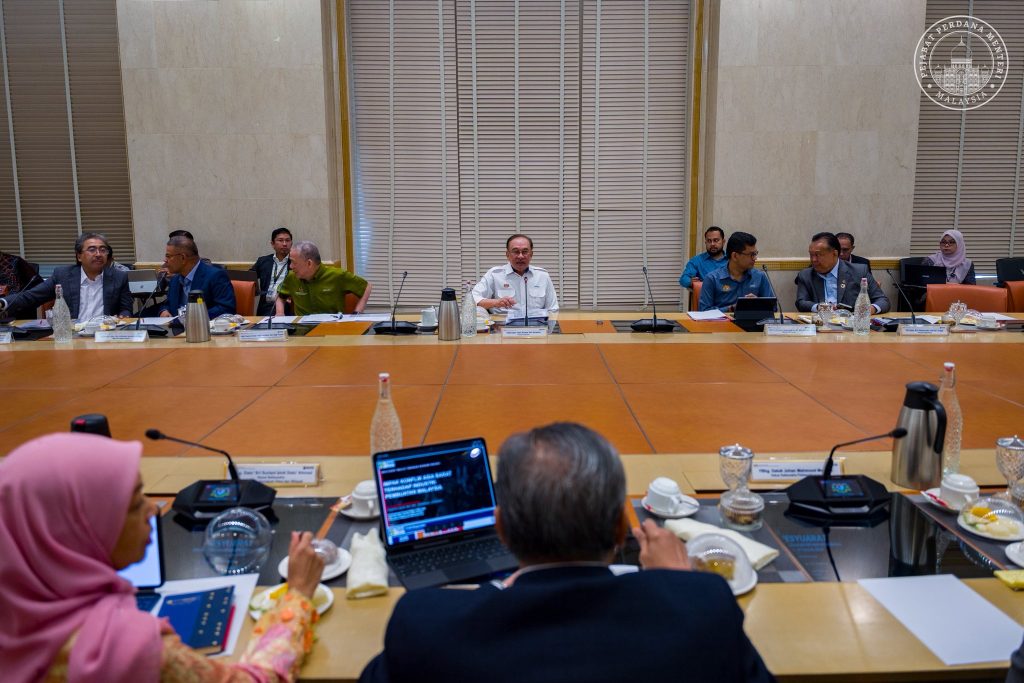
KUALA LUMPUR,20 MAY -- Prime Minister Anwar Ibrahim said the National Economic Action Council (MTEN) meeting yesterday heard a presentation from the Federation of Malaysian Manufacturers regarding the impact of the global supply crisis on the country’s manufacturing sector. According to Anwar, the presentation provided the Government with a clearer understanding of the current challenges faced by the industry, especially the pressure experienced by small and medium enterprises (SMEs) due to rising operational costs and global economic uncertainties. He stressed that every policy and measure introduced by the Government must reflect the realities faced by businesses on the ground to ensure effective assistance reaches the sectors most affected. To strengthen support for SMEs, Anwar said Bank Negara Malaysia has introduced the SME Stabilisation Relief Facility (SME SRF) worth RM5 billion to help businesses maintain cash flow and continue operations. In addition, assurance funding support amounting to RM5 billion through Syarikat Jaminan Pembiayaan Perniagaan (SJPP) has also been made available to support affected industries. Anwar added that MTEN is currently reviewing proposals to improve the Subsidised Diesel Control System (SKDS), with implementation to be carried out in a balanced manner to strengthen leak prevention without disrupting business operations and the country’s supply chain. He said the Government remains committed to managing the crisis by prioritising food, energy, medicine and essential supply security, while continuing efforts to reduce inflationary pressure and strengthen Malaysia’s economic resilience. The Prime Minister also emphasised that engagement with industry players and stakeholders will continue to be enhanced to ensure every policy decision is made comprehensively and in the best interest of both the people and the nation.

KUALA LUMPUR, 20 MAY — Prime Minister Anwar Ibrahim said the National Economic Action Council (MTEN) meeting yesterday heard a presentation from the Federation of Malaysian Manufacturers regarding the impact of the global supply crisis on the country’s manufacturing sector. According to Anwar, the presentation provided the Government with a clearer understanding of the current […]

MARA Remains Core Institution in Empowering Bumiputera Development – PM Anwar
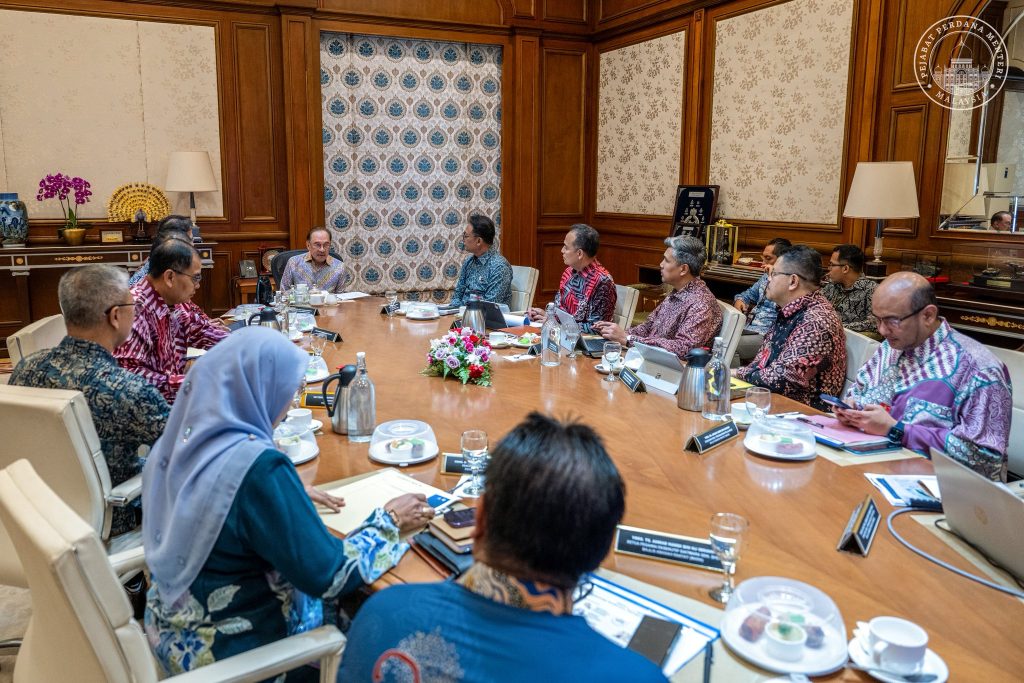
KUALA LUMPUR, May 15 — Prime Minister Anwar Ibrahim yesterday reaffirmed the important role of MARA as the core institution in advancing the Bumiputera empowerment agenda through a more fair, inclusive and comprehensive national development framework. Speaking after a special meeting with MARA’s top management, Anwar said the institution continues to play a vital role in safeguarding the future of the Bumiputera community while contributing towards building a more sustainable and resilient nation. He stressed that efforts to strengthen Bumiputera empowerment must continue through expanded access to quality education, Technical and Vocational Education and Training (TVET), skills training, education financing, entrepreneurial development and support for small and medium enterprises (SMEs). According to the Prime Minister, policies and initiatives championed by MARA have helped produce more skilled and semi-skilled workers, as well as competitive local professionals and entrepreneurs capable of contributing meaningfully to the national workforce. “These efforts will simultaneously increase Bumiputera participation, ownership and mastery in the national economy in line with present demands and future challenges,” he said. Anwar also highlighted MARA’s various transformation initiatives and entrepreneur scaling programmes, which have benefited millions of Bumiputera students and entrepreneurs by strengthening social mobility and economic participation. He emphasized that the Bumiputera empowerment agenda must continue to be driven with strong governance, integrity and effective implementation to ensure lasting impact for future generations. The Prime Minister said the special meeting with MARA leadership was aimed at ensuring the institution remains focused on delivering its mandate efficiently while adapting to evolving economic realities and national priorities. -- MINUTESMY -- SOURCE: FB ANWAR IBRAHIM

KUALA LUMPUR, May 15 — Prime Minister Anwar Ibrahim yesterday reaffirmed the important role of MARA as the core institution in advancing the Bumiputera empowerment agenda through a more fair, inclusive and comprehensive national development framework. Speaking after a special meeting with MARA’s top management, Anwar said the institution continues to play a vital role […]

Malaysia needs green finance surge, strengthen technology for global competitiveness – World Bank
KUALA LUMPUR: Malaysia needs to expand green financing, strengthen local technology capabilities and increase participation across sectors and regions to fully capitalize on the global transition towards sustainability, thus turning climate risk into a competitive advantage in the green value chain. In its recently published Climate and Country Development Report, the World Bank stated that significant obstacles such as low investment in research and development (R&D), workforce skills gaps and weak industry-academia collaboration risk limiting innovation as Malaysia accelerates the country's green transition. “Although Malaysia has introduced green policies and fiscal instruments, domestic private sector investment remains cautious and the innovation ecosystem is still in the development phase. "To accelerate this transformation, Malaysia also needs to increase investment in sustainability-related services and the knowledge-based sector," the bank said in the report. The World Bank also noted that global demand for activities supported by strong environmental, social and governance (ESG) standards is increasing, with green financing, climate risk analytics, sustainable certification and environmental auditing emerging as new growth areas. According to him, Malaysia has a competitive advantage in ESG due to its mature financial sector, robust digital infrastructure and multilingual workforce. "Developing capabilities in these high-value services will diversify exports and integrate sustainability elements into the supply chain," said the bank, adding that states such as Penang and Selangor have the potential to become green industrial clusters that can attract sustainable investment and talent. At the same time, the bank stressed that rural and small-scale states need to be empowered to also reap the benefits of low-carbon growth, whether through green agro-processing, circular economy enterprises or ecotourism. According to him, support for small and medium enterprises (SMEs), investment in regional innovation hubs and empowerment of local governance will ensure that Malaysia's green transition is inclusive, resilient and forms the basis for shared prosperity. Impact of Climate Change The World Bank has announced that climate change is expected to cost up to 8.3 percent of Malaysia's Gross Domestic Product (GDP) by 2050 under the most pessimistic scenario, with greater losses possible. According to him, about half of the predicted costs have already been realised through a decline in GDP, driven by crop losses, floods and reduced productivity due to heat stress. The World Bank has stated that the agriculture sector alone faces the risk of a decline of up to 18 percent in its production value by mid-century, with knock-on effects that will affect business continuity, employment, health outcomes and overall economic stability. "If a once-in-20-year flood hits after a prolonged heat wave, GDP losses could exceed 20 percent in a single year, making climate resilience an economic imperative," the bank said. According to the bank, adaptation measures have the potential to offset up to half of the expected climate-related economic losses, with efforts to address heat stress as a key strategy. The World Bank has stated that increasing the coverage of air conditioning in workplaces from 42 to 75 percent by 2050 could maintain workforce productivity at a modest annual cost of around US$40 million. "However, more comprehensive action is needed. Climate-resilient land-use plans can reduce the risk of floods and landslides, while climate-smart agriculture and integrated water resources management will help maintain food and water security," the bank said. -- BERNAMA

KUALA LUMPUR: Malaysia needs to expand green financing, strengthen local technology capabilities and increase participation across sectors and regions to fully capitalize on the global transition towards sustainability, thus turning climate risk into a competitive advantage in the green value chain. In its recently published Climate and Country Development Report, the World Bank stated that […]