LITEON Partners With SUTD and Its Spinoff NeuroRAN to Drive AI-RAN Innovation, Advancing Real-Time Edge AI Commercialization over 5G
SEOUL, South Korea, June 4, 2026 -- SKAI Intelligence, a Physical AI company specializing in digital twins and industrial-grade synthetic data, today announced the signing of a memorandum of understanding (MOU) with the Seoul National University AI Institute (AIIS), one of Asia's leading artificial intelligence research organizations, to jointly advance core technologies powering the next generation of intelligent robotics. The collaboration brings together SKAI Intelligence's expertise in high-fidelity digital twins, synthetic-data generation, and simulation technologies with the Seoul National University AI Institute's world-class AI research capabilities. Together, the two organizations will pursue research and development initiatives aimed at accelerating the commercialization of Physical AI across industrial applications. As robotics and autonomous systems increasingly move from controlled environments into real-world settings, the ability to train AI models using large-scale, high-quality synthetic data has emerged as a critical industry challenge. Through this partnership, SKAI Intelligence and AIIS will focus on developing advanced robotic perception, grasping, vision, and spatial understanding technologies that enable robots to better understand, interact with, and navigate complex physical environments. At the center of the collaboration is SKAI Intelligence's synthetic-data production infrastructure, which leverages NVIDIA Omniverse-based digital twin technology to transform real-world objects and environments into highly accurate virtual assets. The platform enables the generation of industrial-scale synthetic datasets for AI training, testing, evaluation, and validation, helping bridge the gap between simulation and real-world deployment. The two organizations will jointly conduct research in robotic perception and grasping, object recognition and pose estimation, monocular depth estimation, real-time object tracking, and other foundational technologies required for Physical AI systems. The partners also plan to collaborate on government-sponsored research programs, talent exchanges, and large-scale AI model development initiatives. By combining academic research with industrial-scale simulation and synthetic-data generation capabilities, the partnership seeks to advance Sim-to-Real methodologies that allow robots to learn more efficiently in virtual environments before being deployed in real-world scenarios. "In the Physical AI era, the ability to accurately replicate the real world in digital form and generate scalable, high-quality training data will become a defining competitive advantage," said Morgan Mao, co-CEO and co-Founder of SKAI Intelligence. "By combining our digital twin and synthetic-data technologies with the world-class AI research expertise of Seoul National University AI Institute, we aim to accelerate the development and commercialization of next-generation robotics and Physical AI technologies," Mao added. "This collaboration represents an important step toward bridging advanced AI research with practical industrial applications," said Jaewook Lee, Director of the Seoul National University AI Institute. "Through joint research and continuous technical collaboration, we hope to contribute to the advancement of globally competitive Physical AI technologies." This strategic partnership reflects SKAI Intelligence's broader strategy to strengthen its position as a key infrastructure provider for the emerging Physical AI ecosystem. The company has been expanding its investments in digital twin technologies, synthetic-data generation, and AI simulation platforms to support robotics, automation, and intelligent manufacturing applications worldwide. About SKAI Intelligence SKAI Intelligence is a Physical AI company delivering industrial-grade synthetic data and high-fidelity digital twins for enterprise and industrial applications. Leveraging AI-powered simulation, automation, and digital twin technologies, the company enables scalable AI training and next-generation digital infrastructure across industries. As an NVIDIA Independent Software Vendor (ISV), SKAI Intelligence leverages NVIDIA Omniverse technologies to support digital twin workflows, synthetic data generation, and real-time simulation environments for Physical AI applications. About Seoul National University AI Institute (AIIS) The Seoul National University AI Institute (AIIS) is one of Korea's leading artificial intelligence research organizations, conducting advanced research across machine learning, robotics, computer vision, natural language processing, and next-generation AI systems. AIIS collaborates with academic, government, and industry partners to advance AI innovation and commercialization. -- PRNewswire -- Source: SKAI Intelligence

SEOUL, South Korea, June 4, 2026 — SKAI Intelligence, a Physical AI company specializing in digital twins and industrial-grade synthetic data, today announced the signing of a memorandum of understanding (MOU) with the Seoul National University AI Institute (AIIS), one of Asia’s leading artificial intelligence research organizations, to jointly advance core technologies powering the next […]

Gas Supply For Domestic Use Remains Sufficient, Says Minister
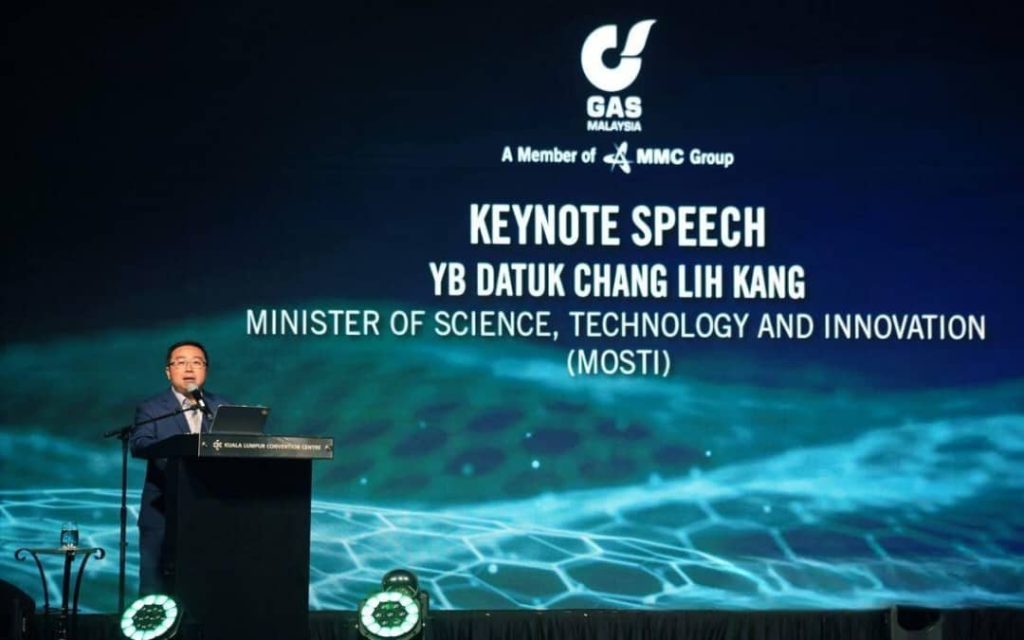
KUALA LUMPUR, June 3 -- Malaysia’s gas supply remains sufficient for now, with the majority of the country’s electricity generation supported by domestic sources, according to Science, Technology and Innovation Minister Datuk Chang Lih Kang. He said authorities continue to monitor developments in the industry. “About 80 per cent of electricity generation in Malaysia is supported by domestic sources, so we are not too dependent on external supplies. “For now, supply is adequate, and there is no cause for major concern,” he told reporters after launching the ‘Revolutionising Industry with Graphene’ initiative here today. Meanwhile, Gas Malaysia Bhd president and chief executive officer Azli Mohamed said the industry is not facing any supply constraints, with the company’s primary source of gas coming from Petroliam Nasional Bhd (Petronas). “Our reliance on the Middle East is minimal. Our supply comes mainly from domestic sources and Australia. Essentially, there are no issues meeting industry demand, and we are able to supply our more than 1,000 customers,” he said. However, Azli noted that the industry could still face indirect challenges, including higher transportation costs and supply chain disruptions. He cited the rubber industry as an example, as it depends on raw materials sourced from countries such as South Korea and China. -- BERNAMA

KUALA LUMPUR, June 3 — Malaysia’s gas supply remains sufficient for now, with the majority of the country’s electricity generation supported by domestic sources, according to Science, Technology and Innovation Minister Datuk Chang Lih Kang. He said authorities continue to monitor developments in the industry. “About 80 per cent of electricity generation in Malaysia is […]

South Korea To Supply 90,000 Rental Homes In Greater Seoul Area For Youths By 2027
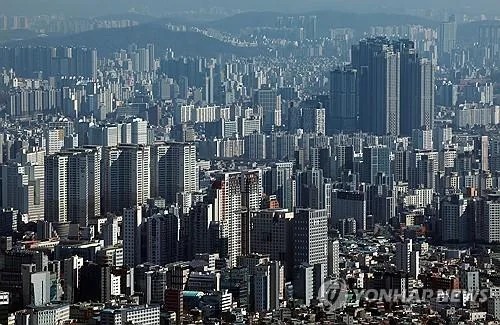
SEOUL, May 22 -- South Korea is planning to supply some 90,000 rental housing units for young people in the greater Seoul area by 2027, as part of broader efforts to stabilise the housing market and improve living conditions for youths, Yonhap News Agency reported. According to its Finance Minister Koo Yun Cheol, the government is seeking various ways to expand non-apartment housing, which is one of the key pillars of the public housing supply programme. “We plan to supply 90,000 rental units in Seoul and surrounding areas for the next two years, and 66,000 of them will be located in regulated zones,” Koo said during a meeting of ministers related to real estate policy. Koo said non-apartment housing, such as multifamily homes and compact studio units, can be supplied relatively quickly, helping ease housing difficulties faced by young people at a faster pace. The government will also adopt modular housing and other construction methods to shorten construction periods and reduce financial burdens on developers, encouraging earlier project launches, he added. During the meeting, officials also reviewed housing market trends and response measures and discussed plans to crack down on illegal real estate activities. --BERNAMA

SEOUL, May 22 — South Korea is planning to supply some 90,000 rental housing units for young people in the greater Seoul area by 2027, as part of broader efforts to stabilise the housing market and improve living conditions for youths, Yonhap News Agency reported. According to its Finance Minister Koo Yun Cheol, the government […]

Trump repeats criticism of Japan, South Korea for not helping in Iran war
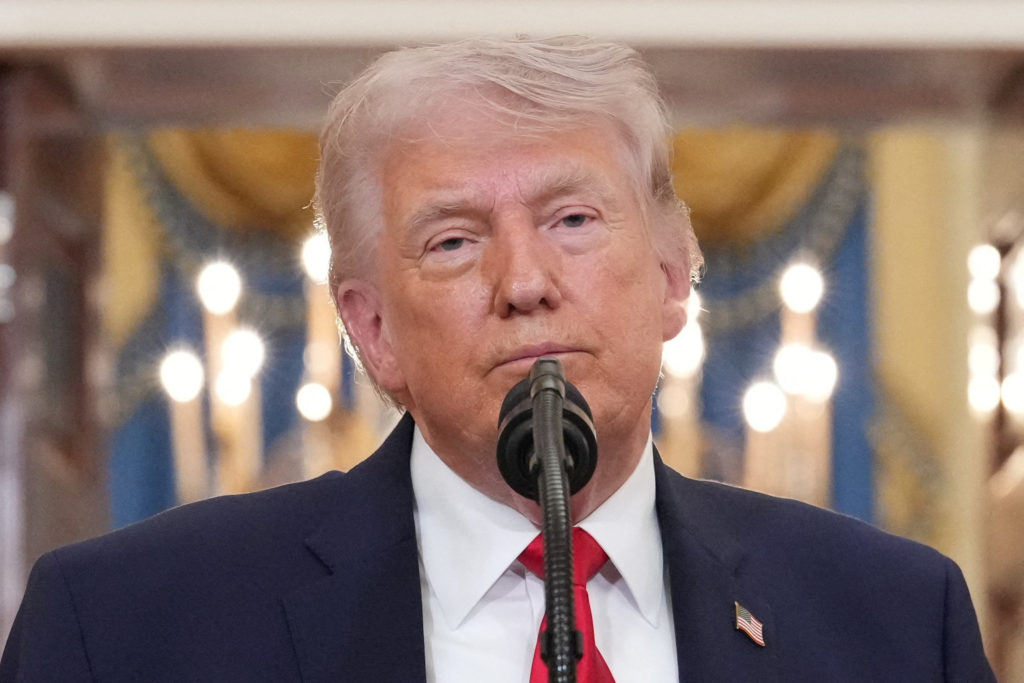
WASHINGTON: President Donald Trump on Monday repeated criticism of Japan, South Korea, Australia and the North Atlantic Treaty Organization (NATO) for not providing naval assistance to help reopen the Strait of Hormuz. Kyodo reported that during a press conference at the White House, Trump complained that Japan and South Korea were “not helping” despite the presence of tens of thousands of US troops in both countries to protect them from North Korea, which he said has “many nuclear weapons.” Trump's suggestion that US military support for the two key allies in Asia, as well as Australia, should be reciprocated, came after he once again described NATO as cowardly. Instead, Trump praised several countries in West Asia including Kuwait, Qatar and Saudi Arabia as "good" partners to the United States since the country and Israel launched the war on Feb. 28. While repeating his threats against Iran, Trump insisted that the United States had already won the war militarily. He said unless Tehran reaches a deal with Washington, Iran's critical infrastructure could be destroyed within four hours. Trump set Tuesday at 8pm in Washington as a deadline for Iran to reopen the Strait of Hormuz, a waterway vital to global oil supplies. Tehran has largely blocked the strait since the war began, affecting energy markets. Reopening the shipping lanes, Trump said, is a "huge priority." "We have to have an agreement that I can accept and part of that agreement is that we want free passage for oil and everything." "(Otherwise,) we have a plan due to our military strength, with every bridge in Iran being completely destroyed by 12 midnight tomorrow, and every power plant in Iran being crippled, burning, exploding, and no longer usable," he said. Speaking with US Secretary of Defense Pete Hegseth, Chairman of the Joint Chiefs of Staff General Dan Caine and Central Intelligence Agency (CIA) Director John Ratcliffe, the president said the United States was actually more willing to not destroy Iran's critical infrastructure. “It would take them 100 years to rebuild now. "If we leave today, it will take them 20 years to rebuild their country, and it will not be as good as before. "The only way they can rebuild their country is by leveraging the ingenuity of the United States," Trump said. Earlier in the day, Iran's official news agency, IRNA, said the country wanted a permanent end to the war, not a ceasefire. Rejecting Washington's 15-point ceasefire proposal, which the news agency said was conveyed through Pakistan, Iran presented its own 10-point plan, including a framework to end regional hostilities and ensure safe passage through the strategic waterway. In comments at a separate event before the press conference, Trump described Iran's proposed response as an "important step" but not yet enough.

WASHINGTON: President Donald Trump on Monday repeated criticism of Japan, South Korea, Australia and the North Atlantic Treaty Organization (NATO) for not providing naval assistance to help reopen the Strait of Hormuz. Kyodo reported that during a press conference at the White House, Trump complained that Japan and South Korea were “not helping” despite the […]