
Malaysia, China Strengthen STI Cooperation To Drive Innovation Commercialisation – MOSTI
PUTRAJAYA, June 22 -- Malaysia and China are committed to strengthening cooperation in science, technology and innovation (STI) to expand technology commercialisation opportunities and ensure that innovation outcomes are translated into sustainable economic impact. The Ministry of Science, Technology and Innovation (MOSTI) said the commitment was reached through  Malaysia-China’s 4th Joint Committee Meeting (JCM) on Science, Technology and Innovation, co-chaired by Science, Technology and Innovation Minister Datuk Chang Lih Kang and China’s representative Lin Xin today. MOSTI said both countries also agreed to enhance cooperation in strategic areas, including artificial intelligence (AI), biotechnology, green technology and advanced materials technology, while strengthening talent development and research capacity. “MOSTI hopes that this collaboration will expand commercialisation opportunities to ensure that innovation is translated into sustainable economic impact in line with the National Science, Technology and Innovation Policy (NSTIP),” MOSTI said in a statement. According to MOSTI, among the key agenda items discussed at the JCM were STI policy exchanges, technology transfer and research commercialisation cooperation, as well as updates on ongoing bilateral programmes. Among the key Malaysia-China bilateral initiatives is the Joint Research Programme (Second Series), which is funding eight Malaysian research projects in areas such as AI, green technology involving energy storage, biotechnology, particularly human vaccines, space technology and advanced materials technology. MOSTI said the meeting also reviewed the progress of the Malaysia-China Expertise Exchange Programme (First Series), which has involved 10 Malaysian researchers in critical technology fields, including AI, green technology (energy storage) and advanced materials technology. In addition, MOSTI said both countries discussed the implementation of the Malaysia-China Joint Laboratory on Emerging Technologies programme, which will focus on AI, blockchain technology, biotechnology, renewable energy and advanced materials technology, with the participation of academia, industry and research communities from both countries. In conjunction with the meeting, MOSTI, through the Academy of Sciences Malaysia, also announced the selection of 10 Malaysian researchers to participate in the Malaysia-China Expertise Exchange (MSE) programme, under which they will be placed for six months at selected research institutions, universities and companies in China. “The programme aims to strengthen local capabilities, enhance science diplomacy, expand bilateral research networks and build national capacity in strategic technologies in support of the country’s STI agenda,” the ministry said. It added that the JCM serves as a key platform for strengthening bilateral cooperation in STI under the Science, Technology and Innovation Cooperation Agreement signed by both countries in October 2013. The meeting also follows Chinese President Xi Jinping’s official visit to Malaysia on April 15-16, 2025, which witnessed the signing of two new memoranda of understanding (MoUs) - one on mutual support for the establishment of laboratories in emerging technologies, and another on cooperation in the application of the BeiDou Navigation Satellite System (BDS). -- BERNAMA  

PUTRAJAYA, June 22 — Malaysia and China are committed to strengthening cooperation in science, technology and innovation (STI) to expand technology commercialisation opportunities and ensure that innovation outcomes are translated into sustainable economic impact. The Ministry of Science, Technology and Innovation (MOSTI) said the commitment was reached through  Malaysia-China’s 4th Joint Committee Meeting (JCM) on Science, Technology […]

STI Must Drive Malaysia’s Economic Resilience Amid Global Uncertainty – PM Anwar Ibrahim
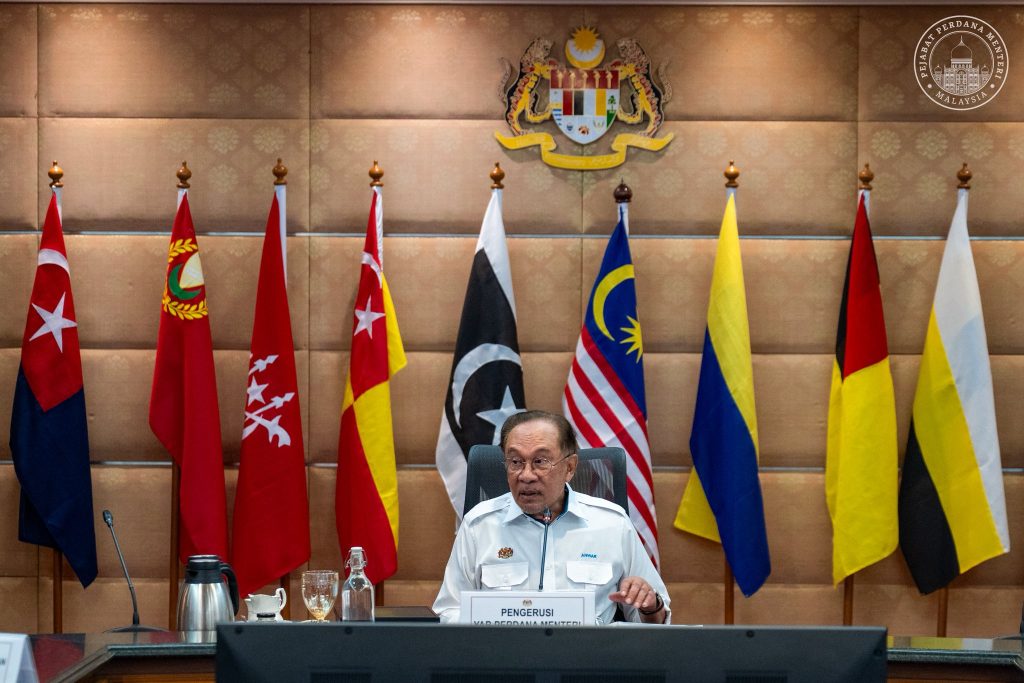
PUTRAJAYA, May 11 — Prime Minister Anwar Ibrahim today stressed that science, technology and innovation (STI) must become the main driver of Malaysia’s economic transformation in facing growing global financial uncertainties and geopolitical challenges, including the post-conflict energy crisis in West Asia. Anwar said every aspect of planning and implementation related to STI development must be mobilised in a more strategic and effective manner to ensure the country remains resilient amid an increasingly fragile global economic chain. He said the MADANI Government remains fully committed to strengthening the national STI ecosystem through several mission-based initiatives aimed at optimising resources, stimulating sustainable economic growth and accelerating the development of high-value technologies and innovations. According to the Prime Minister, the approach is crucial in reinforcing strategic synergy between the government, private sector and research and development (R&D) institutions to ensure research outcomes can be translated into tangible benefits for the people and the nation. “Science, technology and innovation must not remain within laboratories or policy documents alone, but must be transformed into practical solutions that strengthen the economy, create quality jobs and improve the people’s well-being,” he said. Anwar said this while chairing the National Science Council (MSN) Meeting No. 1 for 2026 today. He added that stronger collaboration between all stakeholders would also position Malaysia as a competitive regional hub for innovation and advanced technology development in the years ahead. -- MINUTESMY -- SOURCE: FB ANWAR IBRAHIM

PUTRAJAYA, May 11 — Prime Minister Anwar Ibrahim today stressed that science, technology and innovation (STI) must become the main driver of Malaysia’s economic transformation in facing growing global financial uncertainties and geopolitical challenges, including the post-conflict energy crisis in West Asia. Anwar said every aspect of planning and implementation related to STI development must […]