YB Gobind Singh Deo Welcomes Malaysia’s New Ambassador-Designate to Finland, Eyes Stronger Bilateral Ties
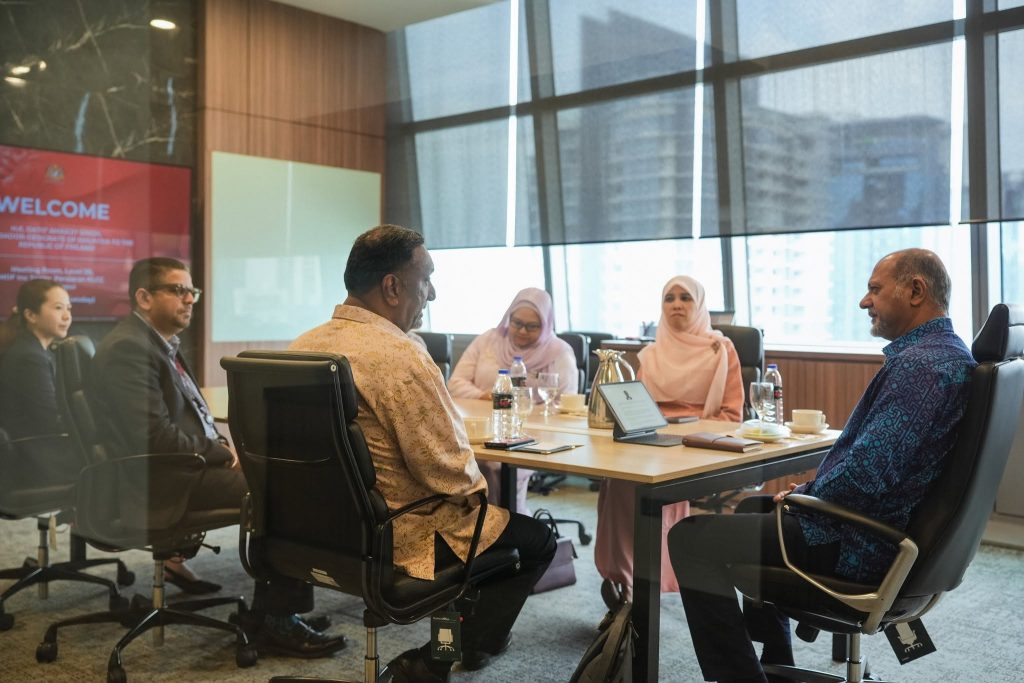
KUALA LUMPUR, June 10 – Digital Minister Gobind Singh Deo today received a courtesy call from Malaysia’s newly appointed Ambassador-designate to the Republic of Finland, Dato’ Amarjit Singh, during a meeting focused on strengthening bilateral relations and advancing cooperation in the digital sphere. In a statement following the meeting, Gobind described the discussion as meaningful, highlighting exchanges on Malaysia’s ongoing digitalisation journey and the important role the ambassador-designate will play in fostering closer ties between Malaysia and Finland. The minister said both sides shared views on opportunities to enhance cooperation between the two countries, particularly in areas that support innovation, digital transformation, and economic development. Gobind expressed confidence that Dato’ Amarjit’s leadership and diplomatic experience would contribute significantly to deepening bilateral engagement and creating new avenues for collaboration between Malaysia and Finland. “I am confident that his leadership will help deepen bilateral cooperation, foster new opportunities for collaboration, and elevate Malaysia-Finland relations to greater heights in the years ahead,” he said. Finland is widely recognised for its strengths in digital innovation, technology development, education, and sustainability, making it a valuable partner for Malaysia as the country continues to accelerate its digital transformation agenda. The meeting underscores Malaysia’s commitment to strengthening international partnerships that support economic growth, technological advancement, and people-to-people exchanges.   -- MINUTESMY  -- SOURCE: FB GOBIND SINGH DEO 

KUALA LUMPUR, June 10 – Digital Minister Gobind Singh Deo today received a courtesy call from Malaysia’s newly appointed Ambassador-designate to the Republic of Finland, Dato’ Amarjit Singh, during a meeting focused on strengthening bilateral relations and advancing cooperation in the digital sphere. In a statement following the meeting, Gobind described the discussion as meaningful, […]

KKDW needs to shift to a culture of impact, accountability – Ahmad Zahid
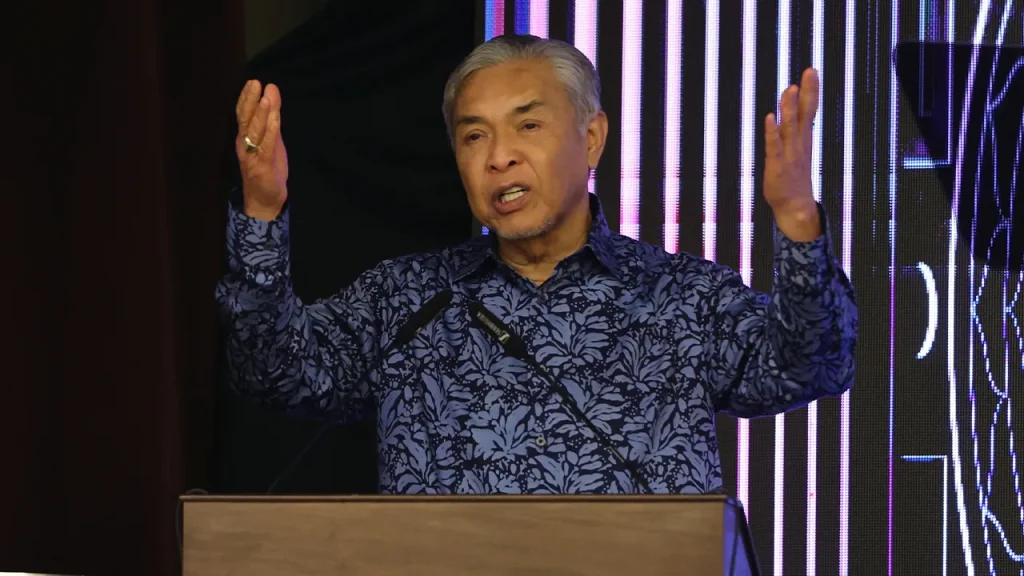
PUTRAJAYA: The Ministry of Rural and Regional Development (KKDW) needs to shift from a culture of mere process compliance to a work culture based on impact and accountability to ensure that every policy and programme truly brings change to rural people, said Deputy Prime Minister Datuk Seri Ahmad Zahid Hamidi. He, who is also the Minister of Rural and Regional Development, said KKDW cannot just be an organization that complies with processes and governance, but must instead be responsible for outcomes that directly impact the well-being of the people. "We must move from a culture of compliance to a culture of impact . From a culture of activity to a culture of accountability . This is the new discipline that I want and we all want to implement at KKDW," he said when speaking at the KKDW monthly gathering, here today. Ahmad Zahid said the people do not judge the government based on the number of meetings or presentations held, but rather through the ability of the government's policies and actions to change their lives. He also urged all KKDW leadership and staff to act faster, be brave in making decisions and honestly assess the organization's weaknesses, as well as be closer to the people to address rural development issues. Therefore, he asked the Secretary-General (KSU) and the ministry's deputy KSUs, directors-general and headmasters to make this mid-term review a turning point with each finding translated into clear decisions and effective implementation. "Every decision must have a timeline between us or the responsible party and every responsibility must lead to actions that we can all work towards. The biggest weakness of an organization is not when it admits it has a problem but when it knows about the problem but does not dare to act," he said. He also outlined six main disciplines that should form the basis of the mid-term review of the KKDW, namely relevance, effectiveness, efficiency, impact, sustainability and coherence. Ahmad Zahid said rural development can no longer be seen as a mere welfare agenda, but rather must be considered as a national defence agenda that is important to guarantee national stability. "If the villages are weak, the country will be fragile. If the villages lag behind, the country will lose balance. But if the villages develop, God willing, Malaysia will have a strong foundation to face any challenges ahead," he said. Ahmad Zahid said KKDW needed to move with new disciplines that would have a major impact on the people as well as speed up the implementation of development programmes and projects. He said that although the country's economy continued to show resilience with economic growth remaining positive, the main question was whether the development implemented was truly benefiting the rural people. Giving the example of the construction of the 1,800-kilometre Rural Link Road (JPD) under the 12th Malaysia Plan (12MP), Ahmad Zahid said the project opened up access to education, health, the economy and job opportunities for rural communities. He said the national rural economic agenda needs to be seen as a comprehensive ecosystem that connects infrastructure development, entrepreneurship, education, training and employment opportunities. Meanwhile, Ahmad Zahid praised the initiatives of several agencies under KKDW including the Central Terengganu Development Authority (KETENGAH) which implemented the KETENGAH Food Valley project, commercial pineapple plantations, broiler farming, in addition to the development of the first coffee plantation area in Kelantan by the South Kelantan Development Authority (KESEDAR) as well as the KEDA Food Valley project developed by the Kedah Regional Development Authority (KEDA). He also expressed his appreciation to the Orang Asli Development Department (JAKOA) following the increase in the enrollment of Orang Asli students into institutions of higher learning (IPT) and the Master's Education Preparation Plan (RPPS), which was described as the highest in the community's educational history. He said early education institutions such as Child Guidance Centres (TABIKA), Child Care Centres (TASKA), Smart Pre-Tahfiz, Smart Classroom and Special Early Childhood Centres under the Community Development Department (KEMAS) also play an important role in building a rural generation that is knowledgeable, technologically literate and confident. -- BERNAMA

PUTRAJAYA: The Ministry of Rural and Regional Development (KKDW) needs to shift from a culture of mere process compliance to a work culture based on impact and accountability to ensure that every policy and programme truly brings change to rural people, said Deputy Prime Minister Datuk Seri Ahmad Zahid Hamidi. He, who is also the […]

TM strengthens AI, sustainability, realising aspirations to achieve digital power by 2030

KUALA LUMPUR: Telekom Malaysia Bhd (TM) is on track to realise its aspiration to become a digital powerhouse by 2030 through its PWR 2030 strategy, in line with efforts to empower artificial intelligence (AI) and sustainability to drive long-term value creation for all stakeholders. In a statement today, updating information presented at its recent annual general meeting, the telecommunications company said it continues to strengthen its role as a coordinator of Malaysia's AI and digital ecosystem by developing the infrastructure, platforms and governance needed to support the wider adoption of AI. This includes AI-powered data centers, as well as AI-based solutions such as smart cities and smart urban forestry for enterprises, governments and large-scale global companies. Its Group Managing Director and Chief Executive Officer, Amar Huzaimi Md Deris said that to strengthen the way value is created, the company is enhancing its AI and digital innovation capabilities while embedding sustainability more deeply into its business, operations and strategic investments. This move also strengthens the company's ability to support the growing digital needs across businesses, communities and countries, he said. Internally, TM's adoption of AI is being accelerated through agentic AI contact centres, network modernisation and structured AI skills upgrading programmes for employees. On sustainability, TM said it is improving its sustainability framework in 2025 by adopting an approach that balances financial targets with environmental and social impacts. For the financial year ending Dec 31, 2025, the group generated RM135 million in revenue from low-carbon products and services including green-certified data centres and digital solutions for micro, small and medium enterprises, in addition to reducing carbon emissions by 34 percent compared to the 2019 baseline. -- BERNAMA

KUALA LUMPUR: Telekom Malaysia Bhd (TM) is on track to realise its aspiration to become a digital powerhouse by 2030 through its PWR 2030 strategy, in line with efforts to empower artificial intelligence (AI) and sustainability to drive long-term value creation for all stakeholders. In a statement today, updating information presented at its recent annual […]

1,000 Trees Planted In Sook To Mark International Day Of Forests Celebration
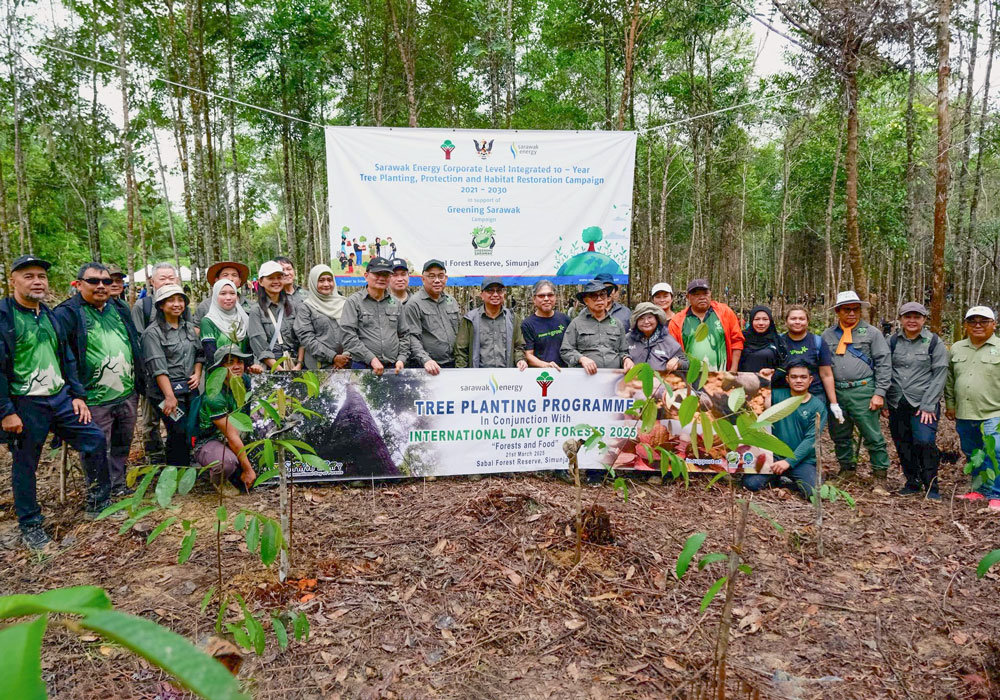
SOOK, May 22 -- About 1,000 trees of various species were planted today in a symbolic effort to strengthen the ecosystem, stabilise the climate and safeguard the sustainability of the country’s economy. Minister of Natural Resources and Environmental Sustainability Datuk Seri Arthur Joseph Kurup said the Sook Lake Forest Reserve in Pensiangan was selected as the venue for the tree-planting programme held in conjunction with the National-level International Day of Forests 2026 celebration. He said the three-day programme, which runs until Sunday, is being carried out in collaboration with local leaders, corporate partners, and participation from Sekolah Menengah Kebangsaan (SMK) Sook and SMK TrusMadi students. “I urge the community, especially the younger generation, to take the opportunity to become agents of change by making tree planting a continuous practice and a way of life for a sustainable future,” he said in a post on his official Facebook page today. The Pensiangan member of Parliament said this year’s celebration, themed ‘Forests and Economies’, aims to highlight green resources as a highly valuable alternative economic source for communities, particularly in rural areas, whether through ecotourism, sustainable forest products or sustainable agriculture. He said Sabah is fortunate to be among the regions with the highest forest cover in Malaysia, and all parties are urged to continue fostering a love for the environment for future sustainability. “Our forests, our treasure, our shared responsibility,” he added. -- BERNAMA

SOOK, May 22 — About 1,000 trees of various species were planted today in a symbolic effort to strengthen the ecosystem, stabilise the climate and safeguard the sustainability of the country’s economy. Minister of Natural Resources and Environmental Sustainability Datuk Seri Arthur Joseph Kurup said the Sook Lake Forest Reserve in Pensiangan was selected as […]

PM Anwar Ibrahim, Singapore PM Lawrence Wong Strengthen Strategic Cooperation on Economy, Energy and Regional Stability
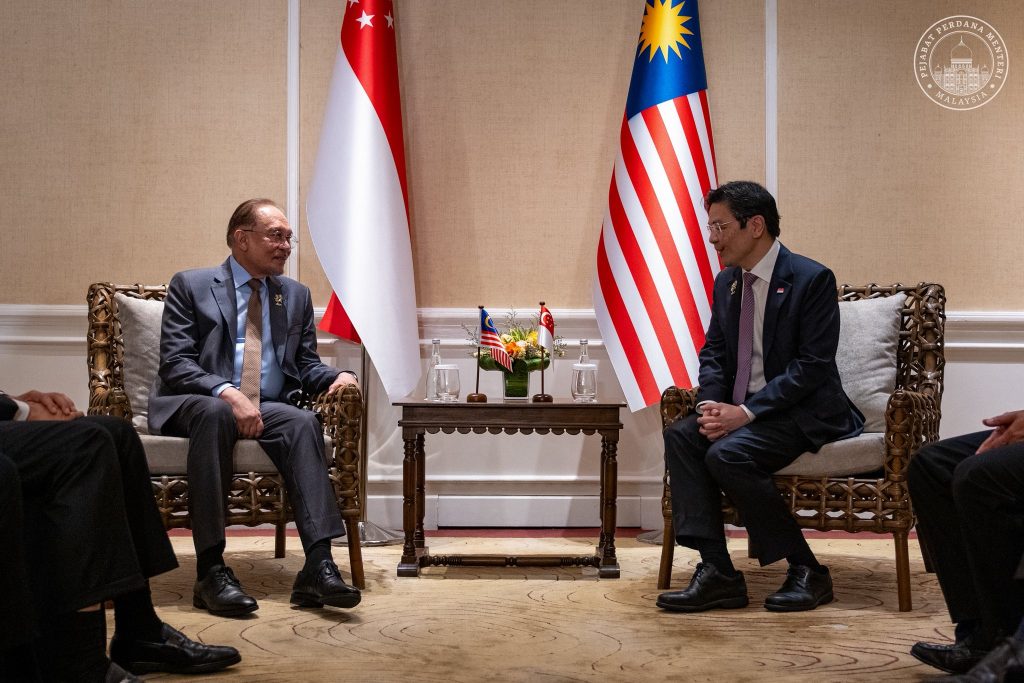
KUALA LUMPUR, May 8 — Prime Minister Anwar Ibrahim and Singapore Prime Minister Lawrence Wong have reaffirmed their commitment to strengthening strategic bilateral cooperation aimed at safeguarding mutual interests, regional stability and the prosperity of the people of both countries. During a bilateral meeting yesterday, both leaders discussed several key areas of cooperation, including efforts to accelerate the implementation of the Johor-Singapore Special Economic Zone (JS-SEZ) and ensure the Rapid Transit System (RTS) Link project becomes operational by the end of 2026. The discussions also focused on expanding collaboration in renewable energy development and the ASEAN Power Grid initiative, as well as deepening cooperation in Carbon Capture and Storage (CCS) technology as part of broader sustainability and climate goals. Malaysia also stressed the importance of continuing maritime border negotiations in a constructive manner and in accordance with international law. Both sides agreed on the need to address matters related to water supply, airspace and the management of the Kuala Lumpur Flight Information Region (KL FIR) through mutual respect and bilateral understanding. On regional and international developments, Anwar emphasised the importance of achieving a lasting ceasefire in the Middle East and safeguarding freedom of navigation in the Strait of Hormuz amid growing geopolitical tensions. The Prime Minister further underscored the need for ASEAN to continue playing a principled and proactive role in preserving regional stability, security and the sustainability of global supply chains. Anwar said Malaysia remains committed to fostering strong ties with Singapore in the spirit of good neighbourliness and ASEAN cooperation, while advancing sustainable economic growth and regional peace. -- MINUTESMY -- SOURCE: FB ANWAR IBRAHIM

KUALA LUMPUR, May 8 — Prime Minister Anwar Ibrahim and Singapore Prime Minister Lawrence Wong have reaffirmed their commitment to strengthening strategic bilateral cooperation aimed at safeguarding mutual interests, regional stability and the prosperity of the people of both countries. During a bilateral meeting yesterday, both leaders discussed several key areas of cooperation, including efforts […]