HSA 2026 To Serve As Platform To Boost Ecosystem, Public-Private Healthcare Collaboration

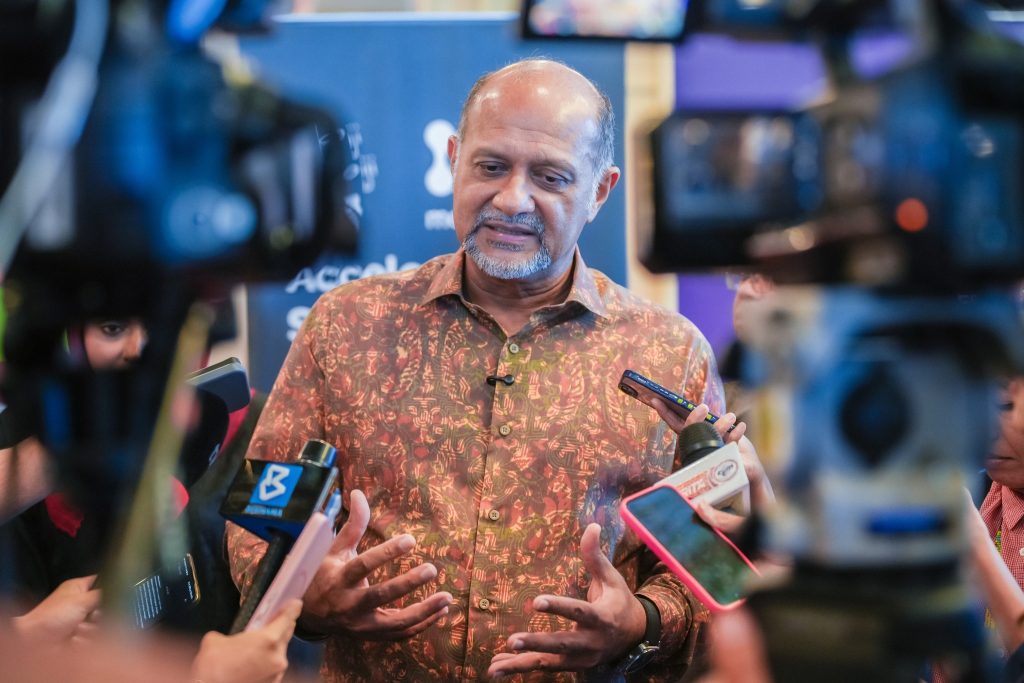
KUALA LUMPUR, May 20 -- The hosting of the Health Summit Asia (HSA) 2026 is expected to serve as a catalyst in strengthening the regional healthcare ecosystem through the gathering of industry players, medical technology experts and policymakers from within and outside the country to explore future healthcare solutions. Deputy Health Minister Datuk Hanifah Hajar Taib said the platform would also create opportunities for stronger collaboration between the government and private sector in enhancing the national healthcare system, particularly through the sharing of technology, innovation and the latest expertise. She said through exhibitions and discussion sessions involving local and international industry players, various new technologies and innovations in the healthcare sector could be highlighted not only in Malaysia but also across Asia. “If we think about it, it is not necessarily the Ministry of Health (MOH) or the Malaysian government that knows every type of technology or breakthrough available from other countries or local industries. “So through exhibitions and discussions like this, we can further strengthen understanding and facilitate solutions to more complex health problems,” she told reporters after launching HSA 2026 here today. Also present were Green Wellness Malaysia founder and managing director Datin Dorph Peng and Qube Integrated Malaysia executive chairman Richard Teo. The three-day conference, jointly organised by Qube Integrated Malaysia and Green Wellness Malaysia, is expected to attract more than 10,000 delegates, over 100 exhibitors and participation from more than 40 global and regional speakers, while targeting the generation of up to RM1.5 billion in commercial opportunities within the ASEAN healthcare and wellness economy. Meanwhile, commenting on the issue of drug-laced vapes or “zombie vapes”, Hanifah Hajar said MOH continuously monitors the current situation while conducting awareness programmes in schools to educate students on the dangers of vaping to health. “If there are vapes containing drugs and not produced by registered companies, we need to work together with the police, customs and enforcement authorities to ensure such matters cannot be compromised,” she said. On the Ebola situation, she said the Ebola vaccine has yet to be registered in Malaysia, but the ministry is making early preparations, including identifying procurement and logistics processes should the vaccine be required in the future. “We want to ensure that if needed, we are fully prepared to bring the vaccine into Malaysia,” she said. Earlier, MOH in a statement today said no Ebola cases have been reported in Malaysia so far, but preparedness measures are being further strengthened in view of the risk of imported cases through international travel following outbreaks in Congo and Uganda. -- BERNAMA

KUALA LUMPUR, May 20 — The hosting of the Health Summit Asia (HSA) 2026 is expected to serve as a catalyst in strengthening the regional healthcare ecosystem through the gathering of industry players, medical technology experts and policymakers from within and outside the country to explore future healthcare solutions. Deputy Health Minister Datuk Hanifah Hajar […]

Ujana Tenaga PETRONAS Chronicles Terengganu’s Energy Journey

KUALA TERENGGANU, May 19– The Petroleum Gallery at the Terengganu State Museum, which has been upgraded to Ujana Tenaga PETRONAS (PETRONAS Energy Garden), chronicles the story of energy, PETRONAS’ heritage, and technological advancement in a way that resonates with the public. PETRONAS senior vice president (Project Delivery and Technology) Ir. Mohd Yusri Mohamed Yusof said […]

S. Korea To Test AI-based Smart City Tech In Southeast Asia

SEOUL, April 13 (Bernama-Yonhap) -- South Korea will carry out pilot projects to test smart city technologies based on artificial intelligence (AI) in five Southeast Asian countries, including Malaysia, aimed at helping address urban challenges and support domestic firms' global expansions, the land ministry said Monday. According to Yonhap News Agency, the ministry said it has selected six projects to be carried out in five countries under its 2026 K-City Network programme, an initiative that supports the application of domestic smart city projects. In Brunei, an AI-based smart city platform will be tested to improve water management and disaster response, while a smart traffic management system will help optimise traffic signals in Bacoor of the Philippines. Projects in Vietnam will help introduce on-demand transport services in Ho Chi Minh City and deploy AI-based smart intersection control systems in Can Tho to improve traffic flow. Additional projects include implementing a safety management solution for ageing buildings in Surin, Thailand, and deploying a traffic management system in Penang, Malaysia, to detect accidents and congestion. The ministry said the programme is expected to help validate the effectiveness of Korean smart technologies in overseas markets and lead to follow-up exports and investment opportunities.

SEOUL, April 13 (Bernama-Yonhap) — South Korea will carry out pilot projects to test smart city technologies based on artificial intelligence (AI) in five Southeast Asian countries, including Malaysia, aimed at helping address urban challenges and support domestic firms’ global expansions, the land ministry said Monday. According to Yonhap News Agency, the ministry said it […]

Mula-X Redefines Financial Security in Thailand with Ideem’s Passkeys+

BANGKOK -- Mula-X today announced the rollout of Passkeys+ from Ideem, potentially replacing SMS-based OTPs with biometric, device-bound authentication across its digital wallet platform. With this move Mula-X has positioned themselves as an industry leader by delivering a significantly improved user experience while also automatically strengthening security for its users. Built on the FIDO standard, Passkeys+ delivers passwordless authentication that is phishing-resistant, invisible to the user, and bound to the device, giving Mula-X visibility and control that standard passkey deployments simply don't offer. Authentication happens natively within the app, with no redirects, no OTP delays, and no attack surface for credential theft. "By adopting Passkeys+ technology alongside our existing SMS-based verification, it allows Mula-X to deliver a faster, more seamless login experience while strengthening security for our users," said Lyn Kok, Founder & CEO of Mula-X. "Security and convenience usually don't go together, but with the advent of AI deep faking, improved phishing attacks and more demanding customers they are both paramount in digital finance." A Stronger Bottom Line The operational impact is equally significant. By enabling an alternative to SMS OTP infrastructure, Mula-X potentially removes recurring delivery costs and the operational complexity of managing global OTP providers, replacing variable, usage-based expense with a scalable, fixed-overhead security layer. "The Thai market is sophisticated and fast-moving, and Mula-X's users deserve authentication at the forefront of the industry," said Greg Storm, President of Ideem. "Mula-X has demonstrated that better security and user convenience can be delivered simultaneously. Users will always take the path of least resistance, and by making their security easy and convenient, Mula-X has given their customers an easy, automatic and invisible path to better security. . As digital finance accelerates across Southeast Asia, Mula-X's adoption of Passkeys+ sets a new benchmark for what modern fintech security should look like. /PRNewswire/

BANGKOK — Mula-X today announced the rollout of Passkeys+ from Ideem, potentially replacing SMS-based OTPs with biometric, device-bound authentication across its digital wallet platform. With this move Mula-X has positioned themselves as an industry leader by delivering a significantly improved user experience while also automatically strengthening security for its users. Built on the FIDO standard, […]