KUALA LUMPUR, 10 APRIL -- The global economy is currently under pressure from the ongoing West Asian crisis which could potentially require financial assistance of up to US$50 billion (US$1 = RM3.98) to help vulnerable countries cope with the shock, according to the International Monetary Fund (IMF). IMF Managing Director Kristalina Georgieva said the war had also triggered a significant, global and asymmetric supply shock, disrupting energy flows, price spikes and putting pressure on supply chains around the world. Oil and liquefied natural gas (LNG) supplies have proven to be widely affected, which has only contributed to increased inflation and economic uncertainty at the global level. He also referred to the Ras Laffan Complex in Qatar which was described as "very important evidence" in terms of the effectiveness and accuracy of strategic investments, capable of producing 93 percent of the Gulf region's LNG, with approximately 80 percent of it destined for Asia Pacific destinations - a region that is currently experiencing a serious fuel shortage. "The Laffan race has been essentially closed since March 2 with immediate effect on March 19 and will likely take three to five years to fully recover," he said in Washington on Thursday (local time). Georgieva said the impact was also felt most severely by oil-importing countries and those with fiscal capacity constraints, while energy-exporting countries were also no exception in terms of cost spikes and wider economic disruption. The IMF also expects global growth to slow down in all scenarios, even if the situation changes for the better, as infrastructure damage, supply disruptions and declining confidence are the main factors hampering the outlook. To address the crisis, the IMF projects that demand for balance of payments support could potentially increase by US$20 billion to US$50 billion in the near future, with the lower estimate depending on how well the ceasefire holds. "Two things need to be emphasized: (first) the range figure could have been much higher if most emerging economies had not implemented good policies, including some of the large ones, over the past few decades." "Secondly, we all have sufficient resources to deal with this shock," he said. Georgieva also advised policymakers to respond more cautiously, avoiding steps or approaches that could worsen the global situation while focusing on vulnerable populations and maintaining price stability. The IMF also stressed the importance of strong economic fundamentals and policy discipline, and that countries with greater fiscal space and significant resilience are better positioned to manage the shock. "Policymakers can help in many ways and of course, they also need to be careful not to make the situation worse." "In this regard, I urge all countries to reject any unilateral action -- export controls, price controls and so on that could further affect the global situation," he said. Despite the crisis, Georgieva said, there are still better prospects when some countries act to reexamine relations and see more new opportunities. "For example, ASEAN. Trade within ASEAN is about 20 percent. In comparison, trade within the European Union is 60 percent. So why don't these countries increase trade with each other?" "These are aspects that need to be examined and the IMF wants to help them not only create more encouraging trade relations, but also examine collective strengths that can be leveraged." "The same thing also involves the Gulf countries, which were actually actively coordinating reform efforts, increasing connectivity until this war affected them. I am sure this situation will be a longer trend in the Gulf region." “For me, just like you, we may need to create a group of ‘optimists.’ We need to realize that this changing world is a world where opportunities that were previously unimaginable are now becoming more prominent and not just challenges. Yes, we need to focus on the challenges, but at the same time not miss the opportunities that are there,” he said. Meanwhile, he said the upcoming IMF Spring Meeting will focus on coordinating responses or actions to reduce the economic impact and support recovery efforts in the current uncertain reality.

US$50 billion in financial assistance needed as West Asian conflicts weigh on global economy – IMF

KUALA LUMPUR, 10 APRIL — The global economy is currently under pressure from the ongoing West Asian crisis which could potentially require financial assistance of up to US$50 billion (US$1 = RM3.98) to help vulnerable countries cope with the shock, according to the International Monetary Fund (IMF).

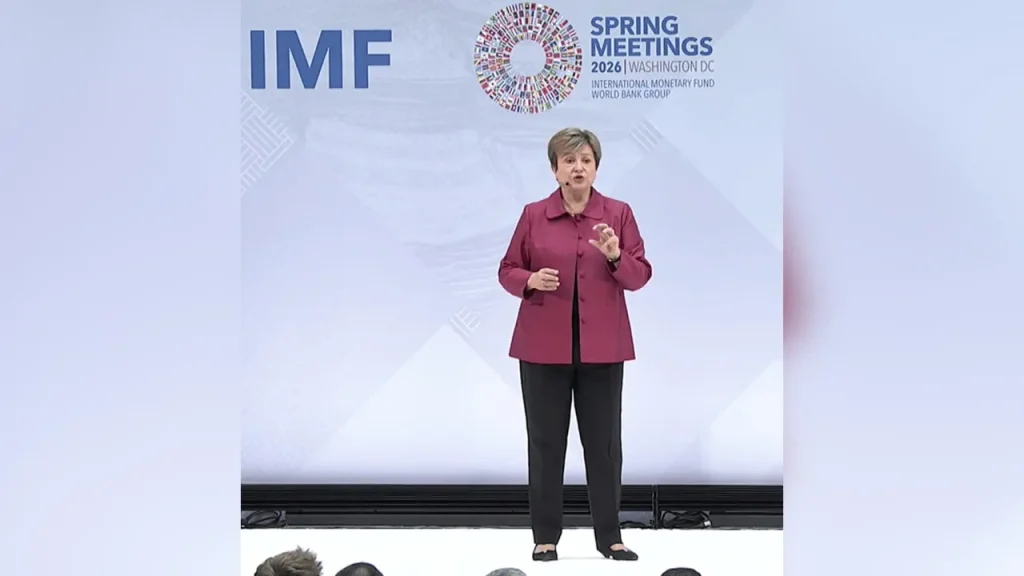
IMF Managing Director Kristalina Georgieva said the war had also triggered a significant, global and asymmetric supply shock, disrupting energy flows, price spikes and putting pressure on supply chains around the world.

Oil and liquefied natural gas (LNG) supplies have proven to be widely affected, which has only contributed to increased inflation and economic uncertainty at the global level.

He also referred to the Ras Laffan Complex in Qatar which was described as “very important evidence” in terms of the effectiveness and accuracy of strategic investments, capable of producing 93 percent of the Gulf region’s LNG, with approximately 80 percent of it destined for Asia Pacific destinations – a region that is currently experiencing a serious fuel shortage.

“The Laffan race has been essentially closed since March 2 with immediate effect on March 19 and will likely take three to five years to fully recover,” he said in Washington on Thursday (local time).

Georgieva said the impact was also felt most severely by oil-importing countries and those with fiscal capacity constraints, while energy-exporting countries were also no exception in terms of cost spikes and wider economic disruption.

The IMF also expects global growth to slow down in all scenarios, even if the situation changes for the better, as infrastructure damage, supply disruptions and declining confidence are the main factors hampering the outlook.

To address the crisis, the IMF projects that demand for balance of payments support could potentially increase by US$20 billion to US$50 billion in the near future, with the lower estimate depending on how well the ceasefire holds.

“Two things need to be emphasized: (first) the range figure could have been much higher if most emerging economies had not implemented good policies, including some of the large ones, over the past few decades.”

“Secondly, we all have sufficient resources to deal with this shock,” he said.

Georgieva also advised policymakers to respond more cautiously, avoiding steps or approaches that could worsen the global situation while focusing on vulnerable populations and maintaining price stability.

The IMF also stressed the importance of strong economic fundamentals and policy discipline, and that countries with greater fiscal space and significant resilience are better positioned to manage the shock.

“Policymakers can help in many ways and of course, they also need to be careful not to make the situation worse.”

“In this regard, I urge all countries to reject any unilateral action — export controls, price controls and so on that could further affect the global situation,” he said.

Despite the crisis, Georgieva said, there are still better prospects when some countries act to reexamine relations and see more new opportunities.

“For example, ASEAN. Trade within ASEAN is about 20 percent. In comparison, trade within the European Union is 60 percent. So why don’t these countries increase trade with each other?”

“These are aspects that need to be examined and the IMF wants to help them not only create more encouraging trade relations, but also examine collective strengths that can be leveraged.”

“The same thing also involves the Gulf countries, which were actually actively coordinating reform efforts, increasing connectivity until this war affected them. I am sure this situation will be a longer trend in the Gulf region.”

“For me, just like you, we may need to create a group of ‘optimists.’ We need to realize that this changing world is a world where opportunities that were previously unimaginable are now becoming more prominent and not just challenges. Yes, we need to focus on the challenges, but at the same time not miss the opportunities that are there,” he said.

Meanwhile, he said the upcoming IMF Spring Meeting will focus on coordinating responses or actions to reduce the economic impact and support recovery efforts in the current uncertain reality.

— BERNAMA

Related News