Zahid Hamidi Extends 45th Anniversary Wishes to KEDA

KUALA LUMPUR, MAY 28 -- Deputy Prime Minister Datuk Seri Ahmad Zahid Hamidi today extended his congratulations to the Kedah Regional Development Authority (KEDA) on the occasion of its 45th anniversary, praising the agency’s longstanding contribution to rural development in Kedah. Established in 1981, KEDA has spent more than four decades driving transformation and improving the socio-economic landscape of rural communities in the “Rice Bowl State”. In a statement, Zahid described KEDA’s 45-year journey as one filled with sacrifices and achievements in uplifting rural development and enhancing the well-being of the people. “Alhamdulillah, KEDA continues to play its role as a catalyst agent in accelerating holistic rural transformation, encompassing both worldly and spiritual aspects for the prosperity of rural communities,” he said. Zahid added that KEDA’s true strength lies in the sincerity and dedication of its workforce, who remain close to the grassroots and understand the needs and aspirations of the people. He also called on the agency to continue being caring, responsive and committed in championing the rural development agenda. “If not us who continue standing together with the rural community, then who else?” he said. Zahid expressed hope that KEDA would continue to prosper and remain among the key institutions in driving the development of rural areas and regional progress in the country. “Happy 45th Anniversary to all KEDA staff and members. May KEDA continue to move forward, be blessed with ease in all its affairs, and remain an important institution in advancing rural and regional development in Malaysia, Insya-Allah,” he added. -- MINUTESMY -- SOURCE: FB ZAHID HAMIDI

KUALA LUMPUR, MAY 28 — Deputy Prime Minister Datuk Seri Ahmad Zahid Hamidi today extended his congratulations to the Kedah Regional Development Authority (KEDA) on the occasion of its 45th anniversary, praising the agency’s longstanding contribution to rural development in Kedah. Established in 1981, KEDA has spent more than four decades driving transformation and improving […]

TM strengthens AI, sustainability, realising aspirations to achieve digital power by 2030

KUALA LUMPUR: Telekom Malaysia Bhd (TM) is on track to realise its aspiration to become a digital powerhouse by 2030 through its PWR 2030 strategy, in line with efforts to empower artificial intelligence (AI) and sustainability to drive long-term value creation for all stakeholders. In a statement today, updating information presented at its recent annual general meeting, the telecommunications company said it continues to strengthen its role as a coordinator of Malaysia's AI and digital ecosystem by developing the infrastructure, platforms and governance needed to support the wider adoption of AI. This includes AI-powered data centers, as well as AI-based solutions such as smart cities and smart urban forestry for enterprises, governments and large-scale global companies. Its Group Managing Director and Chief Executive Officer, Amar Huzaimi Md Deris said that to strengthen the way value is created, the company is enhancing its AI and digital innovation capabilities while embedding sustainability more deeply into its business, operations and strategic investments. This move also strengthens the company's ability to support the growing digital needs across businesses, communities and countries, he said. Internally, TM's adoption of AI is being accelerated through agentic AI contact centres, network modernisation and structured AI skills upgrading programmes for employees. On sustainability, TM said it is improving its sustainability framework in 2025 by adopting an approach that balances financial targets with environmental and social impacts. For the financial year ending Dec 31, 2025, the group generated RM135 million in revenue from low-carbon products and services including green-certified data centres and digital solutions for micro, small and medium enterprises, in addition to reducing carbon emissions by 34 percent compared to the 2019 baseline. -- BERNAMA

KUALA LUMPUR: Telekom Malaysia Bhd (TM) is on track to realise its aspiration to become a digital powerhouse by 2030 through its PWR 2030 strategy, in line with efforts to empower artificial intelligence (AI) and sustainability to drive long-term value creation for all stakeholders. In a statement today, updating information presented at its recent annual […]

TNB’s RM43 billion grid modernization supports rapid growth in data center demand
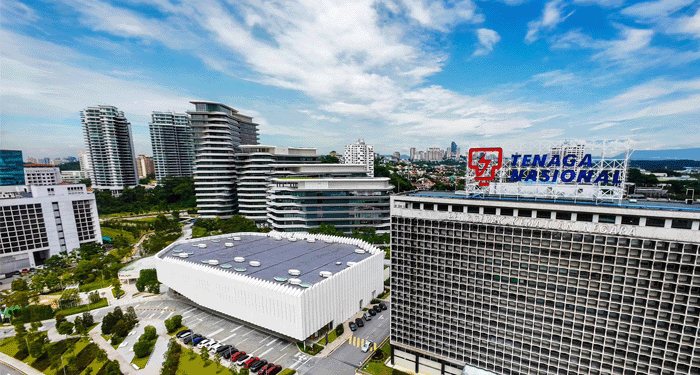
KUALA LUMPUR: Tenaga Nasional Bhd's (TNB) RM43 billion grid modernisation programme is set to meet the growing demand for data centres in Malaysia, with future energy needs being factored into a more comprehensive national generation plan to ensure long-term system readiness. Speaking at the Data Centre and Cloud Infrastructure Expo 2026, TNB Chief Grid Officer Hasmarizal Hassan shared the steps the utility company is taking to provide grid infrastructure to support the rapid development of the sector, including connection capacity, implementation period and long-term system planning. Among the main focuses is the TNB Green Lane Line, which has reduced the grid connection period for data centres from 36 months to as little as 12 months, according to Hasmarizal in a post on TNB's social media. As of March 2026, a total of 33 projects have been implemented under this framework, reflecting TNB's recognition that connection speed is a key factor in strengthening Malaysia's position as a regional data center hub. "To manage large-scale demand growth, TNB is also adopting a cluster-based grid strategy, focusing on transmission infrastructure investments in identified growth corridors," he said. He said Johor remained among the key active clusters under the strategy, with further expansion across the country planned to support scalability and maintain overall system reliability. Hasmarizal said the approach aims to ensure the grid remains capable of supporting the increasing demand for digital infrastructure in Malaysia, continuing to attract data centre investments and other high-value investments. The MADANI government focuses on industries that create better job opportunities, facilitate technology transfer, drive innovation and promote long-term economic growth. -- BERNAMA

KUALA LUMPUR: Tenaga Nasional Bhd’s (TNB) RM43 billion grid modernisation programme is set to meet the growing demand for data centres in Malaysia, with future energy needs being factored into a more comprehensive national generation plan to ensure long-term system readiness. Speaking at the Data Centre and Cloud Infrastructure Expo 2026, TNB Chief Grid Officer […]

DHPP Defends Role in PAS, Says Criticism Over Non-Malay Wing “Misunderstands Its Function”
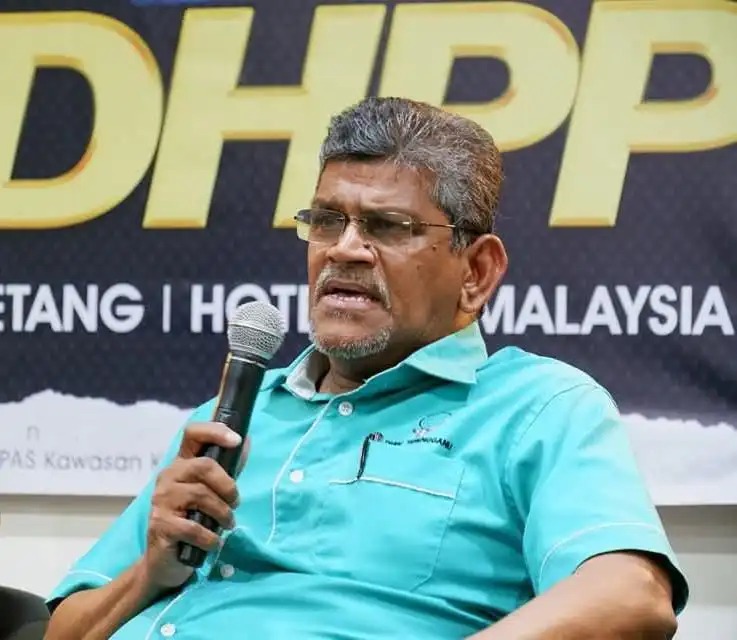
KUALA LUMPUR, May 28 -- The role of Dewan Himpunan Pendukung PAS (DHPP) within Parti Islam Se-Malaysia has come under renewed discussion following recent commentary by political analyst P. Ramasamy on opposition dynamics in Malaysia. In rebutting the statement made by Ramasamy, DHPP Information Chief Dr Balachandran Gopal Krishnan said portraying Dewan Himpunan Pendukung PAS (DHPP) as “feeble” or “meek” misunderstands both the role and strength of DHPP within PAS itself. “DHPP does not operate as an isolated political pressure group. Behind DHPP stands the full machinery, structure and leadership of PAS – one of the most organised and grassroots-driven political parties in Malaysia today.” he explained. Secondly, DHPP was never created as a race-based political platform. Unlike many parties that continue to approach politics through narrow ethnic bargaining, DHPP represents a broader and more inclusive political engagement involving Malaysians from various religious and cultural backgrounds who believe in integrity, stability, social harmony and responsible governance, he pointed out. “The old political model where every race must be represented only by leaders from the same race is increasingly losing relevance, especially among younger Malaysians. “Leadership should not be judged merely by ethnicity, but by sincerity, competency and willingness to serve all communities fairly.” said Dr Balachandran. In reality, many existing Indian political leaders today no longer possess the bargaining power they once claimed to have. “This is a political reality many ordinary Indians themselves openly acknowledge. Merely having an Indian face in leadership does not automatically translate into meaningful empowerment for the Indian community. “Within PAS, issues involving non-Muslims, Indians, Chinese, Siamese, Kadazan or any other community are not viewed as “their problems” alone. “PAS leaders themselves regularly raise issues affecting all Malaysians because governance must transcend race-based silos if the country genuinely wishes to move forward.” he added. “Malaysia today is entering a new political phase. The rakyat are increasingly tired of endless factionalism, personality politics, nepotism accusations and race-centred political narratives. What Malaysians need moving forward is a more mature, stable and inclusive political culture built on values, accountability and mutual respect. “Political maturity is not about who shouts the loudest about race representation. It is about building trust across communities and ensuring every Malaysian feels heard, respected and protected within the national framework.” That is the direction DHPP believes Malaysia must move towards, he asserts. --PRESSKL

KUALA LUMPUR, May 28 — The role of Dewan Himpunan Pendukung PAS (DHPP) within Parti Islam Se-Malaysia has come under renewed discussion following recent commentary by political analyst P. Ramasamy on opposition dynamics in Malaysia. In rebutting the statement made by Ramasamy, DHPP Information Chief Dr Balachandran Gopal Krishnan said portraying Dewan Himpunan Pendukung PAS […]

Sanjeevan Ramakrishnan Making Inroads in Jeram Padang for Perikatan Nasional

KUALA LUMPUR, MAY 28 -- By all accounts, Jeram Padang seat in Negeri Sembilan has long been viewed as a constituency where traditional political loyalties run deep. Yet on the ground, a subtle but noticeable shift is beginning to emerge through the presence of Perikatan Nasional (PN) coordinator Sanjeevan Ramakrishnan. Unlike conventional politicians who rely heavily on ceramah seasons and election rhetoric, Sanjeevan appears to be building his influence through consistent grassroots engagement, community accessibility and local issue-driven politics. In many ways, his approach reflects a growing political trend among younger coordinators and emerging leaders who understand that voters today are less interested in slogans and more focused on visibility, service and sincerity. Over the past months, Sanjeevan has increasingly been seen attending local programmes, engaging with residents from various communities and positioning himself as a bridge between ordinary voters and the broader PN machinery. While Jeram Padang remains politically competitive, his steady presence has begun to attract attention, particularly among younger voters and segments of the Indian community who are often overlooked outside election cycles. Political observers note that PN’s challenge in Negeri Sembilan has traditionally been its ability to penetrate mixed and semi-urban constituencies. However, figures like Sanjeevan represent a newer strategy within the coalition — one centred around long-term relationship building rather than seasonal campaigning. What makes his rise noteworthy is that he does not come across as confrontational. Instead, his messaging focuses on local development concerns, youth opportunities, cost of living pressures and community welfare issues. This softer grassroots approach could potentially help PN expand its acceptance beyond its traditional support base. There is also a growing recognition that voters in areas like Jeram Padang are becoming increasingly fluid in their political preferences. The old assumptions that certain communities will vote permanently along historical lines no longer carry the same certainty they once did. Ground engagement now matters more than party logos alone. Sanjeevan’s increasing visibility also signals PN’s intention to strengthen its organisational structure early, well before the next state election. Political groundwork at constituency level often determines future momentum, and Jeram Padang may become one of the constituencies to watch if PN continues investing in local coordinators with strong community outreach capabilities. Of course, political inroads do not automatically translate into electoral victory. Much will depend on whether PN can sustain its local engagement, present credible policy alternatives and maintain cohesion at state level. Nevertheless, Sanjeevan Ramakrishnan’s growing presence in Jeram Padang suggests that PN is no longer content with being merely an opposition voice in the area. Instead, the coalition appears intent on becoming a serious grassroots contender — and Sanjeevan may well be one of the individuals leading that effort quietly but effectively. Jeram Padang itself remains one of the more unique constituencies in Negeri Sembilan due to its mixed demographic and plantation-rooted political landscape. According to constituency data and SPR-linked electoral records, the seat has approximately 16,300 registered voters as of the 2023 electoral roll, with Malays forming slightly above 50 per cent of the electorate, followed by Indians at around 33 per cent, Chinese nearly 10 per cent and others making up the remainder. The constituency also consists of several key polling districts including Jeram Padang, Rompin, Bukit Rokan Barat, Ladang Middleton, Ladang Bahau and the FELDA areas of Palong 1 and Palong 2. These demographics make Jeram Padang a politically strategic seat where grassroots engagement across multiple communities is essential for any coalition hoping to build long-term influence. For Perikatan Nasional, this is precisely why the groundwork being laid by Sanjeevan Ramakrishnan could prove significant in the years ahead. -- SOURCE : PRESSKL -- Photo credit – Sanjeevan Ramakrishnan Facebook

KUALA LUMPUR, MAY 28 — By all accounts, Jeram Padang seat in Negeri Sembilan has long been viewed as a constituency where traditional political loyalties run deep. Yet on the ground, a subtle but noticeable shift is beginning to emerge through the presence of Perikatan Nasional (PN) coordinator Sanjeevan Ramakrishnan. Unlike conventional politicians who rely […]

Reading Helps Build A More Mature, Thoughtful Society – PM Anwar Ibrahim

KUALA LUMPUR, May 28 -- Prime Minister Datuk Seri Anwar Ibrahim said the practice of reading can help shape a more mature and broad-minded society in facing an increasingly complex world. In a Facebook post, he said books are not only a source of knowledge but also educate society to be more patient in thinking and wiser in making judgements. “Books teach us to be more patient in thought, more mature in judgement and not easily swept away by a culture of condemnation or short-lived sensationalism. “Insya-Allah, tomorrow I will launch the 2026 Kuala Lumpur International Book Fair (PBAKL) as a sign of continued support for the culture of knowledge and reading among the people, particularly the younger generation,” he said. Anwar said he took the opportunity during the Aidiladha holiday yesterday to read several of his favourite books from various fields, including literature, while reflecting on the increasingly challenging times. In a video shared in the post, Anwar also recited poetry from “Dari Derita Bangsa”, related to his struggle and imprisonment in 1999, which also touched on the resilience of his wife, Datuk Seri Dr Wan Azizah Wan Ismail, in facing challenges during the Reformasi era. The 43rd PBAKL 2026 will be held from May 29 to June 7 at the World Trade Centre Kuala Lumpur. -- BERNAMA

KUALA LUMPUR, May 28 — Prime Minister Datuk Seri Anwar Ibrahim said the practice of reading can help shape a more mature and broad-minded society in facing an increasingly complex world. In a Facebook post, he said books are not only a source of knowledge but also educate society to be more patient in thinking […]

PKR Records Over 5,000 New Members Between April And May – YB Fahmi Fadzil
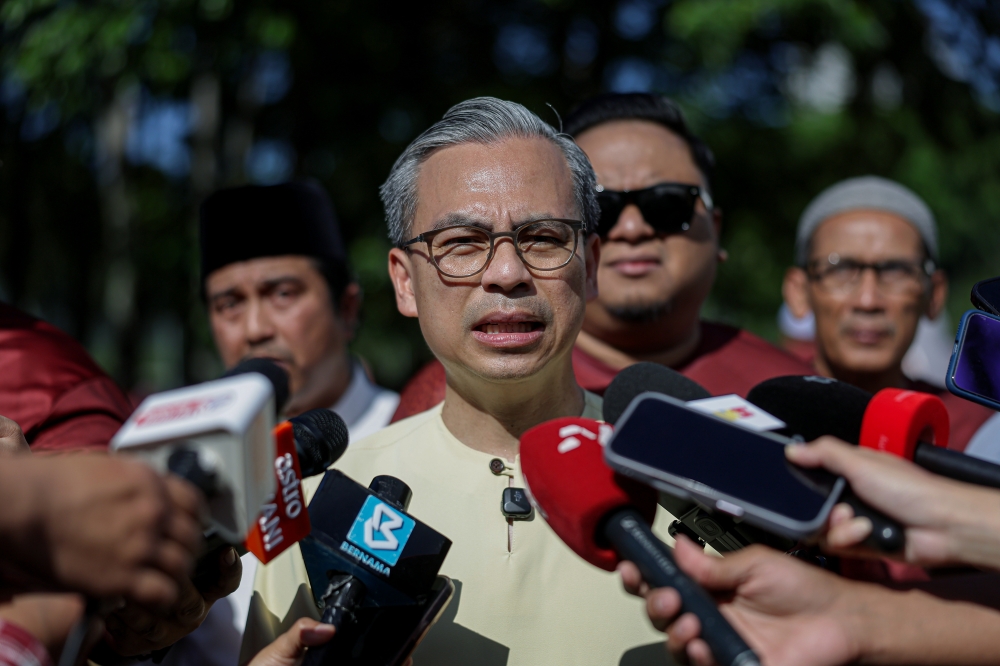
KUALA LUMPUR, May 27 -- PKR recorded more than 5,000 new members between April and this month, said PKR information chief Datuk Fahmi Fadzil. Fahmi, who is also Communications Minister, said the increase was achieved without any major programmes or specific promotional efforts by the party. “For PKR itself, with a membership of more than one million, we have seen that from April to May alone, without any major programmes and through organic growth without promotion, the number of new PKR members exceeded 5,000. “PKR will continue to serve as the backbone of the Unity Government while playing a role in ensuring the reform agenda and the people’s aspirations are realised,” he told reporters after attending the Lembah Pantai Korban Perdana Perpaduan programme in conjunction with Aidiladha here today. He said this when asked to comment on claims that a new party had received about 18,000 membership applications within five days of its relaunch. On this year’s korban programme, Fahmi said the Lembah Pantai Member of Parliament’s Office had contributed 72 cows throughout the constituency. Fahmi, who is Lembah Pantai MP, said 10 of the cows were managed at the main site of the Lembah Pantai Korban Perdana Perpaduan programme today. He said the contributions involved distribution to surau, mosques, residents’ associations and neighbourhood committees in the area. Fahmi said the programme was also attended by representatives from Unity Government component parties, including Lembah Pantai Amanah, UMNO and PKR. “I believe programmes like this can strengthen ties and the spirit of unity among the public, communities and friends within the Unity Government component parties,” he said. -- BERNAMA

KUALA LUMPUR, May 28 — PKR recorded more than 5,000 new members between April and this month, said PKR information chief Datuk Fahmi Fadzil. Fahmi, who is also Communications Minister, said the increase was achieved without any major programmes or specific promotional efforts by the party. “For PKR itself, with a membership of more than […]

Are Malaysian Youth Still Interested in Politics?
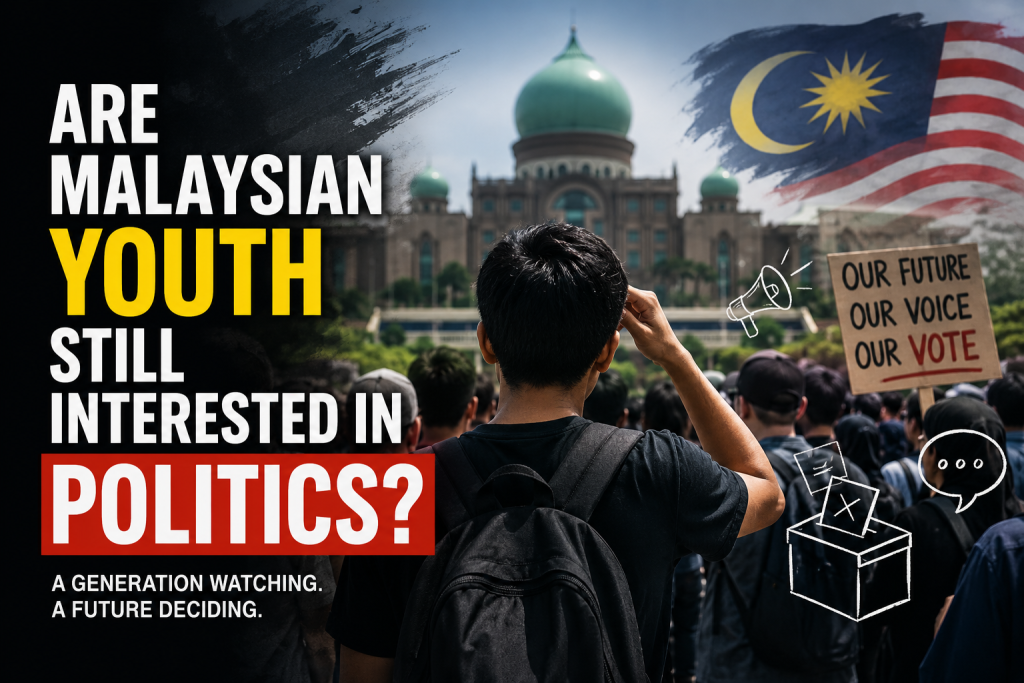
Not too long ago, politics in Malaysia felt like something distant for many young people. It was often viewed as a conversation reserved for older generations — something discussed passionately at coffee shops, ceramah stages, or family dinner tables while the youth simply listened from the sidelines. But things have changed. Today, Malaysian youths are more exposed to politics than ever before. They see political debates on TikTok, breaking news on X, government announcements on Instagram, and public criticism circulating through WhatsApp groups almost every day. Politics is no longer confined to Parliament or television screens. It lives on their phones, appears on their timelines, and quietly shapes their future whether they like it or not. Yet despite this constant exposure, a growing question remains: Are Malaysian youths truly interested in politics anymore, or are they simply tired of it? The answer is probably somewhere in between. Many young Malaysians still care deeply about issues affecting the country. They talk about the rising cost of living, unemployment, corruption, education quality, housing affordability, and mental health struggles. These are political issues, even if they are not always discussed in political language. The younger generation wants change, fairness, and opportunities. The problem is that many no longer believe politics alone can deliver those promises. Years of political instability, changing governments, endless arguments between politicians, and repeated public disappointments have created fatigue among the youth. Some who once felt hopeful now feel disconnected. They see politicians attacking one another online while ordinary Malaysians continue struggling with daily expenses and uncertain futures. Over time, this creates cynicism. For many youths, politics now feels noisy rather than meaningful. At the same time, it would be unfair to label Malaysian youths as apathetic. The younger generation expresses political opinions differently compared to previous generations. They may not attend ceramah every week or wave party flags on the streets, but they speak through social media campaigns, online discussions, podcasts, memes, and digital activism. Some support causes rather than political parties. Others focus more on policies than personalities. This shift is important to understand. Young Malaysians today are less interested in blind loyalty toward politicians. They are more likely to question leaders openly regardless of political affiliation. Respect is no longer automatically given based on title or seniority. Instead, many youths judge leaders based on transparency, communication, and whether they genuinely understand rakyat issues. The implementation of Undi18 also changed the political landscape significantly. Suddenly, millions of younger voters became part of the democratic process. Political parties rushed to attract youth attention through social media strategies and youth-friendly campaigns. However, attracting young voters online is one thing; maintaining their trust is another challenge entirely. Many youths are now politically aware but emotionally detached. They follow issues closely, yet hesitate to fully believe in any political figure. This may explain why political enthusiasm among youths often appears inconsistent. One moment they are vocal online, the next they withdraw completely from political conversations. Perhaps this is not because the youth have lost interest in politics, but because they are still searching for reasons to trust it again. There is also a deeper reality many older generations sometimes overlook. Young Malaysians today are growing up in a far more financially and emotionally demanding environment. Many are worried about stable jobs, affordable homes, student debt, career pressure, and even whether they can build a comfortable future in the country. Politics matters to them, but survival often comes first. Still, dismissing the youth as “lazy voters” or “politically ignorant” would be a mistake. Malaysian youths are watching closely. They are observing how leaders behave, how policies are implemented, and whether promises actually translate into action. They may not always speak loudly, but that does not mean they are not paying attention. In many ways, the future of Malaysian politics may depend less on whether youths are interested in politics, and more on whether politics is still interested in genuinely serving the youth. Because trust, once lost, is difficult to rebuild. -- MINUTESMY / SUGAN BALAN

Not too long ago, politics in Malaysia felt like something distant for many young people. It was often viewed as a conversation reserved for older generations — something discussed passionately at coffee shops, ceramah stages, or family dinner tables while the youth simply listened from the sidelines. But things have changed. Today, Malaysian youths are […]

PM Anwar Ibrahim , Shehbaz Discuss Regional Peace, Bilateral Ties And Gaza Crisis In Phone Call
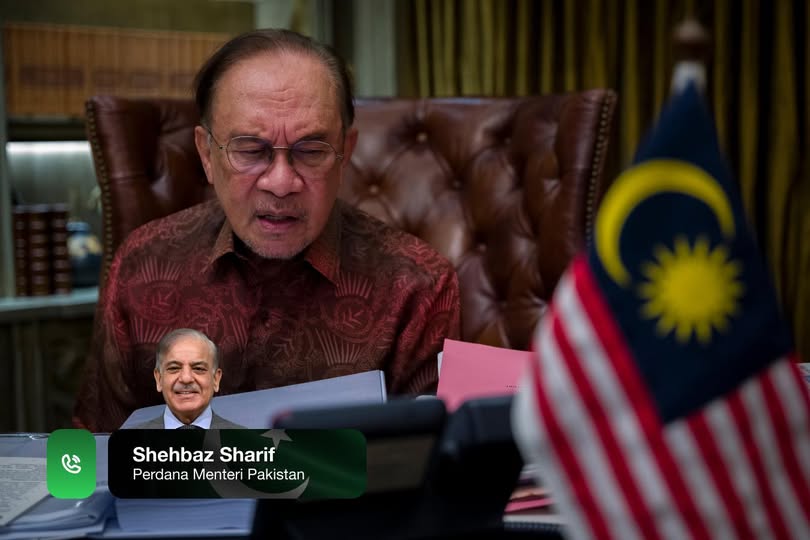
KUALA LUMPUR, May 28 — Prime Minister Datuk Seri Anwar Ibrahim held a telephone conversation with his Pakistani counterpart, Shehbaz Sharif, to discuss regional developments and ongoing efforts to strengthen the long-standing bilateral relationship between Malaysia and Pakistan, Yesterday. Anwar said he also conveyed his Hari Raya Aidiladha greetings to Shehbaz and the people of Pakistan, expressing hope that the spirit of sacrifice and brotherhood would continue to reinforce peace and the well-being of the ummah. During the conversation, both leaders touched on the positive progress in negotiations involving Iran and the United States, including discussions related to the reopening of the Strait of Hormuz, which is considered crucial for regional security and global trade stability. Anwar also expressed Malaysia’s appreciation for Pakistan’s role in mediation efforts and its willingness to host further negotiations aimed at promoting peace and stability in the region. “Malaysia remains firm in its position that all disputes should be resolved through dialogue, diplomacy and peaceful approaches to ensure stability in the West Asian region,” he said. The two leaders also discussed the importance of the international community taking decisive action and speaking out against the violence and atrocities committed against civilians in Gaza and Lebanon. Anwar said Malaysia and Pakistan would continue to strengthen their ties based on friendship, mutual respect and a shared commitment towards global peace and prosperity. -- MINUTESMY -- SOURCE : FB ANWAR IBRAHIM

KUALA LUMPUR, May 28 — Prime Minister Datuk Seri Anwar Ibrahim held a telephone conversation with his Pakistani counterpart, Shehbaz Sharif, to discuss regional developments and ongoing efforts to strengthen the long-standing bilateral relationship between Malaysia and Pakistan, Yesterday. Anwar said he also conveyed his Hari Raya Aidiladha greetings to Shehbaz and the people of […]