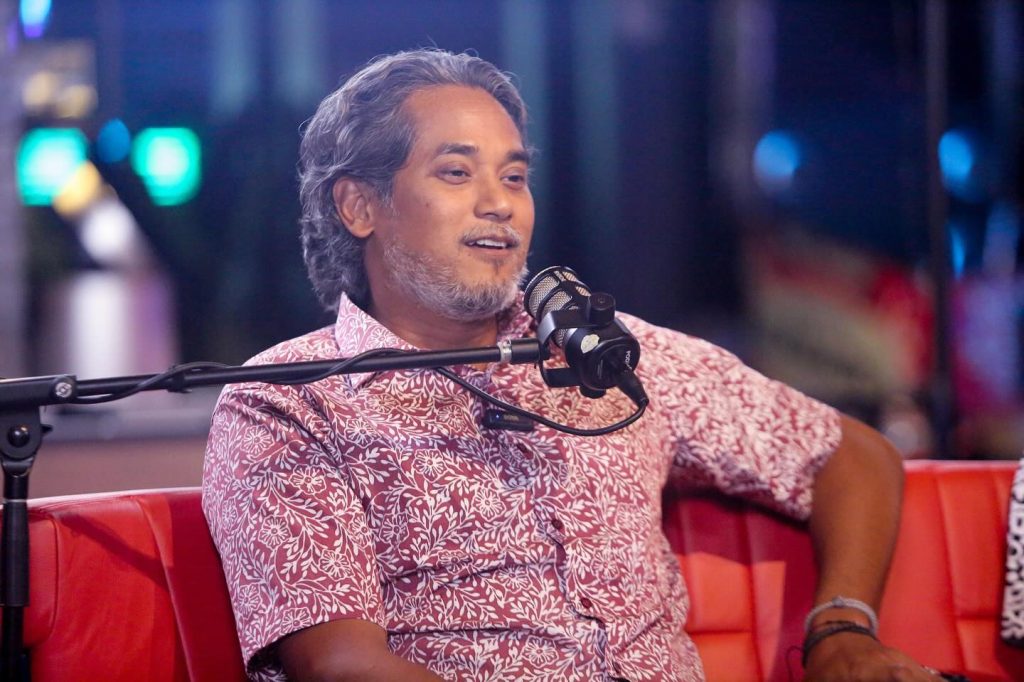
The announcement that Khairy Jamaluddin is returning to UMNO is more than a personal homecoming—it is a potential inflection point in Malaysian politics.
Khairy, widely known as KJ, has consistently demonstrated a blend of youthful energy, intellectual rigor, and political experience that few contemporary leaders in Malaysia can match.
His return comes at a crucial juncture for UMNO and Barisan Nasional (BN), as the party navigates the challenges of an increasingly fragmented political landscape, waning voter confidence, and the need to reconnect with a new generation of Malaysians.
Khairy’s political career has been characterized by a progressive outlook, a willingness to engage in policy innovation, and an ability to communicate effectively with younger voters and professionals.
These qualities are precisely what UMNO has struggled to showcase in recent years. His re-entry under the Rumah Bangsa initiative—a framework designed to unite former members and bridge internal divisions—signals a strategic effort by party leadership to harness talent and experience while promoting reconciliation within the party.
It reflects a growing recognition that UMNO’s survival and relevance depend on inclusivity and adaptability.
Importantly, Khairy has framed his return not as a bid for power but as a commitment to serve the party humbly.
His pledge to “be an ordinary crew member,” helping tighten loose planks or hammer nails where needed, suggests a focus on collective effort over individual ambition.
This attitude could be pivotal in fostering internal unity, especially at a time when factionalism has sometimes overshadowed UMNO’s broader political objectives.
By emphasizing service and duty over personal advancement, Khairy sets a tone that could inspire cooperation across generational and ideological lines within the party.
Beyond party dynamics, Khairy’s return may also have wider implications for Malaysia’s political landscape. Younger voters, who have increasingly leaned towards reformist or independent political options, may perceive his comeback as a signal that UMNO is capable of reform and renewal.
If managed strategically, Khairy’s presence could help UMNO recalibrate its messaging, policy priorities, and engagement strategies to appeal to a broader cross-section of Malaysians without alienating its traditional base.
Yet, the path forward is not without challenges. Integrating Khairy smoothly into UMNO’s existing hierarchy, balancing the expectations of veteran leaders, and ensuring that his return translates into tangible electoral or policy gains will require careful navigation.
How the party leverages his skills and credibility could determine whether this reunion becomes a symbolic gesture or a substantive turning point in Malaysian politics.
In conclusion, Khairy Jamaluddin’s return to UMNO represents a rare opportunity: a chance to unify fractured leadership, inject fresh ideas, and reconnect with a new generation of voters.
More than a personal homecoming, it is a strategic move that, if properly harnessed, could strengthen the party’s relevance, enhance governance, and restore public confidence in UMNO as a political force capable of leading a modern, diverse Malaysia.
For both the party and the nation, the stakes could not be higher—and the promise, potentially transformative.
–Press KL