SINGAPORE, November 4 – Artificial intelligence (AI) is moving beyond digital platforms and into the physical world. However, experts say its wider industrial use will depend on how well different technologies work together.
A new white paper highlights the challenges of turning embodied AI into reliable systems for real-world operations.
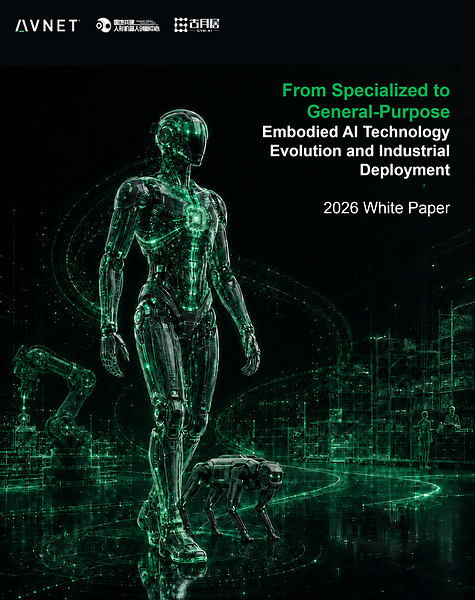
The report, titled From Specialized to General-Purpose: 2026 White Paper on Embodied AI Technology Evolution and Industrial Deployment, was jointly published by Avnet, the National and Local Co-Built Humanoid Robotics Innovation Center and GYH.AI.
What Is Embodied AI?
Embodied AI refers to artificial intelligence built into physical systems such as robots and autonomous machines.
These systems can sense their surroundings, make decisions and perform actions in the real world.
For example, an intelligent robot may use sensors to understand its environment. It can then process information and move to complete a task.
Although AI models and robotics are advancing quickly, combining them into dependable systems remains a major challenge.
Edward Tsaur, Vice-President of Avnet Design Services, Marketing and Communications for Asia Pacific, said future progress would depend on how effectively different technologies work together.
He stressed that making machines smarter is not enough. They must also operate reliably and deliver consistent results.
Four Factors That Could Shape Industrial AI
The white paper identifies four important areas that could influence the wider adoption of embodied AI.
1. Better Integration of Technologies
AI models, computing platforms, sensors and motion controls must work together.
Energy management and communication systems are also important.
A weakness in one component can affect the performance of the entire system. Therefore, developers must consider the complete system rather than focus on individual technologies.
2. Choosing the Right Technology
Companies must select technologies based on their actual operational needs.
These decisions should consider performance, energy efficiency, reliability, scalability and cost.
The most advanced component may not always be the best choice. Instead, the overall system must suit the task and working environment.
3. Progress Towards General-Purpose Robots
The development of general-purpose embodied AI will take time.
The report expects progress to build on specialised systems designed for specific tasks.
Over time, improvements in system design and integration could allow these machines to handle a wider range of activities.
4. Planning for Long-Term Industrial Use
Industrial AI systems must do more than perform well during initial testing.
Companies also need to consider safety, software compatibility, component availability and maintenance.
Long-term technical support is equally important. These factors can help ensure that systems remain reliable after deployment.
Industries Need Practical AI Solutions
Interest in intelligent systems is growing across Asia Pacific.
Potential applications include manufacturing, logistics, healthcare and other operational environments.
However, businesses need solutions that can meet specific requirements and operate reliably.
Tsaur said cooperation across the technology industry would be important. Hardware, software and engineering expertise must come together to address real business needs.
Turning AI Innovation into Practical Results
The report highlights a shift in how the industry should measure progress.
Instead of focusing only on individual AI technologies, businesses should assess how complete systems perform in real working environments.
System integration, suitable technology choices and long-term planning will be essential.
These factors could help move embodied AI from research and specialised applications towards wider industrial use.
Source : PR NEWSWIRE | Rewritten By Minutesmy