KUALA LUMPUR, Nov 12 – Former Prime Minister Datuk Seri Najib Tun Razak must follow strict conditions while serving the remainder of his prison sentence under house arrest. Any violation could lead to the immediate cancellation of the arrangement, Home Minister Datuk Seri Saifuddin Nasution Ismail told Parliament.
Najib will remain under house arrest until Aug 23, 2028. The restrictions cover his movements, visitors, communication and daily activities.
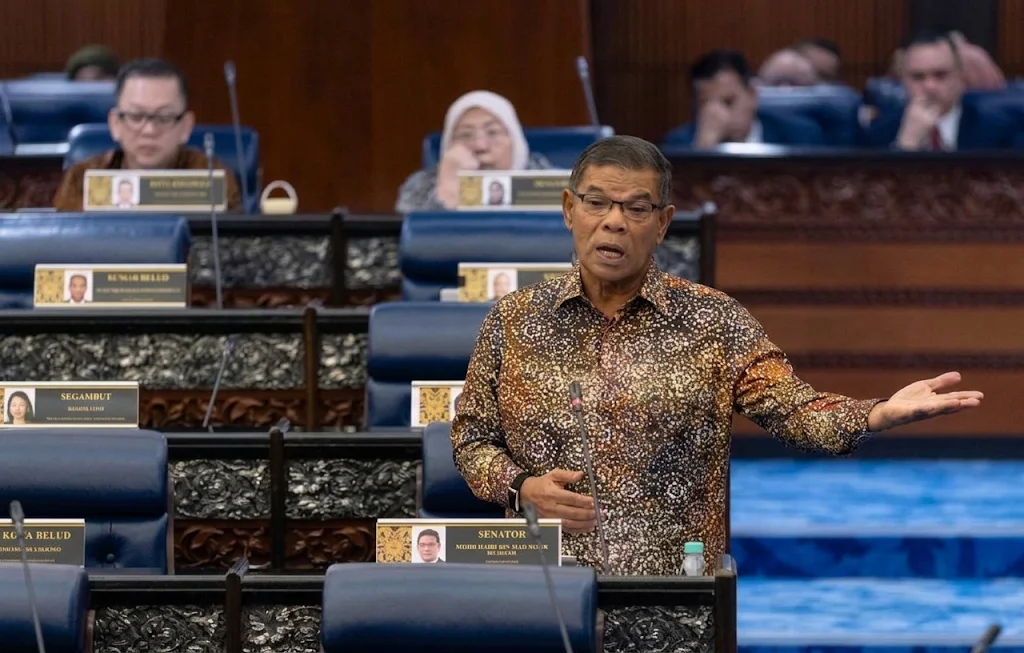
Saifuddin explained the conditions during a Dewan Rakyat sitting on Thursday. He was responding to a question from Pulai MP Suhaizan Kaiat about the rules governing Najib’s house arrest and the agencies responsible for monitoring him.
Najib Cannot Leave Designated Residence
Under the arrangement, Najib must stay at the residence specified by the Pardons Board at No. 11, Jalan Langgak Duta.
He cannot move to another house or building. He also cannot leave the designated address without written permission.
Saifuddin said the Home Ministry had rejected Najib’s written request to include another residence in the arrangement. The minister explained that the Pardons Board’s decision identified only one approved address.
Najib may live with immediate family members, including his wife, children, children-in-law and grandchildren. However, other visitors must obtain written approval before meeting him.
Restrictions on Politics and Communication
The conditions also prevent Najib from taking part in political activities or attending public gatherings.
He cannot issue media statements, post on social media or make public comments. In addition, he must use telecommunications devices registered with the Prisons Department.
These devices help authorities verify his location and monitor compliance with the house arrest conditions.
Saifuddin said the Pardons Board imposed the restrictions under its conditional pardon decision on Sept 18. The Malaysian Prisons Department also enforces additional controls.
Government May Declassify Pardons Board Minutes
Saifuddin also addressed concerns about possible double standards in the justice system.
He said Article 42 of the Federal Constitution allows all Malaysians, regardless of their status, to seek a pardon.
He stressed that the Home Ministry and Prisons Department are responsible for carrying out the Pardons Board’s decision according to the law.
Meanwhile, Saifuddin said he was prepared to submit a proposal to the Cabinet on Nov 13 to declassify the Pardons Board meeting minutes related to Najib’s case.
He said releasing the minutes could help the public better understand the decision and the conditions attached to it.
The proposed declassification will depend on the Cabinet’s consideration.
Source : BERNAMA | Rewritten By Minutesmy