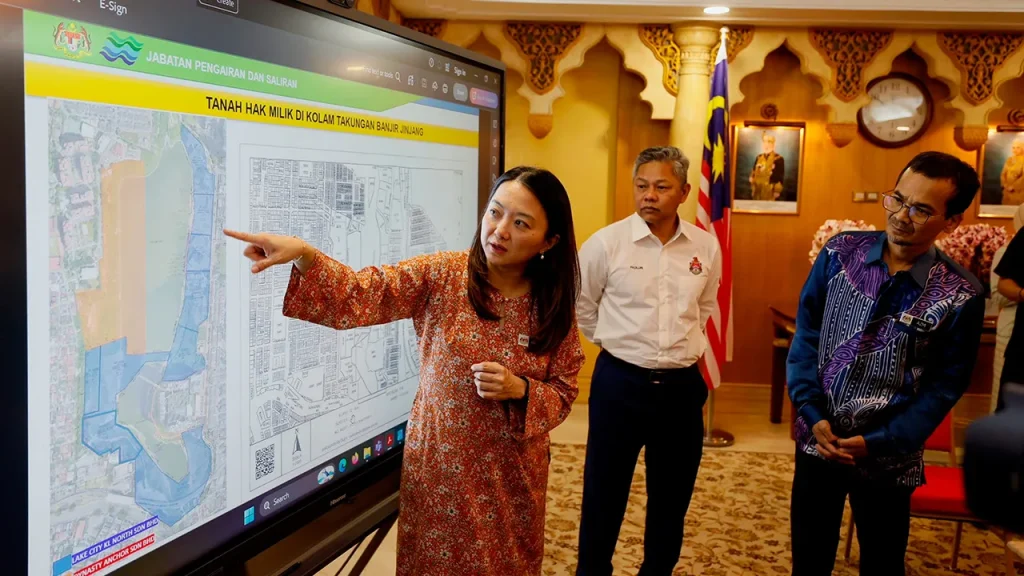
KUALA LUMPUR: The capacity of the flood reservoir in the capital is currently estimated to be only around 30 percent compared to its original size following the shrinkage of the area of the reservoir in Jinjang and Batu due to development on 17 lots of land.
Minister in the Prime Minister’s Department (Federal Territories) Hannah Yeoh said her party was taking a serious view of the situation involving 70 percent of the 17 land lots in question, which had been given ownership rights to developers since 2015 for development purposes, resulting in a reduction in the capacity of the water body compared to the original area of 114.5 hectares.
“Now there are only 34.35 hectares of water bodies left after the ownership was given. So our concern is that if everyone builds (developments), the capacity of the water bodies will decrease,” he said at a press conference at the Kuala Lumpur City Hall (DBKL) Tower here today.
Also present were Kuala Lumpur Mayor Datuk Seri Fadlun Mak Ujud and Federal Territories Department Director-General Datuk Muhammad Azmi Mohd Zain.
Hannah said that based on the technical assessment of the Kuala Lumpur Federal Territory Irrigation and Drainage Department (JPS), the situation also affected the original function of the flood reservoir and made maintenance work and machinery access difficult, as well as increasing the risk of flash floods in existing development areas.
In this regard, he said DBKL would not approve the granting of planning permission (KM) for any development application on the flood reservoir area until the development conditions set by the DID to ensure the original function of the pond and maintenance access could be maintained.
“We cannot continue to allow development on flood reservoirs,” he said.
Meanwhile, Hannah said the Federal Territories Department has created a special task force chaired by its Director General which involves the coordination and cooperation of all agencies involved in flood mitigation actions in Kuala Lumpur, including the Selangor DID.
He said this approach was important to ensure that the capacity of the flood reservoirs in the capital was not further affected, besides ensuring the safety of residents and the sustainability of the city’s drainage system.
— BERNAMA