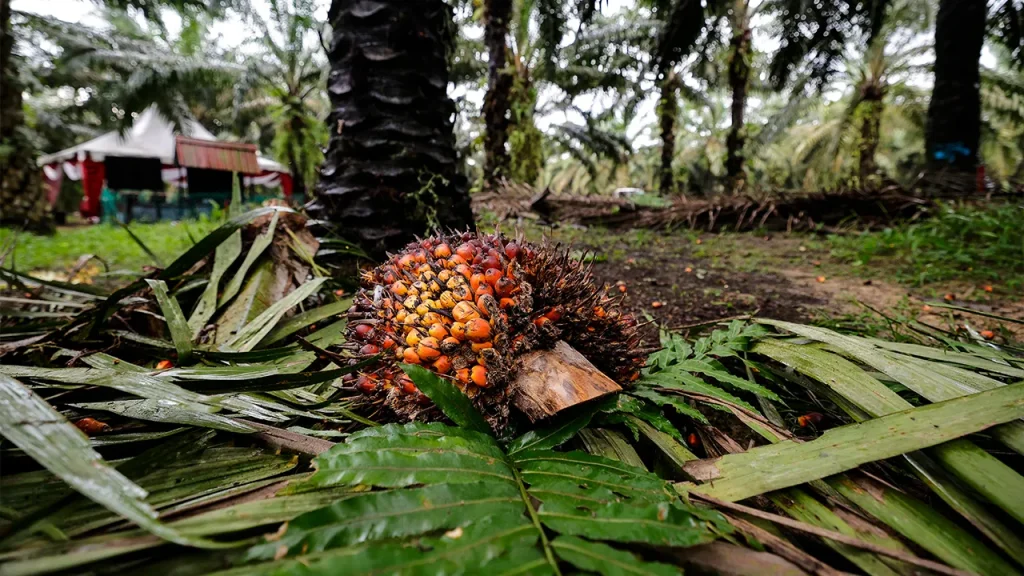
KUALA LUMPUR, JUNE 27 — The country’s palm oil industry has the potential to generate new economic value by utilising approximately 80 percent of the remaining palm oil biomass which was previously considered waste.
Chairman of the Organizing Committee of the Sixth International Palm Oil Biomass Conference 2026, Professor Datuk Ahmad Ibrahim, said that the palm oil industry has so far focused more on oil production which only accounts for about 20 percent of the total palm oil biomass.
“The remaining 80 percent is often considered waste that causes problems for the environment, such as dumping empty bunches.”
“However, recent research shows that this waste has great potential to be converted into high-value products,” he said on Bernama Radio’s Fokus 30 programme titled “New Opportunities in the Palm Oil Industry Through Biomass and Green Economy” here yesterday.
He said palm oil biomass not only involves empty bunches in the factory, but also includes fronds cut in the plantation and palm tree trunks when the replanting process is carried out after a 25-year maturity period.
Ahmad said current innovations allow palm trunks to be converted into timber for the construction sector, in addition to the production of paper, biochemicals as a substitute for petrochemicals and graphite material from palm waste for use in electric vehicle batteries.
To drive the commercialization of biomass-based products more aggressively, Ahmad suggested that the government strengthen the public procurement agenda by becoming the main buyer of the product, especially in the country’s housing sector.
Meanwhile, he said the transition from a linear economy (build-use-dispose) to a circular economy through palm biomass was important to address the issue of global raw material depletion as well as support Malaysia’s target of achieving net zero emissions by 2050.
“Through the circular economy, products are designed to be more durable, recyclable and reduce waste.
“This move will not only provide additional returns to the industry but also direct economic spillover to smallholders through the involvement of the global carbon credit market which is currently reaching up to US$70 (RM287) per tonne in Japan,” he said.
To detail the direction, challenges and efforts to create a more transparent biomass market ecosystem, the Sixth International Palm Oil Biomass Conference 2026 will be held at Cyberview Resort & SPA, Cyberjaya on 14 and 15 July.
The conference, themed “Empowering the Circular Economy and Sustainability”, is open to the public, small and medium enterprise entrepreneurs, researchers and local and international investors to build a network of strategic collaborations.
— BERNAMA