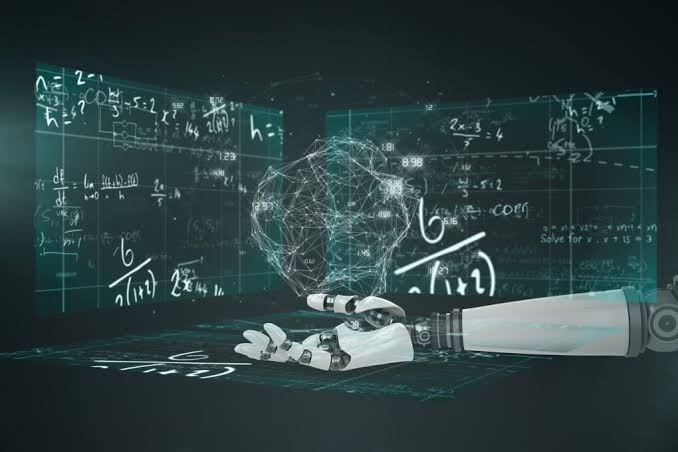
WASHINGTON, November 4 – Artificial intelligence (AI) is making major progress in solving complex mathematical problems, raising questions about the future role of human mathematicians.
Recent developments have shown that AI systems can tackle mathematical challenges that researchers have struggled with for years. However, the rapid progress has also sparked concerns about how the technology could change mathematical research, education and academic careers.
In early October, OpenAI released research manuscripts covering 372 categories of mathematical problems. Many involved challenges that had remained unsolved for a long time.
The company later announced three additional discoveries. Human researchers are now working to interpret the AI-generated findings across mathematics, computer science and physics.
Mathematicians question the future of research
The latest developments have triggered debate among mathematicians about the value of human discovery in an age when machines can produce solutions at remarkable speed.
H. Holden Thorp, editor-in-chief of the academic journal Science, said the recent AI achievements had sent the mathematical community into a state of shock.
He also raised an important question about whether understanding a mathematical result could become more valuable than the excitement of discovering it.
Australian-American mathematician Terence Tao has also expressed concerns about the growing influence of AI.
Tao, who received the Fields Medal in 2006, warned that AI-generated solutions could rely heavily on earlier human research without properly recognising the original contributions.
He and 24 other Fields Medal winners recently signed a joint letter calling for AI-generated mathematical findings to be carefully developed and integrated into the academic community.
They warned that relying too heavily on automated solutions could affect how mathematics is taught, learned and passed on to future generations.
China develops AI tools for mathematics
China is also exploring ways to strengthen its position in AI-powered mathematical research.
Shing-Tung Yau of Tsinghua University in Beijing is leading an alliance involving more than 1,000 scientists. The group aims to develop AI models specifically for mathematics.
Yau described the rapid development of AI in mathematics as a major turning point.
He is also expected to serve as editor-in-chief of the new Journal of AI-Assisted Mathematics, which is scheduled to begin publication in 2027.
The publication will focus on research that uses AI while maintaining strict mathematical standards.
Yau said AI-generated theorems must meet the same proof requirements as those published in leading mathematics journals. Researchers must also explain how AI contributed to their findings and how the results were verified.
Experts warn about unequal access to AI
Babak Haghighat, a mathematician at Tsinghua University, believes AI could help researchers connect different areas of mathematics and explore problems that were previously difficult to tackle.
However, he warned that access to the most advanced AI systems remains a concern.
Large technology companies control many of the leading models. As a result, researchers without access to these tools may face disadvantages.
Haghighat said mathematics should continue to benefit from international cooperation and open research.
He also called for greater collaboration between governments, universities and researchers to develop advanced AI models.
AI could create new opportunities for mathematicians
Not all experts view the changes negatively.
Grant Sanderson, creator of the mathematics-focused YouTube channel 3Blue1Brown, believes AI could make mathematics more accessible and allow researchers to spend more time developing theories.
He said AI could help mathematicians obtain proofs more quickly, giving them more opportunities to explore broader ideas.
Sanderson compared the situation to professional players using AI to improve their skills in the board game Go.
Although machines can outperform humans, players continue to use the technology as a training tool.
He argued that AI solving mathematical problems faster than humans does not remove the value of learning and practising mathematics.
As AI continues to develop, the mathematical community faces an important challenge: finding ways to use machine-generated discoveries while preserving human understanding, creativity and academic standards.
Source : BERNAMA | Rewritten By Minutesmy