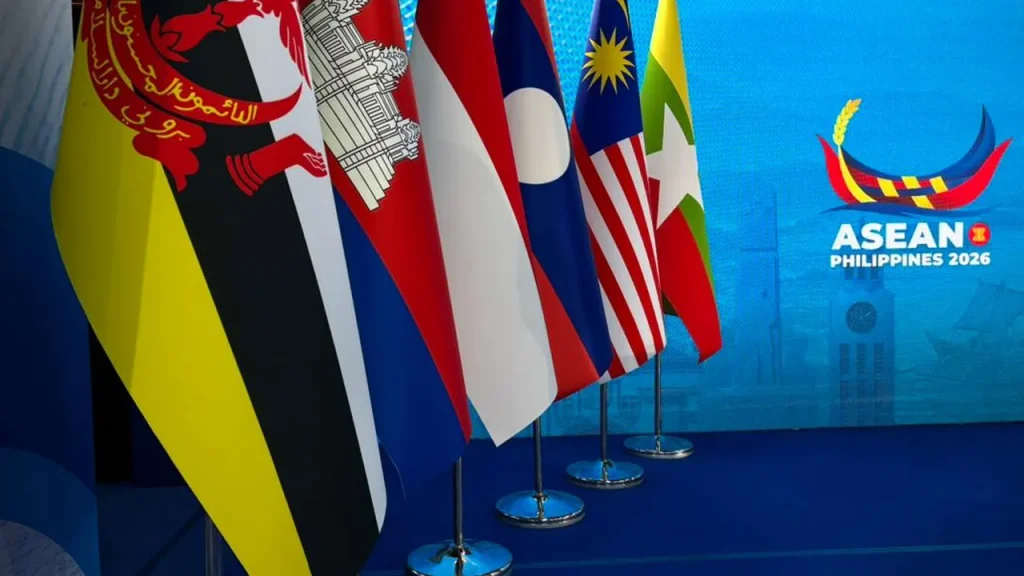
ISTANBUL, JULY 23 — Japan, South Korea, Australia and New Zealand on Wednesday highlighted various global challenges during the countries’ Post-Ministerial Conference with ASEAN in the Philippine capital, Manila, reported Anadolu Ajansi (AA).
Japanese Foreign Minister Toshimitsu Motegi expressed support for ASEAN’s unity and core role, saying Japan wants to strengthen cooperation in areas of common interest and great potential, including digital transformation, artificial intelligence (AI) and green transformation.
South Korean Foreign Minister Cho Hyun said disruptions to global supply chains, instability in West Asia and rapid technological transformation were reshaping the region, creating new opportunities as well as risks.
“By strengthening the spirit of solidarity, we can better weather uncertainty, expand strategic space and create new opportunities for our people,” Cho said.
Seoul is collaborating with ASEAN in several concrete initiatives, including artificial intelligence (AI) mentoring initiatives as well as cultural and creative industry initiatives, he said.
New Zealand Foreign Minister Winston Peters said the world now faces unique new challenges, including escalating geostrategic competition, challenges to the rules-based multilateral system, artificial intelligence and climate change.
“Our partnership remains our greatest strength. It is the foundation for cooperation, collaboration, sharing of knowledge and expertise, trade and shared prosperity,” said Peters.
Australian Foreign Minister Penny Wong said this year has been a “challenging year” due to a changing strategic landscape, intensifying competition and increased risks of tensions and missteps.
“The full impact of the shocks that occurred this year in West Asia, in our region and in the global economy is still unfolding,” he said, noting the impact on food and energy security, as well as the supply chains of fuel, fertiliser and various other commodities.
Australia will continue to support ASEAN-led initiatives to strengthen economic resilience, including the ASEAN Energy Grid and the ASEAN Digital Economy Framework Agreement, Wong said.
He said the past year has shown the extent to which countries depend on each other to ensure security and prosperity, while stressing that the core role of ASEAN and the cooperation it has forged are very important.
“ASEAN is important to Australia because, fundamentally, ASEAN is the backbone of the region – a region where we live and where the future of the world is being shaped. ASEAN builds relationships, shapes rules and fosters shared resilience,” Wong said.
— BERNAMA-ANADOLU