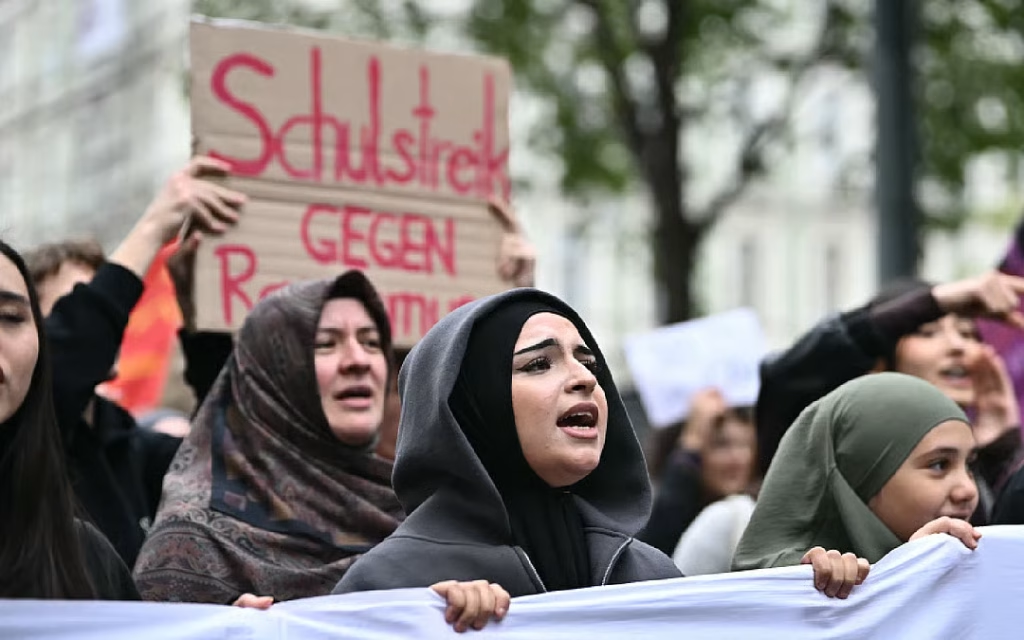
VIENNA: Austria’s ban on headscarves for girls under 14 in schools has triggered protests and resistance from pupils, with dozens refusing to comply with the law since it came into force on Sept 1.
The conservative-led government has defended the measure as a way to promote gender equality and protect Muslim girls from what it describes as “segregation and oppression”.
However, critics say the ban unfairly targets Muslims, violates religious freedom and places young girls under pressure to change how they dress.
According to the Education Ministry, authorities have held 127 meetings with parents and filed 52 reports concerning alleged violations since the ban took effect. Protests against the legislation have also been held nationwide, drawing several hundred participants at a time.
At a demonstration in Vienna, a 37-year-old woman identified only as Zehra said her daughters, aged nine and 13, were upset by the ban.
She said the law contradicted the values she had taught her children about personal choice and the freedom to decide who they wanted to be.
Seham, 12, said she was afraid of removing her headscarf at school because she had worn it for two years and regarded it as part of her identity.
Following discussions with school administrators, she was permitted to use an alternative, non-traditional head covering. However, she said she still preferred wearing a full headscarf.
Muslims account for approximately eight per cent of Austria’s nine million residents, according to government statistics from 2021. A 2024 report by the European Union Agency for Fundamental Rights found that Muslims in Austria experienced particularly high levels of racism and discrimination.
The legislation marks Austria’s second attempt to restrict headscarves in schools. In 2019, a previous conservative-led coalition introduced a similar ban for primary school pupils, but the constitutional court overturned it, ruling that a measure specifically targeting Muslims was incompatible with religious neutrality.
The Islamic Religious Community in Austria, which is supporting legal action against the latest ban, said it had received about 70 complaints from families experiencing difficulties during its implementation.
In a statement, the organisation argued that a law presented as protecting children was instead placing those same children under pressure in schools.
The constitutional court confirmed to AFP that it had received a legal challenge against the legislation, with a ruling expected in the first half of 2027.
Under the current rules, schools must hold a series of discussions with pupils and their parents when girls refuse to comply. Cases may subsequently be referred to education authorities, and parents who continue to disregard the ban can ultimately face fines.
Education Minister Christoph Wiederkehr told AFP that the relatively low number of meetings indicated that most pupils and parents were cooperating with the new requirements.
He added that discussions with families following alleged violations had generally been successful.
Vienna’s education authorities said their initial assessments suggested that the girls concerned wished to wear headscarves voluntarily.
Sandy, 12, said she began wearing a headscarf about a year ago because of the importance she placed on her religion and her desire to practise it.
A teacher in Vienna who had worked with two affected pupils also told AFP there was no indication that the girls had been forced to wear headscarves.
The teacher, who requested anonymity, said the girls had spent weeks adjusting to the new regulations and looking for alternatives that complied with the rules, describing the experience as very uncomfortable for them.