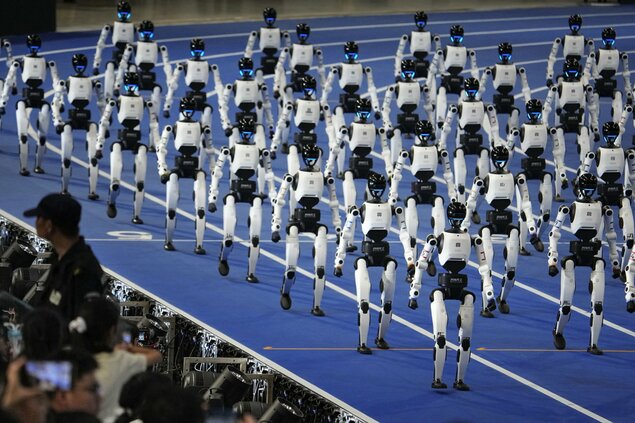
TOKYO, Nov 13 – Humanoid robots could outnumber the world’s human population by around 2083, potentially reaching more than 10 billion units, according to a recent study by researchers from the United States and Europe.
The analysis suggests that rapid advances in robotics could lead to a dramatic increase in the global android population over the coming decades.
However, researchers stressed that this scenario depends on several important conditions. These include sufficient electricity, access to manufacturing components and the ability of robots to help produce more robots.
The study was published on the RealClearScience news website by researchers from the University of Milan, the University of Exeter and The Rockefeller University.
Robots Could Reach 10 Billion
The researchers based their analysis on more than 4,000 possible scenarios.
One scenario suggests that humanoid robots could exceed 10 billion by around 2083. This would happen if robots become capable of supporting their own production while manufacturers maintain sufficient supplies of electricity and components.
The United Nations projects that the world’s human population could reach approximately 10.3 billion in the mid-2080s. After that, the population is expected to gradually decline.
Based on the study, humanoid robots could therefore surpass humans in total numbers within the same period.
Nevertheless, the researchers warned that having more robots than humans would not automatically give machines social, political or economic control.
Around 10,000 Humanoid Robots Today
The study estimates that approximately 10,000 humanoid robots currently exist worldwide.
Their potential applications include manufacturing, warehouse operations, household assistance and caregiving.
Researchers also considered a different scenario without additional robot-driven manufacturing.
Under this condition, the global humanoid robot population could reach around four billion by 2100. This would remain below the projected human population of approximately 10.2 billion.
Robot Self-Production Could Change the Future
The researchers said the ability of robots to replace their own losses and increase their production capacity could significantly change future population growth.
This means the development of autonomous manufacturing could become a major factor in determining how quickly humanoid robots spread worldwide.
Ultimately, the study highlights the potential scale of future robotics development. However, the researchers’ figures remain scenario-based estimates rather than guaranteed outcomes.
Source : BERNAMA | Rewritten By Minutesmy