KUALA LUMPUR, JULY 21 — RHB Investment Bank Bhd (RHB IB) has raised its 2026 export growth forecast for Malaysia to 21.7 percent from 15.3 percent previously, driven by stronger-than-expected 2026 export performance so far, when it grew 27.5 percent.
In a research note on Monday, the investment bank explained that the upward revision was also supported by the strength of the electrical and electronics (E&E) sector following the ongoing technology upgrade cycle and the artificial intelligence (AI)-based investment cycle.
In addition, the high trade surplus of RM83.9 billion in the second quarter of 2026 compared to RM15.3 billion in the second quarter of 2025 will also provide support to the country’s final Gross Domestic Product (GDP) forecast for the second quarter of 2026.
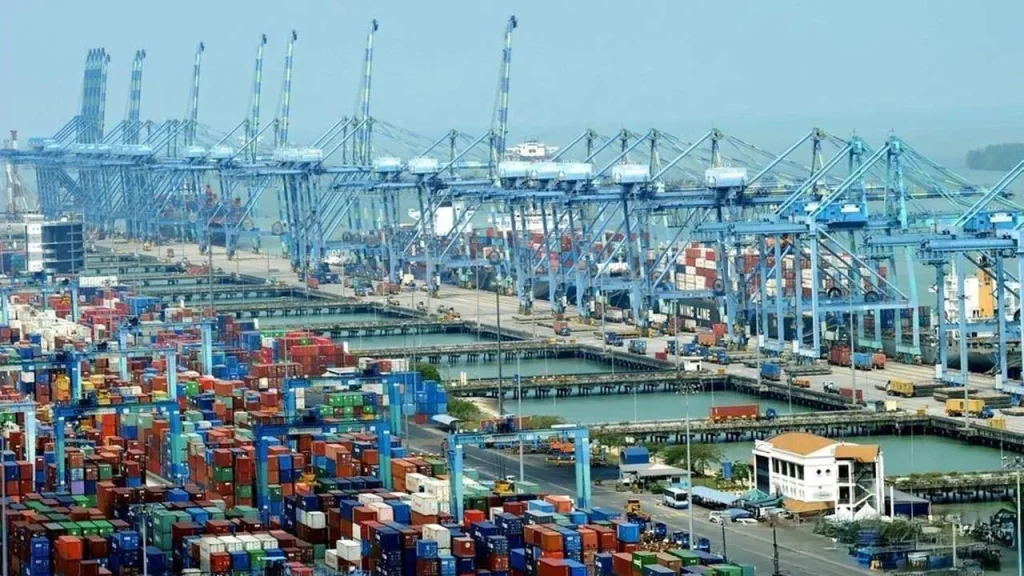
RHB IB expects Malaysia to remain positively positioned to weather external challenges driven by its diversified economic structure, strong integration with regional and global supply chains, and continued efforts to diversify export markets while expanding product offerings.
While RHB IB remains positive on Malaysia’s export prospects for 2026 overall, several downside risks require close monitoring.
“Prolonged geopolitical tensions and continued rising oil prices could affect global growth and trade activity due to increased production, transportation and operational costs.
“This could in turn weaken external demand for Malaysian exports, especially in export-oriented manufacturing industries that are highly integrated with global supply chains,” he added.
According to the investment bank, E&E export prospects remain encouraging, driven by strong global semiconductor demand following advances in AI, cloud computing, data centers, electric vehicles and industrial automation.
Meanwhile, MBSB Investment Bank Bhd also expects Malaysia’s exports to grow rapidly by 18.9 percent in 2026 compared to 6.6 percent in 2025.
The performance will be driven in particular by higher demand for technology products and strong demand for commodity-related products such as petroleum products and liquefied natural gas (LNG).
However, exports continue to be exposed to downside risks such as supply disruptions, high costs and price pressures, possible weak demand and the risk of stricter trade regulations, especially imposed by the United States, he explained.
“We also raised our import growth forecast by expecting imports to grow by 13 percent this year compared to 6.0 percent in 2025 based on the continued increase in domestic economic activity,” added MBSB IB in a research note today.
Malaysia’s trade performance strengthened in June 2026, increasing 44.7 percent to RM340.9 billion from RM235.6 billion in the same period in 2025, driven by continued growth in exports and imports, according to the Department of Statistics Malaysia (DOSM).
DOSM explained that exports grew 45.4 percent to RM177.9 billion and imports increased 43.9 percent to RM163.0 billion, with the trade surplus jumping 64.9 percent to RM14.9 billion for the month.
— BERNAMA