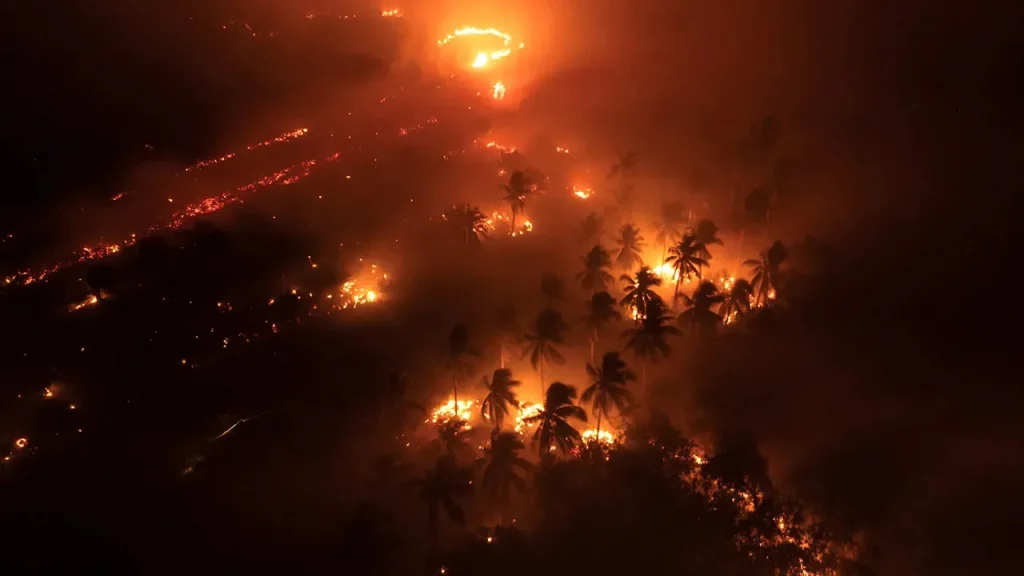
JAKARTA: Damage to peatland ecosystems caused by past agricultural development projects has been identified as one of the main factors contributing to large-scale forest fires and haze in Indonesia.
Indonesia’s Deputy Minister of Food, Hanif Faisol Nurofiq, said extensive drainage activities had altered the natural conditions of peatlands in Central Kalimantan and South Sumatra, making them more susceptible to fires.
Environmental monitoring group Pantau Gambut reported that of Indonesia’s approximately 24 million hectares of peatland, around 16 million hectares were at high risk due to deforestation and falling groundwater levels.
The risk has been further aggravated by the El Niño phenomenon, which has brought drier conditions to several areas.
In Central Kalimantan, air pollution index readings have risen to very high levels, particularly in Katingan district and the provincial capital, Palangka Raya.
Peatland fires are difficult to extinguish because embers can continue burning beneath the ground for extended periods, producing thick smoke and worsening the haze.
The transboundary haze has also affected air quality in neighbouring countries, including Malaysia, Singapore and Timor-Leste, prompting public health measures in affected areas.
To address the problem, the Indonesian government plans to construct wells and strengthen water management systems to restore moisture to degraded peatlands.
However, a study found that only a small portion of peatland areas burned between 2015 and 2019 had been successfully restored to forest, while much of the remaining land had been converted into monoculture plantations, including oil palm.
As the haze situation worsens, dozens of residents in Palangka Raya have staged a protest outside the governor’s office, calling on authorities to take more effective action to address the crisis.
-AWANI
#minutesmy
#viralpost