
IBM and OpenAI Bring Frontier AI to Cyber Defense–Helping Enterprises Keep Pace with Machine-Speed Threats

ARMONK, N.Y., June  -- IBM (NYSE: IBM) today announced it has joined the OpenAI Daybreak Cyber Partner Program, bringing advanced frontier AI capabilities into security operations to help enterprises counter machine-speed threats. Building on the recently announced Project Lightwell, as part of this effort IBM has launched a new application security service that uses the cyber capabilities of OpenAI's models to help organizations identify and validate software vulnerabilities with greater speed, and precision.     Through this program, IBM is working with OpenAI to apply advanced AI capabilities to be deployed defensively inside enterprise workflows where they can help organizations understand and reduce their exposure. The new application security service can go beyond traditional code scanning to identify and validate vulnerabilities using OpenAI cyber capabilities. AI-driven analysis assesses application code, and prioritizes areas with highest potential to contain flaws and exploitable paths. The security harness, powered by IBM Consulting Advantage – IBM's AI platform for delivering consulting services to clients – connects client application environments to advanced AI in a controlled, secured and governed way. Operating within the client's environment, with read-only access to code repositories and bounded execution, it enables large-scale exposure analysis. Delivered as a managed, enterprise-ready service, clients can begin with focused evaluations of key applications and expand to continuous monitoring to reassess risk over time as code changes and new threats emerge. Participation in the OpenAI Daybreak Cyber Partner Program reflects IBM's ongoing role in shaping how frontier AI is deployed across enterprise workflows. Together with OpenAI and other partners, IBM is helping define standards for safeguards including for controlled analysis to help enterprises strengthen resilience. Project Lightwell combines an enterprise security clearinghouse with a global force of engineers to patch, validate, and manage open source code across the software supply chain. Supported by a $5 billion commitment from IBM and Red Hat, the initiative will use OpenAI's cyber capabilities alongside other frontier AI models to help with code review and remediation. "Attackers are already using AI to probe, exploit, and scale threats at machine speed. Defenders need the same advantage, with the security and control enterprises require," said Mark Hughes, Global Managing Partner, Cybersecurity Services, IBM Consulting. "The OpenAI Daybreak Cyber Partner Program expands our access to a broader set of advanced AI capabilities, which we deploy within our clients' environments to help surface the most relevant risks faster and help them act with confidence." "Security is central to realizing the benefits of advanced AI," said Dane Stuckey, Chief Information Security Officer at OpenAI. "Through the OpenAI Daybreak Cyber Partner Program, we are collaborating with AI pioneers like IBM to use frontier models to accelerate defensive security workflows and support enterprises, governments, and other organizations as they identify risks, strengthen resilience, improve security, and ultimately deploy AI with the trust, controls, and compliance their environments require." The new application security service is available today, with further integrations planned as part of the OpenAI Daybreak Cyber Partner Program. Statements regarding IBM's and OpenAI's future direction and intent are subject to change or withdrawal without notice, and represent goals and objectives only. About IBM IBM is a leading provider of global hybrid cloud and AI, and consulting expertise. We help clients in more than 175 countries capitalize on insights from their data, streamline business processes, reduce costs and gain a competitive edge in their industries. Thousands of governments and corporate entities in critical infrastructure areas such as financial services, telecommunications and healthcare rely on IBM's hybrid cloud platform and Red Hat OpenShift to affect their digital transformations quickly, efficiently and securely. IBM's breakthrough innovations in AI, quantum computing, industry-specific cloud solutions and consulting deliver open and flexible options to our clients. All of this is backed by IBM's long-standing commitment to trust, transparency, responsibility, inclusivity and service. Visit www.ibm.com for more information. -- PRNewswire  -- Source: IBM 

ARMONK, N.Y., June 23 — IBM (NYSE: IBM) today announced it has joined the OpenAI Daybreak Cyber Partner Program, bringing advanced frontier AI capabilities into security operations to help enterprises counter machine-speed threats. Building on the recently announced Project Lightwell, as part of this effort IBM has launched a new application security service that uses the cyber capabilities of […]

Lintes Technology Unveils Shared NPC and NPO Interconnect Platform for Next-Generation AI Servers
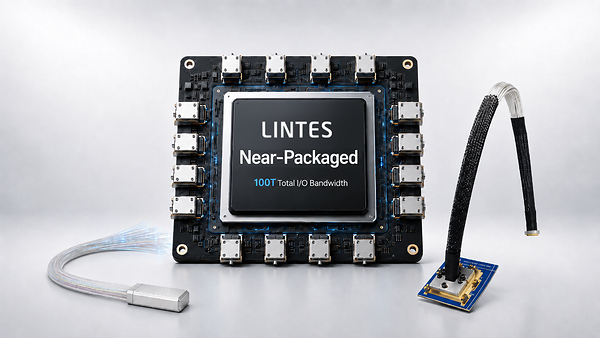
TAIPEI, June 22 -- Lintes Technology (TWSE: 6715), a global leader in high-bandwidth connectivity solutions, today announced the launch of its comprehensive, modular optoelectronic interconnect solution for next-generation AI servers. Addressing the critical bottleneck of high-density data centers, the platform encompasses both Near-Packaged Copper (NPC) and Near-Packaged Optics (NPO) technologies, featuring a shared patented socket architecture.  Unlike conventional hardware designs with fixed interface configurations, this innovative architecture empowers data center operators with infrastructure flexibility. The platform enables direct selection between optical and electronic interfaces within a single system, allowing operators to configure the channel count and bandwidth allocation routed through either NPC or NPO via individual sockets based on actual data throughput requirements. This breakthrough significantly optimizes system routing agility and cost-efficiency for next-generation AI infrastructure. Bridging the CPO Market Gap As AI workloads continue to drive demand for higher computing performance, conventional transmission architectures are approaching practical limits in bandwidth, power, and system design. While Co-Packaged Optics (CPO) remains a key area of industry focus, challenges related to optical engine yield, ASIC integration, and cost efficiency are expected to delay large-scale deployment. In contrast, Lintes's near-packaged interconnect solutions have already completed design validation and are sampling with customers. This makes the platform a concrete, immediately deployable solution for high-density AI servers, effectively bridging the technological gap as the industry transitions to advanced architectures. Modular Near-Packaged Interconnect for AI Scalable Bandwidth To meet the 100T aggregate bandwidth demands of AI chips, Lintes's near-packaged interconnect solutions utilize a patented socket design that simultaneously supports both NPO and NPC. A single socket delivers a transmission bandwidth of up to 6.4T. Depending on specific server and data center infrastructures, this bandwidth can be flexibly configured as four 1.6T or eight 800G transmission paths, helping customers adapt to high-bandwidth, modular, and scalable AI system requirements. This flexible architecture supports both transmission modes based on distance, cost, and layout requirements: Intra-Server and Intra-Rack Transmission (Scale-up): Operators can deploy NPC to connect with other AI chips or PCIe signal connectors. This can be paired with rack cabling options such as DAC, AEC, AOC, and ACC, leveraging copper's cost efficiency and deployment maturity to satisfy high-speed interconnect needs within servers and racks. Cross-Rack Long-Distance Networking (Scale-out): The system can adopt NPO and be paired with high-density multi-fiber connectors like MPO, MTP, and MMC to meet the demands of cross-rack extensions, data center horizontal scaling, and high-bandwidth optical interconnects. Through this modular and platform-based design, Lintes enables AI server and data center customers to flexibly implement near-packaged interconnect solutions for varied computing demands, transmission distances, and deployment costs, while minimizing major changes to existing system architectures and cable configurations. US$84 Million Capital Expenditure Approved to Target 2027 Volume Production To support this growth, Lintes's Board of Directors approved an annual capital expenditure budget of up to approximately US$84 million (NT$2.65 billion) on June 11, 2026. This capital will be allocated toward cleanroom renovations for a new manufacturing facility and the procurement of multi-channel, multi-mode, and single-mode optical module production equipment, expanding advanced hardware manufacturing capacities. With these near-packaged interconnect solutions already sampling with customers, the company aims to align with customer deployment schedules and achieve volume production by 2027, transforming these technological breakthroughs into long-term operational momentum. About Lintes Technology Lintes Technology is a leading provider of high-speed interconnect solutions, delivering advanced cables, connectors, and optical modules for data-intensive applications. With deep expertise in signal integrity and system integration, Lintes enables scalable AI connectivity from edge devices to hyperscale data centers supporting reliable, high-bandwidth communication across next-generation infrastructure. -- PRNewswire -- Source: Lintes Technology 

TAIPEI, June 22 — Lintes Technology (TWSE: 6715), a global leader in high-bandwidth connectivity solutions, today announced the launch of its comprehensive, modular optoelectronic interconnect solution for next-generation AI servers. Addressing the critical bottleneck of high-density data centers, the platform encompasses both Near-Packaged Copper (NPC) and Near-Packaged Optics (NPO) technologies, featuring a shared patented socket architecture. […]

Korea Deep Learning Secures Back-to-Back Global AI Benchmark Wins Over Big Tech
SEOUL, South Korea, June 22 -- Korea Deep Learning, a pioneer in enterprise-grade Document AI and vision intelligence solutions, today announced that its proprietary Document AI has secured the #1 overall ranking on ParseBench, a premier global document parsing benchmark organized by LlamaIndex.     ParseBench evaluates AI models on their ability to read, structure, and extract information from approximately 2,000 pages of complex, real-world enterprise documents across finance, insurance, and government sectors. In the latest evaluation, Korea Deep Learning ranked #1 overall in the VLM category with a score of 76.4, ahead of the next-highest-scoring models (75.0 and 67.8). The company also secured the top spot in Visual Grounding with a score of 78.8, establishing a commanding 19-point lead over the next-highest-scoring model (59.8). The win was driven by KDL-Frontier-Parser-nano, a 1.2-billion-parameter single model. Despite its compact size, it delivered superior accuracy against massive Big Tech systems at a fraction of the operational cost, proving that specialized AI tailored for business workflows can outperform broad, general-purpose LLMs. Its core edge lies in Korea Deep Learning's Near-Zero Hallucination technology, which simultaneously analyzes layout, field relationships, and spatial positioning to minimize error rates and extract data with context-aware precision. Trained on over 400 million images and documents, Korea Deep Learning's solutions support secure on-premise and SaaS deployments. Validated across major enterprise and public sectors, the technology powers administrative data restructuring for the Gyeonggi Provincial Government and serves over 80 major corporations, including Hyundai Capital and LG CNS—slashing document-processing times by up to 96%. Today's ParseBench victory builds on a consecutive string of global milestones. In March 2026, the company's proprietary Vision-Language Model, KDL Frontier, clinched the #1 spot in the English category of OCRBench v2 with a score of 68.1, outperforming other leading models. In recognition of this sustained technological leadership, Forbes Asia officially named CEO Jihyun Kim to its prestigious 2026 '30 Under 30' list in the Consumer & Enterprise Technology category last month. "Our strategy has always been to build specialized AI that decodes complex document structures as intuitively as a human, rather than focusing on massive LLMs," said Jihyun Kim, CEO of Korea Deep Learning. "This milestone validates our architecture as the most practical solution for the 'AI Agent' era, enabling autonomous decision-making and total workflow automation." Backed by an $8 million (KRW 12 billion) Series A funding round secured in December 2025 and a strategic partnership with NVIDIA, Korea Deep Learning is aggressively accelerating its global expansion into international enterprise markets. About Korea Deep Learning Founded in 2019, Korea Deep Learning is a premier vision intelligence and Document AI company developing enterprise-grade AI agents that automate document-based workflows. Its proprietary DEEP Agent platform combines advanced OCR, document parsing, and vision-language models to help organizations seamlessly extract, structure, and act on information from complex documents, images, and visual data. -- PRNewswire -- Source: Korea Deep Learning    

SEOUL, South Korea, June 22 — Korea Deep Learning, a pioneer in enterprise-grade Document AI and vision intelligence solutions, today announced that its proprietary Document AI has secured the #1 overall ranking on ParseBench, a premier global document parsing benchmark organized by LlamaIndex. ParseBench evaluates AI models on their ability to read, structure, and extract information from […]

PM Anwar: Malaysia, Turkmenistan Deepen Strategic Cooperation Beyond Oil and Gas

KUALA LUMPUR, June 20 — Prime Minister Datuk Seri Anwar Ibrahim has reaffirmed Malaysia’s commitment to strengthening bilateral ties with Turkmenistan, highlighting the growing partnership between the two nations in strategic sectors beyond the traditional oil and gas industry. Speaking after attending the Malaysia-Turkmenistan Forum alongside President Serdar Berdimuhamedov before concluding his official visit, Anwar said the forum provided an important platform for industry leaders and business communities from both countries to explore broader and more meaningful avenues of cooperation. He noted that Malaysia and Turkmenistan are now expanding collaboration into key areas such as education, Technical and Vocational Education and Training (TVET), artificial intelligence (AI), semiconductors, and human capital development. “Relations between Malaysia and Turkmenistan have evolved significantly and now extend far beyond the oil and gas sector. Building on decades of trust and friendship, both countries are committed to forging stronger partnerships in strategic and future-oriented industries,” Anwar said. The Prime Minister also highlighted that 2026 marks the 30th anniversary of PETRONAS’ presence in Turkmenistan, describing it as a testament to the success of long-term cooperation based on mutual respect, knowledge-sharing, and technology transfer. According to Anwar, the achievements of PETRONAS in Turkmenistan demonstrate how sustainable partnerships can deliver lasting economic benefits and contribute to the development of both nations. He also reflected on the legacy of renowned Turkmen poet Magtymguly Pyragy, whose writings emphasised unity and shared purpose. “His message that hearts, minds, and souls united by a common purpose can overcome any challenge continues to resonate today and serves as a foundation for the strong relationship between Malaysia and Turkmenistan,” he said. During the forum, Anwar and Berdimuhamedov witnessed the signing of several key agreements aimed at enhancing energy cooperation between the two countries. The agreements included a Framework Agreement between the Government of Turkmenistan and the Government of Malaysia on Long-Term Cooperation for the Development of Turkmenistan’s Hydrocarbon Resources. Also signed was a Production Sharing Agreement (PSA) for Block 19 and Block 20 involving PETRONAS, State Concern Turkmennebit, and State Enterprise Hazarnebit. In addition, both parties concluded a Cooperation Agreement for the implementation of a 2D seismic survey covering offshore blocks along Turkmenistan’s northern coastal region. Anwar expressed confidence that the agreements would usher in a new chapter in Malaysia-Turkmenistan relations and serve as a model of successful South-South cooperation. He said the strengthened partnership demonstrates how countries of the Global South can work together to achieve shared progress, economic growth, and prosperity for their people through mutually beneficial cooperation.    -- MINUTESMY  -- SOURCE: FB ANWAR IBRAHIM 

KUALA LUMPUR, June 20 — Prime Minister Datuk Seri Anwar Ibrahim has reaffirmed Malaysia’s commitment to strengthening bilateral ties with Turkmenistan, highlighting the growing partnership between the two nations in strategic sectors beyond the traditional oil and gas industry. Speaking after attending the Malaysia-Turkmenistan Forum alongside President Serdar Berdimuhamedov before concluding his official visit, Anwar […]

AI Is A Tool, Not An Editorial Authority – Media CEO

KUALA LUMPUR, June 19 -- Artificial intelligence (AI) technology can be utilised to speed up the production of news content, but editorial responsibility must remain in human hands to ensure that the integrity and credibility of journalism are preserved, according to a top media executive. Vanakkam Malaysia chief executive officer Thiaga Rajan Muthusamy said AI should not be given editorial decision-making powers, even though the technology can assist in various aspects of content production and improve work efficiency. He said AI can be used to speed up writing, translation and the preparation of multilingual content, but final decisions related to publication must be made by media practitioners. "For producing content, we can use AI because we know it can generate content faster and more attractively, but do not give editorial responsibility to AI," he said, stressing that AI should not be seen as a replacement for journalists or editors. He said this as a guest on Bernama Radio’s Jendela Fikir HAWANA programme, which discussed the topic HAWANA 2026: Challenges to Media Integrity and Credibility in the AI Era today. Thiaga Rajan said the use of AI in the media industry is unavoidable as the technology is also widely used across various other sectors. He said media practitioners must master the technology to enable them to convey information related to AI more effectively to the public. "If media practitioners themselves do not understand AI, we will not be able to convey such information to the public," he said. According to Thiaga Rajan, media organisations that refuse to adopt AI risk becoming irrelevant in the rapidly evolving digital landscape. He stressed that integrity remains the key factor distinguishing journalistic content from that generated automatically by technology. "AI can write articles, produce videos and create voices, but it cannot replace integrity. As journalists, we cannot compromise on integrity, and it is even more important in this AI era," he said. The National Journalists' Day (HAWANA) 2026 celebration will culminate in Penang tomorrow, bringing together media practitioners from across the country to honour them as integrity-driven conveyors of information. -- BERNAMA

KUALA LUMPUR, June 19 — Artificial intelligence (AI) technology can be utilised to speed up the production of news content, but editorial responsibility must remain in human hands to ensure that the integrity and credibility of journalism are preserved, according to a top media executive. Vanakkam Malaysia chief executive officer Thiaga Rajan Muthusamy said AI […]

Affinidi and CardInfoLink Put the Missing Trust Layer for AI Agents into Production
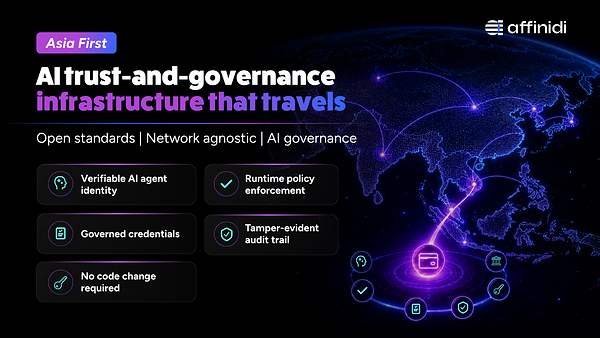
SINGAPORE, June 19 -- CardInfoLink has deployed Agent Gateway on Agenzo, its agentic commerce platform for travel and hospitality merchants, making it what is believed to be the first commercial deployment in Asia to operate AI agents under an independent trust and governance layer. Every AI agent connecting to CardInfoLink's merchants does so through a governed, auditable channel, on open standards, without disrupting the payment infrastructure beneath it. CardInfoLink operates live merchant-acquiring infrastructure across Asia, with more than 15 years in payment processing. Affinidi is an active contributor to the Linux Foundation and the standards bodies shaping the next wave of digital trust infrastructure.     With Agenzo, consumers can instruct AI agents to book a ride, a flight, or a hotel, confirming each purchase as they go. The Agent Gateway governs agent interactions in the background, creating a cryptographically verifiable record of all interactions and allowing only authorised agents to transact, with clear accountability established across all parties. All of this happens in the background, so the experience is unchanged for both the consumer and the merchant. For the business, the agent-readiness process is simplified for merchants by enabling faster implementation through simple configuration with no complex changes to existing systems. This allows them to open their services and products to AI agents through proper governance, and with trust handled at the system boundary rather than custom-built for every integration. As AI agents begin to act inside commercial systems, the open question is not whether they can transact but who is accountable when they do. In its 2026 Future of Fraud Forecast, Experian named the inability to distinguish legitimate agents from malicious ones as the top fraud threat to businesses this year, warning that machine-to-machine transactions are being initiated without clear ownership of liability. Gartner expects more than 40% of agentic AI projects to be cancelled by the end of 2027, citing escalating costs, unclear value, and inadequate risk controls. In January 2026, Singapore's IMDA introduced the world's first governance framework for agentic AI, calling for bounded AI agent autonomy, human accountability, and technical controls as the recommended baseline. Agent Gateway, part of the Affinidi Trust Fabric Suite, is built to meet that bar. "A shipping container reorganised global trade not because it was clever but because it was standardised. Agentic commerce needs the same: one trusted, standardised way for an AI agent to interact with a merchant. We run real infrastructure with real merchants and real consequences, so we could not add agents without it. The Agent Gateway gave us that, inside the systems we already use," said Hyman Zhu, Co-Founder of CardInfoLink. "AI Governance and payment processing are distinct problems and challenges, and they need separate infrastructure. The Agent Gateway is the layer that governs how an AI agent connects to the systems it acts on, independent of how the payment is settled. That layer has been missing from production. With CardInfoLink, it is now running, and every business putting agents to work will need it," said Glenn Gore, CEO of Affinidi. This deployment is the first live proof of an approach that the wider industry has been calling for, a layer that lets AI agents act inside real systems under governance built in from the start. For Affinidi, agentic commerce for travel and hospitality is the first commercial use of a trust layer built to span industries, from payments to healthcare and beyond. Both companies see it as the start of an agent economy that is accountable by default. About Agenzo Agenzo is the AI payment brand developed by Evonet and CardInfoLink. It focuses on helping AI agents complete payments in a safe, simple, and compliant way. Agenzo connects AI agents, merchants, wallets, payment networks, and acquirers. It allows an AI agent to understand a customer's payment intent, create an order, request payment authorisation, and complete the transaction through a trusted payment infrastructure. Agenzo has worked on agentic payment use cases such as travel booking, retail, EV charging, loyalty, QR payment, and merchant checkout. Its goal is to make AI-driven commerce easier for merchants, safer for consumers, and more practical for financial institutions and payment partners. About CardInfoLink CardInfoLink is a payment technology company founded in 2010. The company provides payment infrastructure, acquiring systems, gateway solutions, wallet technology, risk management tools, and payment security services for banks, payment institutions, merchants, and technology partners. CardInfoLink has served customers across Asia and supported many types of payment services, including card acquiring, QR payment, online payment, 3D Secure, settlement, dispute handling, and fraud prevention. Over the years, CardInfoLink has built strong experience in payment system development, cross-border payment connectivity, and financial-grade technology operations. The company continues to support banks, acquirers, PSPs, and merchants with reliable and flexible payment solutions. About Agent Gateway The Agent Gateway, part of the Affinidi Trust Fabric suite, is the trust and governance layer for agentic AI. Built on open standards to avoid vendor lock-in, it gives every AI agent a cryptographic identity, enforces policy at runtime, produces tamper-evident audit trails, and secures messaging across organisational and cloud boundaries. Agent Gateway is built for production workloads that demand multiple agentic flows within and across organisations, meeting the audit requirements of strict regulatory and governance models. Agent Gateway holds AI agents and human actors accountable, traceable, and auditable at scale, enabling businesses to extend their reach to more customers, more data, and more partners without sacrificing governance or control. To learn more, visit affinidi.com/trust-fabric. About Affinidi Affinidi is a Temasek-founded technology company building trust infrastructure for AI agents and the digital economy. Founded in 2020 and headquartered in Singapore, with teams in Bangalore and Berlin, Affinidi provides builders and organisations with the tools to enable verifiable, privacy-preserving interactions between people, businesses, and the systems that serve them. Its technology spans governance infrastructure for AI agents, verifiable credential management, trust registries, and developer tooling, all built on open standards for full interoperability, to avoid vendor lock-in. An active contributor to the Linux Foundation, W3C, and the Decentralized Identity Foundation. Visit www.affinidi.com for more information. -- PRNewswire -- Source: Affinidi

SINGAPORE, June 19 — CardInfoLink has deployed Agent Gateway on Agenzo, its agentic commerce platform for travel and hospitality merchants, making it what is believed to be the first commercial deployment in Asia to operate AI agents under an independent trust and governance layer. Every AI agent connecting to CardInfoLink’s merchants does so through a governed, […]

Asia-Pacific Telecom Leaders Gather in Singapore for the Twimbit Telecom Summit & Awards 2026
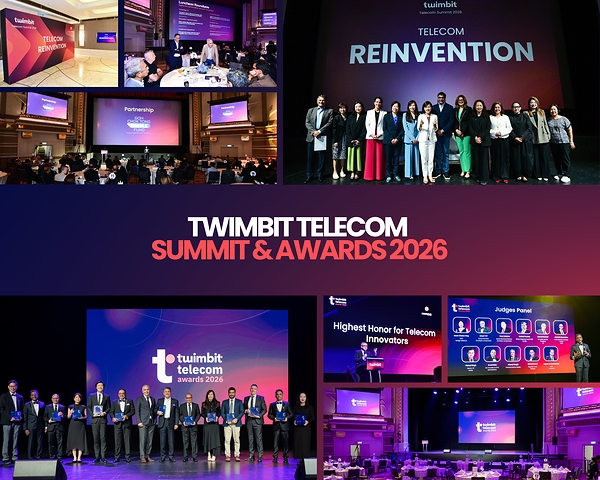
MUMBAI, India and SINGAPORE, June 18 -- The Twimbit Telecom Summit & Awards 2026 recently concluded at the iconic Capitol Theatre Singapore, bringing together senior telecom operators, technology leaders, policymakers, investors, and ecosystem partners from across Asia-Pacific for a day dedicated to telecom reinvention in the AI era.      Hosted by Twimbit, the global research and advisory firm, the summit explored how telecom operators are evolving beyond connectivity into AI-native digital platforms powering enterprise transformation, customer intelligence, sovereign infrastructure, and next-generation digital economies. This year's summit centered around themes including AI-native operations, enterprise AI monetisation, digital sovereignty, infrastructure transformation, customer experience reinvention, and leadership transformation. Across keynote sessions, executive panels, and roundtable discussions, industry leaders discussed the structural shifts reshaping the telecom sector and the operating models required for the next decade. The summit featured leadership perspectives from some of the industry's most influential voices, including Manoj Kohli, Vikram Sinha, Vikram Rao, Juhi McClelland, Ulf Ewaldsson, Rajesh Chandiramani, Anna Yip and Wong Soon Nam. The evening concluded with the Twimbit Telecom Awards 2026, recognising operators, leaders, and innovators driving transformation across the telecom ecosystem. Built on Twimbit's proprietary research frameworks and guided by an independent panel of industry judges, the awards celebrate excellence across AI transformation, customer experience, enterprise business, ESG, network modernization, financial performance, and digital infrastructure. Among the marquee winners this year were Singtel, Bharti Airtel, Reliance Jio, Telkomsel, Indosat Ooredoo Hutchison, Globe, Taiwan Mobile, and Digital Realty. Manoj Kohli received the Lifetime Achievement Award for his outstanding contribution to the telecom industry. This year's awards also partnered with the Goh Chok Tong Enable Fund (GCTEF). Through contributions and pledges made during the evening, the initiative raised over SGD 15,000 to support opportunities, aspirations, and inclusion for persons with disabilities in Singapore. "The telecom industry is entering one of the most defining phases in its history," said Manoj Menon, Founder & CEO of Twimbit. "What we witnessed at the summit was not just a conversation about technology, but a conversation about leadership, reinvention, and the future role telecom will play in shaping digital economies." The Twimbit Telecom Summit & Awards 2026 was supported by founding partner F5 and gold sponsor Comviva. -- PRNewswire  -- Source: Twimbit 

MUMBAI, India and SINGAPORE, June 18 — The Twimbit Telecom Summit & Awards 2026 recently concluded at the iconic Capitol Theatre Singapore, bringing together senior telecom operators, technology leaders, policymakers, investors, and ecosystem partners from across Asia-Pacific for a day dedicated to telecom reinvention in the AI era. Hosted by Twimbit, the global research and advisory […]

Galaxy Data Center Secures US$250 Million in an Initial Strategic Financing Round to Build Next-Generation Green Compute Infrastructure in Southeast Asia

SINGAPORE, June 16, -- Galaxy Data Center ("Galaxy DC") today announced that it has secured US$250 million in an initial strategic financing round from a renowned international investment institution. The proceeds support the company's data center platform development in Southeast Asia, project execution, and deployment of high-density infrastructure for the AI era.    Galaxy DC is strategically leveraging its regional hub in Singapore to advance the multi-country deployment of GW-scale AIDC campuses across Southeast Asia. By employing diversified capital models and industrial ecosystem synergy strategies, the company delivers customized hyperscale AIDC infrastructure services to a broad range of clients. Galaxy DC believes that the demand for AI computing power is reshaping data centers from traditional facility assets toward a new phase of deep collaboration among energy strategy, engineering execution, operational resilience, and customer growth. The company will continue to strengthen its comprehensive capabilities in GW-scale AIDC across technology adaptability, power resources, green energy, localized rapid delivery, and low-carbon operations. It will also further enhance strategic capital partnerships, leveraging diversified capital models to position Southeast Asia as a key hub for global sustainable digital infrastructure. Arthur Yang, Co-founder and CEO of Galaxy DC, said: "This financing further strengthens Galaxy DC's regional platform capabilities. We are seeing rapidly evolving requirements from AI and cloud service clients — focusing not only on capacity, but also on delivery certainty, energy efficiency, operational resilience, and long-term scalability. Galaxy DC remains committed to leveraging cutting-edge, ever-evolving technology and synergistic sustainable energy solutions as its core, building future-ready GW-scale green computing infrastructure for our clients." Representatives from a world-renowned investment institution stated: "Galaxy DC has a clear development path in Southeast Asia as well as differentiated technical capabilities. We see long-term value in the company's high-density, green, and scalable data center platform, and look forward to supporting its role in regional digital infrastructure development." About Galaxy Data Center Galaxy Data Center (Galaxy DC) is a next-generation digital infrastructure platform built for the intelligent era, committed to becoming a continuously evolving global digital service provider. The company focuses on the growing computing demands of artificial intelligence (AI) and cloud computing, with hyperscale AI data centers (AIDCs) at the core of its offering. Galaxy DC builds digital infrastructure that is highly efficient, highly reliable, and highly scalable. Leveraging its unique strengths in sustainable design, resource-efficient deployment, and long-term operations, the company balances rapid compute capacity growth with environmental responsibility and lasting asset value. -- PRNewswire -- Source: Galaxy Data Center

SINGAPORE, June 16, –– Galaxy Data Center (“Galaxy DC”) today announced that it has secured US$250 million in an initial strategic financing round from a renowned international investment institution. The proceeds support the company’s data center platform development in Southeast Asia, project execution, and deployment of high-density infrastructure for the AI era. Galaxy DC is strategically […]

RICOH Brings AI Beyond Concept Through Real-World Operational Applications

SELANGOR, 16 June 2026 – RICOH Malaysia (“RICOH”) today unveiled a suite of AI, automation, and integrated technology solutions at “RICOH Empowering AI – Smarter Work, Real Impact” held at M World Hotel, Petaling Jaya. The event highlighted how businesses are increasingly shifting beyond AI experimentation towards practical, real-world applications that can be integrated into operational environments across various industries such as logistics, manufacturing, inspection, and workplace operations. The showcase comes amid a broader industry push towards industrial automation and smart operations in Malaysia, particularly under the New Industrial Master Plan 2030 (NIMP 2030), which targets the development of 3,000 smart factories through the adoption of automation, artificial intelligence, and advanced technologies. Against this backdrop, RICOH demonstrated how intelligent technologies can be integrated into operational workflows to improve visibility, reduce manual processes, and support more responsive operations across different business environments. The event was officiated by RICOH’s Chief Digital Officer, APAC Region, Mr. Satoshi Tsugane, alongside Federation of Malaysian Manufacturers (FMM) President Jacob Lee Chor Kok and RICOH Malaysia’s Managing Director Alice Lee, underscoring growing collaboration between industry, technology providers, and policymakers in supporting Malaysia’s industrial modernization efforts. RICOH’s Chief Digital Officer, APAC Region, Mr. Satoshi Tsugane, said organisations across the region are increasingly moving beyond AI experimentation towards solutions that can deliver measurable business value. “As businesses continue their digital transformation journeys, there is growing demand for solutions that can connect information, workflows, and people more effectively. Our focus is on helping organisations apply intelligent technologies in ways that create meaningful operational value and support long-term business transformation,” he said. The showcase reflected growing business demand for more connected and intelligent operational environments, as organisations increasingly seek technologies that can improve coordination, operational visibility, and responsiveness across workflows. Federation of Malaysian Manufacturers (FMM) President Jacob Lee Chor Kok said businesses are placing greater focus on technologies that can improve efficiency, visibility, and responsiveness as Malaysia strengthens its position as a regional manufacturing and logistics hub. “Manufacturers are under increasing pressure to improve productivity and competitiveness amid increasingly complex operating environments. The challenge is no longer just adopting technology, but integrating solutions that can deliver measurable improvements,” he said, adding that cross-industry showcases also help businesses better understand how automation and intelligent technologies can be applied within real operational environments. The showcase also highlighted how intelligent technologies are being applied across several operational areas, including: AI as the enabler of operational precision – Intelligent inspection systems designed to support greater accuracy and consistency in real operational environments, including smartphone defect detection, fiber optic inspection, and print quality monitoring. AI as the driver of workflow intelligence – Integrated workplace and workflow solutions aimed at improving information accessibility, coordination, and operational efficiency across day-to-day business processes. AI as the foundation for connected operations – Integrated automation and AI-powered technologies designed to support more connected, adaptable, and responsive operational workflows across different business environments. RICOH Malaysia’s Managing Director, Alice Lee, said the conversation around AI is increasingly shifting from possibility to implementation as organisations look for technologies that can integrate seamlessly into operational workflows while delivering measurable impact. “At RICOH, our focus is on helping businesses operationalise intelligent technologies in practical and scalable ways across different operational environments, from logistics and manufacturing to inspection and workplace coordination. The showcase reflects how AI can be applied in real operational settings, with solutions that can adapt to different business requirements and support more connected and responsive operations. The priority is not just automation, but helping organisations build long-term operational agility and competitiveness,” she added. As organisations continue accelerating digitalisation and automation efforts, the showcase highlights the growing role of intelligent technologies in helping businesses improve operational visibility, responsiveness, and decision-making, while supporting more connected and adaptable ways of working across increasingly complex environments. About Ricoh Ricoh is a global integrator in workplace transformation, operating in approximately 200 countries and regions and headquartered in Tokyo. Supporting customers' value creation, Ricoh offers workplace services and solutions that empower organizations to work smarter through advanced technologies—including AI— together with long-standing expertise rooted in printing. Ricoh also operates commercial and industrial printing businesses and delivers new solutions leveraging inkjet technology. In the financial year ended March 2026, Ricoh Group had worldwide sales of 2,608 billion yen (approx. 16.4 billion USD). For 90 years since our founding, Ricoh has upheld its mission and vision of empowering individuals to find Fulfillment through Work—and that commitment continues today. By understanding and transforming how people work, we unleash their potential and creativity to realize a sustainable future. For further information, please visit www.ricoh.com   -- RICOH

SELANGOR, 16 June 2026 – RICOH Malaysia (“RICOH”) today unveiled a suite of AI, automation, and integrated technology solutions at “RICOH Empowering AI – Smarter Work, Real Impact” held at M World Hotel, Petaling Jaya. The event highlighted how businesses are increasingly shifting beyond AI experimentation towards practical, real-world applications that can be integrated into […]

Journalism’s Core Values Must Endure In The Age Of AI

KUALA LUMPUR, June 16 -- The rapid evolution of technology, from the era of typewriters to artificial intelligence (AI), has transformed the journalism landscape, enabling news production and dissemination to take place faster than ever before. However, despite these technological advancements, both veteran and young journalists agree that journalism’s fundamental values -- ethics, integrity, accuracy and the human touch -- must continue to be upheld to ensure reporting remains credible and trustworthy. Sabah Journalists Association (SJA) adviser Datuk Muguntan Vanar, 61, said these values are the strongest safeguard in the age of AI and social media, ensuring mainstream media continues to earn public trust. “It is important for journalists to uphold accuracy, fairness, independence, transparency and accountability so readers continue to place their trust in us. “Today, false and half-truth information spreads rapidly through social media. If we do not want the journalism profession to face further threats, we must defend the core values of journalism,” he told Bernama. Reflecting on his early career during the typewriter era, Muguntan said the experience taught him to appreciate the discipline and precision required in journalism. “Every word carried weight. We could not simply delete text at the press of a button because even a minor spelling or sentence error meant retyping an entire page. “The typewriter also brought its own character to the newsroom through its constant rhythm and sound. For our generation, it made journalism feel truly alive,” he said. He noted that technological advancement has significantly changed the way journalists gather information, with interviews that were once conducted face-to-face now commonly conducted by telephone or via messaging applications. Describing AI as both an opportunity and a challenge, Muguntan said the technology can improve efficiency but may also pose risks to journalistic and editorial ethics if not used responsibly. “I believe AI will eventually take over many aspects of journalistic work. However, the core values of journalism must always be preserved to maintain the human element in news reporting,” he said. Meanwhile, Malaysian National News Agency (Bernama) economics desk reporter Muhammad Fawwaz Thaqif Nor Afandi, 25, said young journalists must remain committed to journalistic principles to ensure the media continues to serve as a reliable source of authentic information. “AI can be used as a tool to gather information, verify facts and improve grammar, but not to write news entirely. Original writing style and the human touch are essential to preserving a journalist’s identity,” he said. Inspired by former Director-General of Broadcasting Datuk Suhaimi Sulaiman, Fawwaz said he aspires to become an ethical journalist with strong integrity and a commitment to delivering accurate reporting to the public. Malaysia Gazette journalist Nur Arina Asbar, 25, said young journalists must be more aware of their surroundings, especially amid the growing spread of misinformation on social media. “In the race to report viral issues quickly, journalists must verify every piece of information they receive so that published reports are accurate and authentic,” she said. Nur Arina cited Zainal Abdul Rashid (ZRA), the first Malaysian journalist to enter Israel and Palestine to produce a special report, as her inspiration in journalism. For Astro Awani journalist Nurul Shafiqa Azami, 25, one of the biggest challenges facing journalists today is obtaining authentic sources as AI-generated content and manipulated images become increasingly common. “As a young journalist, I use AI technology to help identify news intros and gather background information on issues when preparing reports. “However, journalists cannot rely entirely on AI for writing if we want to preserve the human touch in every news story,” she said. Nurul Shafiqa added that television personality Jasmine Abu Bakar and Astro Awani editor Assim Mohammad Hassan continue to inspire her journey in the media industry. -- BERNAMA

KUALA LUMPUR, June 16 — The rapid evolution of technology, from the era of typewriters to artificial intelligence (AI), has transformed the journalism landscape, enabling news production and dissemination to take place faster than ever before. However, despite these technological advancements, both veteran and young journalists agree that journalism’s fundamental values — ethics, integrity, accuracy and […]