South Korea introduces ‘AI legal secretary’ for civil servants

South Korea introduces 'AI legal secretary' for civil servants

SEOUL, JULY 13 — The South Korean government has developed an “AI legal secretary” service that civil servants can refer to when studying the legal basis for policy planning and implementation. The service was implemented on a trial basis this week, Yonhap News Agency reported, citing officials on Monday. The artificial intelligence (AI) service, which […]

Allora Labs Launches Forge to Let AI Models Compete, Improve, and Earn on Real-World Predictions
NEW YORK, July 3 -- Allora Labs today launches Forge, the world's first arena for predictive intelligence: a live environment where AI models compete on real-world problems, improve through that competition, and earn continuously for the predictions they produce.  A network of models, not a single one Predicting what comes next is one of the oldest pursuits there is. Allora's thesis is that its future will not belong to a single dominant AI model but to a network of them, each competing and improving, together forming a collective intelligence that grows more capable as more models join. Built for developers who want a real test Forge is built for developers who want to test their models against the best in the world. Models improve fastest under real competition, and on Forge they face it on live problems with real outcomes. A developer brings a model and a predict() function, and Forge runs it live and handles the data, the infrastructure, and the rest, so the work stays on the model rather than the operations around it. Models remain owned by their developers, wherever they run. Predictions that are already in demand More than 140 partners across the Allora Network build on the predictions made on Forge, so a model's work is consumed in production and rewards its developer continuously as the model improves and the network grows. "We don't believe the future will be predicted by one model that beats all the others," said Nick Emmons, CEO of Allora. "It will be predicted by many models competing, each making the others better. Forge is where that happens, and where the engineers building the best prediction models in the world are rewarded for it." Availability Developers can join and deploy their first model directly on Forge. About Allora Labs Allora Network is a decentralized AI inference network that harnesses a globally distributed community of machine learning models to produce highly accurate, context-aware predictions in real time. Built on a modular, topic-based system, Allora orchestrates competing models on shared prediction tasks and continuously evaluates performance under live conditions, synthesizing outputs into a high-confidence aggregated signal. By treating inference as an open, competitive, and economically aligned process, Allora enables ever-improving AI services that can be embedded directly into operational systems, powering use cases from EV charging optimization to autonomous IoT decisioning. -- PRNewswire -- Source: Allora Labs 

NEW YORK, July 3 — Allora Labs today launches Forge, the world’s first arena for predictive intelligence: a live environment where AI models compete on real-world problems, improve through that competition, and earn continuously for the predictions they produce. A network of models, not a single one Predicting what comes next is one of the oldest pursuits there is. Allora‘s thesis […]

PM Anwar, Boao Forum Secretary-General Discuss Regional Cooperation Amid Global Challenges
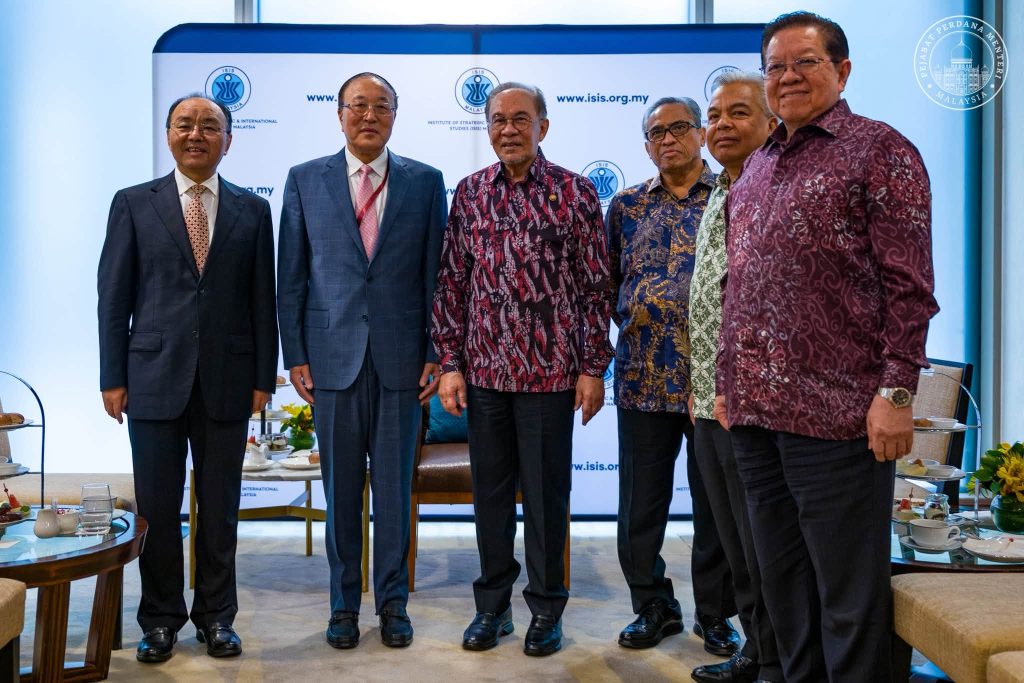
KUALA LUMPUR, July 2 — Prime Minister Datuk Seri Anwar Ibrahim held talks with Boao Forum for Asia (BFA) Secretary-General Zhang Jun today, focusing on strengthening regional cooperation amid growing geopolitical and economic uncertainties. During the meeting, Anwar and Zhang exchanged views on the increasingly challenging regional and global landscape, including geopolitical tensions, economic pressures and the rapid pace of technological change. The Prime Minister stressed that closer, more inclusive and sustained regional cooperation remains essential to ensuring stability, prosperity and shared well-being across Asia. He reaffirmed Malaysia's commitment to working closely with the Boao Forum for Asia in key areas such as trade and investment, digital transformation, artificial intelligence (AI), energy transition, food security, education and talent development. According to Anwar, these collaborative efforts are expected to enhance the region's resilience while creating broader opportunities for cooperation that deliver tangible benefits to the people. He expressed hope that Malaysia's partnership with the Boao Forum for Asia would continue to deepen and contribute meaningfully to regional development and long-term economic growth. -- MINUTESMY

KUALA LUMPUR, July 2 — Prime Minister Datuk Seri Anwar Ibrahim held talks with Boao Forum for Asia (BFA) Secretary-General Zhang Jun today, focusing on strengthening regional cooperation amid growing geopolitical and economic uncertainties. During the meeting, Anwar and Zhang exchanged views on the increasingly challenging regional and global landscape, including geopolitical tensions, economic pressures […]

Cognizant and Domyn Announce Strategic Partnership to Deliver Sovereign AI Solutions Across EMEA

LONDON, July 2, 2026  -- Cognizant (NASDAQ: CTSH) and Domyn, the European leader in sovereign AI infrastructure for regulated industries, have announced a strategic partnership to bring sovereign AI capabilities to enterprises across the EMEA region. The partnership will help organisations in highly regulated sectors deploy powerful AI solutions that keep data within client-controlled environments and support compliance with European regulatory frameworks.  Domyn's end-to-end AI system — spanning compute, proprietary models, governance, and agents —is purpose-built for exactly this challenge, and Cognizant's role as an AI Builder and trusted global systems integrator, with deep EMEA enterprise relationships, makes it the ideal partner to bring these capabilities to scale. Under the partnership, Domyn will provide the AI infrastructure layer, delivering LLMs that can be deployed within client environments, on-premise or in private cloud configurations, while Cognizant will serve as the application, integration, and domain execution layer. Cognizant will train and adapt Domyn's models into smaller, domain-specific models (SLMs), build agents and applications tailored to specific industry use cases, and manage the legacy data pipeline construction, data cleaning, and model-alignment work required for enterprise deployment. Together, the companies will execute a joint go-to-market strategy targeting organisations across UK & Ireland, DACH, Northern Europe, and Southern Europe and the Middle East. For enterprise customers, the partnership unlocks a fully integrated sovereign AI proposition. Organisations gain access to cutting-edge AI models and infrastructure without sacrificing control over their data, while benefiting from Cognizant's proven ability to manage complex enterprise change, embed human-in-the-loop compliance frameworks, and deliver measurable business outcomes at scale. As per Gartner®, "Geopolitics is the key driver behind the demand for true sovereign AI solutions and services, which has a negative impact on global cloud providers offering AI services, such as hyperscale cloud providers. Considering the current geopolitical situation, local cloud providers offering AI services will increasingly become relevant competitors and will grow market share." By 2029, geopolitics will drive 50% of cloud AI workloads to sovereign cloud AI deployment models, up from 5% in 2025.1 "Sovereign AI is one of the most significant growth opportunities in EMEA, and one where Cognizant is uniquely positioned to lead," said Manoj Mehta, President, EMEA, Cognizant. "Regulated organisations across Europe need AI that delivers transformational outcomes without compromising on data sovereignty, regulatory compliance, or security. Our partnership with Domyn brings together world-class AI infrastructure and Cognizant's deep expertise in turning that infrastructure into real, industry-specific solutions. Together, we are giving enterprises the confidence to move fast on AI - on their terms and within their borders." "The next wave of AI in Europe will be won by those who own and control the intelligence at the heart of their business," said Uljan Sharka, CEO at Domyn. "With Cognizant's extensive industry relationships across EMEA, we'll be able to scale our vision and give the most demanding institutions the foundation to move decisively on AI, and truly own the intelligence they're building on." The partnership aligns with Cognizant's three-vector AI Builder strategy — enabling hyper productivity, industrialising AI, and agentifying the enterprise — bringing more than 60 AI patents, 1,500-plus industry-specific agents, and a dedicated AI Lab across San Francisco and Bengaluru. It also represents an important step in Domyn's mission to help regulated enterprises own, govern and trust the intelligence powering their most critical workflows, with the partnership initially focused on customers across EMEA. -- PRNewswire -- Source: Cognizant Technology Solutions

LONDON, July 2, 2026  — Cognizant (NASDAQ: CTSH) and Domyn, the European leader in sovereign AI infrastructure for regulated industries, have announced a strategic partnership to bring sovereign AI capabilities to enterprises across the EMEA region. The partnership will help organisations in highly regulated sectors deploy powerful AI solutions that keep data within client-controlled environments and […]

Harmful content: MCMC completes regulatory framework, subsidiary instruments of Act 866 – YB Fahmi

KUALA LUMPUR, Jun 2 -- The government is completing the regulatory framework under the Online Safety Act 2025 [Act 866], including finalising another regulatory instrument relating to private messaging features to clarify the obligations of digital platforms in dealing with harmful content, said Communications Minister Datuk Fahmi Fadzil. He said the Malaysian Communications and Multimedia Commission (MCMC) is currently holding a public consultation to develop the Online Safety (Other Characteristics of Private Messaging Features) Regulations.  Fahmi said the public consultation, which began on June 19, was scheduled to end on July 20 before the regulations were finalized. "All these subsidiary legislations, codes and guidelines were drafted to detail the duties and obligations of licensed service providers under Act 866, in addition to providing clear guidance on compliance with statutory responsibilities," he said during the Ministerial Question Time session at the Dewan Rakyat today. He was answering a question from Rodziah Ismail (PH-Ampang) on ​​the status of the development of subsidiary instruments under Act 866, including regulations, guidelines and implementation mechanisms. Fahmi said the regulations were among 10 subsidiary instruments that included regulations, codes and guidelines that complemented Act 866, with four of them coming into force on Jan 1, 2026 simultaneously with the act. “It involves the Online Security (Fi) Regulations 2025, the Online Security (Form of Undertaking) Regulations 2025, the Online Security (Online Security Appeal Tribunal) Regulations 2025, and the Online Security (Period) Regulations 2025. "Two more subsidiary regulations were enforced on July 1, 2026, namely the Online Safety (Compounding of Offences) Regulations 2026 and the Online Safety (Online Safety Plan) Regulations 2026," he said. Fahmi said the implementation of Act 866 together with subsidiary regulations, codes and guidelines would ensure that social media platforms shoulder greater responsibility in creating a safer digital ecosystem, including detecting and addressing harmful content more proactively. He said platforms should not continue to rely on MCMC to identify and request that the content be taken down, but instead should implement automatic detection and enforcement. "This harmful content problem should not be handled by MCMC. This harmful content problem should be handled by the platform itself," he said. He said that since Jan 1 until yesterday, MCMC had identified 345,712 pieces of harmful content that were requested to be removed from digital platforms, with each application taking between 30 to 45 minutes as it required the preparation of documents and justification for the reason the content was classified as harmful. "If we take the number 345,712 that I mentioned earlier and multiply it by 30 minutes for each application, it means that from Jan 1 until yesterday, MCMC has used a total of 19.7 years of working time to file content that is believed to be harmful," he said. Fahmi said that of the total content requested to be taken down, approximately 91 percent involved gambling and scam content that was repeatedly produced by criminals and promoted through digital platforms. In this regard, he said MCMC is looking into the use of  AI agentic  technology to increase the efficiency of managing complaints and reduce the workload of officers, in addition to encouraging social media platforms to also utilize artificial intelligence (AI) technology to detect and take down content that violates community guidelines more quickly. -- BERNAMA 

KUALA LUMPUR, July 2 — The government is completing the regulatory framework under the Online Safety Act 2025 [Act 866], including finalising another regulatory instrument relating to private messaging features to clarify the obligations of digital platforms in dealing with harmful content, said Communications Minister Datuk Fahmi Fadzil. He said the Malaysian Communications and Multimedia […]

PM Anwar Urges Swifter Action To Prepare Malaysians For AI-driven Future
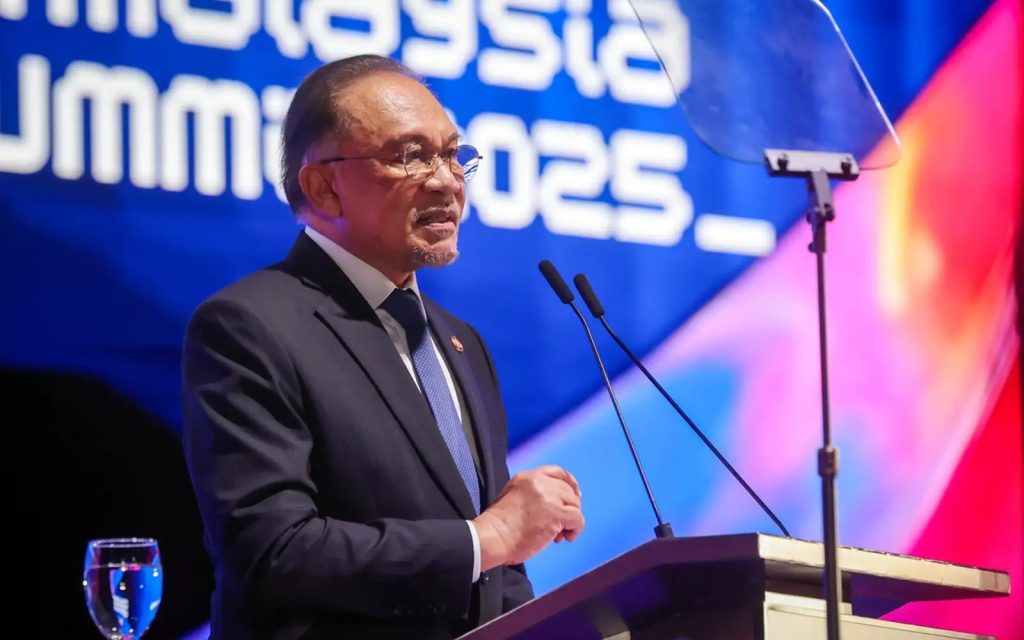
KUALA LUMPUR, July 1 -- Malaysia must accelerate efforts to equip its workforce with the skills and expertise needed to thrive in the artificial intelligence (AI) era. Prime Minister Datuk Seri Anwar Ibrahim today said rapid technological advancements were reshaping industries and creating new opportunities, making it imperative for the country’s education and training ecosystem to adapt. “AI will shape not only how businesses run, but how commerce itself is conducted, how credit is assessed, how risk is managed and how markets connect across borders,” he said in his keynote address at the inauguration of Ant International’s Global Operations Centre here today. Anwar said the government was also finalising the AI Governance Bill to establish a regulatory framework for the human-machine future, complementing existing laws, including the Cybersecurity Act and data protection regulations. He said digital trust remained the foundation of nation-building in the digital era, which had been prioritised under the 13th Malaysia Plan and the final phases of the Malaysia Digital Economy Blueprint. On a similar note, Anwar noted that Malaysia must move swiftly to prepare its young people for emerging industries by strengthening talent development and introducing new disciplines in education and training. He said the government was intensifying efforts to ensure the country’s education system kept pace with rapid technological changes and the evolving demands of the global economy. “Both the National Digital Council and National Education Council have recently focused on equipping Malaysians with the right skills for the future. “We must ensure that our children and young people receive the best possible training and are prepared to venture into new disciplines and opportunities emerging globally,” he said. The Prime Minister stressed that Malaysia must adapt quickly to the pace of technological change to avoid falling behind in an increasingly competitive digital landscape. He also expressed appreciation to Ant International for its confidence in Malaysia and for supporting the government’s efforts to nurture local talent and expand opportunities in the digital economy. -- BERNAMA 

KUALA LUMPUR, July 1 — Malaysia must accelerate efforts to equip its workforce with the skills and expertise needed to thrive in the artificial intelligence (AI) era. Prime Minister Datuk Seri Anwar Ibrahim today said rapid technological advancements were reshaping industries and creating new opportunities, making it imperative for the country’s education and training ecosystem to […]

ZTE Showcases Full-Stack AI Capabilities at MWC Shanghai 2026, Empowering New Era of Token Operations

SHANGHAI, June 26 -- ZTE Corporation (0763.HK / 000063.SZ), a global leading provider of integrated information and communication technology solutions, showcased the TCO-optimal AI factory, an AIOS-powered ecosystem spanning scenario-based applications and innovative terminals, and cutting-edge breakthroughs in AI-driven networks at MWC Shanghai 2026. Through the extreme synergy across computing, network, storage, energy, and software, as well as system-level architecture innovations, ZTE fully unlocked new momentum for token operations.  As AI agents become widespread, industry competition focus is shifting from computing power scale to token efficiency. Leveraging its end-to-end, full-stack AI capabilities, ZTE is forging a complete value chain spanning token production, services, and circulation—to enable operators, enterprises, and industry partners to unlock AI value at scale. Building a TCO-Optimal AI Factory for More Efficient, Cost-Effective Token Production Token efficiency is the core competitiveness in this era of inference. TCO-optimal AI factories are the key to boosting token efficiency and achieving "token freedom". At MWC Shanghai 2026, ZTE showcased solutions that enhanced token efficiency and minimized the cost-per-token through the deep synergy of various elements, including SuperPod, extremely cost-efficient inference, and AIDC with ultimate energy efficiency. Building on 41 years of accumulated expertise in the R&D and engineering of ultra-large-scale, complex systems, ZTE has launched its SuperPod solution. Leveraging multi-chip open collaboration design and the innovative Orthogonal Electrical eXchange (OEX) architecture, it enables plug-and-play deployment and rapid provisioning. A single rack supports 128 GPUs, with high scalability up to 16,000 GPUs, laying a foundation for high-efficiency computing in model training and inference. Through the synergy of network, storage, and computing, as well as hardware and software, ZTE achieves extremely cost-efficient inference. With non-blocking network and Global Server Load Balancing (GSLB), ZTE's solution enables efficient coordination across computing clusters ranging from thousands to tens of thousands of GPUs, further boosting overall inference efficiency. Moreover, ZTE has developed its AIDC solution with ultimate energy efficiency, which integrates 800V HVDC power supply, full-stack liquid cooling, and intelligent computing-electricity synergy, enabling highly efficient and low carbon operations. From computing cluster construction and inference efficiency optimization to green operations, ZTE is steering AI factories from being compute-centric to efficiency-driven, delivering a more cost-efficient and sustainable token production system. Developing an Innovative AIOS Technological Foundation for Smarter Token Scheduling and Closed-Loop Services The AI factory addresses the challenge of low-cost token production, while AIOS plays a critical role in token scheduling, orchestration, and service-oriented output. ZTE has launched the NewStart AIOS and positioned it as the "technological foundation in the AI era". Built on AIOS, Co-Claw—an enterprise-level agent platform—is fully integrated into ZTE terminals, extending AI services to production and daily life. For enterprises, the focus is on enhancing office and R&D efficiency and enabling intelligent operations, to achieve self-evolving workflows and closed-loop decision-making. For homes, ZTE has launched innovative terminals with different screen sizes which serve as entry points to a fully connected smart home. They can be household AI assistant, AI entertainment companion, and AI security guardian—always on, always active for an intelligent lifestyle. For individuals, the company has introduced a new AI-native paradigm spanning AI phones, AI cloud PCs, AI smart displays, FreeScreen and more, enabling personalized recommendations, contextual responses, and immersive interactions across travel, life, and work. AI knows better and delivers enjoyable smart experiences anytime, anywhere. Leveraging the AIOS technological foundation, Co-Claw agent platform, and a full lineup of AI devices, ZTE transforms tokens into schedulable, serviceable, and monetizable resources. This allows operators and enterprises to develop a closed–loop model for token-based services. AI + Network, Co-Building a Future of Intelligent, Ubiquitous 6G Connectivity 6G is more than a generational leap in connectivity. It also serves as the critical infrastructure that enables efficient token circulation in the AI era. As a key participant in global 6G research and standardization, ZTE centers around "AI+" and "SAGIN", speeding up the evolution of 6G from research to commercial use. Regarding SAGIN, ZTE has launched industry-leading LEO satellite communication payload solutions compatible with diverse application scenarios of SAGIN for 5G-A and 6G, fostering the critical connectivity foundation for a smooth evolution from 5G-A to 6G. As for AI-native communications, ZTE has demonstrated its GigaMIMO solution and the world's first 256 TR U6G prototype in the 6G Zone at this event. With GigaMIMO, a cornerstone technology for 6G, the solution leverages architecture innovation, computing synergy, and algorithmic breakthroughs to systematically overcome critical bottlenecks in future network capacity, coverage, and spectral efficiency, thus speeding up 6G deployment and industry evolution. Centered on AI-native capabilities, ZTE has driven the deep integration of AI with existing networks—through architecture upgrades and key scenario innovations—to build a next-gen communications network. The AIR MAX solution comprehensively upgrades the network architecture with AI at its core and delivers a three-tier capability system involving the AI-native infrastructure, autonomous operations, and monetization engine. Together, they empower operators in capability evolution, service transformation, operational shift, and ecosystem reshaping for the AI era. The AI HI-NET solution delivers three key capabilities—AI-native, ultra-high-speed and lossless, and intrinsically secure, laying a solid network foundation for ubiquitous intelligent computing access, lossless wide-area connectivity, and the integration of computing, network, security, and service. The 10G AI-Optical Network solution has been widely deployed across homes, campuses, small businesses, and other key scenarios, unlocking greater value of all-optical cities. Meanwhile, ZTE continues to promote key scenario applications through innovations such as new calling with AI assistant, "first-class" mobile network services, ISAC for low-altitude economy, and highly autonomous networks. These efforts are made to build a more intelligent, efficient, and trustworthy connectivity foundation for the AI era. From AI factory to AIOS, agent platform, and future networks, ZTE demonstrated an end-to-end capability system at MWC Shanghai 2026. The system covers token production, scheduling, and circulation, integrating computing, network, terminals, and agents to accelerate AI from technological breakthroughs to large-scale deployment. The AI industry is accelerating into the inference era, where tokens have become a key measure of AI-driven value creation. Looking to the future, ZTE will work with industry partners to build AI infrastructure and ecosystems that are more efficient, inclusive, and sustainable. Together, we aim to bring AI to various industries, unlocking new growth momentum for the AI era. -- PRNewswire -- Source: ZTE Corporation 

SHANGHAI, June 26 — ZTE Corporation (0763.HK / 000063.SZ), a global leading provider of integrated information and communication technology solutions, showcased the TCO-optimal AI factory, an AIOS-powered ecosystem spanning scenario-based applications and innovative terminals, and cutting-edge breakthroughs in AI-driven networks at MWC Shanghai 2026. Through the extreme synergy across computing, network, storage, energy, and software, as […]

Xinhua Silk Road: “AI+mulberry silk” paves new road to prosperity in S China’s Guangxi

BEIJING, June 25, 2026  -- Detecting an abnormally high indoor temperature, the AI-enabled online platform installed on the cellphone of Wei Qingyi, head of a silkworm-raising cooperative in south China, suggested automatic ventilation for his smart cocooneries.  Instead of traditional bamboo strip-woven silkworm trays and shelves, automatic feeding lines, sensors and high-definition cameras are a common sight in cocooneries in Yizhou District of Hechi City in Guangxi Zhuang Autonomous Region. In the face of an increasing lack in labor but imperative need for industry upgrade, the district leveraged AI to turn the past labor-intensive local silkworm industry into a smart agricultural sector. For instance, Yizhou recreated the entire procedure of local silkworm raising via "AI+the Internet of Things", allowing data to become new agricultural resource and cellphones the new farm tools. With a big data-based cloud computing platform, the large silkworm production area in China further enhanced smart silkworm raising through automatic temperature and humidity monitoring and feeding as well. Via a smart monitoring and alerting network, local short-term and mid-term forecast accuracy rates for significant silkworm diseases usually exceed 90 percent and 80 percent respectively. In local cocooneries, a set of full-process digitized operations enabled by smart clustering, cocoon baking, feeding and disinfection equipment helps the district elevate rate of quality cocoons to 95 percent. As the "Jianyitong" comprehensive service platform that integrates big data, AI and blockchain technologies offers one-stop services including silkworm cocoon trading, settlement, price trend, related production materials supply and lending, local silkworm farmers are no longer worried about underpriced sales. Local silk businesses thus boast stabler channels for quality raw materials purchase, enabling them to build a closed industry chain loop. Thanks to their supreme quality, local raw silks have become the designated raw materials for western luxury brands including Louis Vuitton, Hermes and Chanel, and clothes made of local silk fabrics are regularly exhibited at large international events. Apart from "smartness" and extended silkworm raising industrial chains, an integrated industrial ecology encompassing production, processing, sci-tech, cultural tourism, and ecology has taken shape in Yizhou. Using AI to optimize production and other procedures, local derivative industries such as natural medicines and silk culture tourism largely enlivened local economy, with the output value of mulberry twig alkaloids tablet surpassing 130 million yuan in 2025. Original link: https://en.imsilkroad.com/p/351087.html -- PRNewswire  -- Source: Xinhua Silk Road 

BEIJING, June 25, 2026  — Detecting an abnormally high indoor temperature, the AI-enabled online platform installed on the cellphone of Wei Qingyi, head of a silkworm-raising cooperative in south China, suggested automatic ventilation for his smart cocooneries. Instead of traditional bamboo strip-woven silkworm trays and shelves, automatic feeding lines, sensors and high-definition cameras are a common […]