Rockwell Automation Expands SecureOT Portfolio with Cybersecurity Assessment and Managed Service Capabilities
MILWAUKEE, Wis., June 9 -- Rockwell Automation, Inc. (NYSE: ROK), the world's largest company dedicated to industrial automation and digital transformation, today announced the launch of three enhanced offerings within the SecureOT™ solution suite: OT Cybersecurity Assessment Suite, SecureOT Platform Managed Services and Managed Secure Remote Access (MSRA).    Facing an increasing volume of alerts and limited visibility into operational technology (OT) assets, cybersecurity teams are under pressure to detect and respond quickly. SecureOT's industrial cybersecurity solution suite enables industrial enterprises to stay proactive and resilient without the need to add infrastructure or specialized staff. "Understanding the current state of the OT environment is the foundation for defining the future," said Maria Else, senior global product manager, Cybersecurity Projects, Rockwell Automation. "Manufacturers are under increasing pressure to strengthen cybersecurity without slowing production. With SecureOT, we combine clarity, prioritized action plans and managed expertise to help industrial organizations secure what matters while keeping plants running safely and efficiently. We also leverage technologies such as artificial intelligence (AI) to identify vulnerabilities, automation to maintain efficiency and advanced intelligence to support analysis and understand the latest risks." OT Cybersecurity Assessment Suite The OT Cybersecurity Assessment Suite features a structured, modular approach tailored to the unique operational realities of industrial environments at every stage of their security journey. Combining OT-specific data collection with business-ready insights, the cybersecurity assessment delivers a clear path to building resilience. Built for OT environments by OT professionals, the assessment offerings leverage new proprietary AI and machine learning models to help streamline analysis and standardize evaluation to deliver results and actions in an efficient manner. SecureOT Platform Managed Services SecureOT Platform is Rockwell Automation's risk and vulnerability management solution. Rockwell is now layering its deep industry knowledge on top of the platform to deliver SecureOT Platform Managed Services focused on continuous, professionally managed risk prioritization. The latest update brings managed platform updates, providing the latest features and capabilities, management of the ongoing asset discovery and inventory, and drives programmatic discussions through technical account managers with the customer so security teams can quickly address cybersecurity exposure while minimizing downtime. Managed Secure Remote Access (MSRA) and Beyond Rockwell's new MSRA service connects OT assets, helping to reduce risks, improve efficiency and simplify operations in a vendor-neutral, Rockwell-managed and identity-driven environment. The cloud-routed remote access layer supports OT assets and enables customers to get up and running quickly with turnkey deployment, identity security and reduced workload for internal teams. MSRA enables faster troubleshooting and safer collaboration with vendors, delivered as a scalable service that adapts to each facility. This latest update also introduces Rockwell's refreshed OT Cybersecurity Policy & Procedures offering. Built by Rockwell's OT Governance, Risk and Compliance (GRC) professionals and aligned with international standards, frameworks and best practices, the service provides a comprehensive set of documents to guide and strengthen security programs across the OT environment. Now available for manufacturing and critical infrastructure organizations, these enhancements expand on Rockwell's SecureOT solution suite, a comprehensive industrial cybersecurity offering designed to help manufacturers assess, protect and continuously improve their OT security posture. SecureOT solution suite is supported by Rockwell Automation's broader commitment to industrial cybersecurity, including product security protections embedded across the automation lifecycle and backed by its IEC 62443-4-1 Maturity Level 4 certification – the highest level for the secure product development lifecycle. Combined with capabilities such as assessment, managed services and secure remote access, this approach gives manufacturers a stronger foundation for managing OT risk and improving resilience. To learn more about SecureOT and Rockwell's latest cybersecurity offerings, visit rockwellautomation.com/en-us/capabilities/industrial-cybersecurity. About Rockwell Automation Rockwell Automation, Inc. (NYSE: ROK), is a global leader in industrial automation and digital transformation. We connect the imaginations of people with the potential of technology to expand what is humanly possible, making the world more productive and more sustainable. Headquartered in Milwaukee, Wisconsin, Rockwell Automation employs approximately 26,000 problem solvers dedicated to our customers in more than 100 countries as of fiscal year end 2025. To learn more about how we are bringing the Connected Enterprise® to life across industrial enterprises, visit www.rockwellautomation.com. -- PRNewswire -- Source: Rockwell Automation, Inc.

MILWAUKEE, Wis., June 9 — Rockwell Automation, Inc. (NYSE: ROK), the world’s largest company dedicated to industrial automation and digital transformation, today announced the launch of three enhanced offerings within the SecureOT™ solution suite: OT Cybersecurity Assessment Suite, SecureOT Platform Managed Services and Managed Secure Remote Access (MSRA). Facing an increasing volume of alerts and limited visibility into operational technology (OT) assets, cybersecurity […]

AI Agents Are Already Doing the Work–The Real Challenge is Redesigning It
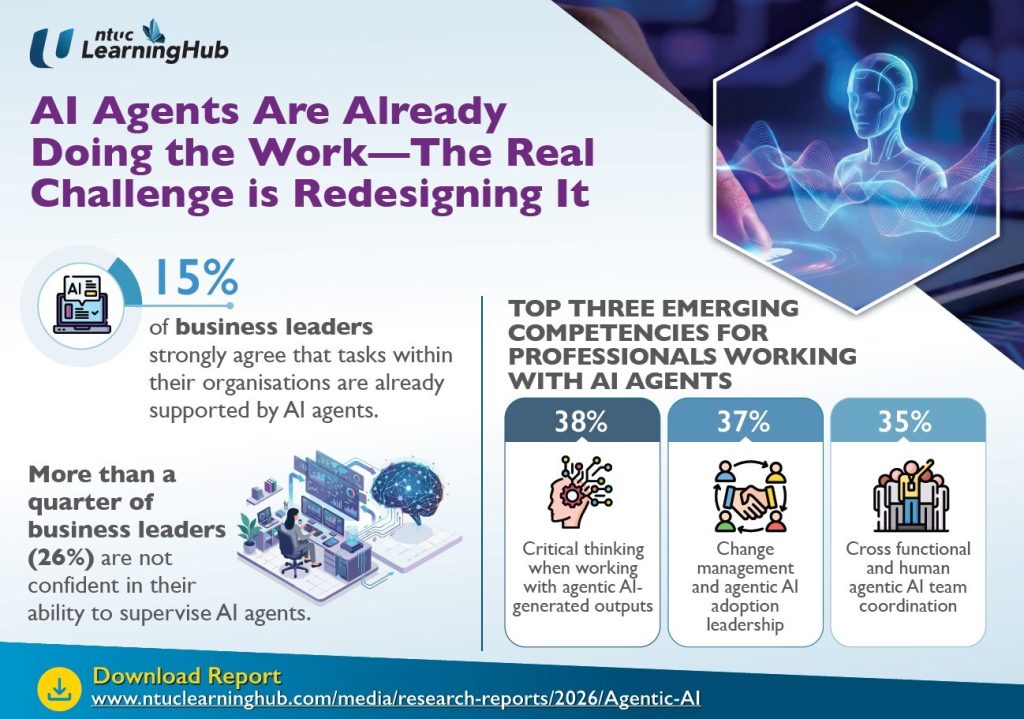
SINGAPORE, June 5 -- Agentic AI adoption is already taking shape, with 15% of business leaders strongly agreeing that tasks within their organisations are supported by AI agents, particularly in functions such as data analysis and reporting (46%), compliance (30%), customer support and service (30%), IT and cybersecurity (29%), and marketing and sales enablement (28%). As adoption advances, organisations are grappling with how this shift is being managed. While AI agents are taking on more responsibility within workflows, the structures that define governance, accountability and workforce readiness are not always evolving at the same pace. One area where this disconnect is most visible is in formal job scopes. Only 27% of business leaders say job scopes accurately reflect the involvement of AI agents, while 42% report that AI agent responsibilities are under-represented and 25% say job scopes have not been updated at all. This misalignment indicates that while AI agents are influencing daily work, yet responsibility for supervision, decision‑making and outcomes is not always clearly defined. These structural gaps are reflected in the levels of confidence among leaders. More than a quarter of business leaders say they are not confident in their ability in supervising AI agents (24% are not very confident, 2% are not confident at all), and a further 24% report that accountability is unclear when AI agents are involved in decisions. These findings point to ongoing challenges in supervision and governance as AI agents are integrated into organisational decision‑making. These are some of the key findings from NTUC LearningHub's Industry Insights Report on Agentic AI and Organisational Transformation, which surveyed 200 business leaders to examine how agentic AI is reshaping job control, decision-making and accountability. All respondents have experience working with agentic AI in their roles, with 24% reporting it as a regular and integral part of their daily work and a further 33% engaging with it frequently. In terms of decision‑making involvement, 31% lead or directly influence decisions on AI agents, while 49% provide input and recommendations. Challenges around measurement and oversight add further complexity. Fairness and bias are cited by 39% of business leaders as the most difficult AI agent performance area to quantify, followed by accountability attribution (36%). While many organisations can track productivity and cost metrics, assessing how AI agents perform across these harder‑to‑measure dimensions is a key issue. At the same time, workforce readiness is failing to keep pace with the speed of adoption. The most significant workforce challenge organisations face is the lack of skills required for AI-augmented roles, cited by 44% of business leaders. This is followed closely by difficulty measuring individual and team performance fairly in AI-integrated environments (43%) and limited access to relevant training and upskilling opportunities (42%). As AI agents undertake more tasks, job scopes and role definitions may not be reflecting how work is actually being done. The shift towards agentic AI is also reshaping demand for specific roles and capabilities. Business leaders report that the most sought‑after job functions driven by the emergence of AI agents are data privacy and protection (46%), followed by AI operations and performance monitoring (45%), AI risk and compliance (43%), AI workflow integration (42%) and AI security and threat management (42%). Alongside this, the competencies that organisations prioritise are also evolving. The top emerging competency cited by business leaders is critical thinking when working with agentic AI‑generated outputs (38%), followed by change management and agentic AI adoption leadership (37%), cross‑functional and human–AI team coordination (35%), agentic AI governance, accountability and regulatory compliance (34%), and ethical judgement and responsible agentic AI deployment (34%). Together, these findings highlight a shift towards skills that support oversight, judgement and coordination as AI agents become more embedded in organisational workflows. Despite widespread AI adoption, human judgement is central. The most important criterion for trusting AI agents cited by 37% of business leaders, is ensuring that a human remains in the loop to review and approve AI recommendations before any action is taken. This highlights that even as AI systems become more autonomous, organisations still depend heavily on human oversight to manage risk, accountability and ethical considerations. Commenting on the report's findings, Mr Amos Tan, Assistant Chief Executive and Chief Core Skills Officer, NTUC LearningHub, says, "AI agents are already embedded in daily operations, but many organisations are scaling faster than what their workforce and control structures can manage. As AI systems take on more autonomous decision‑making, gaps in supervision, accountability and governance become real risks if not thought through and properly designed. Our findings suggest that without deliberate investment in skills such as AI oversight, critical thinking and ethical judgement, organisations may struggle to maintain trust and control as AI adoption accelerates. To scale agentic AI responsibly, companies must redesign roles, update job scopes and strengthen human capabilities in parallel—because while AI may act, accountability must ultimately rest with people." As agentic AI becomes embedded in day-to-day operations, organisations face a defining choice—continue accelerating adoption without adequate control, or invest in the workforce, governance and operating models needed to manage autonomous systems responsibly at scale. To download the Industry Insights Report on Impact of Agentic AI on Jobs, please visit www.ntuclearninghub.com/media/research-reports/2026/Agentic-AI. To find out more about the courses, training, and grants, please contact NTUC LearningHub at www.ntuclearninghub.com. About NTUC LearningHub NTUC LearningHub is the leading Continuing Education and Training provider in Singapore which aims to transform the lifelong employability of working people. Since our corporatisation in 2004, we have been working with employers and individual learners to provide learning solutions in areas such as Infocomm Technology, Generative AI & Cloud, Healthcare, Retail & Food Services, Employability & Literacy, Business Excellence, Workplace Safety & Health, Security, Human Resources & Coaching and Foreign Workers Training. To date, NTUC LearningHub has helped over 34,000 organisations and achieved more than 3.2 million training places across more than 1,000 courses with a pool of about 1,000 certified trainers. As a Total Learning Solutions provider to organisations, we also forge partnerships to offer a wide range of relevant end-to-end training. Besides in-person training, we also offer instructor-led virtual live classes (VLCs) and asynchronous online learning. The NTUC LearningHub Learning eXperience Platform (LXP)—a one-stop online learning platform—offers timely, bite-sized and quality content for learners to upskill anytime and anywhere. Beyond learning, LXP also serves as a platform for jobs and skills development for both workers and companies. For more information, visit www.ntuclearninghub.com. -- PRNewswire -- Source: NTUC LearningHub Pte Ltd

SINGAPORE, June 5 — Agentic AI adoption is already taking shape, with 15% of business leaders strongly agreeing that tasks within their organisations are supported by AI agents, particularly in functions such as data analysis and reporting (46%), compliance (30%), customer support and service (30%), IT and cybersecurity (29%), and marketing and sales enablement (28%). […]

TÜV Rheinland Issues Verification Statement for the New Hypershell X Series, Marking Breakthroughs in Exoskeleton Response Time and Human-Machine Synchronization

SHENZHEN, China, May 22, 2026 /PRNewswire/ -- Recently, TÜV Rheinland Greater China (hereinafter "TÜV Rheinland"), an international independent third-party testing, inspection, and certification organization, issued a verification statement to Hypershell Technology Co., Ltd. (hereinafter "Hypershell") for its new Hypershell X Series consumer exoskeletons (including models Pro S, Max S, and Ultra S). This marks the series as the world's first end-to-end integrated consumer exoskeleton to receive TÜV Rheinland verification for both assistance response time and human-machine synchronization. Fan Xuanhe, Chief Product Officer of Hypershell, Sven-Olaf Steinke, General Manager of TÜV Rheinland Greater China Electrical, and Sommy Chen, General Manager of TÜV Rheinland Greater China Electrical, attended the statement handover ceremony. The verification project focused on assistance response time and gait synchronization between the user and the exoskeleton in real-world movement scenarios. The testing prioritized two primary aspects: First, Response Time assessed the exoskeleton's ability to accurately detect real-time changes in movement, such as initiation, termination, or locomotor transitions and promptly deliver the appropriate level of power assistance; Second, Human-Machine Synchronization evaluated how seamlessly the device adapted to the user's natural movement rhythm to ensure a fluid, coordinated, and unobstructed walking pattern. TÜV Rheinland conducted a comprehensive evaluation across three primary dimensions: Assistance Response Time: This dimension evaluated the time required for the exoskeleton to respond to changes in human movement and provide corresponding assistance during different movement scenarios. Test results showed that the New Hypershell X Series achieved a response time as fast as 0.31 seconds, representing a 64.5% reduction in response time compared to the previous generation. Human-Machine synchronization: By comparing gait performance with and without the exoskeleton across various representative task scenarios, the evaluation analyzed the alignment between the device and the user's natural movement rhythm and gait characteristics. The results showed that the new Hypershell X Series achieved 97.5% gait synchronization across varied terrains, indicating that the device effectively followed the user's movement rhythm and supported a natural, coordinated motion experience. Subjective User Experience: In addition to objective measurements, the verification incorporated subjective feedback from users during actual wearing and use. The assessment focused on the timeliness of assistance and the smoothness and naturalness of movement, providing a comprehensive assessment of the product's performance in real-world applications. The successful verification of Hypershell's consumer exoskeleton demonstrates its performance capabilities in core technical metrics, establishing the company's position in the global market. Furthermore, by leveraging TÜV Rheinland's innovative Human Factors Engineering evaluation system, this project establishes a new paradigm for integrated "human-machine system" assessments, shifting the industry's focus from purely technical parameters to high-quality, user-centric market applications. Fan Xuanhe stated: "We are honored to receive this verification statement from TÜV Rheinland. The New Hypershell X Series adopts an industry-leading end-to-end motion control algorithm designed to enhance key user experiences such as exoskeleton responsiveness and human-machine coordination. This verification not only recognizes the performance of our products, but also affirms our commitment to continuous innovation. As a pioneer in the industry, we will continue to take a user-centered approach to product development, creating exoskeletons designed for diverse real-world scenarios and bringing intelligent exoskeleton technology to more people around the world." Sommy Chen added: "This verification for Hypershell represents another significant practice of TÜV Rheinland in the field of human factors engineering and consumer robotics. As a leader in robotics testing and certification standards, we provide independent and professional services to help companies refine product performance and enhancing market competitiveness. Moving forward, we will continue to collaborate with innovative tech enterprises to promote the standardized and high-quality international development of the consumer robotics industry." With extensive experience in robotics testing and certification, alongside a profound understanding of technical requirements for robot units and diverse application scenarios, TÜV Rheinland provides manufacturers with customized solutions. Its comprehensive services cover testing and certification across multiple dimensions, including AI regulations, electrical safety, mechanical safety, wireless communication, electromagnetic compatibility (EMC), functional safety, cybersecurity, and chemical safety, helping enterprises enhance product performance, safety, and market trust. About Hypershell Founded in 2021, Hypershell is a world-leading exoskeleton company focused on empowering human exploration. Its intelligent exoskeletons adapt in real time to terrain, activity, and intention, making movement lighter and more natural. With certified performance and tens of thousands of units sold across 70+ countries, Hypershell enhances, not replaces, human ability – shaping a future where wearable robotics become as essential as backpacks for exploration, work, and play. Source: TUV Rheinland Greater China

SHENZHEN, China, May 22, 2026 /PRNewswire/ — Recently, TÜV Rheinland Greater China (hereinafter “TÜV Rheinland”), an international independent third-party testing, inspection, and certification organization, issued a verification statement to Hypershell Technology Co., Ltd. (hereinafter “Hypershell”) for its new Hypershell X Series consumer exoskeletons (including models Pro S, Max S , and Ultra S). This marks […]

YB Gobind Singh Deo: Digital Trust Key to Malaysia’s AI Nation Ambitions by 2030

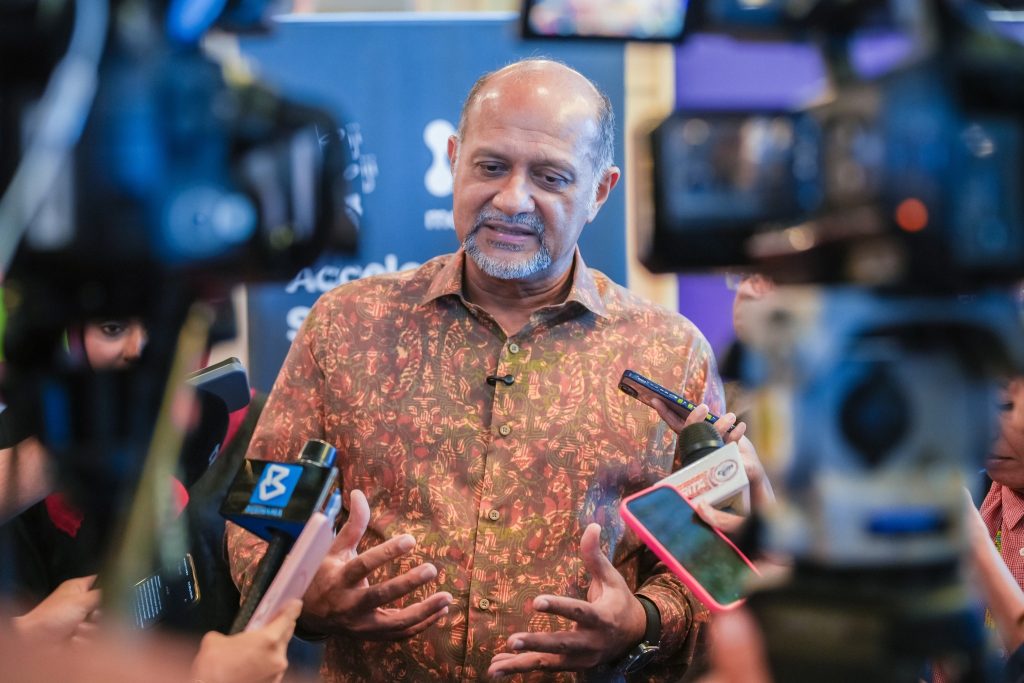
KUALA LUMPUR, May 22 — Digital Minister Gobind Singh Deo said trust must become one of the core foundations of Malaysia’s digital future as the country works towards becoming an AI Nation by 2030 yesterday. He said the development of artificial intelligence (AI) goes beyond technology adoption and must include a secure, ethical, and responsible ecosystem that enables AI to be deployed safely and at scale. Gobind stressed that cybersecurity and digital trust are now essential components of the digital economy, describing them as the “currency” of today’s digital landscape. Speaking at the launch of the RHB Digital Trust Programme, he said the initiative would help businesses and small and medium enterprises (SMEs) strengthen their cyber readiness, build confidence in digital systems, and support Malaysia’s wider digital transformation agenda. He added that the introduction of RHB Cyber-Secure, a cybersecurity self-assessment tool, would provide SMEs with a practical and structured approach to assess their cyber preparedness and improve digital resilience. Gobind also highlighted the collaboration between CyberSecurity Malaysia and RHB Bank, saying strong public-private partnerships are crucial in building long-term cyber resilience across the national ecosystem. He said Malaysia’s digital progress must continue to be guided by trust, collaboration, and shared responsibility to ensure the country develops a digital economy that is innovative, secure, resilient, and trusted by all. -- MINUTESMY -- FB: GOBIND SINGH DEO

KUALA LUMPUR, May 22 — Digital Minister Gobind Singh Deo said trust must become one of the core foundations of Malaysia’s digital future as the country works towards becoming an AI Nation by 2030 yesterday. He said the development of artificial intelligence (AI) goes beyond technology adoption and must include a secure, ethical, and responsible […]

Social Media Features Used By Predators To Harvest Children’s Information

KUALA LUMPUR, May 19– Search functions, tagging features and comment sections on social media platforms are now being identified as key tools used by cyber predators to harvest information on children without requiring any direct interaction at the initial stage. Cybersecurity expert at Universiti Putra Malaysia (UPM) Assoc Prof Dr Nur Izura Udzir said such […]

IBM UNVEILS NEW CYBERSECURITY MEASURES TO COUNTER AI-DRIVEN THREATS
ARMONK, N.Y., April 16 — IBM has announced a new suite of cybersecurity initiatives aimed at helping organizations defend against increasingly sophisticated cyberattacks powered by advanced artificial intelligence models. The company warned that attackers are already leveraging frontier AI to accelerate every stage of the cyberattack lifecycle, significantly reducing the time, cost, and expertise required to carry out complex operations. As a result, traditional security systems—often reliant on fragmented tools and manual processes—are becoming less effective against fast-evolving, automated threats. To address these challenges, IBM Consulting is introducing a new enterprise cybersecurity assessment designed to evaluate an organization’s readiness for AI-enabled threats. The assessment provides visibility into security gaps, policy weaknesses, and AI-specific vulnerabilities, while offering prioritized recommendations and mitigation strategies. In parallel, IBM launched IBM Autonomous Security, a new multi-agent, AI-powered service built to help organizations respond to threats at machine speed. The platform integrates digital security “agents” across an enterprise’s technology environment, enabling coordinated detection, analysis, and response with minimal human intervention. According to IBM, the system is designed to identify potential attack paths, enforce security policies, detect anomalies, and contain threats in real time. It also integrates with governance and risk management systems to enhance compliance and reduce exposure to high-speed attacks. “Frontier models are creating a new category of enterprise threat that is fast moving, systemic and increasingly autonomous,” said Mark Hughes, Global Managing Partner of Cybersecurity Services at IBM Consulting. “AI-powered offense demands AI-powered defense.” IBM said the new offerings are part of its broader strategy to help enterprises modernize their cybersecurity frameworks as threats become more autonomous and complex. The company emphasized that future security advantages will depend not just on individual tools, but on how effectively systems can operate in a coordinated and automated manner. The announcement underscores growing global concern over the misuse of AI in cyberattacks, as organizations across industries race to strengthen defenses and adapt to a rapidly changing threat landscape. /PRNewswire/

ARMONK, N.Y., April 16 — IBM has announced a new suite of cybersecurity initiatives aimed at helping organizations defend against increasingly sophisticated cyberattacks powered by advanced artificial intelligence models. The company warned that attackers are already leveraging frontier AI to accelerate every stage of the cyberattack lifecycle, significantly reducing the time, cost, and expertise required […]