BNM expected to maintain OPR at current level throughout the remainder of 2026
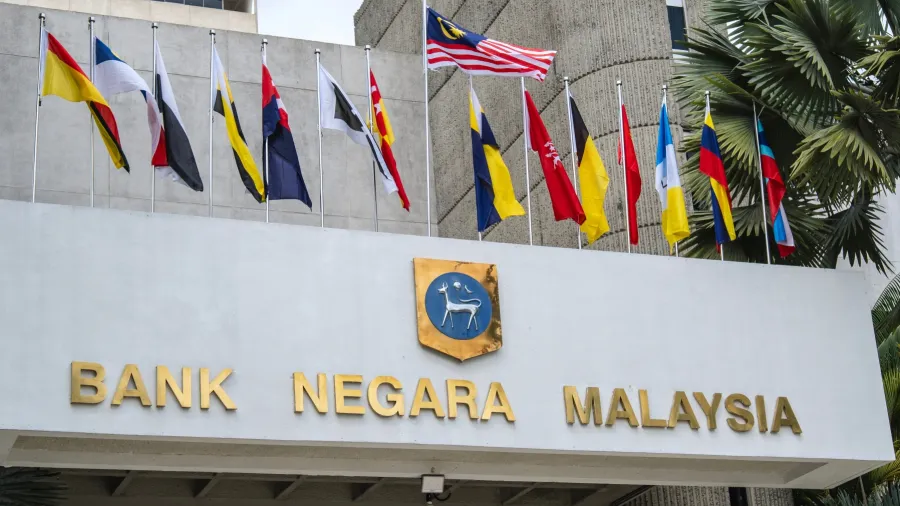
\According to HSBC Global Investment Research, BNM made a small but significant change in its statement when it clarified its monetary policy stance as “consistent” with the current outlook, from “supportive”. However, the HSBC branch still believes that BNM is likely to maintain the rate for the remainder of this year. HSBC Senior ASEAN Economist Yun Liu said BNM also changed its language on inflation by expecting inflation to "increase slightly" from "remaining moderate", reflecting concerns over domestic cost pressures stemming from high global commodity prices. "Malaysia is in a more resilient position compared to other regional countries because Malaysia is a net exporter of energy. This does not mean that Malaysia will be protected from energy shocks, however, the impact is expected to be smaller compared to other Asian economies," he said in a research note. According to RHB Investment Bank Bhd, monetary policy will continue to be data-driven, guided in particular by growth prospects and inflation trends, while strong economic fundamentals and continued subdued inflation support a broadly stable policy stance. The investment bank maintained its 2026 Gross Domestic Product (GDP) growth forecast at 4.7 percent, but expected a continued rise in oil prices to US$140 per barrel could reduce Malaysia's growth prospects by between 0.5 and one percentage point. Meanwhile, CIMB Treasury and Market Research is of the view that BNM's latest statement contains a clearer acknowledgement that rising energy prices and supply chain disruptions due to conflicts in West Asia have begun to affect global growth momentum. According to him, the central bank continues to view current inflationary pressures as largely supply-driven and temporary, thus reinforcing expectations for the OPR to be maintained for a longer period than the initial tightening. CIMB also explained that Malaysia's direct trade exposure to Gulf Cooperation Council countries, Iran and Iraq remains moderate at around 1.5 to 2.0 percent of total exports. This suggests the overall impact is expected to occur through commodity prices and global demand flows rather than direct trade disruptions, he added. MBSB Investment Bank Bhd also maintained its expectation that the OPR would remain set at that rate this year, supported by resilient domestic growth, positive labour market conditions, continued investment activity and continued demand for electrical and electronics exports. The investment bank warned, however, that prolonged geopolitical conflict could cause global energy prices to remain high and could lead to an inflation outlook "high for an extended period" for the rest of the year. "Therefore, government policy measures, particularly fuel subsidies and targeted interventions, will be important in curbing the possibility of increasing inflationary pressures," he added. BNM's Monetary Policy Committee (MPC) meeting on Thursday decided to maintain the OPR at 2.75 percent. The rate has not changed since a 25 basis point cut in July 2025. In a statement yesterday, the central bank explained that at the current OPR level, the MPC believes the monetary policy stance is appropriate and consistent with the prospects of continued price stability and sustainable economic growth.

KUALA LUMPUR: The decision on the Overnight Policy Rate (OPR) being maintained at the current level of 2.75 percent on Thursday reinforced expectations that Bank Negara Malaysia (BNM) may keep the rate unchanged for the remainder of 2026. The expectation comes despite investment banks and research arms warning that prolonged geopolitical tensions and high oil […]

Cheryl Ellron takes on role of chief investment officer at SOGDC

KOTA KINABALU -- Cheryl Ellron has been appointed as Sabah Oil and Gas Development Corporation (SOGDC) chief investment officer, marking a rare female leadership breakthrough in the state’s oil and gas sector. Taking on the role at a “pivotal time”, Cheryl said her focus includes expanding into downstream industries, attracting sustainable investments, and adopting energy-efficient technologies. “Sabah already has a strong foundation… what excites me most is how we can align this strength with Sabah’s Blue Economy frontier,” she said in a statement. She is also pursuing international partnerships, including with a United Kingdom firm, to introduce cleaner energy solutions. “Sabah’s position as a sweet crude oil producer gives us a natural advantage… (with) new technologies and a Blue Economy approach,” she said, adding the goal is to build a responsible, innovation-driven energy hub. --Credit: BORNEOPOST

KOTA KINABALU — Cheryl Ellron has been appointed as Sabah Oil and Gas Development Corporation (SOGDC) chief investment officer, marking a rare female leadership breakthrough in the state’s oil and gas sector. Taking on the role at a “pivotal time”, Cheryl said her focus includes expanding into downstream industries, attracting sustainable investments, and adopting energy-efficient […]

Oil Prices Rise 8 Pct After Trump Announces Blockade Of Strait Of Hormuz
MOSCOW, April 13 - Global oil prices jumped 8 per cent after US President Donald Trump announced a blockade of the Strait of Hormuz, with Brent crude exceeding US$102 per barrel, according to trading data, reported Sputnik/RIA Novosti. As of 22:01 GMT Sunday, June Brent crude futures were trading up 7.76 per cent from the previous close at US$102.59 per barrel, while May WTI futures were up 8.2 per cent at US$104.51. On Saturday, Iran and the US began talks in Islamabad after Trump announced an agreement with Tehran on a two-week ceasefire on Wednesday night. On Sunday morning, the head of the US delegation, Vice President J.D. Vance, announced that Iran and the US had failed to reach an agreement during protracted negotiations and that the US delegation would return home without a deal. On Sunday, Trump announced that the US would begin a blockade of all vessels attempting to enter and exit the Strait of Hormuz. He also instructed the US Navy to track and intercept all vessels that paid Iran to pass through the strait. US Central Command pledged to begin a blockade of "all maritime traffic entering and exiting Iranian ports" at 14:00 GMT on April 13. --BERNAMA-SPUTNIK/RIA NOVOSTI

MOSCOW, April 13 – Global oil prices jumped 8 per cent after US President Donald Trump announced a blockade of the Strait of Hormuz, with Brent crude exceeding US$102 per barrel, according to trading data, reported Sputnik/RIA Novosti. As of 22:01 GMT Sunday, June Brent crude futures were trading up 7.76 per cent from the […]

Oil prices fall below US$100 per barrel driven by ceasefire talks
KUALA LUMPUR: Oil prices fell below US$100 per barrel after the United States (US) and Iran agreed to a two-week ceasefire plan in exchange for Tehran allowing safe passage for ships through the Strait of Hormuz. So far, Brent crude oil has fallen 13.20 percent to US$94.85 while West Texas Intermediate has fallen 14.58 percent to US$96.48 per barrel. SPI Asset Management Managing Partner Stephen Innes told Bernama: “What we are seeing now is not a structural change but more of a mechanical reduction in the geopolitical risk premium that has been factored in based on a worst-case scenario. "In the near term, oil prices could remain below US$100 but the minimum level is unstable. Without a concrete easing of tensions over the Strait of Hormuz, the risk of another price spike is very high," he said. Innes said the two-week ceasefire plan provided a fresh start. He said the situation gave the market room to reassess the situation but did not resolve the main issue as the lack of real progress in reopening the strait could cause prices to rise again. He said supply-side risks remained due to infrastructure damage which could take several months to repair. At the same time, he said the clear indication is that keeping the strait open to ship movement will greatly help lower prices. In that scenario, he said a return to the US$90 per barrel level would be appropriate if tensions eased and gained momentum. He said a more optimistic outcome depended on continued diplomatic coordination, although this remained uncertain. Meanwhile, he said the market had not fully factored in the expectation that the strait would remain open. Innes said political considerations related to the US midterm elections could curb a prolonged conflict, especially given its position as the world's largest oil producer. Bank Muamalat Malaysia Bhd Chief Economist Mohd Afzanizam Abdul Rashid told Bernama that a two-week ceasefire would allow ships to pass through the Strait of Hormuz, where 20 percent of global oil supply depends. He said the continued easing of tensions, if achieved, would pave the way for the reconstruction of oil and gas facilities which would help ease supply constraints. "Recovery will happen in stages. What the market wants is certainty that the conflict will end and business can continue." "However, it is still too early. The current situation is very uncertain. Therefore, the expectation is that crude oil prices will remain unstable in the near future," he said.

KUALA LUMPUR: Oil prices fell below US$100 per barrel after the United States (US) and Iran agreed to a two-week ceasefire plan in exchange for Tehran allowing safe passage for ships through the Strait of Hormuz. So far, Brent crude oil has fallen 13.20 percent to US$94.85 while West Texas Intermediate has fallen 14.58 percent […]

Oil Prices Jump As Trump Ramps Up Threats Against Iran
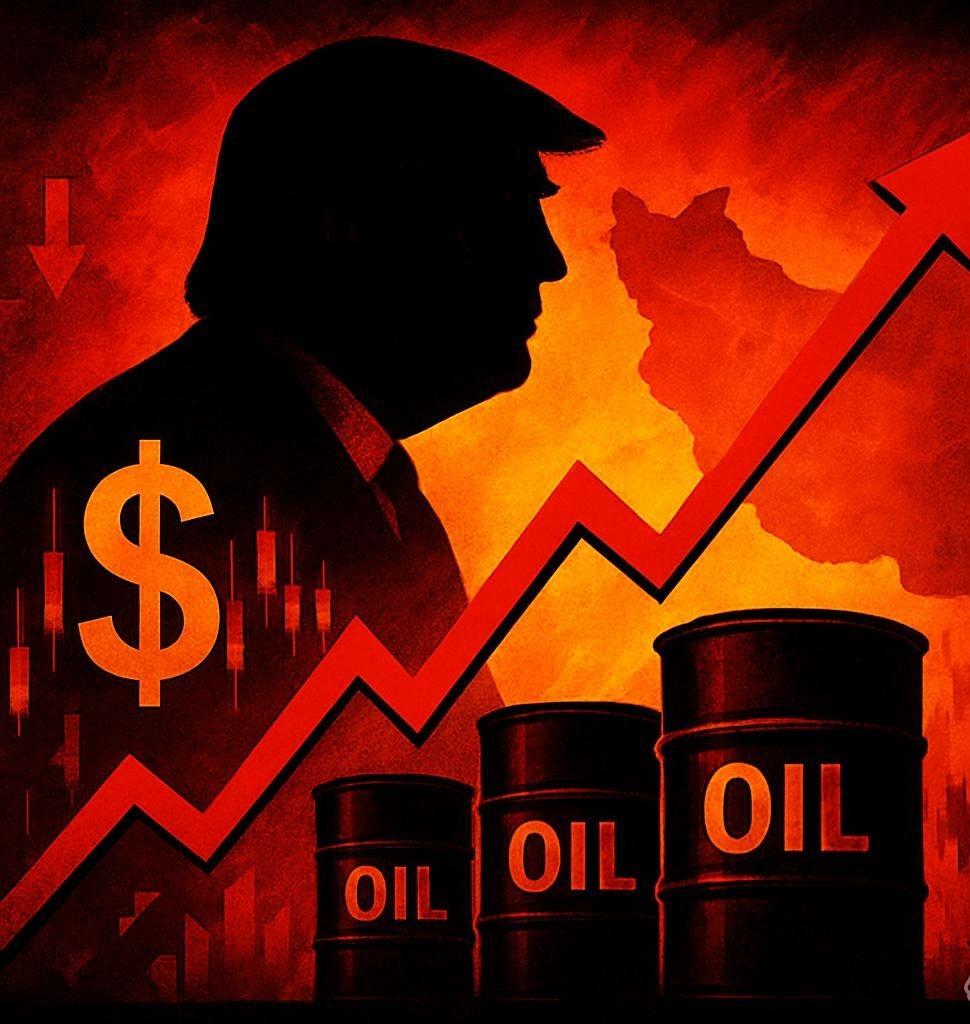
NEW YORK/LONDON, April 6 -- Oil prices rose at the start of the week after US President Donald Trump threatened further military action against Iran, heightening fears of supply disruptions, reported German news agency dpa. Brent crude for delivery in June climbed above US$111 a barrel, nearly US$40 higher than before the outbreak of the conflict. US West Texas Intermediate (WTI) crude also gained. Trump warned Tehran of severe consequences if it failed to comply with US demands by Tuesday 8 pm (0000 GMT Wednesday). The ultimatum, tied to reopening the Strait of Hormuz, appears to have been extended for a third time, though Washington has intensified its rhetoric. Trump told the Wall Street Journal that "if they don't do something by Tuesday evening, they won't have any power plants and they won't have any bridges standing." In a post on his Truth Social platform, Trump said: "Open the Fuckin' Strait, you crazy bastards, or you'll be living in Hell - JUST WATCH!" Meanwhile, eight countries forming the core of the OPEC+ group of oil producers said they were deeply concerned about Iranian attacks on energy infrastructure, warning that repairs to damaged facilities would be costly and time-consuming, undermining supply security. They also highlighted the "critical importance of safeguarding international maritime routes to ensure the uninterrupted flow of energy" - a reference to the Strait of Hormuz, which Iran has effectively blocked in reaction to US-Israeli attacks. At the same time, the group — including countries heavily exposed to the conflict such as Saudi Arabia, Kuwait, Oman and the United Arab Emirates — said they would modestly increase output. Daily production is set to rise by 206,000 barrels in May, they said. --BERNAMA-dpa

NEW YORK/LONDON, April 6 — Oil prices rose at the start of the week after US President Donald Trump threatened further military action against Iran, heightening fears of supply disruptions, reported German news agency dpa. Brent crude for delivery in June climbed above US$111 a barrel, nearly US$40 higher than before the outbreak of the […]

US Allows Russian Oil Tanker To Break Blockade, Travel To Cuba
US Allows Russian Oil Tanker To Break Blockade, Travel To Cuba

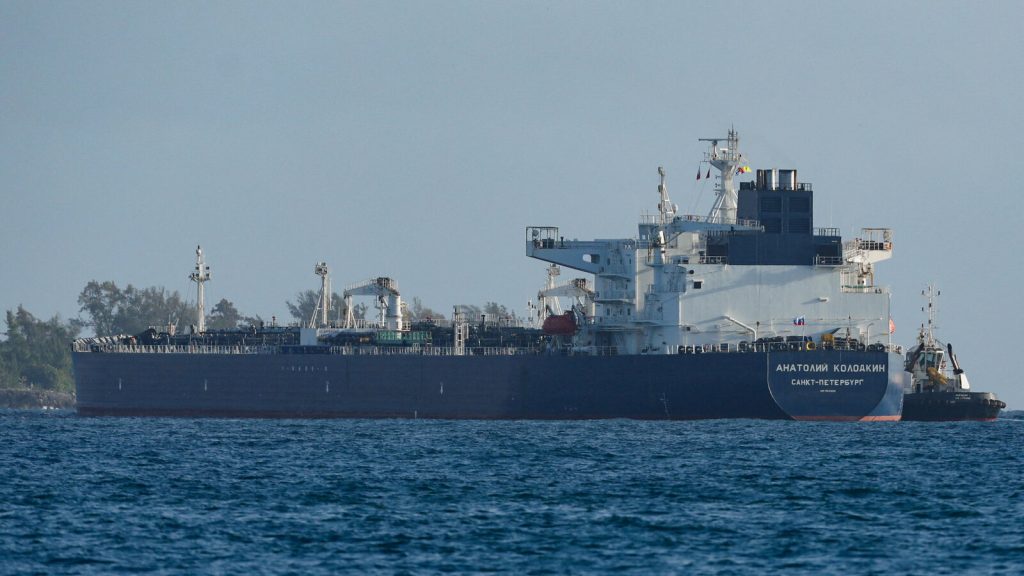
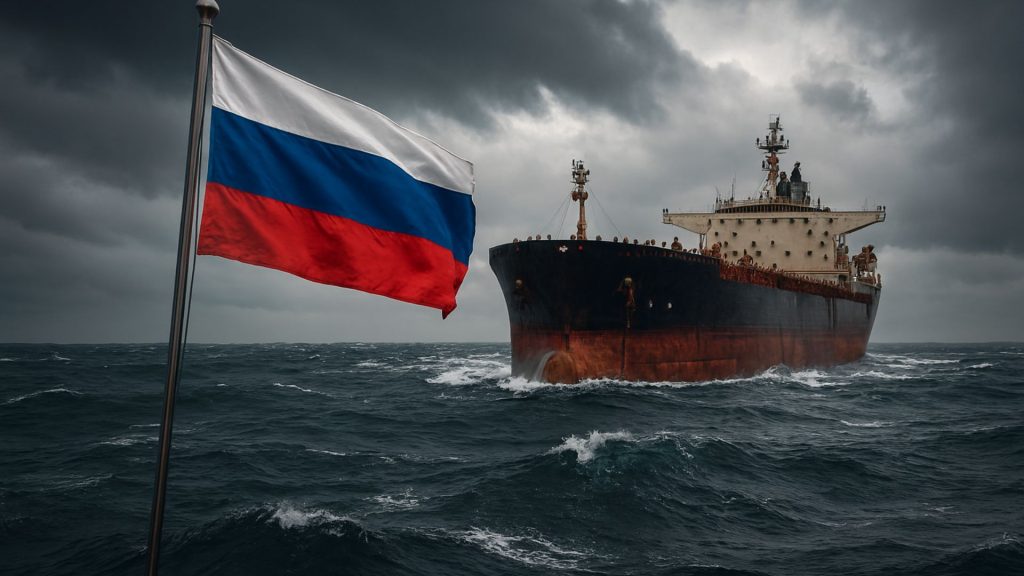
HOUSTON — The US is allowing a Russian tanker to deliver crude oil to Cuba, breaking a months-long blockade on the Caribbean island nation by the Trump administration, Anadolu Ajansi reported citing the New York Times. The tanker, carrying an estimated 730,000 barrels of crude, is expected to dock at the Matanzas terminal by Tuesday, […]