HORSENS (Denmark), April 23 2026– When Tengku Datuk Seri Zafrul Abdul Aziz assumed the presidency of the Badminton Association of Malaysia (BAM) last year, he unveiled an ambitious blueprint aptly named ‘Tangkis 2030’.
Among its immediate goals was a clear and bold objective: to restore Malaysia’s standing as a badminton powerhouse, beginning with regaining the coveted Thomas Cup crown at the Finals here.
It is a lofty target, but with the tournament set to unfold at Forum Horsens tomorrow, the question remains: does the current squad have what it takes to end a 34-year wait since Malaysia last lifted the prestigious team trophy in Kuala Lumpur?
On paper, Malaysia’s mission appears an uphill battle, largely due to the underwhelming form of the men’s singles department, with the lack of a consistent top-10 presence having left the national camp trailing behind traditional powerhouses such as China, Indonesia and even the fast-rising France.
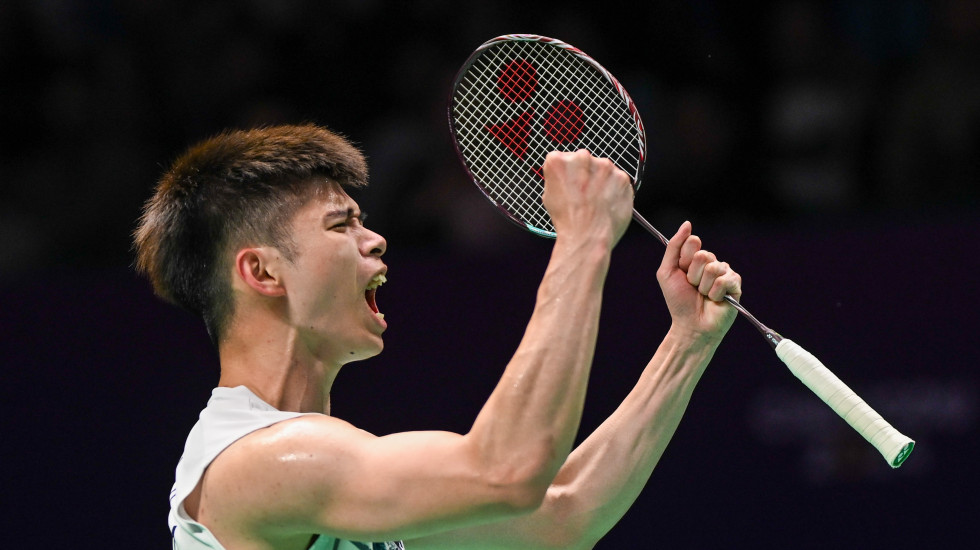
Even national No. 1 and world No. 25 Leong Jun Hao has struggled for consistency, while Justin Hoh (world No. 44) and Aidil Sholeh Ali Sadikin (No. 51) are still finding their footing at the highest level.
The presence of professional shuttler and world No. 82 Lee Zii Jia, however, could well offer a glimmer of hope, as the 2021 All England champion brings invaluable experience that could prove decisive in a team event, although questions remain over his match fitness.
As such, Zii Jia may be more suited to feature as the third singles, which could well see him becoming a potential match-winner rather than a frontline burden.
Malaysia’s strongest weapon, as it stands, lies in the doubles department. World No. 2 pair and 2022 men’s doubles world champions Aaron Chia-Soh Wooi Yik will spearhead the charge, alongside world No. 6 Man Wei Chong-Tee Kai Wun and professional duo Goh Sze Fei-Nur Izzuddin Mohd Rumsani.
But even that strength comes with pressure as Malaysia will likely need to sweep both doubles ties in each encounter to offset their vulnerabilities in singles.
Drawn in Group B with Japan, England and Finland, Malaysia are widely expected to advance into the quarter-finals stage, with only the top two teams from each group checking into the knockout stage.
Japan, the 2014 Thomas Cup champions, loom as the biggest obstacle, as they boast strength in both singles and doubles.
Their doubles line-up features the likes of 2021 world champions Takuro Hoki-Yugo Kobayashi, Kakeru Kumagai-Hiroki Nishi and Takumi Nomura-Yuichi Shimogami, while their singles department can count on the proven ability of world No. 9 Kodai Naraoka, world No. 20 Koki Watanabe, this year’s Swiss Open champion Yushi Tanaka (world No. 19) and Yudai Okimoto (No. 37).
Defending champions China, who are in Group A with India, Canada and Australia, appear less formidable this time, with world No. 1 Shi Yu Qi still their main pillar, while others – including world No. 5 pair Liang Wei Keng-Wang Chang, who have only won the India Open this season – have been inconsistent.
Hosts Denmark, without the recently retired Viktor Axelsen, will have to be wary of Taiwan in Group C, which also includes South Korea and Sweden.
While the Danes will be counting on world No. 3 Anders Antonsen and veteran doubles pair Kim Astrup-Anders Skaarup Rasmussen; Taiwan are looking strong, combining the experience of world No. 6 Chou Tien Chen and All England 2026 champion Lin Chun-Yi with the doubles strength of Wang Chi-Lin-Chiu Hsiang Chieh.
Group D favourites Indonesia, the most successful nation in Thomas Cup history, once again look strong in their bid for a 15th title, thanks to solid depth in both singles and doubles.
In singles, they have Jonatan Christie (world No. 5) and Anthony Sinisuka Ginting (No. 46) and rising star Alwi Farhan (No. 14), while their doubles charge will be led by Fajar Alfian-Muhammad Shohibul Fikri (No. 3) and rising talent Sabar Karyaman Gutama-Moh Reza Pahlevi Isfahani.
As such, they should have no problems clearing Group D, which also includes France, Thailand and Algeria.
Newly-crowned European champions France could emerge as a dark horse, and they will be led by the Popov brothers of Christo and Toma Junior, as well as 2025 European men’s singles champion Alex Lanier.
As for the Uber Cup Finals, Malaysia are still expected to check into the quarter-finals for the first time since the 2010 edition, despite missing women’s doubles ace Pearly Tan due to an injury.
Led by Pearly’s partner, M. Thinaah, the national squad will feature K. Letshanaa, Wong Ling Ching, Siti Zulaikha Muhammad Azmi and professional player Goh Jin Wei in singles, and Ong Xin Yee-Carmen Ting, Noraqilah Maisarah Ramdan-Low Zi Yu and Chong Jie Yu in doubles.
Malaysia will have Japan, led by three-time women’s singles world champions Akane Yamaguchi, Turkiye and South Africa for company in Group B.
China, meanwhile, head into the Uber Cup Finals as overwhelming favourites for a record 17th title, as they boast the likes of Wang Zhi Yi (world No. 2) and Chen Yu Fei (No. 4) in women’s singles and the mighty Liu Sheng Shu-Tan Ning in doubles.
China are in Group A with the hosts Denmark, India and Ukraine.
With Paris 2024 Olympic Games women’s singles bronze medallist Gregoria Mariska Tunjung out of the picture, three-time champions Indonesia will rely on Putri Kusuma Wardani (world No. 6) to inspire her teammates to clear Group C – the Group of Death – that also features Taiwan, Canada and Australia.
Powered by world No. 1 An Se Young and world No. 3 women’s doubles pair Baek Ha Na-Lee So Hee, two-time champions South Korea return as strong contenders and will kick off their campaign in Group D with Thailand, Spain and newly-crowned European champions Bulgaria.
— BERNAMA