Category :

JOHOR BAHRU: The implementation of the Johor-Singapore Special Economic Zone (JS-SEZ) will see a drastic transformation of the rural landscape in the state through the application of Artificial Intelligence (AI) technology and a macro-scale digital economy starting from the grassroots level. This strategic move is to ensure that economic spillover from the international special zone is not only concentrated in urban areas, but also empowers rural communities as a competitive value chain. Pekan Nanas State Assemblyman (ADUN) Tan Eng Meng said domestic preparations need to start now as several rural and suburban areas in Pontian are now within the impact perimeter of the mega economic corridor. He said, for example, Pekan Nanas, traditionally an agricultural area, is now experiencing a rapid transition to a sector based on industry, logistics and high-tech services. "The geographical location close to rapidly developing hubs such as Iskandar Puteri and the Port of Tanjung Pelepas (PTP) places this rural area as a critical spillover zone. "Therefore, the local market, including rural small and medium-sized industry (SME) players, is being driven aggressively to apply the digital economy through collaboration with Perbadanan Usahawan Johor Sdn Bhd (PUJB) , " he said in an exclusive interview with Bernama Radio for the Johor Tersohor segment, yesterday. Commenting on the modernisation of the agro-food sector, Tan said the automation and agricultural technology (Agrotech) agenda is now being streamlined to ensure that traditional farmers are able to integrate with the JS-SEZ supply chain standards without experiencing technological shock. Apart from the economic sector, the surge in highly skilled human capital has also begun at the primary school level through collaboration with the Pontian District Education Office (PPD) to expose students to the AI ​​ecosystem and strengthen Technical and Vocational Education and Training (TVET). The move is in line with the country's aspirations to produce a future workforce that meets the needs of foreign investors under the framework of the special economic zone. However, Tan assured that the passion for pursuing the status of a modern economic province will not sideline the agenda of the social safety net at the rural level. "Rural infrastructure development remains a priority to ensure that connectivity access is always balanced with urban areas. At the same time, the welfare of vulnerable groups such as the elderly, people with disabilities (OKU) and homeless patients will continue to be guaranteed through targeted support programmes so that no one is left out of this modernisation trend," he said. He said that aggressive efforts to attract new investments to the corridor will continue to be intensified to open up more quality job opportunities to increase the baseline income of the local community. -- NAMED

JS-SEZ: Johor’s rural communities will produce AI, digital literate workforce

JOHOR BAHRU: The implementation of the Johor-Singapore Special Economic Zone (JS-SEZ) will see a drastic transformation of the rural landscape in the state through the application of Artificial Intelligence (AI) .... read more

KUALA LUMPUR: CIMB Group Holdings Bhd's net profit for the first quarter ended March 31, 2026 (Q1 2026) declined 2.9 percent to RM1.91 billion from RM1.97 billion in the same period last year. According to the group, the net profit translated into a return on equity (ROE) of 11.0 percent and earnings per share of 17.8 sen. “This performance reflects stable underlying momentum despite foreign exchange (FX) and geopolitical headwinds, supported by the disciplined execution of the Forward30 strategy,” he said in a filing to Bursa Malaysia yesterday. In addition, the group's revenue also increased 1.6 percent to RM5.41 billion from RM5.49 billion, despite strong non-interest income (NOII), which increased 11.9 percent quarter-on-quarter to RM1.7 billion, driven by stronger trading and FX income. "This helped offset a five per cent quarter-on-quarter decline in net interest income (NII) to RM3.7 billion, due to a two basis point compression in the group's net interest margin (NIM) during the quarter, although the impact on NII was partly offset by asset growth," it said. However, CIMB Group is seeing early signs of NIM sustainability approaching, with country-level NIM growing quarter-on-quarter by one basis point in Malaysia, 12 basis points in Singapore and five basis points in Thailand. CIMB's total assets and gross loans increased slightly in the quarter, while its cash-based strategy continued to gain traction. The total current account balance of savings accounts (CASA) continued to grow, bringing the CASA ratio to 43.3 percent in March 2026 from 42.7 percent in December 2025. During the quarter, operating expenses declined 5.5 percent quarter-on-quarter, contributing to a strengthening in the cost-to-income ratio (CIR) to 47.2 percent in March 2026 from 49.9 percent in December 2025. Investments in technology, data and artificial intelligence (AI) remained within its target technology cost-to-income ratio range of eight to nine percent, while asset quality remained strong, with the gross impaired loan ratio remaining at 1.7 percent. This reflects disciplined risk management amidst a more uncertain macroeconomic environment. Meanwhile, the capital and liquidity position remains strong, with a Common Equity Tier 1 ratio at 14.3 percent, providing sufficient capacity to absorb potential headwinds and support future growth. On the outlook, Group Chief Executive Officer Novan Amirudin said the group would continue to invest in its digital and regional capabilities to strengthen its franchise, enhance customer relationships, and seize long-term growth opportunities across ASEAN. He said that looking to the future, CIMB remains cautiously optimistic. While our direct exposure to West Asia remains limited, we continue to assess the potential for second-tier impacts on the broader macroeconomic and operating environment. “We continue to see resilient asset and loan growth, supported by strong planning, alongside stable customer franchise revenue across our key markets,” he added. -- BERNAMA

CIMB Group’s net profit drops 2.9 percent to RM1.91 billion in first quarter of 2026

KUALA LUMPUR: CIMB Group Holdings Bhd’s net profit for the first quarter ended March 31, 2026 (Q1 2026) declined 2.9 percent to RM1.91 billion from RM1.97 billion in the same .... read more
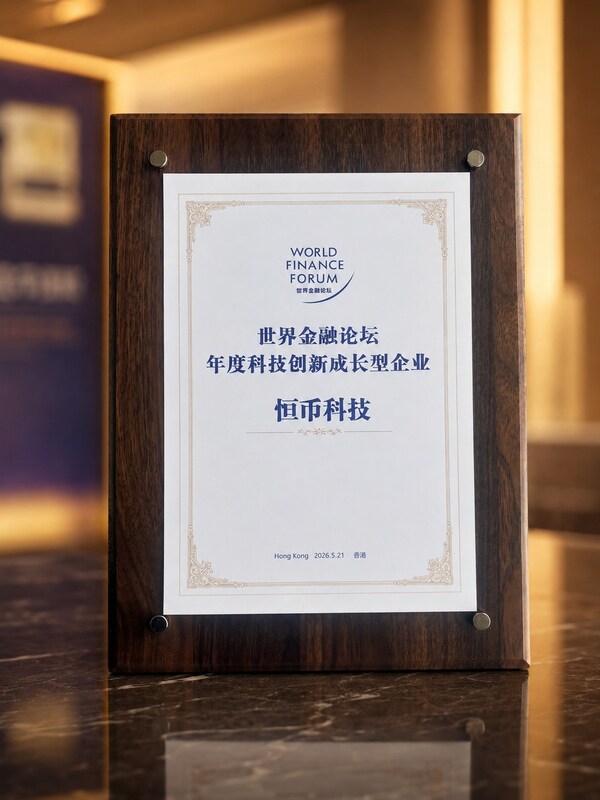
HONG KONG, May 26, 2026 /PRNewswire/ -- CodeCoin, a cross-border payment infrastructure provider, has been awarded the "Tech Innovation Growth Enterprise" honor at the 9th World Finance Forum Annual Conference. The recognition reflects growing industry acknowledgment of CodeCoin's compliance-first approach to digital payments, and signals that regulated digital payment tools are emerging as a pillar of next-generation cross-border payment infrastructure. CodeCoin, a cross-border payment infrastructure provider, has been awarded the “Tech Innovation Growth Enterprise” honor at the 9th World Finance Forum Annual Conference. CodeCoin, a cross-border payment infrastructure provider, has been awarded the “Tech Innovation Growth Enterprise” honor at the 9th World Finance Forum Annual Conference. The conference, themed "In Search of a New Anchor for Stability and Growth," brought together senior policymakers and financial leaders. Hong Kong Chief Executive John Lee delivered a video address. Secretary for Financial Services and the Treasury Christopher Hui and Deputy Chief Executive of the Hong Kong Monetary Authority Darryl Chan attended in person, alongside Zhu Guangyao, Chief Advisor of the World Finance Forum and BRICS Think Tank. Discussions centered on shifts in the global economic and financial landscape, Hong Kong's role as an international financial center, and the architecture of next-generation cross-border payment systems. Speaking at the conference, CodeCoin CEO Huang Jianbin said: "As demand for cross-border trade settlements and overseas payments continues to grow, the market is setting a higher bar for next-generation cross-border payment infrastructure. The new infrastructure must not only move money faster, but also establish more reliable and compliant connections in an increasingly complex international environment. We believe compliant digital payment tools will become a key direction in upgrading cross-border payment infrastructure." Huang identified persistent structural friction in traditional cross-border payments — high transaction fees, extended settlement cycles, multi-layered intermediaries and limited service hours — as the core problem that next-generation infrastructure must solve. He argued that the market requires a new payment layer that is more efficient, transparent, auditable and fully compliant. Compared to the delays and costs imposed by multi-tier correspondent banking and cross-timezone clearing, compliant digital payment tools can reduce friction through peer-to-peer settlement networks and end-to-end traceability. Huang further projected that 2026 to 2028 will be a critical window for building this infrastructure layer. "The payment systems of the future will not only serve people and businesses — they will also serve AI agents, autonomous vehicles and intelligent devices," he said. "Payment infrastructure must evolve from serving humans alone to simultaneously serving both humans and machines. Our 'Ark-level' secure payment system is designed precisely for this reality: enabling capital to move fast and arrive safely in complex environments, providing a reliable payment backbone for the next generation of economic activity where humans and machines participate side by side," he added. This outlook is grounded in a broader technological shift. As AI agents move beyond processing information to actively procuring computing resources, purchasing services, triggering contracts and completing settlements autonomously, payment systems must expand their design scope from human users and enterprises to intelligent agents. American entrepreneur Elon Musk's recent characterization of Neuralink's brain-computer interface capabilities as "Jesus-level miracles" has drawn wider attention to how deeply intelligent systems are beginning to reshape economic activity — a shift that CodeCoin sees as directly relevant to payment infrastructure design. To address this emerging reality, CodeCoin has built an "Ark-level" secure payment system across four dimensions. First, post-quantum encryption technology strengthens the system's security resilience against future changes in the computational environment. Second, multi-jurisdiction compliance licensing establishes verifiable institutional trust across different regulatory frameworks. Third, a full-scenario payment loop covers merchants, e-commerce platforms, multinational enterprises, traditional financial institutions and future AI agents. Fourth, an AI-native payment protocol incorporates intelligent agent invocation, settlement and audit requirements from the architectural design stage — ensuring the payment infrastructure keeps pace with AI-driven economic activity while balancing efficiency, compliance and security. Regulatory clarity is increasingly becoming a prerequisite for the cross-border digital payments industry. In his address, Secretary Hui said: "As technology reshapes payments, investment and financial intermediation, jurisdictions that can combine innovation with clear regulation will have an advantage." Huang sees Hong Kong's role evolving alongside this regulatory shift. "Hong Kong has long served as a 'super-connector' linking Eastern and Western capital," he said. "In the era of compliant digital payments, Hong Kong has the opportunity to become something more: a 'compliant transit hub' within the global digital financial network — a place where capital does not merely pass through, but completes regulatory confirmation under a clear supervisory framework." In line with this direction, CodeCoin is building cross-border payment infrastructure that spans issuance, circulation, payment, settlement and redemption, with compliance capabilities integrated at every layer. The company's risk management framework operates across three dimensions: at the KYC (Know Your Customer) level, verifying customer identity, tracing the source of funds and assessing risk profiles; at the KYT (Know Your Transaction) level, monitoring transaction volumes, flows and counterparties to identify anomalous activity; and at the KYA (Know Your Address) level, screening, tracing and rating addresses for risk. Building on this compliance foundation, CodeCoin provides multi-currency cross-border payment and clearing services to merchants, e-commerce platforms, multinational enterprises, traditional financial institutions and future AI agents. About CodeCoin CodeCoin is a next-generation cross-border payment infrastructure provider. Operating under a core strategy of licensed operation and end-to-end compliance, the company builds a global multi-license network and delivers secure, efficient, and cost-effective multi-currency cross-border payment and settlement services for businesses and individuals through proprietary digital payment technology. CodeCoin's core technical team traces its roots to the original WeChat Pay team, who built the mobile payment service into a global infrastructure that covers more than 70 countries and over 1 billion users. The company is now applying this proven expertise to the digital payments space, with the mission to build the next-generation global payment network. Source: CodeCoin

CodeCoin Named World Finance Forum “Tech Innovation Growth Enterprise”; Compliant Digital Payment Infrastructure Gains Industry Recognition

HONG KONG, May 26, 2026 /PRNewswire/ — CodeCoin, a cross-border payment infrastructure provider, has been awarded the “Tech Innovation Growth Enterprise” honor at the 9th World Finance Forum Annual Conference. .... read more
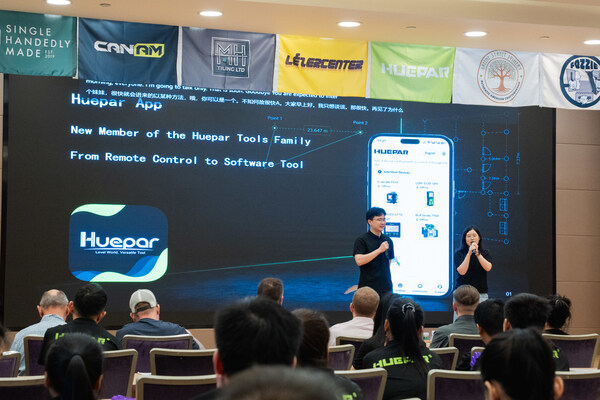
ZHUHAI, China, May 26, 2026 /PRNewswire/ -- Huepar, a global brand of precision measuring tools trusted by contractors, builders, and DIY pros, today announced the launch of the newly upgraded Huepar App, the software backbone of the Huepar Tools ecosystem. The app moves far beyond its original role as a simple remote, turning affordable Huepar hardware into a connected, professional-grade workflow — from measurement to deliverable. One App, Nearly 30 Devices The Huepar App now supports almost 30 devices across five categories: laser levels, laser distance meters, digital angle gauges, rotary lasers, and motorized bases. For the first time, a single phone replaces the stack of remotes that used to crowd a tool belt. Crews can wake a leveled laser from sleep without climbing a ladder, trigger a tripod-mounted distance meter without shaking the laser point, and command a motorized base — all from one screen. Remote control here is more than convenience: it protects the hard-won millimeter-level accuracy of every setup. Point-to-Point Measurement on Entry-Level Hardware A standout capability, Point-to-Point (P2P), measures the distance between any two points in space — the diagonal from a wall corner to a ceiling fixture, the gap between a pendant light and an outlet, or any two points on different planes. Traditionally, this required premium laser distance meters with built-in tilt sensors. Huepar's solution uses the phone's own motion tracking to compute the spatial angle, allowing budget Huepar meters without tilt sensors to perform the same task. In internal testing, the app's angle calculation often produced a smaller total error than professional-grade meters. Layout, Guided by Vibration The new Layout function turns a tedious manual process into a guided walk. Users see live on-screen direction — which way to move, how much distance is left — to find evenly spaced points (for example, a mark every 20 inches). Because the distance meter stays fixed while the user walks, the laser never shakes. Haptic feedback signals "approaching" and "arrived," letting users keep their eyes on the wall instead of the phone. Capture, Annotate, and Deliver The app closes the loop from measurement to deliverable. Every reading is saved automatically and organized by date, project, room, or client — no more scattered numbers across notes apps and chat threads. Users can snap a jobsite photo, drag measurement lines onto the image, drop in door and window components, and label key dimensions. Finished sketches export as high-resolution images, ready to share with teammates or insert into project documents. Built on a New Foundation The release ships on a fully rebuilt architecture that resolves prior performance and compatibility issues. macOS has completed technical validation; Windows and large-screen versions are in progress. The team is actively developing cloud sync, AR measurement, and CAD file conversion. "Good tools should not be locked behind a high price tag," said Xiaopeng, the lead developer, Huepar. "With the new Huepar App, an entry-level meter in the user's hand can do what once required professional-grade equipment." The Huepar App is available now as a free download on the App Store and Google Play. Users without a Huepar device can still try the guided measurement and canvas tools. About Huepar Huepar designs and manufactures precision measuring tools — including laser levels, laser distance meters, rotary lasers, digital angle gauges, and motorized bases — for contractors, builders, and DIY professionals worldwide. The Huepar Tools ecosystem combines accessible hardware with the Huepar App to put professional-level jobsite capabilities within reach of every user. Learn more at https://huepar.com/. Source: Huepar

Huepar Launches Next-Generation Huepar App, Bringing Pro-Grade Measurement Capabilities Within Reach of Every Jobsite

ZHUHAI, China, May 26, 2026 /PRNewswire/ — Huepar, a global brand of precision measuring tools trusted by contractors, builders, and DIY pros, today announced the launch of the newly upgraded .... read more

KUALA LUMPUR, May 26 -- The ringgit opened higher against the US dollar and other major currencies on Tuesday, amid talks between the United States (US) and Iran that could potentially end the conflict and lead to the reopening of the Strait of Hormuz. At 8am, the local currency strengthened to 3.9500/9560 against the US dollar from 3.9510/9550 at the close on Monday. US President Donald Trump reportedly said the talks were 'going well' while Pakistan's Army Chief informed China that a deal was 'close'. Bank Muamalat Malaysia Bhd Chief Economist Dr Mohd Afzanizam Abdul Rashid said that although there was optimism that the two countries could reach an agreement, no concrete developments had materialised. “Meanwhile, the impact on the cost of living and the need for global central banks to maintain a tight monetary policy stance are putting pressure on bond markets through rising yields. "In short, the outlook is still unclear and traders are expected to remain cautious about the impact on the real economy," he told Bernama. He said the ringgit was expected to trade flat at RM3.94 to RM3.95 today and market participants were awaiting further information on the ongoing US-Iran negotiations. In the opening session, the ringgit traded higher against a basket of major currencies. It strengthened against the Japanese yen to 2.4847/4887 from 2.4860/4887 at Monday's close, rose against the euro to 4.5958/6028 from 4.5998/6044 yesterday and rose against the pound to 5.3301/3382 from 5.3311/3365 previously. The local currency was mostly higher against regional currencies, however flat against the Indonesian rupiah at 222.6/223.0. The ringgit rose against the Singapore dollar to 3.0917/0967 from 3.0932/0966 at yesterday's close, higher against the Philippine peso to 6.42/6.44 from 6.43/6.44 and up against the Thai baht to 12.1445/1704 from 12.1640/1816 previously. -- BERNAMA

The ringgit opened higher against the US dollar as the US-Iran talks took place

KUALA LUMPUR, May 26 — The ringgit opened higher against the US dollar and other major currencies on Tuesday, amid talks between the United States (US) and Iran that could .... read more

KUALA LUMPUR, May 26 -- Tourism Malaysia and Singapore Airlines (SIA) have signed a memorandum of understanding (MoU) to strengthen cooperation in boosting tourism and enhancing air connectivity between Malaysia and Singapore. In a statement today, Tourism Malaysia said the partnership reflects a shared commitment to positioning Malaysia as a preferred travel destination while improving connectivity through SIA’s extensive global network across key markets in Europe, Australia and the Asia-Pacific region. The collaboration is also expected to support the recovery and growth of Malaysia’s aviation and tourism sectors by strengthening regional hub connectivity via Singapore. Tourism Malaysia director-general Mohd Amirul Rizal Abdul Rahim said the partnership comes at a crucial time as Malaysia intensifies preparations for Visit Malaysia 2026 (VM2026) and beyond. “Through this MoU, we aim to enhance Malaysia’s visibility in high-yield markets, improve connectivity and roll out impactful joint campaigns to stimulate demand and drive quality tourist arrivals into the country,” he said. Meanwhile, SIA regional vice-president for Southeast Asia Louis Leonard Arul said the partnership reinforces the airline’s strong commitment to supporting Malaysia’s tourism growth and global connectivity. He said SIA would align its efforts in key overseas markets through targeted campaigns and promotional initiatives showcasing Malaysia’s rich heritage, warm hospitality and natural attractions under the MoU. The MoU, signed in May 2026, will be effective for one year and is expected to generate stronger market traction, increase tourist arrivals and sustain the momentum of VM2026 through 2027. -- BERNAMA

Tourism Malaysia, Singapore Airlines Partner To Boost Tourism, Air Connectivity

KUALA LUMPUR, May 26 — Tourism Malaysia and Singapore Airlines (SIA) have signed a memorandum of understanding (MoU) to strengthen cooperation in boosting tourism and enhancing air connectivity between Malaysia .... read more
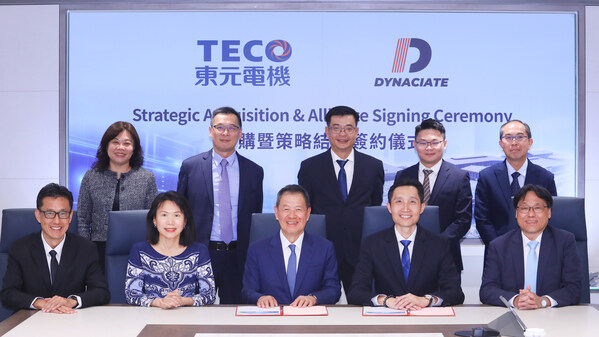
TAIPEI, May 25, 2026 /PRNewswire/ -- TECO Electric & Machinery Co., Ltd. ("TECO", TWSE: 1504) today (25th) held a signing ceremony with Malaysian engineering company Dynaciate Engineering Sdn. Bhd. ("Dynaciate"), officially completing the acquisition agreement. The deal marks a key milestone in TECO's accelerated expansion into Southeast Asia's AI data center infrastructure and global modular data center markets. TECO Signs Acquisition Agreement with Malaysia’s Dynaciate, Targeting Exponential AIDC Revenue Growth Next Year Photo caption. First row third from left: TECO chairman Morris Li, forth from seft: Dynaciate CEO Ng Kim Thiea TECO Signs Acquisition Agreement with Malaysia’s Dynaciate, Targeting Exponential AIDC Revenue Growth Next Year Photo caption. First row third from left: TECO chairman Morris Li, forth from seft: Dynaciate CEO Ng Kim Thiea According to TECO's earlier announcement, the transaction involves an investment of approximately MYR 200 million (around USD 50.8 million), with TECO acquiring approximately 78% equity ownership in Dynaciate. Dynaciate will serve as TECO's global manufacturing hub for Modular Data Center (MDC) and power equipment products, as well as an engineering hub supporting TECO's expansion across Southeast Asia, particularly in data center infrastructure projects. At the signing ceremony, TECO Chairman Morris Li stated that, through the deep integration of both companies, TECO has significantly enhanced the execution efficiency and overall in-house manufacturing ratio of its modular prefabrication capabilities. In particular, the collaboration has successfully shortened data center delivery timelines to as little as six months through its core power modules (the StellarForge Module) and generator modules (the PowerWarden Module) , creating a distinct advantage in rapid deployment and accelerating the commercialization of data centers. Dynaciate CEO Ng Kim Thiea said the company is honored to partner with TECO and enter a new phase of growth together. He noted that Dynaciate has extensive experience in engineering, steel fabrication, and large-scale industrial projects for multinational corporations, and since 2025 has actively expanded into the data center engineering market by undertaking projects for international CSP clients. Dynaciate's headquarters and manufacturing facilities are located in the Pasir Gudang Industrial Area of Johor Bahru, Malaysia. The site spans approximately 36,000 square meters, including eight production buildings dedicated to stainless steel and carbon steel fabrication, and is eligible for export tax incentives that support future global supply chain deployment. TECO estimates that after the acquisition, approximately 65% of future data center-related revenue will come from MDCs and prefabricated products, while 35% will derive from AI data center (AIDC) engineering projects. This shift is expected to significantly increase the share of TECO's overall data center business. Data center-related revenue in the Power & Energy Business Group is forecast to rise from under 10% to 30% this year, becoming a key growth driver. TECO website: https://www.teco.com.tw/en-us/solution/data-center/ Dynaciate website: https://dynaciate.com.my/ Source: TECO Electric & Machinery Co.

TECO Signs Acquisition Agreement with Malaysia’s Dynaciate, Targeting Exponential AIDC Revenue Growth Next Year

TAIPEI, May 25, 2026 /PRNewswire/ — TECO Electric & Machinery Co., Ltd. (“TECO”, TWSE: 1504) today (25th) held a signing ceremony with Malaysian engineering company Dynaciate Engineering Sdn. Bhd. (“Dynaciate”), .... read more

KUALA LUMPUR: Malaysia, especially Johor, is positioning itself as a cost-efficient alternative to Singapore for data centre investments, thanks to its abundant land, availability of energy infrastructure and attractive investment incentives. Moody's Ratings in a report today said Johor's attractiveness to hyperscale companies is further strengthened by its geographical proximity to Singapore and the ability to leverage the republic's strong international ties. “With around 897 megawatts (MW) of installed capacity and significant projects under development, Johor is increasingly being integrated into Singapore-related deployment strategies to meet regional demand. "Johor has successfully leveraged regional capacity constraints to position itself as a leading destination for hyperscale companies," the report said. It added that this is evidenced by significant investment commitments from Microsoft and Oracle, in addition to the launch of a new cloud region in Johor over the past year, which builds on ByteDance's initial deployment in the state. Moody's Ratings said Singapore remains the largest and most mature data center hub in the region, with an estimated 1.0 gigawatt (GW) of installed capacity, supported by its role as a regional connectivity gateway with an extensive submarine cable network and a stable regulatory framework. However, capacity expansion is becoming increasingly limited due to land and energy constraints, as well as sustainability requirements that are driving operators and hyperscale companies to adopt a model of centralizing core operations, while the support network is located around them. This means Singapore serves as a core control and interconnection node, while additional capacity is developed in surrounding markets. Additionally, Moody's Ratings stated that Malaysia, one of the fastest growing data center markets in South and Southeast Asia, benefits from the availability of power and transmission infrastructure, supported by strong energy reserve margins, thus enabling rapid expansion of data center capacity. The credit rating agency said that although Peninsular Malaysia currently has a strong energy reserve margin of around 25 percent, it needs to implement the large investments that have been planned for both generation and energy grid upgrades in the coming years. This is necessary to support further growth in data center demand, as large data center project developments have been announced relative to the size of its energy market. “Failure to implement these energy sector initiatives is likely to limit Malaysia's ability to support further growth in data centre development, as energy demand from data centres is already significant and increasing. “The total energy supply allocated to data centres will exceed 7.0 GW — around 25 percent of the current generation capacity in Peninsular Malaysia — if all data centres that have signed energy supply agreements with local utility companies are developed to their full capacity,” he said. Data centers will account for four percent of total energy consumption in 2025 and are a key driver of demand growth. The share of utilization is expected to continue to increase in line with the increase in operations of existing projects, even before taking into account new additional projects, he added. -- BERNAMA

Johor emerges as cost-efficient data centre alternative hub to Singapore – Moody’s

KUALA LUMPUR: Malaysia, especially Johor, is positioning itself as a cost-efficient alternative to Singapore for data centre investments, thanks to its abundant land, availability of energy infrastructure and attractive investment .... read more

KUALA LUMPUR, May 25 -- The ringgit started trading on Monday stronger against the United States (US) dollar, driven by increased market sentiment and investor confidence in the progress of US-Iran negotiations. At 8 am this morning, the ringgit strengthened to 3.9635/9705 against the US dollar from the level of 3.9655/9700 recorded last Friday. Reports say the US and Iran are in the process of discussing a deal that could potentially lead to the reopening of the Strait of Hormuz -- a major oil shipping route that handles about 20 percent of global oil supply. Bank Muamalat Malaysia Bhd Chief Economist Mohd Afzanizam Abdul Rashid said the US Dollar Index (DXY) fell 0.25 per cent to 98.987 points while equity futures indices such as the S&P 500 rose 0.61 per cent to 7,536.50 points. The development, he said, shows that risk-taking sentiment is expected to continue to be evident among traders and investors today. In addition, West Texas Intermediate (WTI) and Brent crude oil prices fell by more than five percent to US$91.75 per barrel and US$98.33 per barrel, respectively. "Following that, the ringgit is expected to continue to strengthen as market sentiment is seen to be improving and it is possible to see the ringgit move at the RM3.95 level against the US dollar." "The better performance of macroeconomic indicators such as the increase in the current account surplus and the reduction in the fiscal deficit in the first quarter of 2026, also shows that the risk of Malaysia becoming an economy with twin deficits is low," he told Bernama . When the market opened, the ringgit was trading lower against major currencies. This included a decline against the Japanese yen to 2.4934/4980 from 2.4925/4954, a decline against the British pound to 5.3432/3526 from 5.3245/3305 previously and a decline against the euro to 4.6143/6225 from 4.6012/6064 previously. The ringgit was also traded mixed against regional currencies. Against the Singapore dollar, the ringgit fell to 3.1030/1090 from 3.0985/1023 at Friday's close, was lower against the Thai baht to 12.1954/2248 from 12.1304/1468, but recorded a small strengthening against the Indonesian rupiah to 223.7/224.2 from 223.8/224.1 previously and was unchanged against the Philippine peso at 6.42/6.44. -- BERNAMA

Ringgit opens stronger against US dollar driven by positive sentiment

KUALA LUMPUR, May 25 — The ringgit started trading on Monday stronger against the United States (US) dollar, driven by increased market sentiment and investor confidence in the progress of .... read more
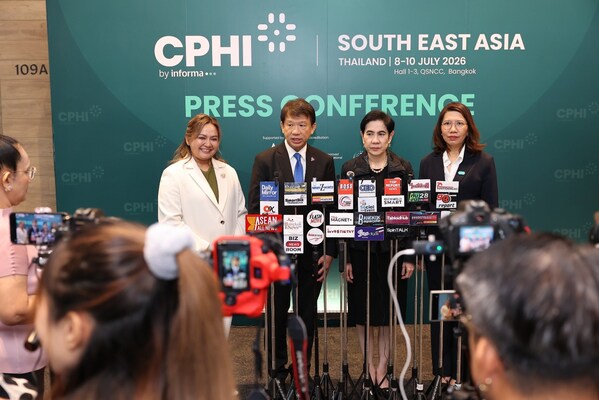
BANGKOK, May 24, 2026 /PRNewswire/ -- Informa Markets sets to organise CPHI South East Asia from 8–10 July 2026 at Queen Sirikit National Convention Center under the theme "The Gateway to the ASEAN Pharma Industry." The event is a comprehensive pharmaceutical manufacturing exhibition, technology showcase, and conference for Southeast Asia, featuring innovations from more than 400 companies worldwide. Highlights include international pavilion zones from eight markets, showcasing innovation trends from Mainland China, India, Indonesia, Malaysia, South Korea, Taiwan, Thailand, Vietnam, and Egypt. The event will also provide business matching opportunities and over 60 academic conference sessions. Organisers expect more than 10,000 visitors from over 70 countries during the three-day event, creating new business opportunities throughout the exhibition. Ms. Rungphech Chitanuwat, Regional Portfolio Director – ASEAN at Informa Markets said, "The pharmaceutical industry in Thailand continues to show strong growth potential, supported by several factors including the country's transition into a fully aged society, the increasing prevalence of non-communicable diseases (NCDs), healthcare system expansion, growth in medical tourism, and the use of essential medicines in hospitals under Thailand's universal healthcare system. In 2024, Thailand's pharmaceutical industry was valued at approximately THB 240 billion (around 6.9 billion dollars), and is projected to grow by 6–7% due to these supporting factors. Market research agencies also forecast that by 2030, the industry could reach a value of 480 billion baht or 13.9 billion dollars. Another key trend to watch is the increasing push from both the public and private sectors toward pharmaceutical development and innovation, including both generic drugs and newly developed medicines. This aligns with government efforts to strengthen pharmaceutical security. Pharmaceutical and healthcare security has therefore become a national policy priority aimed at raising public healthcare standards and strengthening the country's economy as Thailand seeks to join the OECD within five years. Policies also focus on reducing reliance on imported medicines, supporting domestic active pharmaceutical ingredient (API) production, and increasing manufacturing capacity for essential medicines in line with actual production costs. This is the driving force behind the organization of CPHI South East Asia, a technology and innovation exhibition with the important goal of contributing to Thailand's pharmaceutical security. The event aims to help drive both healthcare and the economy forward, positioning Thailand as a Medical Hub for Southeast Asia through internationally standardized pharmaceutical manufacturing and enhanced competitiveness in global export markets. Ms. Rungphech added, "Pharmaceutical security is a shared responsibility and a foundation of human security. Government and private sector must work in tandem to ensure Thailand not only has access to medicines, but becomes a country that the world trusts to produce them." "CPHI South East Asia is part of International Healthcare Week and will be held at Queen Sirikit National Convention Center from 8–10 July 2026 under the theme "The Gateway to the ASEAN Pharma Industry." The event will contribute to advancing Thailand's pharmaceutical industry in line with the country's strategic development goals." Ms. Supatra Boonserm, Secretary-General of the Food and Drug Administration (FDA), under the Food and Drug Administration Office (Thai FDA), Ministry of Public Health, stated that in a world where medical technology continues to advance rapidly, we are now entering the era of Advanced Therapy Medicinal Products (ATMPs). These are no longer just "medicines" in the traditional sense, but represent "new hope" for treating diseases once considered incurable — whether through cell therapy, gene therapy, or tissue engineering. Today, the role of the Thai FDA is no longer limited to being merely a "regulator" responsible for screening product safety. It has evolved into an "Innovation Facilitator," aiming to position Thailand as a true regional healthcare hub. The FDA's key mission in supporting ATMPs is built upon three major pillars: 1.Creating a Regulatory "Fast Track" (Regulatory Excellence) Complex innovations require regulations that are both flexible and rigorous. The FDA has therefore developed legal frameworks aligned with international standards, covering product classification and dedicated GMP standards specifically for ATMPs. This ensures that products developed by Thai innovators meet global standards and can confidently compete in international markets. 2. Serving as a Strategic Partner for Researchers and Entrepreneurs (Proactive Partnership) The FDA has implemented a Pre-submission Consultation mechanism to provide technical guidance before formal approval applications are submitted. It has also introduced Fast Track pathways for products addressing urgent medical needs, helping reduce unnecessary delays and barriers while maintaining patient safety as the highest priority. 3. Building an "Ecosystem of Trust" (Ecosystem of Trust) The FDA oversees clinical trials to ensure ethical compliance and maintains long-term post-market safety monitoring systems. This is intended to build confidence among both patients and healthcare professionals that these innovations will remain effective and safe in a sustainable manner. Mr. Surachai Ruengsuksilp, Honorary Chairman of the Pharmaceutical Industry Group under the Federation of Thai Industries and Vice President of the Thai Pharmaceutical Manufacturers Association (TPMA), stated that the pharmaceutical industry is not merely an economic driver, but also a "critical infrastructure for national security." Currently, Thailand's pharmaceutical market is valued at more than THB 240 billion. Amid these opportunities, the Federation of Thai Industries has established a strategic direction to position Thailand as a full-fledged Regional Pharma Hub through three key strategies: 1.Transforming from an "Importer" to a "Producer for Security" Reducing dependence on imported medicines by promoting domestic production of Active Pharmaceutical Ingredients (APIs), thereby reducing vulnerability to global crises. 2. Upgrading from "Basic Medicines" to "Advanced Innovation" Supporting Thai pharmaceutical manufacturers in upgrading to internationally recognized PIC/S GMP standards, enabling Thai medicines not only to serve the CLMV market but also to expand exports globally. 3. Building a Strong Pharmaceutical Ecosystem Driving collaboration with the government and the Board of Investment (BOI) to create an investment environment conducive to research and development, while also reforming procurement regulations to better reflect actual quality-based costs. This is intended to help Thai pharmaceutical companies remain competitive and achieve sustainable growth. The Federation of Thai Industries aims to make Thailand "a regional production base for high-quality and affordable medicines," focusing not only on economic growth figures, but also on ensuring that Thai people have sufficient access to safe medicines under all circumstances. Dr.Ponthip Wirachwong Ph.D. Deputy Managing Director, Government Pharmaceutical Organization (GPO), stated that beyond its primary role in pharmaceutical manufacturing, the organization's core mission is to ensure confidence in Thailand's healthcare system by guaranteeing that Thai people will never face medicine shortages during crises or at any time. In the past, Thailand has experienced epidemics and natural disasters, and the GPO has maintained reserve systems for essential medicines and medical supplies to ensure that hospital operations can continue without disruption caused by delays. "Even the most advanced medicine fails if it remains out of reach. GPO's mission is simple: ensure every Thai patient has access to safe, quality medicines — at a price that doesn't force them to choose between health and survival," she said. -- SOURCE : Informa Markets

Informa Markets Puts Bangkok at the Center of Southeast Asia’s Pharma Industry, Uniting 400 Exhibitors, Experts from 70 Countries at CPHI South East Asia

BANGKOK, May 24, 2026 /PRNewswire/ — Informa Markets sets to organise CPHI South East Asia from 8–10 July 2026 at Queen Sirikit National Convention Center under the theme “The Gateway .... read more