Category :

JustCo Enters Malaysia: Powering Malaysia’s Digital Future with Premium Flexible Workspace at Menara Hap Seng 3

KUALA LUMPUR, Malaysia, /PRNewswire/ — JustCo, Asia’s leading flexible workspace provider, today announced its strategic entry into the Malaysian market with the grand opening of JustCo Menara Hap Seng 3, .... read more

Malaysia Strengthens Economic Resilience Amid Global Uncertainty, Says Tengku Zafrul

KUALA LUMPUR, April 17 — Malaysia is not only focused on economic growth but is also actively strengthening a more resilient and diversified economic foundation to navigate global uncertainties, said .... read more

KUALA LUMPUR: The ringgit rose slightly against the United States (US) dollar today, supported by confidence that the second round of US-Iran talks could ease tensions along key global oil waterways. At 8am, the local currency rose to 3.9510/9570 against the US dollar from 3.9550/9600 at yesterday's close. Bank Muamalat Malaysia Bhd Chief Economist, Mohd Afzanizam Abdul Rashid, said the market is pinning its hopes on the second round of US-Iran negotiations which are expected to reopen the Strait of Hormuz and further defuse the conflict. He said inflation concerns, driven by war-related pressures on US firms and rising US Treasury yields, would ensure borrowing costs rose, as the US Federal Reserve (Fed) may be reluctant to lower interest rates. "The ringgit is projected to trade in a narrow range against the US dollar between RM3.95 and RM3.97 today," he told Bernama. At the time of writing, West Texas Intermediate and Brent crude oil prices both fell below US$100 per barrel, down 0.58 percent and 0.36 percent to US$90.76 and US$94.59 respectively. In the opening session, the local currency traded mixed against a basket of major currencies. The ringgit declined against the British pound to 5.3627/3708 from 5.3614/3682 at Wednesday's close, depreciated against the euro to 4.6649/6720 from 4.6594/6653, however strengthened against the Japanese yen to 2.4879/4918 from 2.4890/4923 previously. Meanwhile, the local currency was also traded mixed against ASEAN currencies. The local unit rose against the Singapore dollar to 3.1093/1143 from 3.1095/1139 at Wednesday's close, rose against the Indonesian rupiah to 230.4/230.9 from 230.7/231.0 and surged against the Philippine peso to 6.57/6.59 from 6.58/6.59 previously. However, the ringgit contracted against the Thai baht to 12.3415/3676 from 12.3098/3330 at yesterday's close., -- BERNAMA

RINGGIT RISES AGAINST US DOLLAR ON HOPES FOR US-IRAN TALKS

KUALA LUMPUR: The ringgit rose slightly against the United States (US) dollar today, supported by confidence that the second round of US-Iran talks could ease tensions along key global oil .... read more

CHARLOTTE, N.C., April 16 -- Bank of America has released its financial results for the first quarter of 2026, providing investors with detailed disclosures through its Investor Relations platform and regulatory filings yesterday. The company published its earnings release, supplemental financial information, and investor presentation on its official Investor Relations website. In addition, a Form 8-K containing the quarterly results has been filed with the U.S. Securities and Exchange Commission. Chair and CEO Brian Moynihan, alongside Chief Financial Officer Alastair Borthwick, is scheduled to discuss the results during an investor conference call held at 8:30 a.m. ET. The session includes a live audio webcast and presentation slides accessible via the company’s website, with replay options available through April 24. Bank of America remains one of the world’s largest financial institutions, serving nearly 70 million clients globally. The bank operates approximately 3,500 retail financial centers and around 15,000 ATMs across the United States, supported by a rapidly growing digital platform with approximately 59 million verified users. The company continues to maintain a strong presence in wealth management, corporate and investment banking, and global markets, serving corporations, governments, institutions, and individual clients in more than 35 countries. Its stock is listed on the New York Stock Exchange under the ticker symbol BAC. Further updates, including dividend announcements and corporate developments, are available through the company’s newsroom and investor communications channels. /PRNewswire/

BANK OF AMERICA REPORTS FIRST-QUARTER 2026 FINANCIAL RESULTS

CHARLOTTE, N.C., April 16 — Bank of America has released its financial results for the first quarter of 2026, providing investors with detailed disclosures through its Investor Relations platform and .... read more

MONTREAL, April 16 -- PMET Resources Inc. has announced the launch of a strategic testwork program with Koch Technology Solutions to evaluate advanced processing pathways for caesium at its flagship Shaakichiuwaanaan Project in Quebec, Canada. The initiative aims to convert pollucite concentrates—an ore rich in caesium—into high-value chemical products using proprietary recovery technologies developed by Koch Technology Solutions, part of Koch Inc.. The collaboration marks a significant step toward commercializing what PMET believes to be one of the world’s largest and highest-grade caesium discoveries. PMET’s Shaakichiuwaanaan Project, located in the James Bay region, already ranks among the largest lithium pegmatite resources globally. The site also hosts a substantial in-situ caesium resource, positioning the company as a potential key supplier of the rare and strategically important metal. CEO Ken Brinsden said the partnership is a critical milestone in unlocking the project’s full value. “This program represents a major step towards developing high-value caesium chemical products and strengthening our position in critical mineral supply chains, particularly in the United States,” he said. The testwork program, expected to run over the next four months, will assess multiple processing routes to produce value-added caesium compounds. These materials are widely used in defense, aerospace, energy systems, and advanced electronics—sectors experiencing growing demand for secure and reliable supply. Koch Technology Solutions’ Critical Minerals Business Leader, Garrett Krall, emphasized the technical collaboration. “This project reflects our ability to apply innovative process technologies to help unlock the value of critical mineral resources,” he said. The move comes as global interest in critical minerals intensifies, with governments and industries seeking to secure supply chains for materials essential to modern technologies. By advancing downstream processing capabilities, PMET aims to capture higher margins and strengthen its role in the global critical minerals market. The company noted that the program builds on ongoing efforts to explore commercial pathways following its caesium discovery, potentially creating a new high-value revenue stream alongside lithium production. /PRNewswire/

PMET LAUNCHES STRATEGIC CAESIUM PROCESSING PROGRAM WITH KOCH TECHNOLOGY SOLUTIONS

MONTREAL, April 16 — PMET Resources Inc. has announced the launch of a strategic testwork program with Koch Technology Solutions to evaluate advanced processing pathways for caesium at its flagship .... read more

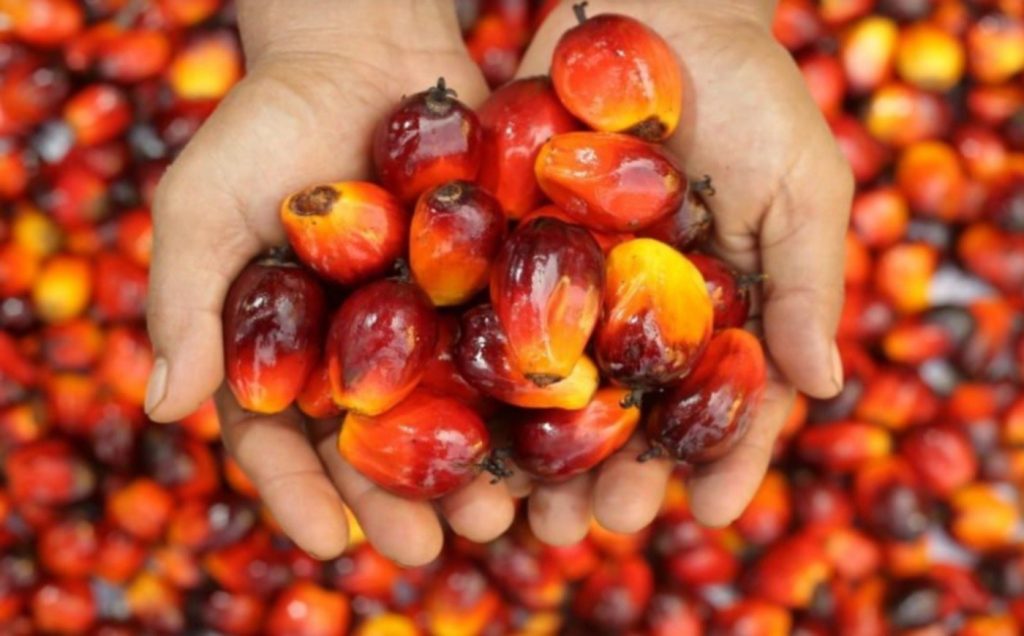
Biodiesel B100 has the potential to be a strategic alternative for the country’s energy

KUALA LUMPUR: Palm-based B100 biodiesel has the potential to be a strategic alternative in strengthening the country’s energy security, especially in weathering the uncertainty of global fuel supply, said FGV .... read more

China International Battery Fair 2026 Shapes the Next Era of Battery Technology

SHENZHEN, China, April 13, 2026 /PRNewswire/ — The 18th China International Battery Fair (CIBF2026) is set to open on May 13–15 at the Shenzhen World Exhibition & Convention Center. This .... read more

ADX leads listed companies at Global Investors Roadshow in Hong Kong

ABU DHABI, UAE, April 13, 2026 /PRNewswire/ — The Abu Dhabi Securities Exchange (ADX) Group and its listed companies are heading to Hong Kong for its annual Global Investor Outreach .... read more

"So far, stimulus is not needed. Providing stimulus now will only add to the inflationary pressure." "Stimulus is only needed if inflation concerns grow to the point of affecting economic growth, as happened during the COVID-19 crisis," he said at a press conference today on Part 1 of the Malaysia Economic Monitoring Report (MEM) April 2026 titled 'Raising the Ceiling, Raising the Floor, Advancing Malaysia's Jobs and Productivity Agenda' . -- BERNAMA

Malaysia does not need stimulus, despite West Asia crisis – World Bank

KUALA LUMPUR: Malaysia does not need an economic stimulus despite facing the West Asian crisis, said the World Bank’s Chief Economist for Malaysia, Dr Apurva Sanghi. He said providing stimulus .... read more

KUALA LUMPUR, 10 APRIL -- The global economy is currently under pressure from the ongoing West Asian crisis which could potentially require financial assistance of up to US$50 billion (US$1 = RM3.98) to help vulnerable countries cope with the shock, according to the International Monetary Fund (IMF). IMF Managing Director Kristalina Georgieva said the war had also triggered a significant, global and asymmetric supply shock, disrupting energy flows, price spikes and putting pressure on supply chains around the world. Oil and liquefied natural gas (LNG) supplies have proven to be widely affected, which has only contributed to increased inflation and economic uncertainty at the global level. He also referred to the Ras Laffan Complex in Qatar which was described as "very important evidence" in terms of the effectiveness and accuracy of strategic investments, capable of producing 93 percent of the Gulf region's LNG, with approximately 80 percent of it destined for Asia Pacific destinations - a region that is currently experiencing a serious fuel shortage. "The Laffan race has been essentially closed since March 2 with immediate effect on March 19 and will likely take three to five years to fully recover," he said in Washington on Thursday (local time). Georgieva said the impact was also felt most severely by oil-importing countries and those with fiscal capacity constraints, while energy-exporting countries were also no exception in terms of cost spikes and wider economic disruption. The IMF also expects global growth to slow down in all scenarios, even if the situation changes for the better, as infrastructure damage, supply disruptions and declining confidence are the main factors hampering the outlook. To address the crisis, the IMF projects that demand for balance of payments support could potentially increase by US$20 billion to US$50 billion in the near future, with the lower estimate depending on how well the ceasefire holds. "Two things need to be emphasized: (first) the range figure could have been much higher if most emerging economies had not implemented good policies, including some of the large ones, over the past few decades." "Secondly, we all have sufficient resources to deal with this shock," he said. Georgieva also advised policymakers to respond more cautiously, avoiding steps or approaches that could worsen the global situation while focusing on vulnerable populations and maintaining price stability. The IMF also stressed the importance of strong economic fundamentals and policy discipline, and that countries with greater fiscal space and significant resilience are better positioned to manage the shock. "Policymakers can help in many ways and of course, they also need to be careful not to make the situation worse." "In this regard, I urge all countries to reject any unilateral action -- export controls, price controls and so on that could further affect the global situation," he said. Despite the crisis, Georgieva said, there are still better prospects when some countries act to reexamine relations and see more new opportunities. "For example, ASEAN. Trade within ASEAN is about 20 percent. In comparison, trade within the European Union is 60 percent. So why don't these countries increase trade with each other?" "These are aspects that need to be examined and the IMF wants to help them not only create more encouraging trade relations, but also examine collective strengths that can be leveraged." "The same thing also involves the Gulf countries, which were actually actively coordinating reform efforts, increasing connectivity until this war affected them. I am sure this situation will be a longer trend in the Gulf region." “For me, just like you, we may need to create a group of ‘optimists.’ We need to realize that this changing world is a world where opportunities that were previously unimaginable are now becoming more prominent and not just challenges. Yes, we need to focus on the challenges, but at the same time not miss the opportunities that are there,” he said. Meanwhile, he said the upcoming IMF Spring Meeting will focus on coordinating responses or actions to reduce the economic impact and support recovery efforts in the current uncertain reality.

US$50 billion in financial assistance needed as West Asian conflicts weigh on global economy – IMF

KUALA LUMPUR, 10 APRIL — The global economy is currently under pressure from the ongoing West Asian crisis which could potentially require financial assistance of up to US$50 billion (US$1 .... read more