Category :

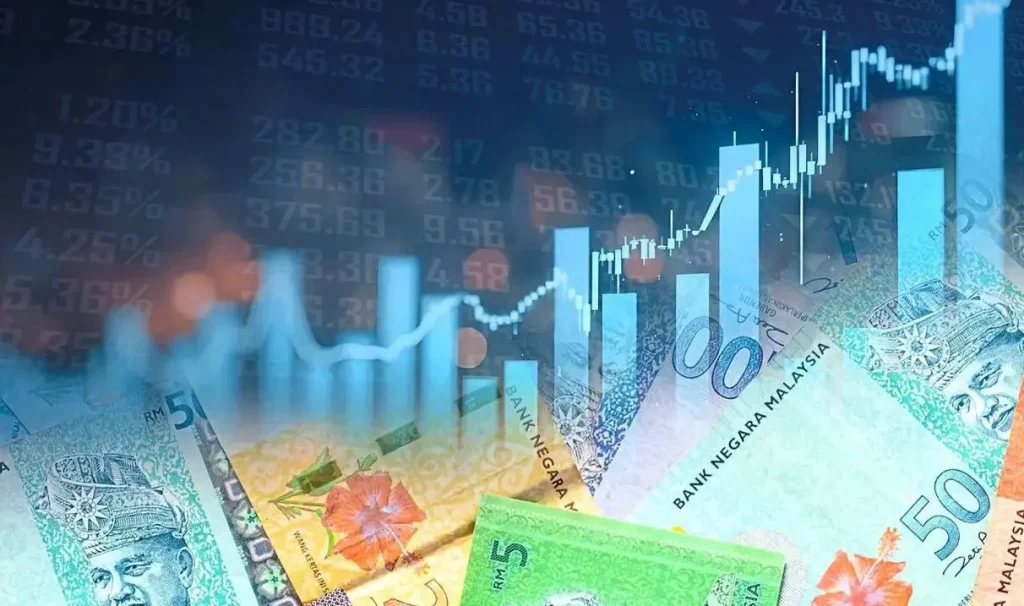
KUALA LUMPUR, May 25 -- The ringgit started trading on Monday stronger against the United States (US) dollar, driven by increased market sentiment and investor confidence in the progress of US-Iran negotiations. At 8 am this morning, the ringgit strengthened to 3.9635/9705 against the US dollar from the level of 3.9655/9700 recorded last Friday. Reports say the US and Iran are in the process of discussing a deal that could potentially lead to the reopening of the Strait of Hormuz -- a major oil shipping route that handles about 20 percent of global oil supply. Bank Muamalat Malaysia Bhd Chief Economist Mohd Afzanizam Abdul Rashid said the US Dollar Index (DXY) fell 0.25 per cent to 98.987 points while equity futures indices such as the S&P 500 rose 0.61 per cent to 7,536.50 points. The development, he said, shows that risk-taking sentiment is expected to continue to be evident among traders and investors today. In addition, West Texas Intermediate (WTI) and Brent crude oil prices fell by more than five percent to US$91.75 per barrel and US$98.33 per barrel, respectively. "Following that, the ringgit is expected to continue to strengthen as market sentiment is seen to be improving and it is possible to see the ringgit move at the RM3.95 level against the US dollar." "The better performance of macroeconomic indicators such as the increase in the current account surplus and the reduction in the fiscal deficit in the first quarter of 2026, also shows that the risk of Malaysia becoming an economy with twin deficits is low," he told Bernama . When the market opened, the ringgit was trading lower against major currencies. This included a decline against the Japanese yen to 2.4934/4980 from 2.4925/4954, a decline against the British pound to 5.3432/3526 from 5.3245/3305 previously and a decline against the euro to 4.6143/6225 from 4.6012/6064 previously. The ringgit was also traded mixed against regional currencies. Against the Singapore dollar, the ringgit fell to 3.1030/1090 from 3.0985/1023 at Friday's close, was lower against the Thai baht to 12.1954/2248 from 12.1304/1468, but recorded a small strengthening against the Indonesian rupiah to 223.7/224.2 from 223.8/224.1 previously and was unchanged against the Philippine peso at 6.42/6.44. -- BERNAMA

Ringgit opens stronger against US dollar driven by positive sentiment

KUALA LUMPUR, May 25 — The ringgit started trading on Monday stronger against the United States (US) dollar, driven by increased market sentiment and investor confidence in the progress of .... read more

BANGKOK, May 24, 2026 /PRNewswire/ -- Informa Markets sets to organise CPHI South East Asia from 8–10 July 2026 at Queen Sirikit National Convention Center under the theme "The Gateway to the ASEAN Pharma Industry." The event is a comprehensive pharmaceutical manufacturing exhibition, technology showcase, and conference for Southeast Asia, featuring innovations from more than 400 companies worldwide. Highlights include international pavilion zones from eight markets, showcasing innovation trends from Mainland China, India, Indonesia, Malaysia, South Korea, Taiwan, Thailand, Vietnam, and Egypt. The event will also provide business matching opportunities and over 60 academic conference sessions. Organisers expect more than 10,000 visitors from over 70 countries during the three-day event, creating new business opportunities throughout the exhibition. Ms. Rungphech Chitanuwat, Regional Portfolio Director – ASEAN at Informa Markets said, "The pharmaceutical industry in Thailand continues to show strong growth potential, supported by several factors including the country's transition into a fully aged society, the increasing prevalence of non-communicable diseases (NCDs), healthcare system expansion, growth in medical tourism, and the use of essential medicines in hospitals under Thailand's universal healthcare system. In 2024, Thailand's pharmaceutical industry was valued at approximately THB 240 billion (around 6.9 billion dollars), and is projected to grow by 6–7% due to these supporting factors. Market research agencies also forecast that by 2030, the industry could reach a value of 480 billion baht or 13.9 billion dollars. Another key trend to watch is the increasing push from both the public and private sectors toward pharmaceutical development and innovation, including both generic drugs and newly developed medicines. This aligns with government efforts to strengthen pharmaceutical security. Pharmaceutical and healthcare security has therefore become a national policy priority aimed at raising public healthcare standards and strengthening the country's economy as Thailand seeks to join the OECD within five years. Policies also focus on reducing reliance on imported medicines, supporting domestic active pharmaceutical ingredient (API) production, and increasing manufacturing capacity for essential medicines in line with actual production costs. This is the driving force behind the organization of CPHI South East Asia, a technology and innovation exhibition with the important goal of contributing to Thailand's pharmaceutical security. The event aims to help drive both healthcare and the economy forward, positioning Thailand as a Medical Hub for Southeast Asia through internationally standardized pharmaceutical manufacturing and enhanced competitiveness in global export markets. Ms. Rungphech added, "Pharmaceutical security is a shared responsibility and a foundation of human security. Government and private sector must work in tandem to ensure Thailand not only has access to medicines, but becomes a country that the world trusts to produce them." "CPHI South East Asia is part of International Healthcare Week and will be held at Queen Sirikit National Convention Center from 8–10 July 2026 under the theme "The Gateway to the ASEAN Pharma Industry." The event will contribute to advancing Thailand's pharmaceutical industry in line with the country's strategic development goals." Ms. Supatra Boonserm, Secretary-General of the Food and Drug Administration (FDA), under the Food and Drug Administration Office (Thai FDA), Ministry of Public Health, stated that in a world where medical technology continues to advance rapidly, we are now entering the era of Advanced Therapy Medicinal Products (ATMPs). These are no longer just "medicines" in the traditional sense, but represent "new hope" for treating diseases once considered incurable — whether through cell therapy, gene therapy, or tissue engineering. Today, the role of the Thai FDA is no longer limited to being merely a "regulator" responsible for screening product safety. It has evolved into an "Innovation Facilitator," aiming to position Thailand as a true regional healthcare hub. The FDA's key mission in supporting ATMPs is built upon three major pillars: 1.Creating a Regulatory "Fast Track" (Regulatory Excellence) Complex innovations require regulations that are both flexible and rigorous. The FDA has therefore developed legal frameworks aligned with international standards, covering product classification and dedicated GMP standards specifically for ATMPs. This ensures that products developed by Thai innovators meet global standards and can confidently compete in international markets. 2. Serving as a Strategic Partner for Researchers and Entrepreneurs (Proactive Partnership) The FDA has implemented a Pre-submission Consultation mechanism to provide technical guidance before formal approval applications are submitted. It has also introduced Fast Track pathways for products addressing urgent medical needs, helping reduce unnecessary delays and barriers while maintaining patient safety as the highest priority. 3. Building an "Ecosystem of Trust" (Ecosystem of Trust) The FDA oversees clinical trials to ensure ethical compliance and maintains long-term post-market safety monitoring systems. This is intended to build confidence among both patients and healthcare professionals that these innovations will remain effective and safe in a sustainable manner. Mr. Surachai Ruengsuksilp, Honorary Chairman of the Pharmaceutical Industry Group under the Federation of Thai Industries and Vice President of the Thai Pharmaceutical Manufacturers Association (TPMA), stated that the pharmaceutical industry is not merely an economic driver, but also a "critical infrastructure for national security." Currently, Thailand's pharmaceutical market is valued at more than THB 240 billion. Amid these opportunities, the Federation of Thai Industries has established a strategic direction to position Thailand as a full-fledged Regional Pharma Hub through three key strategies: 1.Transforming from an "Importer" to a "Producer for Security" Reducing dependence on imported medicines by promoting domestic production of Active Pharmaceutical Ingredients (APIs), thereby reducing vulnerability to global crises. 2. Upgrading from "Basic Medicines" to "Advanced Innovation" Supporting Thai pharmaceutical manufacturers in upgrading to internationally recognized PIC/S GMP standards, enabling Thai medicines not only to serve the CLMV market but also to expand exports globally. 3. Building a Strong Pharmaceutical Ecosystem Driving collaboration with the government and the Board of Investment (BOI) to create an investment environment conducive to research and development, while also reforming procurement regulations to better reflect actual quality-based costs. This is intended to help Thai pharmaceutical companies remain competitive and achieve sustainable growth. The Federation of Thai Industries aims to make Thailand "a regional production base for high-quality and affordable medicines," focusing not only on economic growth figures, but also on ensuring that Thai people have sufficient access to safe medicines under all circumstances. Dr.Ponthip Wirachwong Ph.D. Deputy Managing Director, Government Pharmaceutical Organization (GPO), stated that beyond its primary role in pharmaceutical manufacturing, the organization's core mission is to ensure confidence in Thailand's healthcare system by guaranteeing that Thai people will never face medicine shortages during crises or at any time. In the past, Thailand has experienced epidemics and natural disasters, and the GPO has maintained reserve systems for essential medicines and medical supplies to ensure that hospital operations can continue without disruption caused by delays. "Even the most advanced medicine fails if it remains out of reach. GPO's mission is simple: ensure every Thai patient has access to safe, quality medicines — at a price that doesn't force them to choose between health and survival," she said. -- SOURCE : Informa Markets

Informa Markets Puts Bangkok at the Center of Southeast Asia’s Pharma Industry, Uniting 400 Exhibitors, Experts from 70 Countries at CPHI South East Asia

BANGKOK, May 24, 2026 /PRNewswire/ — Informa Markets sets to organise CPHI South East Asia from 8–10 July 2026 at Queen Sirikit National Convention Center under the theme “The Gateway .... read more

KUALA PILAH, May 24 -- What began as a small experimental project with just 500 polybags has now grown into a serious venture for young farmer Muhammad Nazirullah Mohamad Nazlan, who is betting on locally grown red onions as Malaysia looks to reduce its reliance on imports. The 32-year-old agropreneur from Negeri Sembilan had spent the past few years focusing on chilli cultivation, but a collaboration offer from the Malaysian Agricultural Research and Development Institute (MARDI) last October opened the door to something entirely new. Through the project, MARDI supplied him with seeds for the BAW-2 rose onion variety while also providing technical support, monitoring and guidance throughout the planting process. “At first, I only tried 500 polybags as a pilot project. The first harvest came in March, and each polybag produced between 500 and 700 grammes of onions,” he told Bernama when met at his farm in Ulu Pilah here recently. The encouraging outcome quickly convinced him that onion farming could go beyond a small-scale trial. Eager to learn more, Muhammad Nazirullah visited onion farms in Bachok, Kelantan and Gopeng, Perak to better understand commercial cultivation techniques before deciding to expand the project further. Today, he manages around 51,000 polybags of red onions across three separate plots covering eight acres, a scale-up he described as both challenging and rewarding. Red onions, he said, can be harvested within 75 days and planted up to four times a year, making the crop commercially attractive for local growers. He is also preparing another 55-acre onion farm in Tanjung Ipoh, which is expected to begin operations in July. Despite having a background in business studies, agriculture has long been close to his heart, with nearly a decade of experience in the field helping him navigate the demands of modern farming. For Muhammad Nazirullah, the venture is about more than just business. He sees local onion cultivation as part of a bigger effort to strengthen the country’s food security at a time when Malaysia still relies heavily on imported onions. “The government wants to reduce dependence on imported onions by at least 30 per cent by 2030. Right now, we are still building the ecosystem, especially in terms of seed supply before production can be expanded further,” he said. Drawing on nearly a decade of experience in agriculture, he described onion farming as relatively easier to manage compared to other crops as it requires less water and is well-suited for controlled environments such as rain shelter structures. His farm uses fertigation and Internet of Things (IoT) technology, allowing watering and fertilisation to be carried out automatically every hour, a system that helps maintain crop health while reducing disease risks and labour costs. Working alongside a manager and six workers, Muhammad Nazirullah said his first three-tonne harvest was sold to MARDI at RM7 per kilogramme under a five-year collaboration agreement that also includes reseeding activities. Still, expanding the project has required significant investment. Nearly RM400,000 was spent on infrastructure such as rain shelter systems and fertigation facilities, which he believes are necessary to minimise losses during unpredictable weather conditions, especially the monsoon season. Looking ahead, he hopes to expand into downstream products such as fried onions and eventually explore export opportunities once production stabilises, with a long-term target of producing between 15 and 20 tonnes per acre each season. -- BERNAMA

Agropreneur Sees Potential In Local Onion Farming Amid Import Dependence

KUALA PILAH, May 24 — What began as a small experimental project with just 500 polybags has now grown into a serious venture for young farmer Muhammad Nazirullah Mohamad Nazlan, .... read more

KUALA LUMPUR, May 24 -- Malaysia has a strong foundation to lead the development of smart and sustainable energy in the ASEAN region, especially through efforts to realise the ASEAN Power Grid (APG), said Tenaga Nasional Bhd (TNB) Senior Chief Strategy, Regulatory and Sustainability Officer, Datuk Muhamad Nazri Pazil. He said Malaysia's strategic position at the heart of ASEAN, world-class grid infrastructure, mature energy ecosystem and policies that support the energy transition agenda give the country an advantage to play a greater role at the regional level. "In terms of our strategic position, it allows us to collaborate with other energy utility partners through an initiative we call APG. "With this APG, we can share energy. When there is high demand in a country, we can help," he said in the Ruang Bicara program produced by BERNAMA TV on Thursday. Muhamad Nazri said the Energy Transition Conference 2026 (ETCon26) which will take place from June 3 to 5, 2026 at the Kuala Lumpur Convention Centre will be an important platform for ASEAN countries to discuss measures to accelerate the realisation of the APG. He said the conference would be attended by participants from Malaysia, the ASEAN region and outside ASEAN, with approximately 2,000 delegates from various countries and technical backgrounds expected to attend. "In the context of this ETCon, it is very noticeable because we provide the platform." "There will be participation from ASEAN countries and we can discuss how to further accelerate our desire to realise this APG," he said. Commenting further on cross-border energy cooperation, he said the Laos-Thailand-Malaysia-Singapore (LTMS) initiative was the first connection that enabled commercial energy transfers and for security of supply purposes. He said there were five other projects in planning and feasibility studies including the Vietnam-Malaysia-Singapore (VMS) connection, Sarawak-Peninsula-Singapore, as well as increasing Malaysia's connectivity with Thailand and Singapore. "If there is connectivity between ASEAN countries, we can strengthen the security of energy supply. "We know that right now there are geopolitical issues, gas costs are also rising, so when we have renewable energy (RE) that can be shared, this means costs can be controlled," he said. Muhamad Nazri said such collaborations also enable renewable energy from countries such as Laos, which has hydro resources, and Vietnam, which has wind resources, to be channeled to other countries including Malaysia and Singapore. Regarding ETCon26, he said the conference would be officiated by Prime Minister Datuk Seri Anwar Ibrahim, while Deputy Prime Minister and Minister of Energy Transition and Water Transformation Datuk Seri Fadillah Yusof would deliver the keynote address on the first day. He said more than 80 speakers have confirmed their participation, in addition to 40 sponsors who will open their respective stalls throughout the conference. He said ETCon26 would also focus on how energy and artificial intelligence (AI) could be combined to drive the energy transition in Malaysia and the Asian region. Muhamad Nazri said ETCon26 should not stop as a mere conference space but rather should be translated into clear follow-up actions through strategic collaboration, investment and implementation. "In ETCon26, there will be 16 strategic collaboration exchanges and launches," he said. He said the ultimate goal of ETCon is to be a catalyst for the actual implementation of the energy transition with visible impacts in the short, medium and long term. -- BERNAMA

Malaysia has the potential to lead the development of ASEAN Energy Grid – TNB

KUALA LUMPUR, May 24 — Malaysia has a strong foundation to lead the development of smart and sustainable energy in the ASEAN region, especially through efforts to realise the ASEAN .... read more

PUTRAJAYA, May 23 -- Malaysia and New Zealand have expressed commitment to enhancing cooperation to address the global fuel supply crisis and food supply chain uncertainties, including strategic collaboration on critical agricultural inputs such as fertilisers, dairy products and grains. In addition, Malaysia expressed confidence in New Zealand’s regulatory system for agricultural products and encouraged the country to explore opportunities for sharing expertise in the field. The matter was highlighted during a courtesy call by New Zealand High Commissioner to Malaysia Michael Walsh on Agriculture and Food Security Ministry (KPKM) secretary-general Datuk Seri Isham Ishak here yesterday. The meeting followed an earlier discussion held in September 2025 as part of efforts to strengthen bilateral agricultural trade relations between Malaysia and New Zealand. KPKM said in a statement today that New Zealand also offered capacity-building opportunities for KPKM officers through the ASEAN-New Zealand Manaaki Scholarship, in addition to existing cooperation under the Sanitary and Phytosanitary Committee of the Malaysia-New Zealand Free Trade Agreement (MNZFTA). Isham also invited New Zealand to participate in the 2026 Malaysia Agriculture, Horticulture and Agrotourism Exhibition (MAHA), scheduled to take place from Aug 28 to Sept 6, in Serdang under the theme “Value Creation for Food Security”. Agricultural trade between Malaysia and New Zealand totalled RM5.57 billion in 2025, with Malaysia’s exports comprising animal feed ingredients, while major imports from New Zealand consisted of dairy products. Dairy products remained New Zealand’s largest export component to Malaysia, contributing about 75 per cent of total bilateral trade in the sector. In addition, the two countries continue to maintain close cooperation through regional and multilateral platforms, including the MNZFTA and the ASEAN-Australia-New Zealand Free Trade Area. Malaysia and New Zealand will also celebrate the 70th anniversary of diplomatic relations between the two countries in 2027. -- BERNAMA

M’sia, NZ To Enhance Agricultural Cooperation Amid Global Supply Uncertainties

PUTRAJAYA, May 23 — Malaysia and New Zealand have expressed commitment to enhancing cooperation to address the global fuel supply crisis and food supply chain uncertainties, including strategic collaboration on .... read more

KUALA LUMPUR, May 23 — Prime Minister Anwar Ibrahim said Malaysia must ensure incoming investments contribute directly to strengthening local industries, improving workforce skills and raising the people’s standard of living, rather than merely increasing economic figures on paper. Speaking at the Forum of Malaysian Scientists MADANI Series 12 held at the Securities Commission Malaysia last night, Anwar said the discussion focused on how Malaysia can position itself more effectively amid the changing landscape of global capital flows. He noted that recent indicators showed encouraging developments, with economic growth, investments and capital markets continuing to record positive momentum, in some areas exceeding initial forecasts. However, the Prime Minister stressed that economic success should not be measured solely through macroeconomic data. According to Anwar, investments entering the country must help build the capacity of local companies, strengthen small and medium enterprises (SMEs), improve citizens’ skills and create meaningful employment opportunities. He added that the MADANI Government remains committed to ensuring that growth is inclusive and benefits all segments of society, including small traders, workers, youths and communities in rural and interior areas. Anwar said Malaysia is currently at an important crossroads as global capital flows continue to evolve and economic resilience increasingly becomes a key factor in national competitiveness. He emphasised that reforms, good governance, fiscal discipline and efforts to strengthen national capacity must continue to be reinforced to secure sustainable growth. The Prime Minister also reaffirmed the government’s commitment to ensuring that the country’s progress is not only reflected in economic statistics but genuinely felt by Malaysians across the nation -- MINUTESMY -- SOURCE: FB ANWAR IBRAHIM

PM Anwar Ibrahim: Investments Must Benefit Malaysians, Not Just Boost Economic Numbers

KUALA LUMPUR, May 23 — Prime Minister Anwar Ibrahim said Malaysia must ensure incoming investments contribute directly to strengthening local industries, improving workforce skills and raising the people’s standard ofC, .... read more

KUALA LUMPUR, May 22 -- A total of RM5 million has been invested by the National Entrepreneurship Institute (INSKEN) since 2022 to strengthen the country’s social enterprise sector through initiatives focused on capacity building, market access and social enterprise accreditation. Entrepreneur Development and Cooperatives Minister Steven Sim Chee Keong said the investment aligns with the MADANI Government’s efforts to position social enterprises as a driver of Malaysia’s inclusive economy. He said social enterprises are becoming increasingly important amid geopolitical uncertainties, global supply chain disruptions and social changes, as the model not only focuses on profit, but also addresses social and environmental issues through creative and sustainable business approaches. “As an example, an ageing society in the future will require more community care services and social support, which can also be driven through the social enterprise model,” he said in a statement today. Among the initiatives implemented by INSKEN are engagement sessions with industry players, social enterprise accreditation clinics, international conferences, and programmes to strengthen networking and market access locally and abroad. Sim said 3,875 participants have benefited from INSKEN’s programmes and initiatives to date. He said INSKEN had also allocated RM200,000 over the past six months to help 20 social enterprise entities expand their markets and community impact through procurement opportunities, operational subsidies, event participation and strategic business matching. He also encouraged more social enterprises to obtain accreditation through INSKEN to enhance credibility and gain access to financing, tax exemptions, government programmes, exhibitions and other forms of support. Based on the Social Entrepreneurship Action Framework 2030 (SEMy2030) and the British Council’s The State of Social Enterprise in Malaysia study, Malaysia had an estimated 20,000 social enterprises as of 2018. To date, 600 business entities have received social enterprise accreditation through INSKEN, comprising 281 Aspiring Social Enterprises, 252 Basic Social Enterprises and 67 Accredited Social Enterprises. Meanwhile, INSKEN chief executive officer Viviantie Sarjuni said the agency is moving towards mainstreaming social procurement practices to help social enterprises become more competitive, sustainable and ready to expand further. -- BERNAMA

INSKEN Invests RM5 Mln To Strengthen Social Enterprises – Sim

KUALA LUMPUR, May 22 — A total of RM5 million has been invested by the National Entrepreneurship Institute (INSKEN) since 2022 to strengthen the country’s social enterprise sector through initiatives .... read more

The ringgit opened stronger against the United States (US) dollar and other major currencies on Friday, supported by easing geopolitical tensions in West Asia and Malaysia's improving macroeconomic prospects. At 8am, the local currency rose to 3.9550/9645 against the US dollar at 3.9595/9630 at Thursday's close. Bank Muamalat Malaysia Bhd Chief Economist, Mohd Afzanizam Abdul Rashid, said optimism that the US and Iran would reach an amicable solution continued to increase. He said that West Texas Intermediate (WTI) and Brent crude oil prices decreased by 1.49 percent and 2.32 percent to US$97.79 per barrel and US$102.58 per barrel, respectively. "According to Iranian news agencies, Tehran is examining a proposal from the US which is seen as likely to bridge some of the differences between the two parties," he told Bernama. He also said the ringgit is expected to continue to be in a better position following Malaysia's positive macroeconomic backdrop, particularly when the current account surplus increases to 3.0 percent of gross domestic product (GDP) in the first quarter of 2026 compared to 0.5 percent in the previous quarter. "In addition, the government's fiscal position continues to improve with the fiscal deficit narrowing to RM17.1 billion or 3.3 percent of GDP in the first quarter of 2026 compared to RM21.9 billion or 4.5 percent of GDP in the same period in 2025." "Therefore, the ringgit is expected to remain strongly supported at around RM3.95 to RM3.96 against the US dollar today," he said. At the opening of trading, the ringgit traded higher against a basket of major currencies. The local currency rose against the British pound to 5.3120/3247 from 5.3220/3267 at Thursday's close, strengthened against the euro to 4.5945/6056 from 4.6037/6078 previously and rose against the Japanese yen to 2.4866/4928 from 2.4906/4929. The ringgit is also trading higher against regional currencies. It strengthened against the Singapore dollar to 3.0949/1026 from 3.0967/0997 previously and rose against the Thai baht to 12.1286/1648 from 12.1304/1468. The local currency also appreciated against the Indonesian rupiah to 223.8/224.5 from 224.1/224.4 previously and increased against the Philippine peso to 6.42/6.44 from 6.43/6.44 previously. -- BERNAMA

Ringgit opens higher against US dollar, major currencies

The ringgit opened stronger against the United States (US) dollar and other major currencies on Friday, supported by easing geopolitical tensions in West Asia and Malaysia’s improving macroeconomic prospects. At .... read more

KUALA LUMPUR, May 22 -- Malaysia's trade volume jumped 15.3 percent year-on-year to RM1.127 trillion for the period January to April 2026, creating new history, according to the Malaysia External Trade Development Corporation (MATRADE). The performance was driven by a surge in demand for high growth, high value (HGHV) products and a planned market diversification strategy. In a statement on Thursday, MATRADE said exports jumped 19 percent to RM609.31 billion while imports increased 11.1 percent to RM517.40 billion, thus recording the highest value ever recorded during the period. "This resulted in a trade surplus of RM91.92 billion, a remarkable jump of 99.1 percent which effectively doubled the previous year's performance," he explained. MATRADE added that Malaysia has demonstrated remarkable external sector resilience despite the escalating geopolitical uncertainties in West Asia. Export expansion in the period January to April 2026 was driven by strong demand for electrical and electronic (E&E) products which grew by RM71 billion or 32.1 percent, supported by the global semiconductor boom which was further boosted by the application of artificial intelligence (AI), cloud computing and the expansion of data centers. Most importantly, Malaysia strengthened its position in the global AI value chain with exports of AI-enabled products jumping 42.9 percent to RM319.05 billion, now accounting for more than half (52.4 percent) of the country's total exports. In addition, pharmaceutical and automotive products provided an additional dimension to the HGHV narrative by recording double-digit growth of 21.9 percent and 10.3 percent respectively. This is in line with the 13th Malaysia Plan (13MP) strategic priorities for the HGHV industry including semiconductors, energy transition technologies as well as sectors driven by the digital economy. Meanwhile, April 2026 also delivered exceptional results with monthly exports jumping 36.9 percent to RM182.74 billion and the monthly trade surplus increasing by 460.5 percent to RM28.75 billion, the highest value ever recorded in Malaysia's trade history. This in turn strengthens the momentum that drives the country's trade engine. Meanwhile, MATRADE Chief Executive Officer Abu Bakar Yusof said the surge in AI-enabled products and semiconductor exports confirmed that Malaysian industry is firmly entrenched in the technology supply chain that shapes the global economy. "MATRADE remains committed to guiding Malaysian exporters and small and medium enterprises (SMEs) to move up the value chain to ensure that we not only dominate the market, but also capture the highest value opportunities within it," he said. According to MATRADE, exports to the United States increased by 32.5 percent, Taiwan (+68.9 percent), Hong Kong (+43.0 percent), China (+18.7 percent), the European Union (+23.9 percent) and ASEAN (+8.6 percent) which was partly driven by shipments of E&E products. Exports to free trade agreement (FTA) partners increased 14.2 percent to RM390.09 billion with 17 out of 24 FTA countries recording positive growth including South Korea, India, Mexico, the United Kingdom, Australia and New Zealand. Most notably, Malaysia's trade diversification is entering a high-growth phase that goes beyond its traditional pillars. Developing markets recorded exponential growth with the Democratic Republic of Congo (+196.6 percent), Sudan (+223.1 percent), Zimbabwe (+220.5 percent), Bulgaria (+141.6 percent), Haiti (+103.5 percent), Ethiopia (+88.1 percent) and Uzbekistan (+29.7 percent) leading the surge. "This reflects the systematic expansion of Malaysia's trade footprint into high-growth and underserved markets across Africa and Eastern Europe," he said. He explained that Malaysia's diversity strategy is also on the right track. "While our core markets remain strong, the exponential growth we are seeing in frontier economies in Africa, Latin America and Eastern Europe signals that Malaysian exporters are confidently entering new markets. "In this era of global trade uncertainty, geographical resilience is not just a strategic precaution. We are stepping beyond traditional markets to ensure Malaysia remains important and cannot be ignored in the global supply chain," said Abu Bakar. MATRADE said Malaysia's trade trajectory for 2026 remains robust, driven by a combination of HGHV sector momentum, diversified target markets and strategic adaptability in the face of geopolitical uncertainties. This positions Malaysia as a confident and resilient player in the global trade landscape, according to MATRADE. He explained that the agency will continue to support Malaysian exporters to seize new emerging opportunities, take advantage of trade agreements and firmly penetrate high-value segments in the global supply chain. --BERNAMA

Malaysian trade hits historic record of RM1.127 trillion for January-April 2026

KUALA LUMPUR, May 22 — Malaysia’s trade volume jumped 15.3 percent year-on-year to RM1.127 trillion for the period January to April 2026, creating new history, according to the Malaysia External .... read more

KUALA LUMPUR, May 22 -- Two of Malaysia's proud brands, namely The Manhattan Fish Market (MFM) and US Pizza, have received recognition from The Malaysia Book of Records (MBOR) in conjunction with the prestigious Franchise International Malaysia (FIM) 2026 exhibition which took place here today. The recognition was presented by MBOR Chief Executive Officer Christopher Wong to MFM for its achievement as the longest-running halal seafood restaurant chain, and US Pizza Malaysia was recognised for having the largest network of local pizza branches with halal certificates in the country. The historic ceremony was witnessed by the Minister of Entrepreneur and Cooperative Development Steven Sim, Chairman of the Malaysian Franchise Association (MFA) Datuk Dr Radzali Hassan and Chairman of Perbadanan Nasional Berhad (PERNAS) Datuk Mohamed Rozhan Mohd Ghazalli. MFM Chief Executive Officer Deric Yeo said the recognition reflects the company's long-term commitment to maintaining halal standards and serving the community with confidence. "It has been 17 years since we received halal certification and this is the time for us to continue to serve the community through practices and processes that comply with halal issues," he told reporters after a cocktail reception in conjunction with the FIM 2026 exhibition. Yeo, who is also the Group Chief Operating Officer of US Pizza, said the two local brands would continue to expand their respective wings both domestically and internationally. He said that currently, MFM operates in several overseas markets including Bangladesh, Sri Lanka, Maldives, Jordan and Myanmar. Touching on expansion plans, Yeo said the group recently opened a new MFM branch in Lotus's Kepong while the next branches are scheduled to open in Tanjung Tokong, Penang and Lotus's Ampang in about three weeks. He said the group also recently expanded its operations to Empire City and LSH33, Sentul as part of its ongoing brand growth initiative. "For US Pizza, we will continue to do our best to provide service, be in more locations, and go to more places to reach more customers to meet the needs of the community," he said. Yeo said currently, US Pizza operates almost 100 branches across Malaysia, Singapore and Indonesia. -- BERNAMA

The Manhattan Fish Market, US Pizza receives recognition from Malaysia Book of Records

KUALA LUMPUR, May 22 — Two of Malaysia’s proud brands, namely The Manhattan Fish Market (MFM) and US Pizza, have received recognition from The Malaysia Book of Records (MBOR) in .... read more