Category :

"BNM's liabilities consist primarily of currency in circulation (2025: RM177.75 billion; 2024: RM170.72 billion) and deposits by financial institutions (2025: RM118.06 billion; 2024: RM131.92 billion)," said BNM in its 2025 Annual Report released today. For the financial year ended Dec 31, 2025, BNM recorded a net profit of RM12.45 billion (2024: RM13.16 billion), following total income of RM14.35 billion (2024: RM14.98 billion), after deducting costs related to reserve portfolio management and monetary operations. In 2025, BNM spent RM1.86 billion to manage the organization. Of the net profit of RM12.45 billion, RM7.45 billion (2024: RM7.91 billion) will be transferred to the Risk Reserve, which amounts to RM155.31 billion at the end of 2025 (2024: RM147.90 billion). “Given that 85 percent of BNM's assets are denominated in foreign currencies, it is important for BNM to build up adequate Risk Reserves. "This allows BNM to buffer financial market volatility as well as fluctuations in the exchange rate of foreign currency assets," explained BNM.

BNM to pay RM5 billion in dividends to government, total assets RM602.22 billion

KUALA LUMPUR — Bank Negara Malaysia (BNM) will pay a dividend of RM5 billion to the government for 2025. Total assets as at Dec 31, 2025 stood at RM602.22 billion .... read more

KUALA LUMPUR: Strengthening economic fundamentals and policy buffers in the face of global trade uncertainties is an important step to ensure continued growth and, in turn, guarantee the well-being of the people, said Bank Negara Malaysia (BNM) Governor Datuk Seri Abdul Rasheed Ghaffour. He said that improvements in fiscal sustainability and attracting quality investment have created space to continue implementing much-needed reforms in social protection and the labor market. "These reforms may require some short-term adjustments, but these adjustments are necessary to ensure more inclusive growth and provide benefits to the people, including future generations," he said in the BNM 2025 Annual Report released here today. The central bank projects Malaysia's Gross Domestic Product (GDP) to grow between four percent and five percent in 2026 as Malaysia's domestic resilience and diversified export structure provide a strong foundation to face external challenges. Malaysia's path towards becoming a high-income developed nation must be built on the foundation of shared prosperity. “We need to build an economy that creates higher-paying jobs, supports households and businesses, and remains resilient for decades to come,” said the Governor. Abdul Rasheed said the financial sector remained effective in moving funds between savers and borrowers. “Financial institutions remain well-capitalized and operationally resilient, supported by more than adequate liquidity buffers and good asset quality. "This ensures continued access to financing for households and businesses, thus supporting consumption, investment and sources of income," he said. Looking ahead, he said in an increasingly fragmented world, ASEAN could be a source of strength. In the face of significant global trade tensions, ASEAN's united commitment to provide a prudent and constructive response reflects this principle. For Malaysia, being part of a region that upholds cooperation and stability is an important core in facing an increasingly complex global landscape. In this regard, BNM is leading efforts to advance more integrated regional financial and economic integration through the Financial Track. The regional payment network continues to expand, with 29 payment networks now operating across ASEAN member countries. “Now, tourists making purchases or small businesses selling products across borders can make and receive payments faster, more securely and at a lower cost. "This development reduces friction, expands opportunities and supports the income sources of the ASEAN community," he said. He said ASEAN's ability to respond collectively to external shocks has also been strengthened, including through the enhancement of the Chiang Mai Multilateralisation Initiative as well as several key strategies under the ASEAN Geoeconomic Task Force. All of these measures strengthen ASEAN's ability to act together against external shocks, thus creating an additional layer of resilience to face global uncertainties. "For BNM, the priority will continue to be on preparedness to face the challenges ahead, without neglecting the long-term priorities of enhancing economic prospects and preserving the country's resilience," he said. Abdul Ghaffour said the Monetary Policy Committee will continue to closely monitor developments and assess the balance of risks to the growth and inflation outlook. "BNM also continues to stand ready, as it has done throughout several episodes of significant uncertainty, to ensure that the market remains orderly and manage the risk of excessive volatility," he said. With the Financial Sector Plan 2022–2026 entering its final phase, implementation will be accelerated in line with efforts to develop the next direction for Malaysia's financial sector. "BNM will implement efforts to further facilitate innovation, including in new areas such as digital finance, stablecoins and climate adaptation in a safe and responsible manner," he said.

BNM Governor: Strong Economic Foundations Key to Navigating Global Uncertainty

KUALA LUMPUR — Strengthening economic fundamentals and policy buffers remains crucial for Malaysia to sustain growth and safeguard public well-being amid global trade uncertainties, said Abdul Rasheed Ghaffour, Governor of .... read more

KUALA LUMPUR, March 30 — The Ministry of Digital reaffirmed its commitment to transforming Malaysia into a high-income, AI-driven nation that is peaceful, progressive, and inclusive for all. The Malaysia Digital Economy Corporation (MDEC) has successfully secured RM87.4 billion in digital investments in 2025, signaling strong progress in advancing the national digital strategy and driving high-value, AI-powered economic growth. The investment is projected to create over 31,000 high-value jobs, providing Malaysians with enhanced employment opportunities, improved digital skills, and greater economic resilience. The Ministry of Digital urged all stakeholders to continue playing their respective roles in accelerating Malaysia’s digitalisation agenda, emphasizing that the nation’s transition towards an AI-driven economy is key to long-term prosperity and competitiveness.

MDEC Secures RM87.4 Billion in Digital Investments, Boosting Malaysia’s AI-Driven Growth

KUALA LUMPUR, March 30 — The Ministry of Digital reaffirmed its commitment to transforming Malaysia into a high-income, AI-driven nation that is peaceful, progressive, and inclusive for all. The Malaysia .... read more

SAMENTA Urge Liquidity-Focused Stimulus as Middle East Conflict Drives Costs Up

KUALA LUMPUR, 30 March 2026 — Malaysian small and medium enterprises (SMEs) are calling on the government to prioritise liquidity support in an upcoming stimulus package, as escalating conflict in .... read more

MINDET Strengthens Regional Partnerships with ASSEAN JCI, NGOs to Boost Sabah’s Investment Appeal — Ewon

KOTA KINABALU, March 28, 2026 — Sabah’s Ministry of Industrial Development, Entrepreneurship and Transport (MINDET) will continue strengthening collaboration with regional organisations such as the Association of JCI Senator in .... read more

KUALA LUMPUR: Malaysia’s transition towards electric vehicles (EVs) is likely to gain momentum בעקבות rising global crude oil prices, particularly among buyers in the premium internal combustion engine (ICE) segment, according to CIMB Securities Sdn Bhd. In a research note released today, the firm projected that EV adoption across the country will accelerate in 2026, driven in part by the anticipated launch of the Proton e.MAS 5. Continued tax incentives for locally assembled (CKD) EVs are also expected to support this growth. At the same time, CIMB Securities noted that the recent temporary adjustment to the BUDI95 fuel quota is unlikely to significantly impact the mass market segment. This is because most national car models are designed with smaller engines and are more fuel-efficient. Based on estimates from the Malaysian Road Safety Research Institute, private vehicles in Malaysia average about 28,000 kilometres annually. Looking at the country’s top-selling models in 2025—Perodua Bezza, Axia, Myvi, Alza, and Proton Saga—the firm estimates yearly fuel consumption to range between 1,100 and 1,500 litres. Even when accounting for higher usage, CIMB Securities said the revised BUDI95 quota still provides sufficient capacity for most drivers. Prime Minister Datuk Seri Anwar Ibrahim recently announced that the monthly individual limit for BUDI95 fuel purchases will be temporarily reduced from 300 litres to 200 litres starting April 1, citing ongoing geopolitical tensions in West Asia. He added that the adjustment is expected to have minimal impact on the public, as average monthly fuel consumption is حوالي 100 litres, with nearly 90 percent of consumers using less than 200 litres per month.

Rising Oil Prices Expected to Boost EV Adoption in Malaysia, Says CIMB Securities

KUALA LUMPUR — Malaysia’s transition towards electric vehicles (EVs) is likely to gain momentum rising global crude oil prices, particularly among buyers in the premium internal combustion engine (ICE) segment, .... read more

KUALA LUMPUR, March 27 (Bernama) — Entrepreneur Development and Cooperatives Minister Steven Sim Chee Keong has placed “Hebatkan Perniagaan Malaysia” as the central thrust of his first 100 days leading the Entrepreneur Development and Cooperatives Ministry (KUSKOP), highlighting a series of key achievements aimed at strengthening the nation’s business landscape. Sim said the ministry’s early progress includes expanding access to financing, empowering micro, small and medium enterprises (MSMEs), and enhancing the national entrepreneurial ecosystem. “A hundred days in KUSKOP together with Malaysian entrepreneurs. Thank you KUSKOP staff, you delivered. I have only a single focus: Hebatkan Perniagaan Malaysia. We want to ‘Power Up’ Malaysian businesses, regardless of race and religion — Power Up, Jalan Teruih!” he said in a Facebook post today. Among the highlights, financing for Bumiputera entrepreneurs under Tabung Ekonomi Kumpulan Usaha Niaga Nasional (TEKUN Nasional) was increased from RM300 million to RM500 million. A new RM100 million financing scheme was also introduced through SME Bank and Bank Rakyat to support Chinese MSMEs. Additionally, funding for Indian entrepreneurs under the Indian Community Entrepreneur Development Scheme was raised from RM30 million to RM50 million. The minister also rolled out targeted financing initiatives, including the RM50 million Ramadan dan Perniagaan Rakyat Financing Scheme (BARAKAT) for Bumiputera MSMEs, the RM30 million Chinese-owned Micro Entrepreneur Special Financing Programme (BERKAT) for Chinese New Year, and the RM3 billion Women Entrepreneur Economy Fund (DEWI), which is expected to benefit 300,000 women entrepreneurs nationwide. On the international front, a business agreement worth RM2 billion was secured during the Makkah Halal Forum 2026, while participation in Japan Foodex generated RM90 million in sales. Efforts to strengthen the cooperative sector were also intensified, with RM254 million allocated — the highest in history — alongside the introduction of the Business School Malaysian Skill Certificate (SKM) to transform school cooperatives into business learning platforms for students. — MinutesMY / Igneseous Noris — PHOTO: FB Steven sim

‘Hebatkan Perniagaan Malaysia’ Main Focus Of First 100 Days In KUSKOP – Steven Sim

KUALA LUMPUR, March 27 (Bernama) — Entrepreneur Development and Cooperatives Minister Steven Sim Chee Keong has placed “Hebatkan Perniagaan Malaysia” as the central thrust of his first 100 days leading .... read more

Diesel subsidy in Sabah and Sarawak a necessity, not a privilege — Chan Foong Hin

KOTA KINABALU, March 27 — Sabah DAP Deputy Chairperson and Kota Kinabalu MP Chan Foong Hin has expressed strong support for Prime Minister Anwar Ibrahim’s decision to maintain the diesel .... read more

Sabah Entitled to Diesel Subsidy, Says Ewon Benedick

KOTA KINABALU, March 27 — Sabah is justified in receiving diesel subsidies given its longstanding role as one of Malaysia’s main oil and gas producers, said Ewon Benedick. The Sabah .... read more

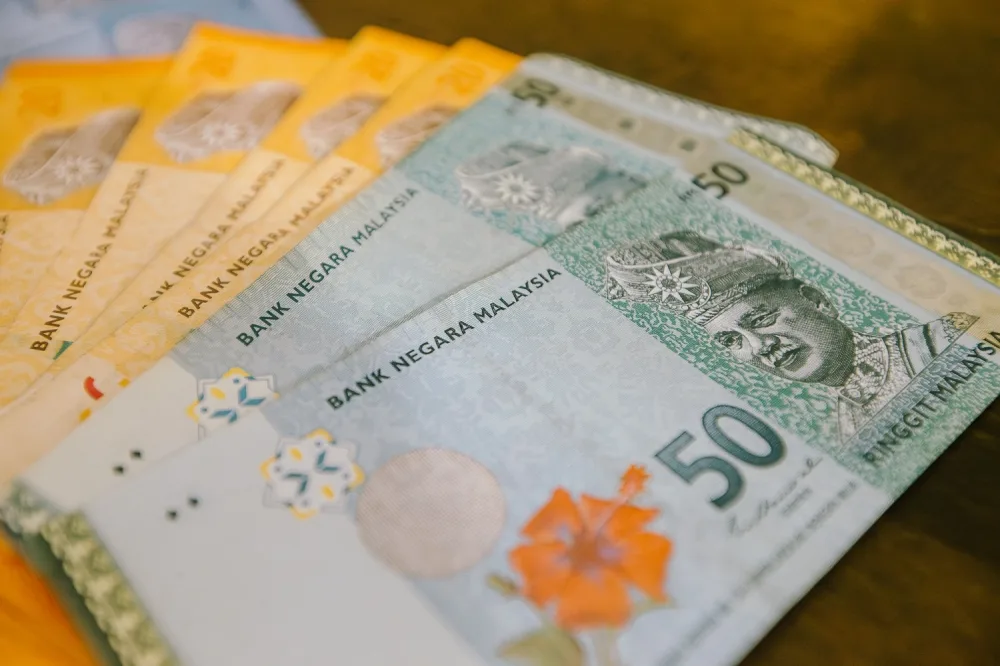
KUALA LUMPUR — The Malaysian ringgit opened higher for the fourth consecutive day, following the government’s announcement of a measured approach to fuel subsidies aimed at balancing fiscal discipline with cost-of-living concerns amid ongoing West Asian tensions. At 8am, the local currency rose to 3.9855/4.0050 against the US dollar, up from Thursday’s close of 3.9920/3.9955. Prime Minister Datuk Seri Anwar Ibrahim, in a special message yesterday, announced that effective April 1, the individual monthly quota for the BUDI95 fuel programme will be temporarily reduced from 300 litres to 200 litres per month due to the geopolitical situation. The adjustment is expected to have minimal impact on most Malaysians, as average consumption remains around 100 litres monthly, with nearly 90 percent using less than 200 litres. Anwar also confirmed that Iran has permitted Malaysian oil tankers to pass through the Strait of Hormuz, easing supply concerns. Bank Muamalat Malaysia Bhd Chief Economist Mohd Afzanizam Abdul Rashid said the move demonstrates the government’s commitment to balancing fiscal responsibility with household welfare amid global market pressures. “This is a positive development for the ringgit, reflecting timely government action in response to the fallout from tensions in West Asia,” he said. SPI Asset Management’s managing partner Stephen Innes noted that the temporary reprieve granted by US President Donald Trump on potential attacks on Iran’s energy infrastructure has eased safe-haven demand for the US dollar, providing further support to the ringgit. The local currency also strengthened against other major and regional currencies. It rose against the Japanese yen to 2.4951/2.5077, the British pound to 5.3143/5.3403, and the euro to 4.5969/4.6194. Against ASEAN currencies, it gained against the Singapore dollar at 3.0994/3.1148, the Thai baht at 12.0868/12.1566, the Indonesian rupiah at 235.7/237.0, and the Philippine peso at 6.61/6.65. The ringgit’s sustained momentum reflects market confidence in Malaysia’s proactive economic measures despite ongoing global uncertainties.

Ringgit Strengthens on Government’s Pragmatic Fuel Subsidy Adjustment Amid West Asia Tensions

KUALA LUMPUR — The Malaysian ringgit opened higher for the fourth consecutive day, following the government’s announcement of a measured approach to fuel subsidies aimed at balancing fiscal discipline with .... read more