Category :

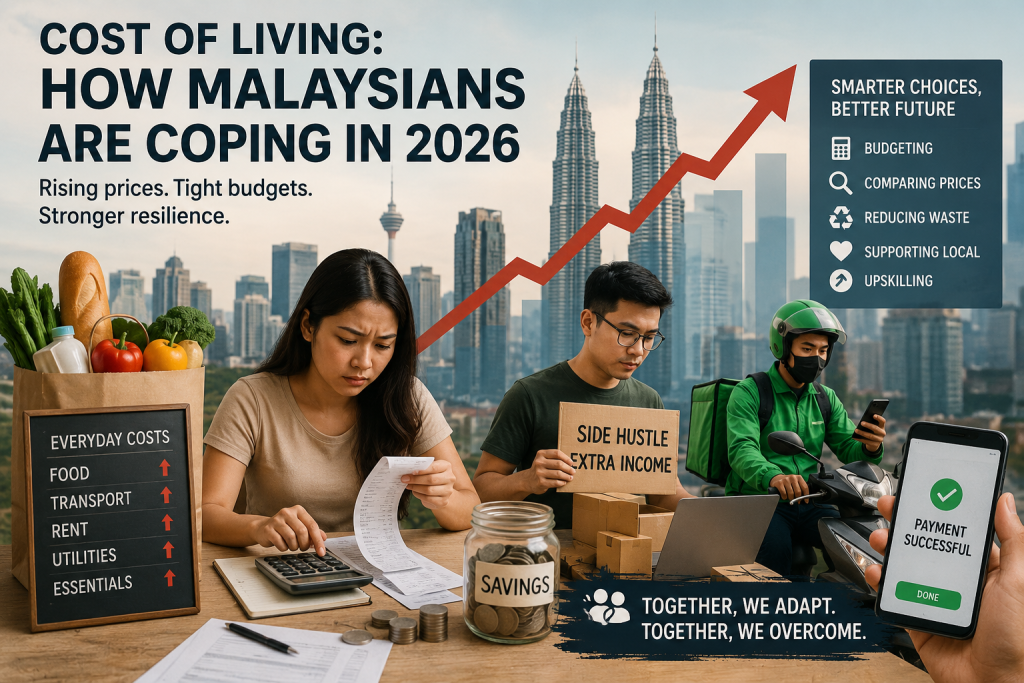
In 2026, the cost of living remains one of the biggest concerns among Malaysians from all walks of life. Whether it is a family living in Kuala Lumpur, a fresh graduate starting a career in Johor Bahru, or small business owners in Penang, many are feeling the pressure of rising expenses while trying to maintain a decent quality of life. The reality is simple — prices are increasing faster than incomes for many people. Food prices continue to climb, rental costs in urban areas remain high, and transportation expenses are becoming heavier on household budgets. While Malaysia’s economy shows signs of growth in several sectors such as technology, tourism, and digital services, the benefits are not always reaching ordinary citizens equally. Today, Malaysians are adapting in ways that would have seemed unusual just a few years ago. Families are cutting unnecessary spending, young adults are taking on freelance jobs after office hours, and more people are turning to online businesses to earn extra income. Side hustles are no longer just an option — they are becoming a necessity. At the same time, consumer behavior is changing rapidly. More Malaysians are comparing prices through apps before shopping, choosing local brands over imported goods, and reducing luxury spending. Dining out less frequently, delaying large purchases, and using public transportation more often have become common habits among middle-income households. One noticeable trend in 2026 is the rise of the “survival mindset” among younger Malaysians. Many Gen Z workers no longer prioritize owning luxury items or expensive cars. Instead, financial stability, flexible work opportunities, and affordable living are becoming more important. This generation has grown up during uncertain economic periods, and it has shaped how they view money and success. Housing affordability remains another major issue. For many young Malaysians, owning a home still feels out of reach, especially in major cities. High property prices combined with slow salary growth have forced many to continue renting or living with family longer than previous generations did. While affordable housing initiatives exist, demand still exceeds supply in many urban areas. Small businesses are also facing enormous challenges. Rising operating costs, higher utility bills, and increasing supply chain expenses have placed pressure on local entrepreneurs. Many small traders and food operators are struggling to balance competitive pricing with maintaining profits. Some businesses have survived by embracing digital platforms and cashless systems, but others continue to face uncertainty. Despite these challenges, Malaysians continue to show resilience. Across the country, communities are finding ways to support one another. Local markets promoting affordable products, community food banks, and social media groups sharing financial advice have become increasingly important. Malaysians have always been known for adaptability, and this period is proving that once again. Technology is also helping people cope. The digital economy has opened opportunities for freelancers, online sellers, content creators, and gig workers. Many individuals are building secondary incomes through platforms that did not exist a decade ago. However, this also raises concerns about job security and work-life balance, especially among younger workers juggling multiple sources of income. Looking ahead, the cost of living issue cannot be solved through individual effort alone. Long-term solutions require stronger wage growth, better public transportation systems, affordable housing policies, and continued support for local businesses. Economic progress should not only be measured through national statistics, but through the daily lives of ordinary Malaysians. In the end, the conversation about the cost of living is not only about money. It is about the future people believe they can build for themselves and their families. As Malaysia moves deeper into 2026, one thing is clear: Malaysians are not giving up. They are adapting, evolving, and finding ways to move forward despite the pressures surrounding them. But resilience alone should not become the permanent solution to rising living costs. Sustainable change is needed to ensure future generations can thrive, not simply survive. -- MINUTESMY / SUGAN BALAN

Cost of Living: How Malaysians Are Coping in 2026

In 2026, the cost of living remains one of the biggest concerns among Malaysians from all walks of life. Whether it is a family living in Kuala Lumpur, a fresh .... read more

Vijay also known as 'THALAPATHY' has spent most of his life proving people wrong. His journey — from a struggling young actor facing ridicule to becoming one of Tamil cinema’s biggest superstars, and now a political leader attempting to reshape Tamil Nadu politics — is built on persistence more than privilege. When Vijay entered the film industry in the early 1990s, he was heavily criticised. Despite being the son of filmmaker S. A. Chandrasekhar, he did not receive automatic acceptance from audiences. Many mocked his looks, dialogue delivery, and screen presence. At a time when Tamil cinema was dominated by larger-than-life personalities, Vijay appeared quiet and ordinary. Several critics believed he lacked the charisma needed to become a hero. But Vijay survived because he kept improving. Instead of responding emotionally to criticism, he focused on hard work. Film after film, he sharpened his acting, dancing, and action performances. Movies like Poove Unakkaga gave him recognition, while later blockbusters such as Ghilli, Thuppakki, Mersal, and Leo turned him into a mass icon. His films increasingly included social themes about corruption, inequality, education, and governance, which helped strengthen his image beyond entertainment. Over time, Vijay’s fan clubs became more organised and socially active. They conducted welfare programmes, blood donation drives, flood relief efforts, and educational assistance. These activities quietly laid the groundwork for his future political movement. When Vijay officially launched Tamilaga Vettri Kazhagam, expectations were enormous. Supporters viewed him as a fresh alternative in Tamil Nadu politics, especially for younger voters seeking change. However, politics quickly exposed him to a different kind of challenge. Unlike cinema, where popularity guarantees applause, politics demands constant accountability. Vijay now faces criticism from rival parties, political analysts, and even sections of the public who question whether a film star can truly govern. Some critics argue that he has yet to present detailed policy frameworks on the economy, employment, rural development, and national issues. Others believe he still lacks the grassroots political machinery needed to compete against established Dravidian parties with decades of organisational strength. His political journey has also been complicated by intense media scrutiny. Every speech, silence, public appearance, and political decision is analysed. Opponents accuse him of relying too much on celebrity influence, while supporters counter that his clean public image and disciplined approach make him different from traditional politicians. Yet Vijay has already achieved something significant politically — he has created momentum. In a state where politics has historically been dominated by powerful established parties, building a new political movement itself is a major achievement. His rallies attract massive crowds, his speeches generate wide discussion, and his appeal among youth remains strong. Even critics acknowledge that he has become an important political figure whose influence cannot be ignored. What makes Vijay’s story compelling is that his struggles never truly ended — they simply evolved. In cinema, he fought for acceptance as an actor. Today, in politics, he is fighting for acceptance as a leader. The battlefield has changed, but the challenge remains the same: proving that he belongs at the top. Whether Vijay eventually succeeds politically or not, his journey already reflects resilience, patience, and reinvention. Few public figures manage to survive criticism in one field and willingly enter an even harsher arena. Vijay did exactly that, and that courage itself explains why millions continue to follow his journey closely. -- MINUTESMY / SUGAN BALAN

From Cinema’s Underdog to Political Challenger: The Rise of TVK Leader Vijay

Vijay also known as ‘THALAPATHY’ has spent most of his life proving people wrong. His journey — from a struggling young actor facing ridicule to becoming one of Tamil cinema’s .... read more

KUALA LUMPUR, March 31 — Malaysia has entered a new era in labour protection with the enforcement of the Gig Workers Act 2025 [Act 872], marking a major milestone in safeguarding the rights and welfare of workers in the rapidly expanding digital economy. The landmark legislation, which officially comes into force today, reflects the strong commitment of the MADANI Government under Prime Minister Anwar Ibrahim to ensure that economic progress goes hand in hand with social justice. Described as a bold and comprehensive move, the Act provides long-awaited legal recognition and protection for gig workers, a sector that has grown significantly in recent years due to technological advancements and shifting employment trends. With an estimated 1.64 million gig workers in Malaysia set to benefit, the law introduces key safeguards including basic workers’ rights, improved transparency in contractual agreements, clearer dispute resolution mechanisms, and stronger social security protections. Officials подчеркнули that Malaysia’s approach places it ahead of regional peers such as Singapore, Indonesia, and Philippines, where gig worker protections are still being introduced gradually or remain limited to specific sectors. In contrast, Malaysia’s dedicated legal framework positions the country among Asia’s leaders in addressing the challenges of the gig economy. The Ministry of Human Resources, Ministry of Human Resources Malaysia, played a central role in developing the Act, working closely with a wide range of stakeholders including gig worker associations, trade unions, academics, and media representatives. “This is not just about economic growth, but about fairness and inclusion,” the government said, emphasizing that the goal is to build a digital economy that is not only innovative and fast-growing, but also equitable and sustainable. The introduction of Act 872 is seen as a defining step in positioning Malaysia not merely as a participant in the regional gig economy, but as a model nation demonstrating that technological advancement and social protection can progress together. The government expressed appreciation to all parties involved in shaping the legislation, noting that the achievement reflects a collective national effort to secure a more just and resilient future of work.

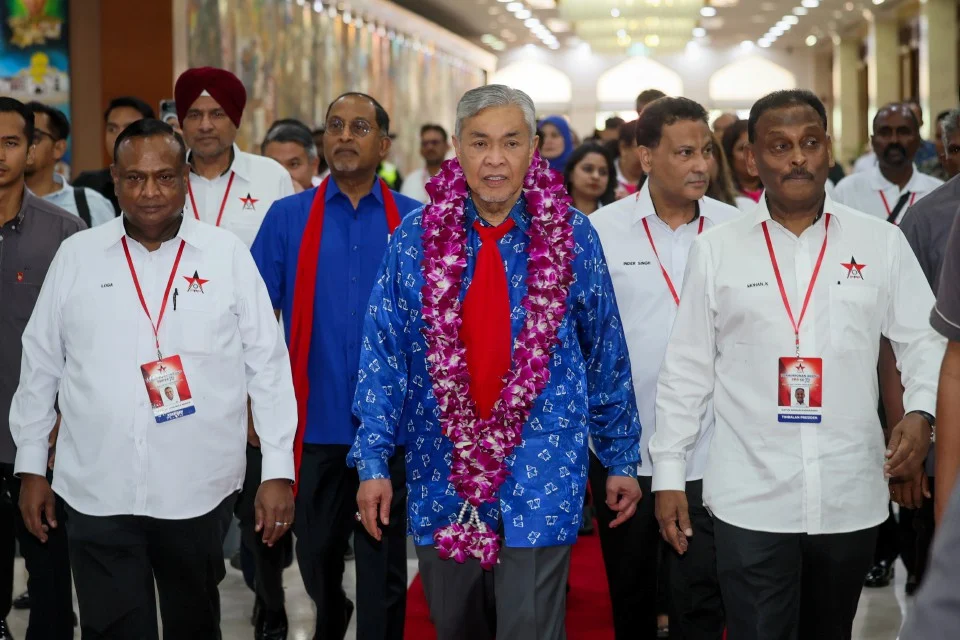
Ramanan Stands Firm: Defending PKR as a House That Must Not Be Torn Down from Within

The heated exchange at the Johor PKR Convention should not be reduced to mere personality clashes—it reflects a deeper question about loyalty, responsibility, and the proper way to defend a .... read more

Why Malaysia’s Online Safety Act Matters

Malaysia’s Online Safety Act (ONSA), passed in 2025 and came into force on 1 January 2026, is not only timely but essential. The reality today is clear: harmful online content .... read more

Opinion: Khairy Jamaluddin’s Return – A Strategic Inflection Point for UMNO

The announcement that Khairy Jamaluddin is returning to UMNO is more than a personal homecoming—it is a potential inflection point in Malaysian politics. Khairy, widely known as KJ, has consistently .... read more

When Platforms Become Judge, Jury and Executioner

Opinions on topical issues from thought leaders, columnists and editors. By :Ts Dr Manivannan Rethinam Digital platforms have reshaped how people work, communicate and earn a living. What began as .... read more
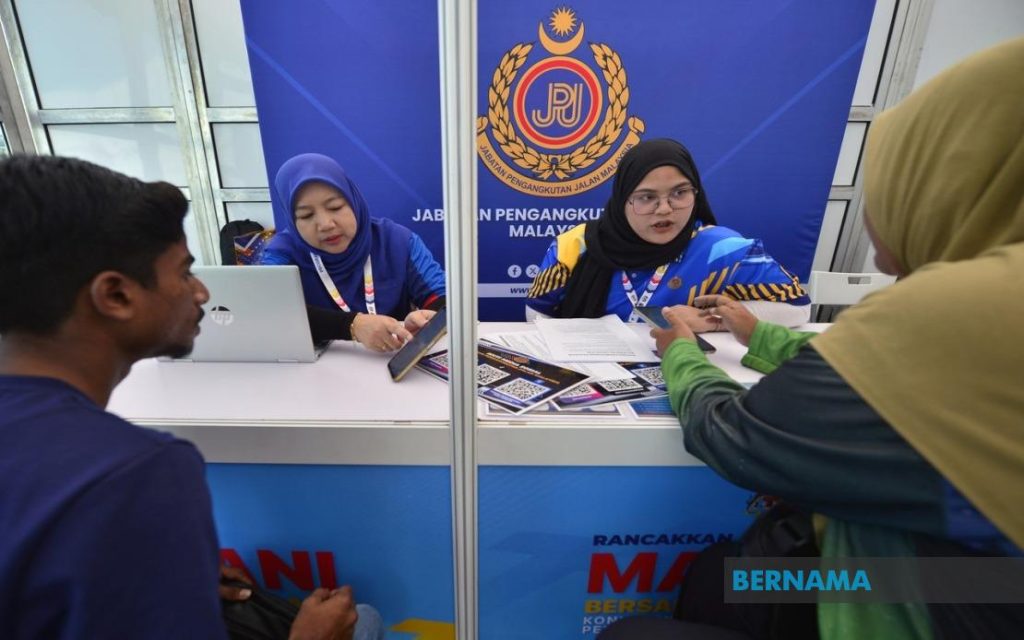
Malaysia’s Civil Service: From Stereotypes to Excellence

Opinions on topical issues from thought leaders, columnists and editors. By :Vickneswari Krishnan Sammy For decades, Malaysia’s civil service has often been associated with familiar stereotypes – slow processes, rigid .... read more
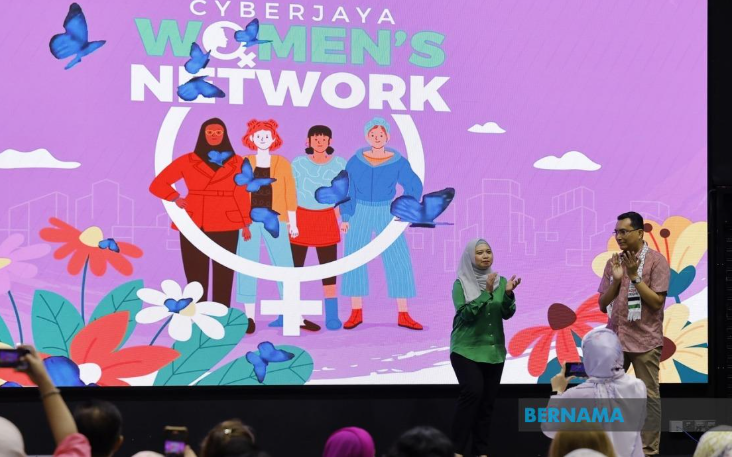
Why Women Still Struggle to Lead – And Why the Problem Is Bigger Than the Workplace

Opinions on topical issues from thought leaders, columnists and editors. By :Ivlynn Yap Every International Women’s Day, organisations around the world reaffirm their commitment to gender equality. Statements are issued, .... read more

Who Cares For The Caregivers?

Opinions on topical issues from thought leaders, columnists and editors. By Assoc Prof Dr Tengku Elena Tengku Mahamad and Dr Wan Norbani Wan Noordin During a recent community engagement visit .... read more


Healing By Design

Opinions on topical issues from thought leaders, columnists and editors. By Ooi Ow Wen What is the fundamental difference between treating and healing? Treating is merely a process to combat .... read more