
Category :

BEIJING, June 25, 2026  -- Detecting an abnormally high indoor temperature, the AI-enabled online platform installed on the cellphone of Wei Qingyi, head of a silkworm-raising cooperative in south China, suggested automatic ventilation for his smart cocooneries.  Instead of traditional bamboo strip-woven silkworm trays and shelves, automatic feeding lines, sensors and high-definition cameras are a common sight in cocooneries in Yizhou District of Hechi City in Guangxi Zhuang Autonomous Region. In the face of an increasing lack in labor but imperative need for industry upgrade, the district leveraged AI to turn the past labor-intensive local silkworm industry into a smart agricultural sector. For instance, Yizhou recreated the entire procedure of local silkworm raising via "AI+the Internet of Things", allowing data to become new agricultural resource and cellphones the new farm tools. With a big data-based cloud computing platform, the large silkworm production area in China further enhanced smart silkworm raising through automatic temperature and humidity monitoring and feeding as well. Via a smart monitoring and alerting network, local short-term and mid-term forecast accuracy rates for significant silkworm diseases usually exceed 90 percent and 80 percent respectively. In local cocooneries, a set of full-process digitized operations enabled by smart clustering, cocoon baking, feeding and disinfection equipment helps the district elevate rate of quality cocoons to 95 percent. As the "Jianyitong" comprehensive service platform that integrates big data, AI and blockchain technologies offers one-stop services including silkworm cocoon trading, settlement, price trend, related production materials supply and lending, local silkworm farmers are no longer worried about underpriced sales. Local silk businesses thus boast stabler channels for quality raw materials purchase, enabling them to build a closed industry chain loop. Thanks to their supreme quality, local raw silks have become the designated raw materials for western luxury brands including Louis Vuitton, Hermes and Chanel, and clothes made of local silk fabrics are regularly exhibited at large international events. Apart from "smartness" and extended silkworm raising industrial chains, an integrated industrial ecology encompassing production, processing, sci-tech, cultural tourism, and ecology has taken shape in Yizhou. Using AI to optimize production and other procedures, local derivative industries such as natural medicines and silk culture tourism largely enlivened local economy, with the output value of mulberry twig alkaloids tablet surpassing 130 million yuan in 2025. Original link: https://en.imsilkroad.com/p/351087.html -- PRNewswire  -- Source: Xinhua Silk Road 

Xinhua Silk Road: “AI+mulberry silk” paves new road to prosperity in S China’s Guangxi

BEIJING, June 25, 2026 — Detecting an abnormally high indoor temperature, the AI-enabled online platform installed on the cellphone of Wei Qingyi, head of a silkworm-raising cooperative in south China, .... read more
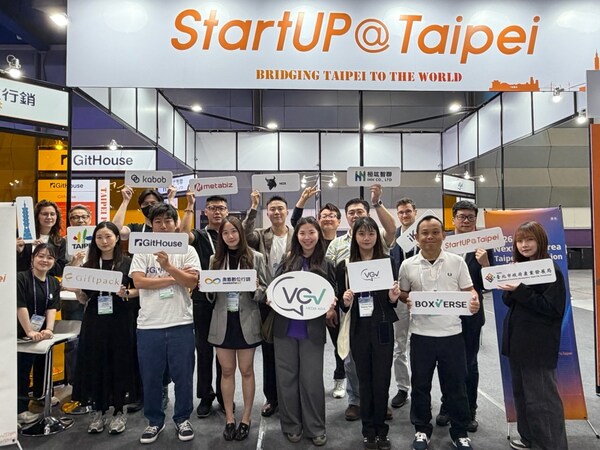
TAIPEI, June 25  -- Led by the Department of Economic Development, Taipei City Government, the StartUP@Taipei program brought 10 Taipei-based AI companies to South Korea this month to participate in NextRise 2026, one of Asia's largest innovation and startup events.  In addition to exhibiting at NextRise, the delegation met with key players in Korea's innovation ecosystem, including startup hub MARU 360, the Goyang City Government in Gyeonggi Province, and Z Venture Capital Corporation (ZVC), the investment arm of Naver. The participating companies showcased AI applications across retail, financial services, enterprise operations, data platforms, and brand growth.  According to Jin Sang-hoon, Director of Korean accelerator and investment firm Tap Angel Partners: "Taipei companies have developed mature technologies that are highly complementary to the Korean market. We welcome more Taiwanese companies to enter Korea and provide their services here." The participating companies demonstrated how Taipei's AI sector is evolving beyond software tools to become critical infrastructure for global business operations. In the retail and consumer sector, KABOB CLOUD has deployed its smart retail solutions through local partners to major Korean retailers including emart, Lotte Mart, Homeplus, GS25, and Daiso, covering more than 1,000 stores. As Korean retailers continue expanding internationally, replicating operational efficiency and customer experience across markets has become a growing challenge. Global brand expansion is another priority for Korean enterprises. Awesomeart Digital Marketing has helped international brands achieve over 70% market share of voice within six months and has served more than 500 brands. VGV Media Asia, meanwhile, has worked with more than 700 clients across nine markets, including global brands such as Samsung, UNIQLO, and iHerb. Giftpack, another company focused on global brand operations, has built a network spanning 42 countries, serving more than 1,400 enterprise clients while connecting over 8,000 factories worldwide. The company's AI Agent is designed not as a chatbot, but as a business infrastructure layer that helps enterprises manage customer relationships, corporate gifting programs, and cross-border supply chains at scale. Together, these companies highlight the strong alignment between Taipei's AI capabilities and the international growth strategies of Korean brands and enterprises. In enterprise operations, PlusBlocks Technology has deployed its AI Digital Employee platform across more than 800 locations, reducing decision-making time from days to seconds. Enterprise data has also emerged as a critical battleground. Metabiz's AI Enterprise Data Platform currently serves over 200 corporate clients across Asia while maintaining customer retention rates above 80%. Another participating company, IHH, focuses on enterprise communications infrastructure, providing video collaboration solutions to organizations in finance, insurance, healthcare, and government sectors. As AI agents and robotics become increasingly integrated into business environments, real-time collaboration between humans, AI systems, and autonomous agents is rapidly emerging as a new growth opportunity. In the financial sector, NOX AI, which has raised US$3.6 million in funding, has expanded its services across Taiwan and Southeast Asia. The company believes the next stage of fintech competition will be defined not by transaction speed, but by democratizing investment intelligence through AI, enabling institutions and individuals alike to access sophisticated analytical capabilities. Matthew Cho, Co-CEO of Korean venture capital firm Pacemakers, commented: "Taipei companies have demonstrated remarkable internationalization capabilities. Some have already established business operations in Korea, while others have successfully expanded into Japan and Southeast Asia. We see strong potential for Taipei and Korean companies to jointly pursue larger opportunities across Asia and global markets." The Department of Economic Development, Taipei City Government, noted that Taipei's innovation ecosystem is increasingly moving beyond technology development toward cross-border business services and enterprise solutions. Through continued partnerships with Korea, Japan, Southeast Asia, and other strategic markets, Taipei aims to help local companies work more closely with international corporations, investors, and local governments, contributing to the next stage of AI-driven growth across Asia. -- PRNewswire -- Source : Startup@Taipei 

Taipei AI Companies Head to NextRise 2026, Strengthening Asia’s Hub for Enterprise AI Collaboration

TAIPEI, June 25 — Led by the Department of Economic Development, Taipei City Government, the StartUP@Taipei program brought 10 Taipei-based AI companies to South Korea this month to participate in .... read more
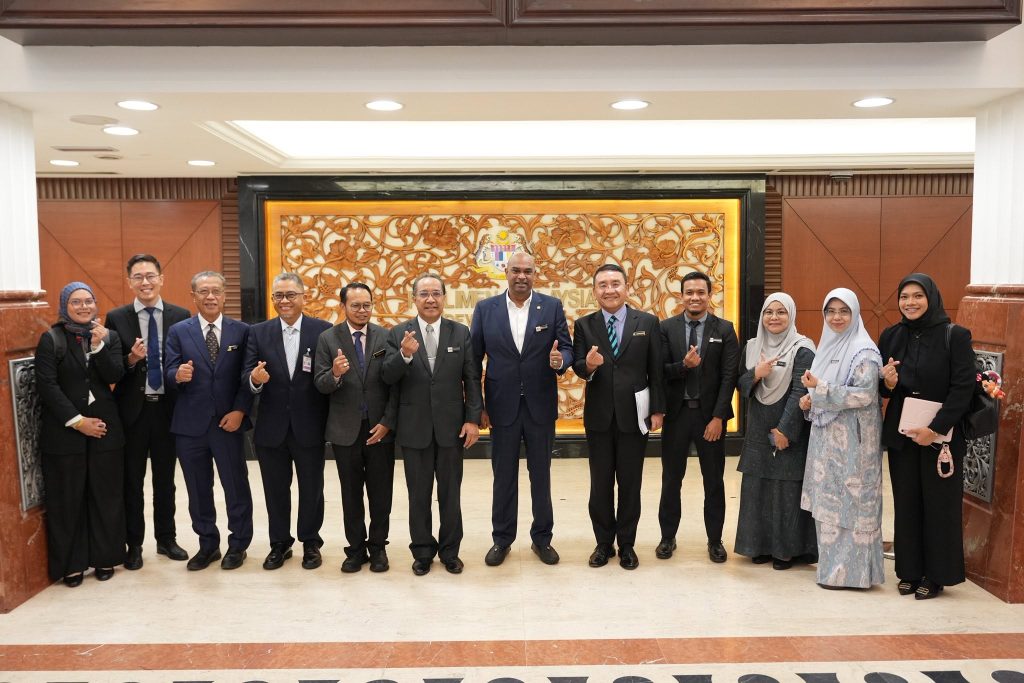
KUALA LUMPUR, June 25 – Malaysia must take proactive steps to equip its workforce with artificial intelligence (AI) and digital skills to remain competitive in an increasingly technology-driven global economy, Human Resources Minister Ramanan said. Speaking in the Dewan Rakyat on Thursday,Ramanan responded to a question from Padang Serai Member of Parliament Datuk Azman Nasrudin regarding the impact of automation and AI on employment trends and job losses in the country. He stressed that while AI is transforming workplaces and industries, it should not be viewed as the sole cause of job displacement. “The reality is that the world of work is changing rapidly. Technology, digitalisation and AI are reshaping how we work, how businesses operate and the types of jobs needed in the future,” he said. According to Ramanan, job losses are influenced by various factors, including global economic challenges, evolving business models, rising operating costs and corporate restructuring. He said the government’s priority is to ensure workers are prepared for these changes through effective intervention and workforce development strategies. The Ministry of Human Resources (KESUMA), he added, has adopted a proactive approach by implementing reskilling, upskilling and job-matching programmes to help Malaysians remain relevant in the labour market. Citing TalentCorp data, Ramanan said nearly 700,000 jobs could be affected by developments in AI, the digital economy and the green economy over the coming years if workers fail to enhance their skills. At the same time, he noted that technological advancement is also expected to create hundreds of new job opportunities. To address the challenge, the government is strengthening Technical and Vocational Education and Training (TVET), expanding access to skills development programmes, introducing initiatives such as MyMahir and promoting lifelong learning. “Our goal is not only to help Malaysians adapt to change, but to empower them to become leaders in the future economy,” he said. Ramanan also highlighted the role of the Social Security Organisation (PERKESO) in supporting workers who lose their jobs through social protection schemes, financial assistance and re-employment programmes. “Technological advancement cannot be stopped. However, with the right policies, relevant training and continuous support, we can ensure this transformation creates more opportunities than challenges,” he said. He reaffirmed the MADANI Government’s commitment to ensuring no worker is left behind as Malaysia navigates the changing employment landscape. -- MINUTESMY

Malaysia Must Prepare Workforce for AI-Driven Future – Datuk Ramanan

KUALA LUMPUR, June 25 – Malaysia must take proactive steps to equip its workforce with artificial intelligence (AI) and digital skills to remain competitive in an increasingly technology-driven global economy, .... read more


SINGAPORE, June 24 -- Gravity Game Hub (GGH) is excited to announce the launch of its first-ever collaboration between the mobile idle RPG Ragnarok Idle Adventure PLUS and the legendary anime franchise Gatchaman. Running from June 24 to July 9, 2026, this limited-time crossover event brings exclusive themed content, exciting challenges, and unique rewards inspired by the iconic heroes of Gatchaman.      "We are excited to bring Gatchaman, one of the most iconic anime franchises in history, into the world of Ragnarok Idle Adventure Plus. This collaboration allows us to connect two beloved universes that have inspired generations of fans across Asia and beyond. Through exclusive characters, events, and rewards, we hope to deliver a memorable experience that celebrates both the adventurous spirit of Ragnarok and the heroic legacy of Gatchaman. We sincerely thank our players for their continued support and look forward to sharing this special journey together," said Harry Choi, President Director, Gravity Game Hub Pte. Ltd. Exclusive In-Game Content and Rewards Throughout the event period, players can participate in a variety of special activities, including Daily Log-In Events, Airship Intercept, War Territory, Daily Reward Boosts, and the Cross-Server Dojo. By completing these activities, players can collect event-exclusive currency and exchange it for premium collaboration rewards, including: Exclusive Collaboration Pet: Joe the Condor Special Collaboration Red Card Exclusive Event Title Limited Avatar Frame Phase 2: Science Ninja Team Event Starting July 2, players can enjoy an additional collaboration chapter, Science Ninja Team, featuring a themed portal exploration mini-game, cross-server leaderboard competition, and a special roulette event. Participants will have the opportunity to obtain another exclusive collaboration pet, Jinpei the Swallow, alongside various in-game rewards. Dedicated Skill Comprehension Events for the collaboration pets will also be available, providing valuable upgrade materials, Pet Item Copy, GP, Zeny, and Pet EXP to help players strengthen their companions. The Ragnarok Idle Adventure PLUS x Gatchaman collaboration update is now available on iOS and Android devices. Players can find full event details and patch notes through the game's official community channels. About Ragnarok Idle Adventure Plus Genre: Idle RPG Platform: Mobile (Android & IOS) Website: https://roidle.gnjoy.asia Facebook: https://www.facebook.com/ROIdleAdventure Instagram: https://www.instagram.com/roidleadventureplus Discord: https://discord.gg/roidleadventureplus About Gravity Game Hub Founded in 2021, Gravity Game Hub (GGH) Pte. Ltd. is a publisher and developer of online and mobile games, committed to delivering high-quality entertainment experiences and building thriving gaming communities throughout Southeast Asia and beyond. About Tatsunoko Production Founded in 1962, Tatsunoko Production Co., Ltd. is a renowned Japanese animation studio and the creator of iconic franchises such as Science Ninja Team Gatchaman, Casshan, Hurricane Polymar, and Tekkaman. The company continues to expand the global reach of its beloved IPs through animation, licensing, and entertainment partnerships. -- PRNewswire -- Source: Gravity Game Hub 

Gravity Game Hub Launches Exclusive Gatchaman Collaboration Across Ragnarok Idle Adventure Plus

SINGAPORE, June 24 –– Gravity Game Hub (GGH) is excited to announce the launch of its first-ever collaboration between the mobile idle RPG Ragnarok Idle Adventure PLUS and the legendary .... read more

KAWASAKI, Japan, June 24 -- Toshiba Corporation today announced the launch of the GridDB Startup Program, a strategic initiative that will empower startups in building and scaling real-time industrial solutions on GridDB Cloud, Toshiba's distributed time-series database for Big Data and IoT systems. Applications are open here from June 24, 2026. In a business world driven by constantly growing flows of information, identifying and extracting value requires systems that can accurately and reliably analyze massive volumes of data in real time with no disruption to operations. GridDB, Toshiba's distributed time‑series database, addresses these challenges by delivering strengths in reliability, low latency, and horizontal scalability. The launch of GridDB Startup Program is part of Toshiba's broader effort to foster long-term partnerships with startups that advance co-development of solutions and bring new ideas to life. The program aims to combine Toshiba's expertise in data infrastructure with the creativity and agility of startups in generating new use cases and technology breakthroughs in IoT, AI and machine learning, smart infrastructure, healthcare, finance, real-time analytics, and other areas. The program provides participants with essential technology, reduces barriers to innovation, and enables collaborative experimentation. Access to GridDB Cloud and GridDB's technical expertise gives the participants ability to concentrate solely on product development rather than infrastructure management, and to rapidly prototype, validate, and scale concepts. The program also delivers resources and incentives to foster early-stage growth, supporting startups in accelerating time-to-market and taking solutions to the global level.     Key Incentives of the GridDB Startup Program: Complimentary access to GridDB Cloud Dedicated technical support from GridDB's experts Opportunities for joint marketing and promotional activities with Toshiba's GridDB team Potential connection with Toshiba Corporate Venture Capital Applications are open from June 24, 2026 for 26 countries and regions where GridDB Cloud is available. Details and application form are here. Through collaborations nurtured in the GridDB Startup Program, Toshiba will continue to contribute to the advancement of digital transformation (DX) and the realization of future cyber-physical systems.  About GridDB Cloud GridDB Cloud, is Toshiba's high-performance database offered as a fully managed cloud service, combining time-series data management, petabyte-scale scalability, and high reliability with dual NoSQL/SQL interfaces for flexible development. It is available on Microsoft Azure Marketplace, offering seamless integration with tools like Azure IoT Edge and Grafana, intuitive GUI-based cluster management, and elastic scaling—reducing setup times, infrastructure costs, and operational overheads. With global availability in 26 countries and regions, GridDB Cloud enables enterprise-scale real-time analytics with ease. GridDB Product Website https://www.global.toshiba/ww/products-solutions/ai-iot/griddb.html -- PRNewswire -- Source: Toshiba Corporation 

Toshiba Launches GridDB™ Startup Program to Collaborate with Innovators and Co-Create Future Technologies

KAWASAKI, Japan, June 24 — Toshiba Corporation today announced the launch of the GridDB Startup Program, a strategic initiative that will empower startups in building and scaling real-time industrial solutions .... read more

TAIPEI, June 24, 2026-- Omnichat, the omnichannel customer experience platform, hosted its annual product launch on June  9th. Under the theme "The New Era of Agentic AI: Driving the Future of Retail and Omnichannel Revenue Growth," the company launched OmniClaw, its AI strategist, alongside Omni AI Message Flow and other Agentic AI solutions. Amid fading traffic dividends and soaring customer acquisition costs, Omnichat partnered with LINE and Meta to explore how enterprises can build sustainable retail models leveraging AI, proprietary data, and private domain operations.  As conversational commerce experiences continue to mature, Omnichat has achieved historic breakthrough milestones in 2026 in both technical capability and messaging volume, successfully routing over 8 billion messages. The platform continues to fuel revenue growth for enterprises through chat commerce and has secured dual validation as a LINE-Biz Solutions Gold Tech Partner and a Meta Certified Company in both Business Messaging Strategy and WhatsApp for Business Technical. "The true value of AI does not lie in one-way broadcasting; it lies in transforming conversations into a brand's most potent CRM and real-time social commerce engine," said Jerry Weng, General Manager of Omnichat Taiwan. "As a dual-certified partner within the LINE and Meta ecosystems, Omnichat is dedicated to helping brands leverage data-driven conversations to unlock revenue. In an era where organic traffic is dwindling, we are equipping enterprises with the ultimate retail compounding effect and a closed-loop system for data growth." The showcase featured exclusive industry keynotes from LINE and Meta leadership. Achi Tsai, Vice President of Product & Strategy Planning, Corporate Business Division for LINE Taiwan Limited, noted, "LINE's core AI roadmap has always been about 'empowerment' rather than 'control.' Moving forward, AI will evolve from a generative, passive search tool used by social editors and support reps into an active predictor that anticipates customer needs and serves up hyper-personalized recommendations before the user even asks. LINE will continue its deep collaboration with Omnichat to help enterprises translate complex interactions into seamless, attentive care, creating powerful private domain engagement and compounding value." Bell Hou, Client Solutions Director, Greater China at Meta, added, "As the Meta Business Messaging ecosystem constantly evolves, the newly introduced Marketing Messages on Messenger has become a vital tool for brands to bypass the traditional 24-hour messaging window and strengthen private domain retention. By integrating audience management with omnichannel data, brands can maximize lead generation capabilities on Messenger, drastically improving targeted communication efficiency and long-term customer lifetime value." Beyond exploring macroeconomic industry trends with LINE and Meta, Omnichat lifted the curtain on its Agentic AI product roadmap, announcing a brand-new lineup of AI solutions - OmniClaw, Omni AI Message Flow, CS Agent, and Sales Agent, designed to seamlessly inject AI capabilities directly into operational workflows and revenue-generating scenarios. The highlight of the showcase was OmniClaw, an AI-native brain and strategist embedded directly into the Omnichat platform. Unlike generic AI tools, OmniClaw is engineered for loyalty management, precision marketing, and intelligent sales. From day one, it understands a company's campaign data and organizational structure, enabling teams to run real-time analytics, plan campaigns, and access expert guidance without switching tabs. Marketers can directly ask, "Which campaign generated the highest revenue?", "Which member segment is ripe for remarketing?", or "Analyze recent support ticket trends." OmniClaw cross-references multi-module data to deliver concrete, actionable recommendations, eliminating manual reporting for rapid decision-making. "OmniClaw solves the fatal flaw of generic AI tools—their lack of business-specific understanding," said Alan Chan, Founder and CEO of Omnichat. "It aggregates multi-dimensional data into actionable business insights. As an AI-native brain built for retail, OmniClaw is more than a search tool. By analyzing historical empirical data—including conversation trends, product recommendation links, and broadcast performance—it maps out future campaigns and generates ready-to-use drafts. This empowers enterprises to make faster, data-driven decisions, turning AI into a true operational growth engine." To address the traditional bottlenecks of marketing campaigns—where moving from inspiration and copywriting to cross-department or agency alignment is incredibly time-consuming—Omnichat rolled out Omni AI Message Flow. Here, AI steps into the role of a Marketing Agent to streamline the entire creation cycle. Marketers simply input their campaign objectives and brand guidelines, and the AI automatically maps out the conversation flow, generates the copy, and designs the asset layout. This slashes campaign setup time by at least 50%, allowing brands to take ideas to launch at unprecedented speeds. In 2026, retail technology has officially entered the "Agentic Era," with AI evolving into Omni AI Agents armed with autonomous reasoning and cross-system execution capabilities. Omnichat's CS Agent natively bridges with enterprise CRM and ERP systems to autonomously handle member inquiries, order tracking, logistics, and post-purchase support—dramatically reducing manual workloads while upgrading service speed. Simultaneously, the Sales Agent acts as the ultimate conversational commerce brain, proactively recommending merchandise based on product catalogs, inventory levels, and consumer intent to drive checkouts directly within the chat window for a 24/7 autonomous shopping experience. "The CS Agent and Sales Agent we launched have completely bridged the last mile from 'understanding dialogue' to 'taking cross-system action,'" explained Ian Chan, Chief Technology Officer at Omnichat. "They don't just call system APIs to autonomously close up to 90% of support cases; they proactively pitch product recommendations like a star salesperson to close deals directly in the chatroom. Coupled with our new BYOA (Bring Your Own AI) open architecture, we are helping enterprises securely and deeply embed their proprietary AI models into daily operations, transforming AI into tangible corporate productivity." The event closed with a cross-industry panel discussion featuring Henry Lu, CEO of IMAG Marketing, Anne Chen, Director of Business Development at WENK MEDIA, and Kevin Li, Chief Marketing Officer of Buy123. The panelists unanimously agreed that AI, private domain operations, and data integration have formed the new battleground for brand competitiveness, and that the democratization of Agentic AI will drastically accelerate digital transformation and top-line revenue growth across the retail industry. Addressing the pain point of skyrocketing traffic costs, WENK MEDIA shared practical case studies on how combining AI with robust data integration successfully amplified traffic conversion. From a CRM perspective, Buy123 broke down how mid-sized brands can break away from margin-killing price wars by pivoting toward granular, data-driven customer segmentation on LINE. Finally, IMAG, a customer relationship and AI-powered engagement partner for premium retail brands, pointed out that international luxury brands have seamlessly woven AI into their omnichannel strategies—maintaining elite, high-touch hospitality while fostering high-frequency digital engagement. This signals a broader shift from competing for traffic to building long-term customer relationships, with AI helping brands determine the next best action across every customer interaction. Agentic AI is increasingly becoming a key growth engine for the next phase of retail transformation. About Omnichat Limited Omnichat is a leading AI-Native Agentic Customer Experience Platform, empowering over 5,000 global brands with an autonomous AI workforce. Through its comprehensive AI Social CRM ecosystem, the platform is designed to scale customer engagement and cultivate long-term loyalty. As an official partner of Meta and LINE, Omnichat seamlessly integrates marketing automation, sales conversion, and customer support. By unifying conversational interaction with agentic execution, Omnichat delivers seamless end-to-end customer journeys across LINE, WhatsApp, Facebook Messenger, Instagram, and WeChat.  -- PRNewswire -- Source: Omnichat 

Omnichat Launches Annual Product OmniClaw, the New Agentic AI Strategist

TAIPEI, June 24, 2026— Omnichat, the omnichannel customer experience platform, hosted its annual product launch on June 9th. Under the theme “The New Era of Agentic AI: Driving the Future .... read more

SHAH ALAM, June 23 -- The Selangor state government expects solar energy usage in the state to rise following the launch of the Solar Accelerated Transition Action Programme (Solar ATAP) on Jan 1, supporting its shift towards green energy. State Environment and Public Health Committee chairman Jamaliah Jamaluddin said the outlook is also driven by an increase in companies offering no-upfront-cost installation schemes, which could attract more people to install the technology at their premises. “The Sustainable Energy Development Authority (SEDA) also maintains a list of companies offering such services on its website under the ‘Registered Solar PV Investor (RPVI) Directory. “With such methods, there will be no additional cost burden on building owners, and in fact savings can be achieved through the energy generated from the solar power system,” she said when winding up the debate on the Selangor Resilience Strengthening Package in the State Legislative Assembly today. Jamaliah said that, based on SEDA data under the Government Net Energy Metering (NEM Gomen) programme, 70 government buildings, including local authorities, are registered under the scheme. She said the figure represented a total installed capacity of 5.69 megawatts (MW), with 2.23MW generated from the State Secretary’s Building and district and land offices in Selangor. “The private sector has generated 392.97MW under the Net Energy Metering (NEM) scheme, according to SEDA Malaysia data, spanning commercial, industrial and agricultural users. “In addition, there were also private sector players generating solar electricity for self-consumption without selling it back to the TNB (Tenaga Nasional Berhad) grid,” she said. Jamaliah said the state is implementing the Government Green Energy (GGE) project in partnership with TNB Renewables Sdn. Bhd and Worldwide Holdings Berhad, aimed at increasing solar energy use in government facilities via a solar farm in Hulu Bernam. “The GGE project is expected to produce up to 100MW of capacity and is targeted to be commissioned by 2028, subject to final agreements and regulatory approvals. “The project is expected to boost renewable energy use in state government operations, reduce dependence on conventional power supply and support carbon reduction efforts under the state’s low-carbon agenda,” she added. -- BERNAMA 

Solar Technology Use Expected To Increase In Selangor – Exco

SHAH ALAM, June 23 — The Selangor state government expects solar energy usage in the state to rise following the launch of the Solar Accelerated Transition Action Programme (Solar ATAP) .... read more

ARMONK, N.Y., June  -- IBM (NYSE: IBM) today announced it has joined the OpenAI Daybreak Cyber Partner Program, bringing advanced frontier AI capabilities into security operations to help enterprises counter machine-speed threats. Building on the recently announced Project Lightwell, as part of this effort IBM has launched a new application security service that uses the cyber capabilities of OpenAI's models to help organizations identify and validate software vulnerabilities with greater speed, and precision.     Through this program, IBM is working with OpenAI to apply advanced AI capabilities to be deployed defensively inside enterprise workflows where they can help organizations understand and reduce their exposure. The new application security service can go beyond traditional code scanning to identify and validate vulnerabilities using OpenAI cyber capabilities. AI-driven analysis assesses application code, and prioritizes areas with highest potential to contain flaws and exploitable paths. The security harness, powered by IBM Consulting Advantage – IBM's AI platform for delivering consulting services to clients – connects client application environments to advanced AI in a controlled, secured and governed way. Operating within the client's environment, with read-only access to code repositories and bounded execution, it enables large-scale exposure analysis. Delivered as a managed, enterprise-ready service, clients can begin with focused evaluations of key applications and expand to continuous monitoring to reassess risk over time as code changes and new threats emerge. Participation in the OpenAI Daybreak Cyber Partner Program reflects IBM's ongoing role in shaping how frontier AI is deployed across enterprise workflows. Together with OpenAI and other partners, IBM is helping define standards for safeguards including for controlled analysis to help enterprises strengthen resilience. Project Lightwell combines an enterprise security clearinghouse with a global force of engineers to patch, validate, and manage open source code across the software supply chain. Supported by a $5 billion commitment from IBM and Red Hat, the initiative will use OpenAI's cyber capabilities alongside other frontier AI models to help with code review and remediation. "Attackers are already using AI to probe, exploit, and scale threats at machine speed. Defenders need the same advantage, with the security and control enterprises require," said Mark Hughes, Global Managing Partner, Cybersecurity Services, IBM Consulting. "The OpenAI Daybreak Cyber Partner Program expands our access to a broader set of advanced AI capabilities, which we deploy within our clients' environments to help surface the most relevant risks faster and help them act with confidence." "Security is central to realizing the benefits of advanced AI," said Dane Stuckey, Chief Information Security Officer at OpenAI. "Through the OpenAI Daybreak Cyber Partner Program, we are collaborating with AI pioneers like IBM to use frontier models to accelerate defensive security workflows and support enterprises, governments, and other organizations as they identify risks, strengthen resilience, improve security, and ultimately deploy AI with the trust, controls, and compliance their environments require." The new application security service is available today, with further integrations planned as part of the OpenAI Daybreak Cyber Partner Program. Statements regarding IBM's and OpenAI's future direction and intent are subject to change or withdrawal without notice, and represent goals and objectives only. About IBM IBM is a leading provider of global hybrid cloud and AI, and consulting expertise. We help clients in more than 175 countries capitalize on insights from their data, streamline business processes, reduce costs and gain a competitive edge in their industries. Thousands of governments and corporate entities in critical infrastructure areas such as financial services, telecommunications and healthcare rely on IBM's hybrid cloud platform and Red Hat OpenShift to affect their digital transformations quickly, efficiently and securely. IBM's breakthrough innovations in AI, quantum computing, industry-specific cloud solutions and consulting deliver open and flexible options to our clients. All of this is backed by IBM's long-standing commitment to trust, transparency, responsibility, inclusivity and service. Visit www.ibm.com for more information. -- PRNewswire  -- Source: IBM 

IBM and OpenAI Bring Frontier AI to Cyber Defense–Helping Enterprises Keep Pace with Machine-Speed Threats

ARMONK, N.Y., June 23 — IBM (NYSE: IBM) today announced it has joined the OpenAI Daybreak Cyber Partner Program, bringing advanced frontier AI capabilities into security operations to help enterprises .... read more

TAIPEI, June 22 -- Lintes Technology (TWSE: 6715), a global leader in high-bandwidth connectivity solutions, today announced the launch of its comprehensive, modular optoelectronic interconnect solution for next-generation AI servers. Addressing the critical bottleneck of high-density data centers, the platform encompasses both Near-Packaged Copper (NPC) and Near-Packaged Optics (NPO) technologies, featuring a shared patented socket architecture.  Unlike conventional hardware designs with fixed interface configurations, this innovative architecture empowers data center operators with infrastructure flexibility. The platform enables direct selection between optical and electronic interfaces within a single system, allowing operators to configure the channel count and bandwidth allocation routed through either NPC or NPO via individual sockets based on actual data throughput requirements. This breakthrough significantly optimizes system routing agility and cost-efficiency for next-generation AI infrastructure. Bridging the CPO Market Gap As AI workloads continue to drive demand for higher computing performance, conventional transmission architectures are approaching practical limits in bandwidth, power, and system design. While Co-Packaged Optics (CPO) remains a key area of industry focus, challenges related to optical engine yield, ASIC integration, and cost efficiency are expected to delay large-scale deployment. In contrast, Lintes's near-packaged interconnect solutions have already completed design validation and are sampling with customers. This makes the platform a concrete, immediately deployable solution for high-density AI servers, effectively bridging the technological gap as the industry transitions to advanced architectures. Modular Near-Packaged Interconnect for AI Scalable Bandwidth To meet the 100T aggregate bandwidth demands of AI chips, Lintes's near-packaged interconnect solutions utilize a patented socket design that simultaneously supports both NPO and NPC. A single socket delivers a transmission bandwidth of up to 6.4T. Depending on specific server and data center infrastructures, this bandwidth can be flexibly configured as four 1.6T or eight 800G transmission paths, helping customers adapt to high-bandwidth, modular, and scalable AI system requirements. This flexible architecture supports both transmission modes based on distance, cost, and layout requirements: Intra-Server and Intra-Rack Transmission (Scale-up): Operators can deploy NPC to connect with other AI chips or PCIe signal connectors. This can be paired with rack cabling options such as DAC, AEC, AOC, and ACC, leveraging copper's cost efficiency and deployment maturity to satisfy high-speed interconnect needs within servers and racks. Cross-Rack Long-Distance Networking (Scale-out): The system can adopt NPO and be paired with high-density multi-fiber connectors like MPO, MTP, and MMC to meet the demands of cross-rack extensions, data center horizontal scaling, and high-bandwidth optical interconnects. Through this modular and platform-based design, Lintes enables AI server and data center customers to flexibly implement near-packaged interconnect solutions for varied computing demands, transmission distances, and deployment costs, while minimizing major changes to existing system architectures and cable configurations. US$84 Million Capital Expenditure Approved to Target 2027 Volume Production To support this growth, Lintes's Board of Directors approved an annual capital expenditure budget of up to approximately US$84 million (NT$2.65 billion) on June 11, 2026. This capital will be allocated toward cleanroom renovations for a new manufacturing facility and the procurement of multi-channel, multi-mode, and single-mode optical module production equipment, expanding advanced hardware manufacturing capacities. With these near-packaged interconnect solutions already sampling with customers, the company aims to align with customer deployment schedules and achieve volume production by 2027, transforming these technological breakthroughs into long-term operational momentum. About Lintes Technology Lintes Technology is a leading provider of high-speed interconnect solutions, delivering advanced cables, connectors, and optical modules for data-intensive applications. With deep expertise in signal integrity and system integration, Lintes enables scalable AI connectivity from edge devices to hyperscale data centers supporting reliable, high-bandwidth communication across next-generation infrastructure. -- PRNewswire -- Source: Lintes Technology 

Lintes Technology Unveils Shared NPC and NPO Interconnect Platform for Next-Generation AI Servers

TAIPEI, June 22 — Lintes Technology (TWSE: 6715), a global leader in high-bandwidth connectivity solutions, today announced the launch of its comprehensive, modular optoelectronic interconnect solution for next-generation AI servers. .... read more

PUTRAJAYA, June 22 -- Malaysia and China are committed to strengthening cooperation in science, technology and innovation (STI) to expand technology commercialisation opportunities and ensure that innovation outcomes are translated into sustainable economic impact. The Ministry of Science, Technology and Innovation (MOSTI) said the commitment was reached through  Malaysia-China’s 4th Joint Committee Meeting (JCM) on Science, Technology and Innovation, co-chaired by Science, Technology and Innovation Minister Datuk Chang Lih Kang and China’s representative Lin Xin today. MOSTI said both countries also agreed to enhance cooperation in strategic areas, including artificial intelligence (AI), biotechnology, green technology and advanced materials technology, while strengthening talent development and research capacity. “MOSTI hopes that this collaboration will expand commercialisation opportunities to ensure that innovation is translated into sustainable economic impact in line with the National Science, Technology and Innovation Policy (NSTIP),” MOSTI said in a statement. According to MOSTI, among the key agenda items discussed at the JCM were STI policy exchanges, technology transfer and research commercialisation cooperation, as well as updates on ongoing bilateral programmes. Among the key Malaysia-China bilateral initiatives is the Joint Research Programme (Second Series), which is funding eight Malaysian research projects in areas such as AI, green technology involving energy storage, biotechnology, particularly human vaccines, space technology and advanced materials technology. MOSTI said the meeting also reviewed the progress of the Malaysia-China Expertise Exchange Programme (First Series), which has involved 10 Malaysian researchers in critical technology fields, including AI, green technology (energy storage) and advanced materials technology. In addition, MOSTI said both countries discussed the implementation of the Malaysia-China Joint Laboratory on Emerging Technologies programme, which will focus on AI, blockchain technology, biotechnology, renewable energy and advanced materials technology, with the participation of academia, industry and research communities from both countries. In conjunction with the meeting, MOSTI, through the Academy of Sciences Malaysia, also announced the selection of 10 Malaysian researchers to participate in the Malaysia-China Expertise Exchange (MSE) programme, under which they will be placed for six months at selected research institutions, universities and companies in China. “The programme aims to strengthen local capabilities, enhance science diplomacy, expand bilateral research networks and build national capacity in strategic technologies in support of the country’s STI agenda,” the ministry said. It added that the JCM serves as a key platform for strengthening bilateral cooperation in STI under the Science, Technology and Innovation Cooperation Agreement signed by both countries in October 2013. The meeting also follows Chinese President Xi Jinping’s official visit to Malaysia on April 15-16, 2025, which witnessed the signing of two new memoranda of understanding (MoUs) - one on mutual support for the establishment of laboratories in emerging technologies, and another on cooperation in the application of the BeiDou Navigation Satellite System (BDS). -- BERNAMA  

Malaysia, China Strengthen STI Cooperation To Drive Innovation Commercialisation – MOSTI

PUTRAJAYA, June 22 — Malaysia and China are committed to strengthening cooperation in science, technology and innovation (STI) to expand technology commercialisation opportunities and ensure that innovation outcomes are translated .... read more